FAST & FREE 📦 2-DAY SHIPPING!*

Most people don’t realize the pain from postpartum hemorrhoids can make the simple act of sitting down feel worse than labor itself.
When you're trying to focus on your newborn, the last thing you need is constant itching and burning. A good numbing spray after pregnancy can be a game-changer, delivering targeted, fast-acting relief without the mess of creams. Think of it as an essential tool for your recovery kit.
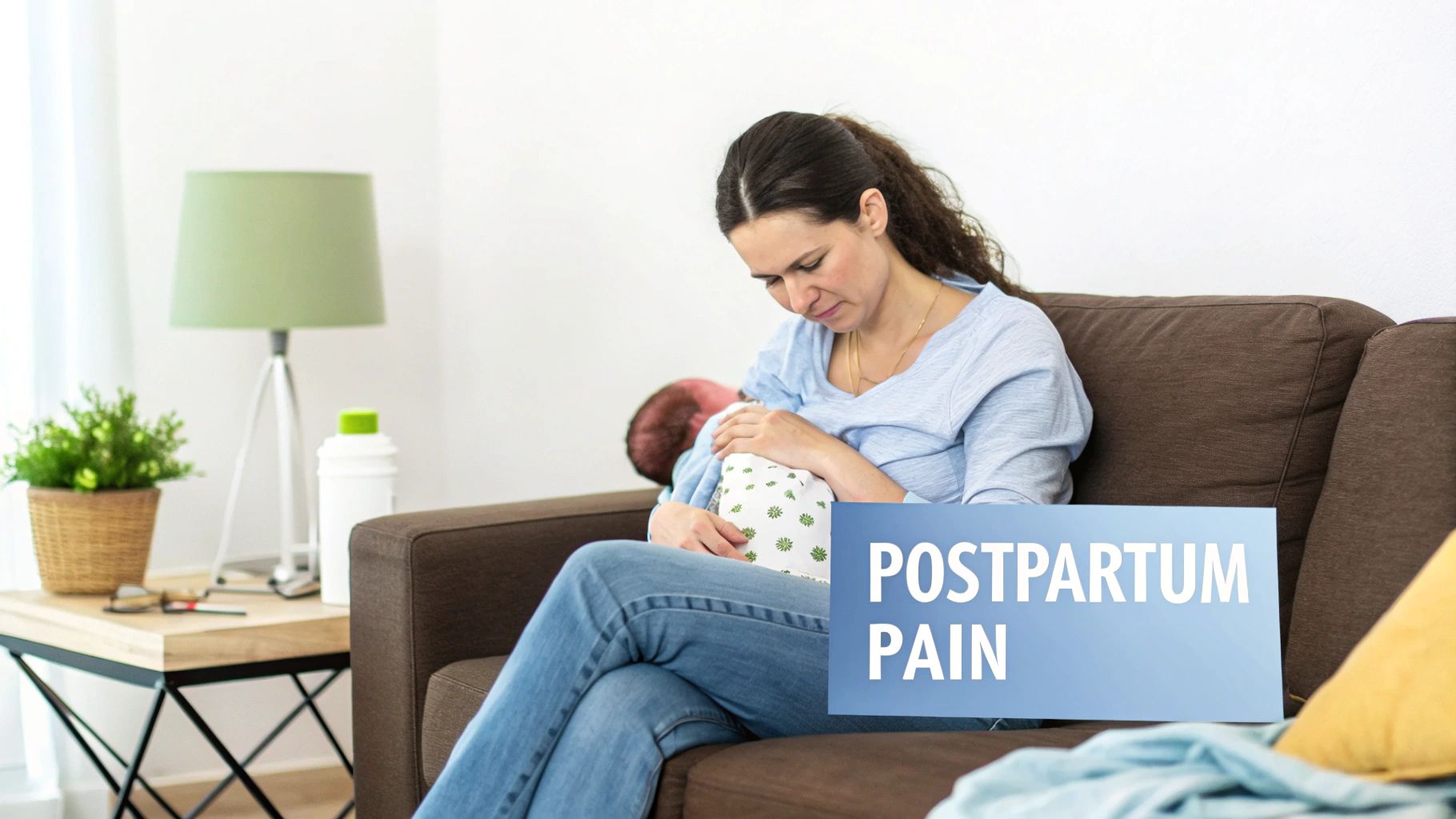
You’re finally home with your baby, trying to soak in every perfect, tiny detail. But there's a painful reality that keeps interrupting those precious moments: postpartum hemorrhoids.
Suddenly, the simple act of sitting down to nurse feels like a major hurdle. You start to dread trips to the bathroom, knowing the discomfort that will follow.
If this sounds familiar, you are far from alone. This is an incredibly common, yet rarely discussed, part of the postpartum journey. It can leave new mothers feeling completely isolated in their pain.
Your recovery shouldn't hurt more than your delivery.
This time is meant for bonding with your baby and healing your body...not for wincing every time you move. The physical demands of caring for a newborn are tough enough without adding hemorrhoid misery into the mix.
So, why is this happening now? Up to 40% of women deal with hemorrhoids after giving birth. The cause is usually a combination of hormonal shifts, increased pressure on the veins, and the intense strain of pushing during delivery.
This isn't just a minor inconvenience. It's a real barrier to enjoying those first few fragile weeks with your new baby. Research shows that 81% of hemorrhoid sufferers are women who have been pregnant, compared to 68% in the general population. That makes this a widespread postpartum issue that demands real, fast relief.
That’s where a targeted solution like a numbing spray becomes so invaluable. It offers a way to manage the pain directly and get you back to focusing on what really matters.
You don't have to just "tough it out." There are effective ways to manage this common postpartum challenge. We cover more strategies in our guide on how to treat hemorrhoids after childbirth.
Remember, prioritizing your own comfort isn’t selfish; it’s a necessary part of being the best mom you can be. Getting relief means you can sit comfortably, move more freely, and fully embrace the incredible experience of new motherhood.
When you're sore, swollen, and just trying to sit down without wincing, the last thing you want is to be poking around a sensitive area. This is where a quality numbing spray after pregnancy becomes your best friend. It’s a game-changer because you can get relief without ever having to touch anything.
That simple fact is a huge deal when everything hurts.
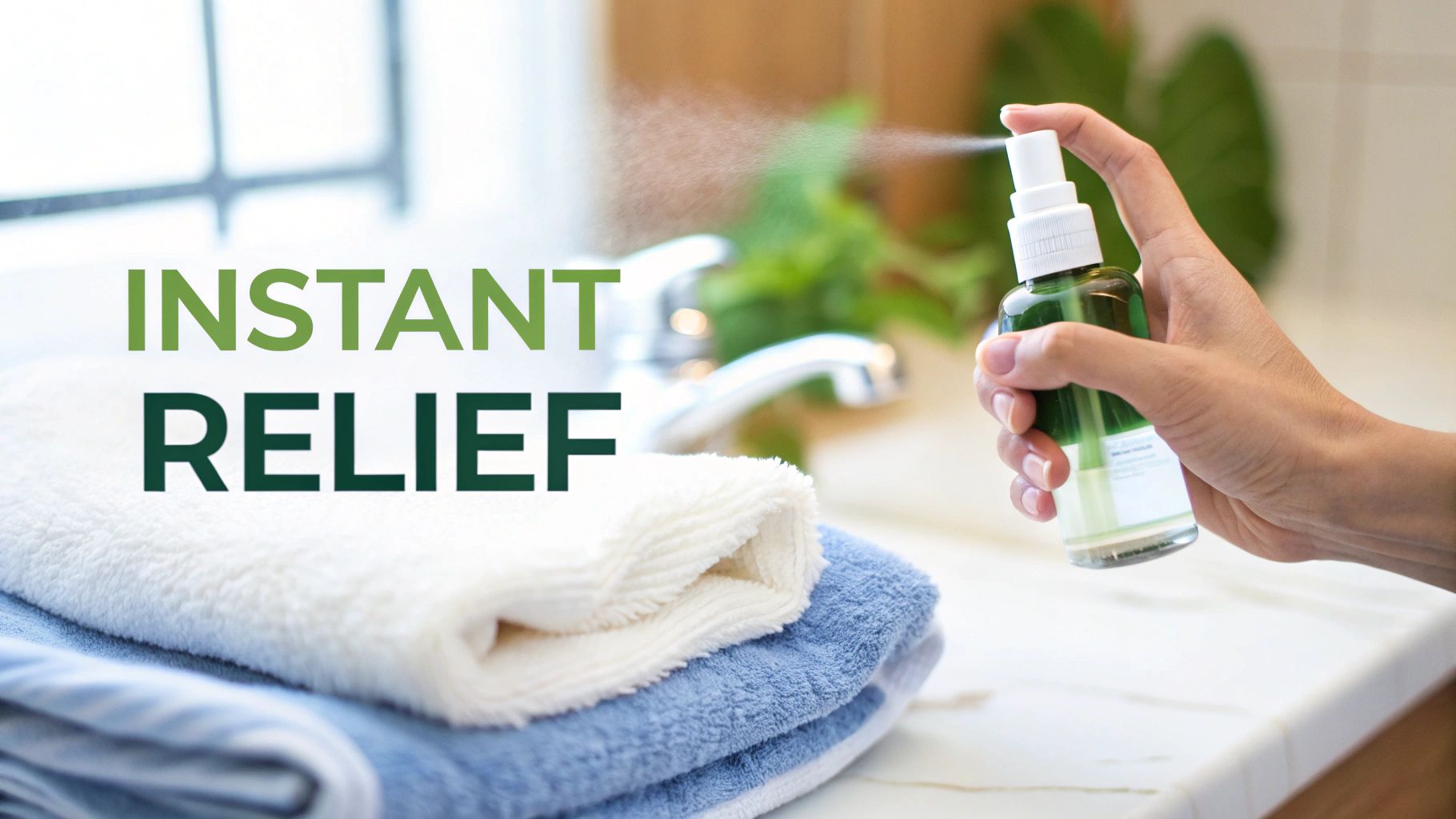
This "touch-free" approach isn't just about comfort...it's also about hygiene. You're minimizing the risk of introducing bacteria to an area that's busy healing from delivery, perineal tears, or an episiotomy. It’s a clean, direct way to get help right where you need it most.
So, how does this stuff actually work? The magic is in a couple of key ingredients doing very different, but very complementary, jobs. Most of the effective sprays out there are built around a powerful local anesthetic.
The most common and trusted one you'll see is lidocaine. A 5% concentration, which is the maximum strength you can get over-the-counter, works by temporarily blocking the nerve signals in your skin. It doesn't heal the tissue, but it basically tells your brain to ignore the pain messages screaming from that area.
This provides targeted relief without impacting your whole system, making it a safe and reliable choice for postpartum care.
While blocking pain is the main event, the best sprays don't stop there. Many, like Revivol-XR Hemorrhoid Relief Spray, also include an ingredient called phenylephrine. Think of it as the "de-puffer." It’s a vasoconstrictor, which is just a technical term for something that shrinks swollen tissues.
By bringing down the swelling, phenylephrine helps to:
This one-two punch is what makes a medicated spray so incredibly effective. It's tackling both the pain and the swelling that’s causing it in the first place.
In the US, where postpartum hemorrhoid rates can shoot as high as 41%, multi-symptom numbing sprays have become an absolute staple. Formulations that blend maximum-strength 5% lidocaine with phenylephrine offer a powerful, non-invasive solution for new mothers.
Revivol-XR's spray is a perfect example of this in action, combining these powerful actives with soothing botanicals like aloe and witch hazel for total care. The reality is, postpartum hemorrhoids are incredibly common, and having a reliable spray on hand is critical. You can learn more about these postpartum health stats from this detailed study on hemorrhoids in pregnancy and postpartum.
Once you understand how these ingredients work together, it's easy to see why a well-formulated numbing spray after pregnancy isn't just a comfort item...it’s a vital part of a smarter, faster recovery plan.
As a new mom, the last thing you have time for is complicated instructions. You just need practical, straightforward guidance. When it comes to using a numbing spray after pregnancy, a few simple steps will help you get safe, effective relief without getting in the way of your body's healing process.
It all starts with good hygiene.
Before you even think about spraying, cleanliness is your top priority. After every trip to the bathroom, use your peri bottle filled with warm water to gently rinse the entire perineal area. Instead of rubbing with toilet paper...which can be incredibly irritating to stitches and sore tissue...gently pat the area dry with a clean, soft towel or even disposable towelettes. This gives you a clean slate for application and helps prevent infection.
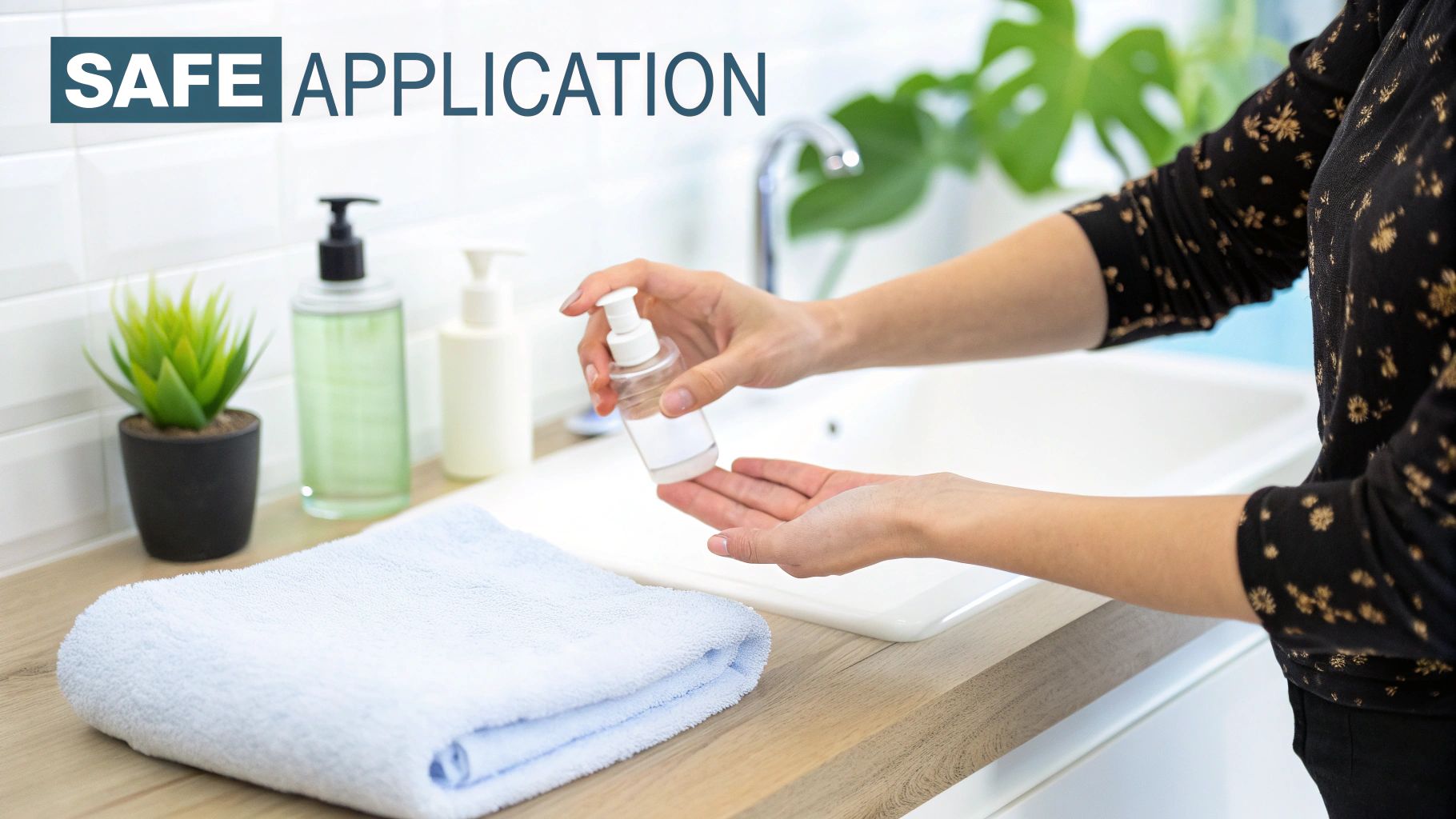
Applying the spray correctly is what makes it work. You really don’t need to saturate the area; a light, even mist is all it takes for the active ingredients to do their job.
Here’s the right way to do it:
It can be tempting to use more when you're in pain, but resist that urge. Over-application won't make you feel better faster, but it could increase the risk of skin irritation.
To make things even simpler, here's a quick cheat sheet for postpartum spray application.
This simple reference guide highlights best practices and common mistakes to help you use your numbing spray safely and effectively after pregnancy.
| Do... | Don't... |
|---|---|
| Gently rinse with a peri bottle before each use. | Rub the area with toilet paper. |
| Pat the area dry with a soft, clean towel. | Saturate the area with too much spray. |
| Hold the can 6 inches away for a fine mist. | Spray directly onto open wounds without doctor approval. |
| Follow the label for application frequency (usually 3-4 times daily). | Exceed the recommended daily dosage. |
| Do a patch test on your skin first. | Hesitate to call your doctor with questions. |
Following these simple do's and don'ts can make a huge difference in your comfort and healing.
It’s completely normal to have questions about safety, especially when you're also caring for a newborn. The two biggest concerns I hear from new mothers are about breastfeeding and using a spray near stitches from a tear or episiotomy.
Luckily, topical numbing agents like 5% lidocaine have minimal systemic absorption. In plain English, that means very little of the medication actually enters your bloodstream, so it’s generally considered safe to use while breastfeeding.
That said, every mother and baby is different.
It's always a good idea to have a quick chat with your OB/GYN or your baby's pediatrician before starting any new product. Their reassurance can give you the peace of mind you need.
If you have stitches, you’ll want to be extra cautious. While a numbing spray can be a lifesaver for that stinging pain, you have to make sure it doesn’t irritate the healing wound. A smart first move is to do a small patch test on a less sensitive area of skin (like your inner arm) to check for any reaction.
Most importantly, get the green light from your doctor before using it near your stitches. They can confirm it’s appropriate for your specific stage of healing. While sprays offer great touch-free relief, you might also be interested in our guide to the best pain relief cream for hemorrhoids for more targeted, ongoing discomfort.
By following these simple hygiene and application tips, you can confidently use a numbing spray after pregnancy to manage pain and focus on what matters most: your recovery and your new baby.
A quality numbing spray after pregnancy is a star player, but even the best players need a strong supporting team. For real postpartum relief, it helps to think of your recovery as a complete system. When each part supports the others, you'll heal faster and feel a whole lot more comfortable day-to-day.
Your recovery toolkit should absolutely go beyond just one product. The goal is to combine immediate, on-the-spot relief with long-term healing and smart preventative care.
There’s a reason sitz baths are one of the most recommended postpartum therapies. This simple practice of soaking the perineal area in warm water provides incredible comfort and promotes healing.
A good sitz bath does a few key things:
To really elevate this practice, you can add therapeutic salts. Products like Revivol-XR 20-in-1 Sitz Bath Salts are made specifically for this. They blend the calming power of Epsom salts with soothing botanicals, turning a simple soak into a powerful healing ritual. You can learn more in our guide on how a sitz bath for hemorrhoids can help your recovery.
While a spray gives you that instant, on-the-go relief, a high-quality cream can provide lasting comfort and protection...especially overnight. Creams create a protective barrier over sensitive skin, which helps prevent irritation from moisture and friction while you rest.
Think of it this way: the spray is for immediate pain, while the cream is for sustained healing.
Using a product like Revivol-XR's Advanced Hemorrhoid & Fissure Cream before bed helps reduce swelling and discomfort while you sleep. The goal is to wake up feeling more refreshed and less focused on the pain. The cream works to calm inflammation and supports your body's natural healing process.
Your toolkit isn't just about what you apply topically. A few simple lifestyle adjustments are crucial for preventing the problem from getting worse. You want to avoid straining during bowel movements at all costs, as this puts immense pressure on already sensitive hemorrhoids.
What you do internally is just as important as what you treat externally.
Here are three non-negotiable habits to adopt right away:
By combining the immediate relief of a numbing spray with the healing power of sitz baths, the protection of a cream, and these smart lifestyle choices, you create a complete care routine. This approach doesn't just mask symptoms...it supports your overall well-being and empowers you to take control of your recovery.
A quality numbing spray after pregnancy can feel like an absolute lifesaver. But it’s important to remember that its job is to manage the expected, run-of-the-mill postpartum discomfort, not to mask a more serious problem.
While most of the aches and pains of recovery get better with time and good self-care, you should never, ever hesitate to reach out to your doctor if something feels off. Your body has just been through an incredible ordeal. Being extra cautious during your recovery is always the right call.
As an exhausted new mom, it's so easy to dismiss symptoms as "just part of the healing process." But some signs are clear indicators that it's time to put down the spray and pick up the phone.
Call your OB/GYN immediately if you experience any of these:
Trust your gut. If your pain feels "off" or different from the general soreness you’ve been experiencing, it’s always better to get it checked out.
Your perineal area is vulnerable to infection as it heals, especially if you had stitches from a tear or an episiotomy. A numbing spray might help with the surface-level pain, but it won’t do a thing for an underlying infection.
Keep an eye out for these classic signs:
Over-the-counter products are fantastic tools for self-care, but they work best when paired with professional medical guidance. Think of your doctor as your partner in this recovery journey.
When you're navigating postpartum recovery, you just want straightforward answers that help you feel better, faster. Let's tackle some of the most common questions new moms have about using a numbing spray after pregnancy.
You'll feel it start working almost right away. Topical anesthetics like 5% lidocaine are formulated for fast action, usually starting to numb the sore area within just a few minutes of spraying.
You can expect the peak numbing effect to kick in within 10 to 15 minutes. This is what makes a spray so helpful for that sharp, sudden pain you might feel after using the bathroom or when trying to sit down. The relief typically lasts for one to three hours, giving you a much-needed window of comfort.
Yes, but you'll want to be gentle and get the green light from your doctor first. A numbing spray can be a lifesaver for the stinging pain that comes with stitches from a perineal tear or an episiotomy. The touch-free application is a huge plus because you’re not rubbing or irritating that delicate, healing tissue.
Before you start spraying, always check with your OB/GYN. They can take a quick look to make sure your incision is healing properly and confirm a spray is a safe choice for you. It's also not a bad idea to do a small patch test on your inner arm first, just to make sure you don't have any skin sensitivity.
This is a big one for so many new moms, and for good reason. The great news is that when you use a topical lidocaine spray, very little of the medication gets absorbed into your bloodstream. Because such a tiny amount enters your system, it’s generally considered safe to use while breastfeeding.
Always double-check with your doctor or your baby’s pediatrician before using any new medication while breastfeeding. Getting their specific guidance will give you total peace of mind.
The golden rule is to follow the directions on the product label. Most postpartum numbing sprays will recommend applying it up to three or four times per day.
A good routine might be to use it after every trip to the bathroom and right before bed to help you get more comfortable rest. Using the spray more than recommended won't give you extra relief and could actually cause skin irritation. Sticking to the guidelines is the key to managing your pain safely and effectively.
For fast, targeted relief you can trust, Revivol-XR offers a complete range of postpartum care solutions. Discover our doctor-trusted, USA-made products and get back to focusing on what matters most. Learn more at https://hemorrhoid.com.