Postpartum Hemorrhoids: Your Complete Guide to Relief After Childbirth

Most new mothers don’t realize that straining on the toilet for just five minutes can be the start of years of hemorrhoid pain. Finding real, lasting relief for hemorrhoids after childbirth is not just about managing pain... it's about reclaiming your comfort so you can focus on your new baby.
I remember talking with a new mom who was in tears, convinced the throbbing pain would never go away. She felt isolated and embarrassed, which is the last thing anyone needs during such a vulnerable time. She just wanted to sit and hold her baby without wincing.
That conversation was a turning point. It highlighted a critical truth about postpartum recovery that nobody talks about.
Effective postpartum care isn't about toughing it out... it's about giving your body the right tools to heal properly.
The experience of childbirth is a marathon, and hemorrhoids are an incredibly common, painful side effect. Your body needs gentle, consistent care to recover. This isn't about some miracle cure... it's about understanding what your body needs right now and taking small, actionable steps every day to reduce swelling, ease pain, and prevent the problem from getting worse.
Let's walk through the steps that will bring you real relief, starting today.
- Soothe the immediate pain with gentle temperature therapy.
- Choose safe, effective over-the-counter treatments.
- Use diet and hydration to prevent straining.
- Make small lifestyle adjustments to take pressure off the area.
- Know exactly when it's time to call your doctor.
That mom I mentioned? We built a simple plan for her, and within a week, she felt a world of difference. She could finally sit comfortably and just enjoy those precious newborn moments. That’s the goal here... getting you back to feeling like yourself again.
Your First Steps for Postpartum Hemorrhoid Relief
Those first few days home with your baby are a beautiful, exhausting blur. The last thing you need is debilitating pain that makes it hard to sit, rest, or even walk around. This isn't just a minor inconvenience... it's a major roadblock during an incredibly vulnerable time.
Let’s be clear: postpartum hemorrhoids are incredibly common. Your body has just been through a marathon. Research shows just how widespread this is... a study of 180 pregnant women found that 50% developed perineal diseases, and hemorrhoids made up a whopping 72.2% of those cases. While the third trimester was a peak time, 11.1% of cases popped up a month after delivery. You are definitely not alone in this.
Soothe with Temperature Therapy
Your first-line defense is all about temperature. It’s simple, effective, and completely safe for your healing body. I like to think of it as a one-two punch for calming down angry, swollen tissue.
-
Cold Compresses for Swelling: For the first 24-48 hours, cold is your absolute best friend. A cold pack or a few witch hazel pads chilled in the fridge can bring incredible numbing relief and help shrink those swollen veins. Just wrap the cold pack in a soft cloth and apply it to the area for 10-15 minutes at a time, a few times a day. Remember, never put ice directly on your skin.
-
Warm Sitz Baths for Relaxation: After the initial day or two, or even between cold sessions, warm water offers a different kind of comfort. A sitz bath... that shallow basin that fits right over your toilet... lets you soak your perineal area in warm water for 15-20 minutes. This simple act relaxes the anal sphincter, boosts blood flow to the area, and can provide some serious pain relief.
Pro Tip: Don't make the water too hot. That can actually increase swelling. Tepid, comfortably warm water is what you're aiming for. It’s perfect for soothing the area without causing more irritation.
Gentle Hygiene Is Non-Negotiable
When you're dealing with postpartum hemorrhoids, how you clean up after using the bathroom is a huge deal. Rough toilet paper will feel like sandpaper and will only make the pain and irritation a hundred times worse.
Instead of wiping, switch to a gentler approach. Use that peri bottle the hospital likely sent you home with to squirt warm water over the area. Then, gently pat dry with a soft, clean towel or even some ultra-soft, unscented toilet paper. Some new moms swear by dabbing with a soft, damp cloth. The goal here is to avoid friction at all costs.
To help you get started, here’s a simple game plan you can follow for those first critical days at home.
Your First 48 Hours At-Home Relief Plan
This table breaks down the safest and most effective actions you can take right away to calm down postpartum hemorrhoid pain and swelling. Think of it as your quick-start guide to feeling more comfortable.
| Method | How It Provides Relief | Recommended Use |
|---|---|---|
| Cold Compress | Numbs the area and reduces swelling by constricting blood vessels. | For 10-15 minutes, 3-4 times a day, especially after bowel movements. |
| Sitz Bath | Soothes irritation, relaxes muscles, and improves blood flow to promote healing. | For 15-20 minutes, 2-3 times a day. Read our guide on using a sitz bath postpartum for best results. |
| Peri Bottle | Cleans the area gently without the friction of toilet paper, preventing irritation. | After every trip to the bathroom. |
| Lie Down | Takes all pressure off the rectal area, allowing for better blood circulation. | Lie on your side whenever possible, especially when resting or feeding the baby. |
Following these steps won't make the problem vanish overnight, but they can dramatically reduce your discomfort, which is a huge win when you’re recovering from childbirth.
Choosing Safe Over-The-Counter Treatments
Standing in the pharmacy aisle can feel overwhelming. You're exhausted, sore, and just need something that will bring relief without causing any harm to your recovering body... especially if you're breastfeeding. Let's break it down and make this simple.
Over-the-counter (OTC) treatments are fantastic for managing pain and swelling right where it hurts. They deliver active ingredients directly to the source of the discomfort. But not all products are created equal, and some are definitely better suited for postpartum recovery than others.
What Ingredients Should You Look For
When you're scanning labels, a few key ingredients are your friends. You're looking for products that can numb the pain, shrink the swelling, and protect that delicate skin from any more irritation.
-
Anesthetics for Numbing: Ingredients like pramoxine or lidocaine are local anesthetics. They work by temporarily blocking nerve signals, giving you that much-needed relief from the constant burning and itching. A product with 5% lidocaine, for instance, is the maximum numbing strength you can get without a prescription.
-
Vasoconstrictors for Swelling: Phenylephrine is a common one. It works by temporarily shrinking the swollen blood vessels that make up the hemorrhoid. This can reduce its size and take off some of that awful pressure.
-
Protectants for Soothing: Think of ingredients like glycerin, petrolatum, or mineral oil as a protective barrier. This coating shields the skin from irritation caused by stool and moisture, giving the tissue underneath a real chance to heal.
-
Astringents for Cooling: Witch hazel is a natural wonder. It’s an astringent known for its cooling and anti-inflammatory properties that help soothe irritation and bring a welcome sense of calm to the whole area. You'll often find it in medicated pads or wipes.
This infographic simplifies the foundational, non-medicinal steps that support any OTC treatment plan.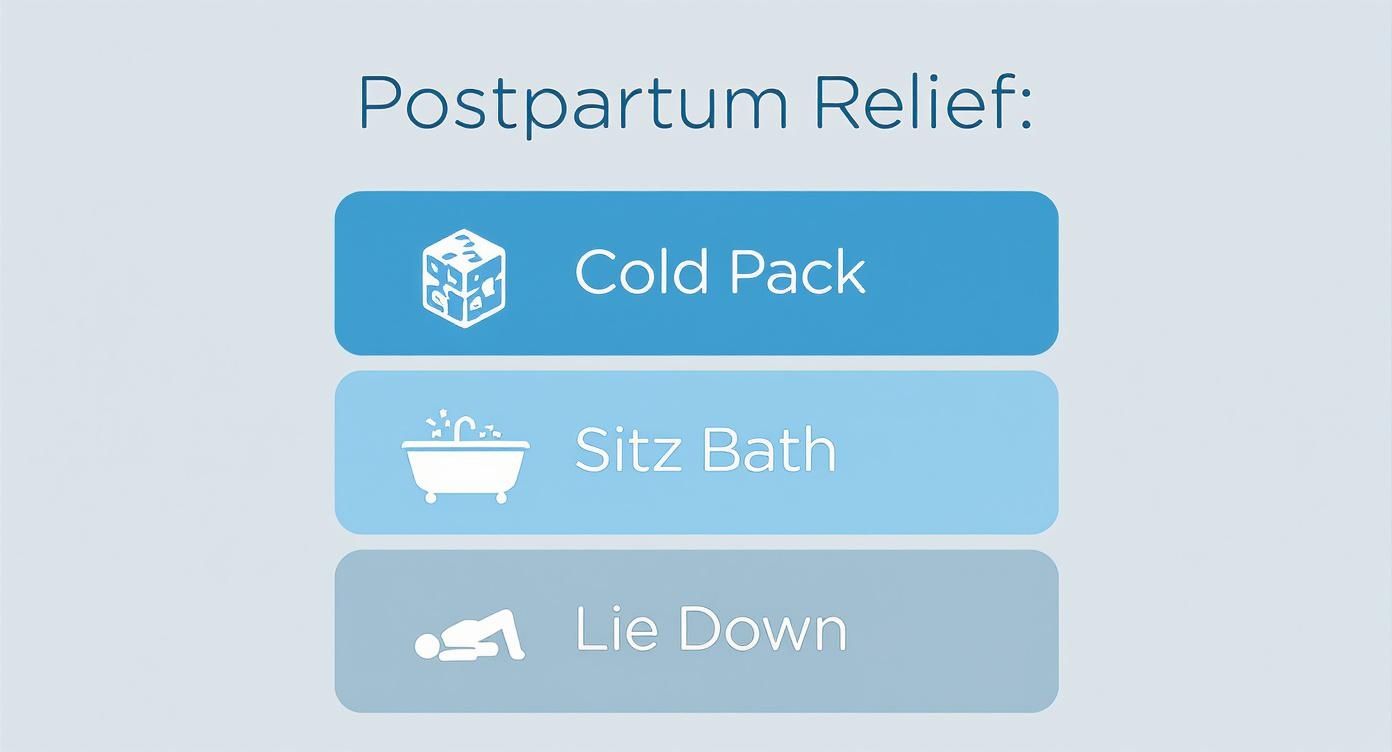
Combining these gentle, at-home methods with a targeted topical treatment is a powerful one-two punch for healing.
Applying Treatments for Maximum Effect
How you apply a cream or ointment matters almost as much as what's in it. The whole area is incredibly tender right now, so a gentle touch is absolutely non-negotiable.
First, always clean the area. Use your peri bottle filled with warm water and gently pat everything dry with a soft cloth. Never, ever rub.
Next, squeeze a small, pea-sized amount of cream onto a clean fingertip or a fresh cotton swab. Instead of rubbing it in, gently dab the product directly onto the external hemorrhoids. This avoids friction and ensures the medication gets where it needs to go without causing more pain. And of course, wash your hands thoroughly before and after you apply it.
A targeted product like Revivol-XR is designed to fit perfectly into this recovery plan. It combines multiple active ingredients to tackle pain, swelling, and irritation all at once, offering a complete solution specifically designed to soothe and support healing for new moms.
Navigating Your Options Safely
While many OTC options are safe, it's always smart to be cautious, especially when you're breastfeeding. Most topical treatments have very minimal absorption into your bloodstream, but a quick chat with your doctor or pharmacist is always a good idea. They can give you the green light and confirm a product is right for you.
Steer clear of products with harsh fragrances or alcohols that could sting or dry out already sensitive skin. And if any product seems to be making the irritation worse, stop using it immediately. Your body is healing, and listening to its signals is one of the most important things you can do for yourself right now.
How Diet and Hydration Speed Up Your Healing
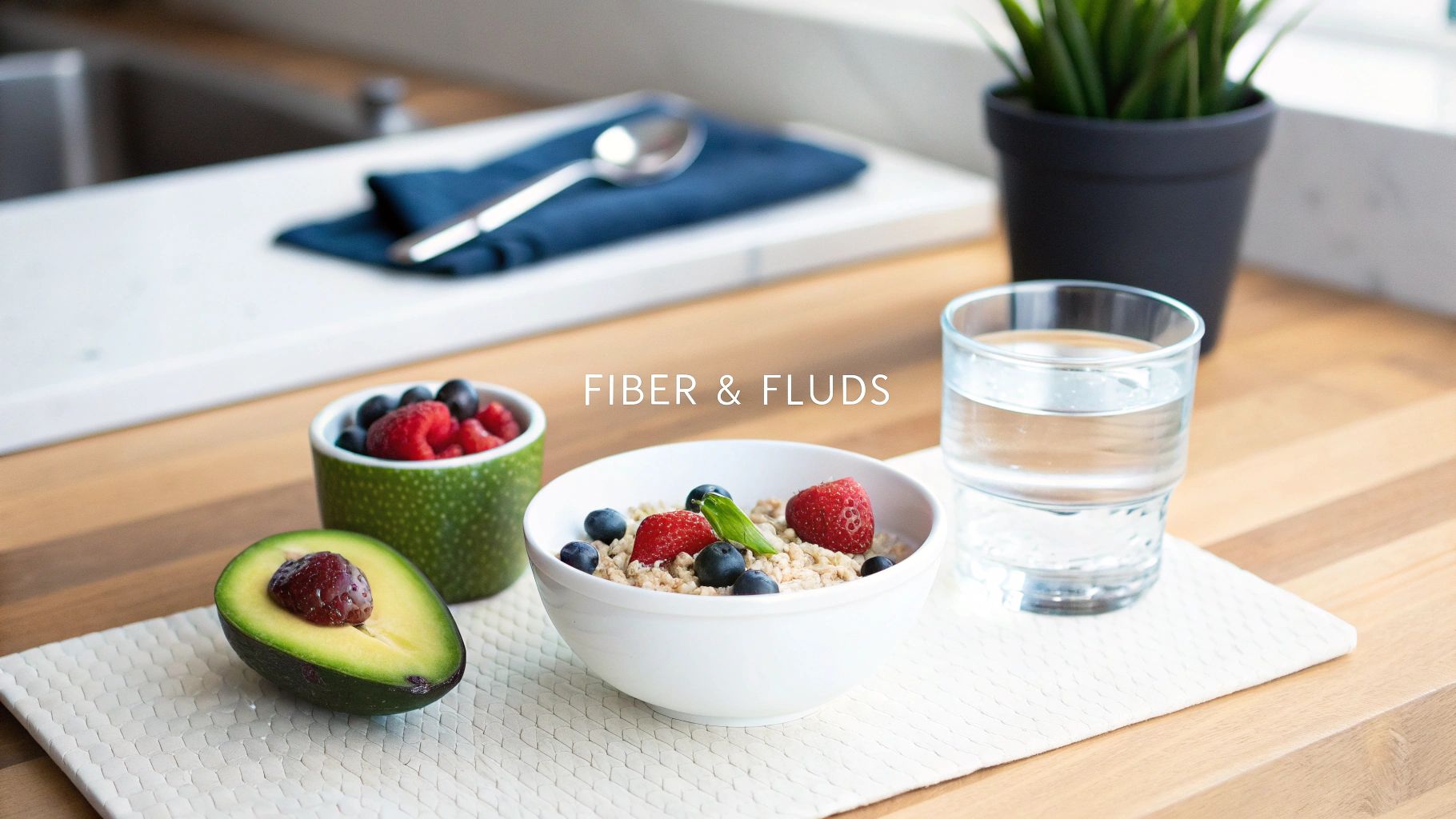
True, lasting relief for hemorrhoids after childbirth really starts from the inside out... with what's on your plate and in your water bottle.
That fear of the first postpartum bowel movement? It’s completely real. Constipation is the absolute enemy of healing right now, because every time you strain, you’re putting incredible pressure on those already tender, swollen veins.
The goal here isn't another stressful diet. It’s about making simple, consistent choices to soften your stool and make bathroom trips feel less daunting. This gentle approach is one of the most powerful things you can do to stop further irritation and give your body the space it needs to heal.
Fuel Your Recovery With Fiber
Fiber is your best friend for postpartum bowel health. It works by absorbing water in your digestive system, adding softness and bulk to your stool. This makes everything easier to pass, which means less pushing and straining.
You don't need to do a massive pantry overhaul. Just focus on weaving more fiber-rich foods into the meals you’re already eating.
-
Soluble Fiber: This type creates a gel-like substance in water, which is fantastic for softening stool. You’ll find it in oats, apples, citrus fruits, carrots, and beans. A warm bowl of oatmeal for breakfast is a perfect, comforting start.
-
Insoluble Fiber: This is the "bulking" agent that helps move everything along. Look for it in whole-wheat breads, nuts, cauliflower, and green beans.
Just remember to increase your intake gradually. Piling on too much fiber all at once can cause gas and bloating. Try adding one or two new things a day and see how your body feels.
Keep it simple: Leave a bowl of berries on the counter for easy snacking. Mash half an avocado on toast for a quick, filling meal. These little habits add up fast without needing a lot of energy or prep time.
Why Hydration Is Not Negotiable
You can eat all the fiber in the world, but it won’t do much good without enough water. In fact, it can make constipation even worse.
Fiber needs fluid to work its magic. Think of a sponge: when it's dry, it’s hard and stiff. When you add water, it becomes soft and pliable. That’s what you want for your stool.
Juggling a newborn is exhausting, and it's so easy to forget to drink. If you're breastfeeding, your body needs even more fluid than usual.
Try these simple tricks to stay hydrated:
- Keep a large, reusable water bottle with you at all times, especially near your favorite nursing spot.
- Set a quiet alarm on your phone to remind you to take a few sips every hour.
- Make it a habit to drink a full glass of water every time you sit down to feed your baby.
If plain water feels boring, try adding a little lemon, cucumber, or mint. Unsweetened herbal teas and warm, clear broths also count toward your daily total and can feel incredibly soothing.
Gentle Foods For Postpartum Recovery
To help you get started, here is a list of fiber-rich, easy-to-digest foods that are perfect for preventing constipation and helping your body heal after childbirth.
| Food Category | Examples You Can Try | How It Helps You Heal |
|---|---|---|
| Whole Grains | Oatmeal, brown rice, whole-wheat bread, quinoa | Provides both soluble and insoluble fiber to keep you regular. |
| Fruits | Berries, pears, apples (with skin), prunes, oranges | High in fiber and water content, naturally softening stool. |
| Vegetables | Broccoli, leafy greens, sweet potatoes, carrots | Adds essential nutrients and fiber to your diet with minimal prep. |
| Legumes | Lentils, black beans, chickpeas | An excellent source of plant-based protein and fiber. |
While you focus on adding these helpful foods, it's also smart to know which ones might be making things more difficult. You can learn more about this by reading our guide on what food causes hemorrhoids. Even small changes here can make a huge difference in your comfort and healing speed.
Simple Lifestyle Changes for Better Recovery

How you move, sit, and go about your day can either help your body heal or make things much worse. Finding relief for hemorrhoids after childbirth goes beyond just creams and baths... it's about making small, mindful tweaks to your daily routine.
These little adjustments can make a surprising difference in managing pain and preventing more irritation. You’ve just done something incredible, and now it's time to give your body the gentle care it needs to recover.
Master How You Sit
When you’re this sore, even just sitting down can feel like a major event. Every ounce of pressure feels magnified. This is where a few simple tools and positions can become your best friends.
A donut cushion or a U-shaped pillow can be a total lifesaver. It creates a gap that lifts your sensitive perineal area off the chair, shifting your weight to your sit bones instead. Just be sure the opening is large enough... you don't want it to act like a tourniquet and make swelling worse.
Try different positions when you're nursing or feeding your baby. Instead of sitting bolt upright, lean back in a semi-reclined position with pillows propping up your back and arms. Lying on your side is another fantastic option that takes all the pressure off your rectum.
Rethink Your Bathroom Breaks
This is a big one. The bathroom is not the place to catch up on social media or finish a chapter in your book. Lingering on the toilet for more than 5-10 minutes lets blood pool in the rectal veins, which increases pressure and aggravates hemorrhoids.
When you feel the urge, go. But if nothing happens after a couple of minutes, get up and move on. Straining is the absolute worst thing you can do for healing hemorrhoids.
Try this simple trick: Get a small footstool (like a Squatty Potty) and place it under your feet. This raises your knees above your hips, which straightens out your colon and makes it much easier to have a bowel movement without straining.
Get Some Gentle Movement
While a marathon is obviously out of the question for a while, being completely sedentary can slow down your recovery. Gentle movement is key because it boosts circulation, and good circulation is essential for healing.
Once you have your doctor's okay, start with short, slow walks. Even just a few minutes around your house or down the block can help stimulate your bowels and reduce that uncomfortable venous pressure.
Globally, hemorrhoids are a common postpartum issue, with some studies showing rates as high as 40%. Research points to things like long labor and pregnancy-related constipation as major causes, which makes these gentle recovery habits all the more crucial. You can find more insights about these postpartum risk factors.
Focus on Pelvic Floor Awareness
After giving birth, it's so important to reconnect with your pelvic floor. You don't need to jump right into intense Kegels. Instead, start with some simple awareness exercises once you've been cleared for activity.
-
Belly Breathing: Lie on your back with your knees bent. Put one hand on your chest and the other on your belly. When you inhale deeply, let your belly rise. As you exhale, let it fall. This helps relax your pelvic floor.
-
Gentle Lifts: As you exhale, gently draw your pelvic floor muscles up and in... like you're trying to stop the flow of urine. Hold for only 2-3 seconds, and then completely relax as you inhale. That relaxation part is just as important as the squeeze.
These small, consistent habits... how you sit, use the bathroom, and move... are the foundation of your recovery. They reduce daily strain, improve blood flow, and give your body the best chance to heal so you can focus on your new baby, not the pain.
When to Call Your Doctor
Most of the time, you can manage postpartum hemorrhoids right at home with the remedies we've talked about. But it’s just as important to know when something isn't right and it’s time to call for backup. This isn't about being an alarmist... it's about knowing your body and feeling empowered to get the right relief for hemorrhoids after childbirth when you need it.
It's completely normal to feel a little embarrassed or hesitant to bring this up. In fact, hemorrhoids are often underdiagnosed simply because people don't talk about them unless a doctor specifically asks. One major survey found that while 60% of people with hemorrhoids had pain, many never mentioned it to their provider. Trust me, your OB/GYN has seen it all. Speaking up is the first step toward feeling better. You can get more details on why it's so important to have an open conversation about symptoms by reviewing the findings on this topic.
Watching for Clear Red Flags
Your body is pretty good at telling you when something is off. While some discomfort is part of the package, a few symptoms are clear signs that you need a professional opinion. Don't just wait for your six-week postpartum check-up if you experience any of these.
Give your OB/GYN or midwife a call if you notice:
- Pain that’s getting worse, not better. If the pain is so bad it's hard to sit, walk, or take care of your baby, and home remedies aren't touching it, that's a sign to call.
- Bleeding that seems excessive. A little bright red blood on the toilet paper is common. But if the bleeding is continuous, heavy, or more than just a few streaks, you need to get it checked out.
- A hard, incredibly painful lump. If you feel a new lump near your anus that's firm, maybe purplish, and hurts to the touch, it could be a thrombosed hemorrhoid. This is essentially a blood clot inside the hemorrhoid. It’s not dangerous, but the pain can be intense and often needs a doctor's help to resolve.
- Signs of an infection. A fever, chills, or any pus-like drainage from the area are red flags. This could signal an infection that requires immediate medical care.
Trust your gut. If something just feels really wrong or the pain is unbearable, you don't need to "tough it out." Your care team is there to support you through every single part of your postpartum recovery.
What to Expect at Your Appointment
Knowing what happens at the appointment can make it much easier to pick up the phone. A visit for hemorrhoids is typically very straightforward and all about getting you some relief.
Your doctor will ask about your symptoms... what they feel like, when they started, and what you’ve already tried. They’ll then do a gentle visual exam of the area to see what's going on and check for things like a fissure or thrombosis.
An internal exam isn't always needed, especially if the problem is clearly external. The whole thing is handled with sensitivity and is focused on figuring out the best and quickest way to get you comfortable again.
Questions to Ask Your Doctor
It's so easy to forget what you wanted to ask when you're sleep-deprived and in pain. I always suggest jotting down a few questions on your phone before you go in.
You might want to ask:
- Based on what you're seeing, how long do you think this will take to heal?
- Are there any prescription-strength creams or treatments that are safe while breastfeeding?
- Is there anything else I can do at home to help things along?
- When should I follow up if I'm not feeling any better?
Reaching out for help is a smart move toward feeling like yourself again. Your well-being is a huge priority, and getting the right medical advice is key to a smoother, more comfortable postpartum recovery.
FAQs: Your Top Questions About Postpartum Hemorrhoids
Let’s get straight to it. Here are some of the most pressing questions new moms have about postpartum hemorrhoids, with direct, no-fluff answers to help you find relief for hemorrhoids after childbirth.
How Long Do Postpartum Hemorrhoids Last?
This is usually the very first thing new moms want to know. The good news is, for most people, postpartum hemorrhoids are a temporary problem that will get better.
With consistent at-home care... we’re talking sitz baths, keeping stools soft, and not straining on the toilet... you should feel a real difference in a few days to a couple of weeks. The sharp pain and swelling are usually the first things to improve.
That said, it can sometimes take up to six weeks for them to shrink down completely. It’s also not uncommon for a small, harmless skin tag to remain after a larger external hemorrhoid heals. If your symptoms aren't getting better after a week or so of home care, or if they’re getting worse, it’s time to check in with your doctor.
Healing isn't always a straight line. You’ll likely have good days and not-so-good days, especially if you get a little constipated. Consistency with your care routine is what really makes the difference.
Are Hemorrhoid Treatments Safe While Breastfeeding?
A totally valid and important question. You need relief, but your baby’s safety is obviously priority number one.
Luckily, most of the go-to topical, over-the-counter treatments are considered safe to use while you’re breastfeeding. Because they are applied right to the problem area, very little is absorbed into your system.
Safe options usually include:
- Witch Hazel Pads: These are a postpartum staple for a reason. They're applied externally, have almost no absorption, and provide immediate cooling relief.
- Creams with Lidocaine or Pramoxine: These numbing agents work locally to calm the pain and aren’t absorbed into the bloodstream in any significant amount.
- Creams with Phenylephrine: This ingredient works as a vasoconstrictor to help shrink swollen tissue and is also generally considered safe for topical use during breastfeeding.
Always apply these products to a clean, dry area, preferably after a bowel movement. And it goes without saying, wash your hands well before and after. Even with these generally safe products, a quick call to your doctor or pharmacist is always a smart move before starting anything new.
What Should I Do If I Have a Thrombosed Hemorrhoid?
A thrombosed hemorrhoid sounds scary, but it just means a blood clot has formed inside an external hemorrhoid. It often appears suddenly as a hard, purplish, and extremely painful lump.
First step: don't panic. While they hurt a lot, they aren't dangerous. You can continue with your at-home care, like gentle sitz baths and cold compresses, to help manage the pain and swelling.
However, if the pain is severe and just started within the last 48-72 hours, call your doctor right away. They can sometimes perform a simple in-office procedure to remove the clot, which brings immediate, significant relief. Don't feel like you have to "tough it out" if the pain is unbearable... help is available and can make a world of difference.
Will Hemorrhoids Make It Impossible to Breastfeed?
Absolutely not. From a medical standpoint, hemorrhoids have zero impact on your ability to produce milk or physically breastfeed your baby.
The real challenge is a practical one: the pain of sitting for long stretches. This is where you have to get a little creative with your nursing positions.
- Try nursing while lying on your side in bed. This takes all the pressure off.
- Get a donut cushion or a U-shaped pillow to use on your favorite chair.
- Lean back in a recliner with plenty of pillows propping you and the baby up.
If pain is getting in the way of enjoying that bonding time, take it as a sign to be more proactive with your pain relief strategies and to lean on your healthcare team for support. Getting your own discomfort managed will help you be more relaxed and present for your little one.
Finding the right combination of treatments is key to feeling better fast. For a comprehensive solution that combines numbing, shrinking, and soothing ingredients in one formula, Hemorrhoid.com offers the Revivol-XR Advanced Hemorrhoid & Fissure Cream. It's a powerful tool to have in your postpartum recovery kit.