5 Tips for Internal Hemorrhoids: Your Guide to Relief & Prevention

What Are Internal Hemorrhoids? Symptoms, Causes, and Relief
Most people don’t realize that straining on the toilet for just five minutes can be the start of years of hemorrhoid pain.
It's a startling moment most of us would rather forget. You've just used the bathroom, and a glance at the toilet paper reveals a few streaks of bright red blood. There's no pain, no itch, nothing else seems out of the ordinary... just that alarming sight. You might even try to brush it off as a fluke, but that little seed of worry has been planted.
This experience is the classic calling card of internal hemorrhoids. Unlike external ones that you can feel, these hide out inside the rectum. Because that inner tissue has very few pain-sensing nerves, they can swell up without you feeling a thing. Their "invisible" nature is exactly why a bit of bleeding is often the first... and only... sign that something's up.
Recognizing the early signs of internal hemorrhoids empowers you to prevent bigger problems down the road.
Think of the veins lining your rectum as tiny, delicate balloons. When you put them under constant pressure from straining on the toilet, dealing with chronic constipation, or even just sitting for too long, they can get stretched out and fragile. The friction from a passing stool is all it takes to irritate their surface and cause a little bleeding. That’s why the blood is almost always bright red and seen on the paper or in the bowl, not mixed in with the stool itself.
While it’s usually not a sign of anything serious, painless rectal bleeding is your body's way of waving a red flag. It’s a signal that something needs to change. Ignoring it allows the underlying issues like straining and constipation to continue, which can make the hemorrhoids much worse. You can learn more about the prevalence of hemorrhoids from this detailed study.
That moment of confusion in the bathroom isn’t just about the blood... it's about your body telling you to pay attention. By understanding the cause, you can shift from worrying to taking proactive steps. This is a very common and manageable condition, and with the right knowledge, you can take control and find relief.
What Causes Internal Hemorrhoids?
For months, Mark chalked up his occasional discomfort to long hours at his desk. He’d sit for hours on conference calls, often grabbing a quick, low-fiber lunch. Evenings were spent decompressing on the couch. He never connected the dots between his sedentary job, his diet, and the subtle but growing internal pressure he felt… until the day that discomfort turned into a very noticeable problem.
Mark's story is incredibly common. He wasn't doing anything obviously wrong, yet his everyday habits were quietly creating the perfect storm for internal hemorrhoids to develop. This is a huge realization for anyone starting to experience symptoms.
Your daily routine might be the biggest contributor to your discomfort.
Think of the veins inside your rectum like tiny balloons. They're designed to handle normal pressure, but when that pressure becomes excessive and constant, they can swell and get irritated. If you slightly over-inflate those balloons every single day, they eventually stretch, weaken, and become the sensitive tissue we call internal hemorrhoids. The primary culprits behind this increased pressure are often hiding in plain sight.
The Pressure Problem: Straining and Sitting
Chronic constipation is one of the biggest drivers of internal hemorrhoids. When your diet lacks enough fiber and water, stools become hard and difficult to pass. This leads directly to the next major cause... straining during bowel movements. Pushing hard puts immense, direct pressure on the rectal veins. Doing this day after day is a fast track to developing issues.
Another huge factor is prolonged sitting. Whether you're at a desk all day, a long-haul truck driver, or just spend a lot of time on the couch, sitting for extended periods increases pressure on the veins in your lower rectum. This constant, low-grade stress interferes with healthy blood flow and contributes to swelling over time.
Other Common Risk Factors
Beyond those daily habits, several other factors can increase your risk. Understanding these can help you pinpoint your personal triggers.
- Pregnancy: The growing uterus puts direct pressure on pelvic veins, and hormonal changes can relax the vein walls, making them more susceptible to swelling.
- Heavy Lifting: Regularly lifting heavy objects can cause you to hold your breath and strain, which dramatically increases intra-abdominal pressure.
- Aging: As we get older, the supportive tissues that hold the rectal veins in place can weaken. This makes them more likely to bulge and swell.
- Chronic Diarrhea: While we talk about constipation a lot, frequent diarrhea can also irritate the rectal lining and contribute to hemorrhoid symptoms.
- Dietary Habits: A diet consistently low in fiber is a major contributor. Learning about the 5 best foods for hemorrhoids is a fantastic starting point for making a real difference.
Once Mark identified these patterns, he could start making small, manageable changes. Taking short walking breaks, adding a salad to his lunch, and drinking more water began to relieve the constant pressure, giving his body a chance to heal. These simple adjustments were the key to his relief.
Recognizing the Symptoms and Understanding the Grades
Ever notice a little bit of bright red on the toilet paper and tell yourself it's nothing? It's a common reaction. But when a "minor" symptom keeps showing up, it's your body's way of asking you to pay attention. It’s time to stop guessing and start understanding what's really going on.
Not all bleeding is the same... knowing the signs is your first step toward relief.
Since internal hemorrhoids are tucked away inside the rectum where there are very few pain-sensing nerves, their symptoms can be surprisingly subtle. The most common giveaway is painless, bright red bleeding. You'll usually spot it on the toilet paper or see a few drops in the toilet bowl. This happens when a hard stool passes by, scraping against the delicate surface of the swollen hemorrhoid.
Another key sign is prolapse. This is when an internal hemorrhoid gets pushed out through the anal opening, typically during a bowel movement. Sometimes it pops back in on its own, but in more advanced cases, it might need to be pushed back in manually. You might also be left with a nagging feeling of fullness, as if you haven't completely finished.
This diagram shows the core issues that lead to these symptoms.
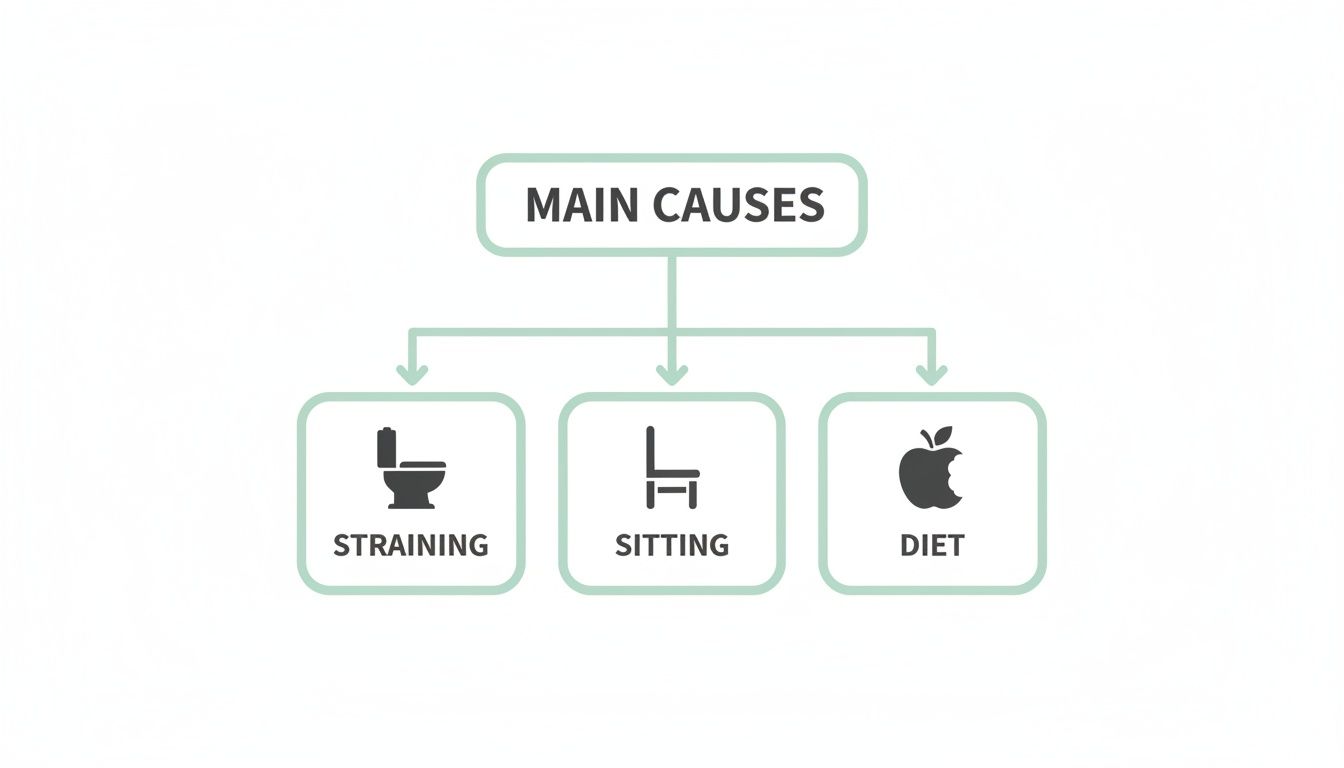
As you can see, things like straining on the toilet, sitting for too long, and a poor diet are the main culprits. They all put extra pressure on the veins in your rectum, eventually causing the symptoms we've just discussed.
The Four Grades of Internal Hemorrhoids
To get a better handle on the situation, doctors classify internal hemorrhoids into four distinct grades. This system is all about the degree of prolapse... how far the hemorrhoid protrudes. Knowing the grade helps pinpoint the best way to get things back on track.
| Grade | Description of Prolapse | Common Symptoms |
|---|---|---|
| Grade I | No prolapse. The hemorrhoid stays inside the rectum. | Painless bleeding is the most common and often only symptom. |
| Grade II | Prolapses during a bowel movement but goes back in on its own afterward. | Bleeding, a feeling of fullness, and you might notice tissue slipping out. |
| Grade III | Prolapses during a bowel movement and must be manually pushed back in. | More noticeable bleeding, discomfort, and a persistent feeling of a bulge. |
| Grade IV | Permanently prolapsed and cannot be pushed back in. | Chronic discomfort, potential for pain if it becomes thrombosed, and bleeding. |
When to See a Doctor
While internal hemorrhoids are incredibly common, rectal bleeding is always something you should get checked out by a doctor. A proper diagnosis is the only way to be sure what’s causing it and to rule out other, more serious conditions. This is no time for guesswork... getting clarity gives you peace of mind and sets you on the fastest path to relief.
How Your Doctor Diagnoses and Treats Internal Hemorrhoids
Let's be honest, walking into a doctor's office to talk about hemorrhoids is probably not on your list of favorite things to do. The whole idea of an exam can feel awkward and make you want to put it off. But here’s the reality: it's usually a quick, straightforward process that’s far less intimidating than you might think.
A real diagnosis is the only way to know you're treating the right problem.
Your doctor’s first job is to confirm that your symptoms are actually from internal hemorrhoids and not something else. The process usually starts with a simple chat about what you've been experiencing. They'll ask about bleeding, discomfort, or anything you’ve noticed protruding. The physical exam is typically very quick.
- Visual Check: The doctor will look at the outside of the anal area to rule out external hemorrhoids.
- Digital Rectal Exam (DRE): The doctor will gently insert a gloved, lubricated finger into the rectum to feel for any swollen internal hemorrhoids.
- Anoscopy: They might use a short, lighted tube called an anoscope to get a direct look at the tissue inside your rectum.
Starting with Simple At-Home Care
For most cases of Grade I or II internal hemorrhoids, the first line of defense starts right at home. The goal is to reduce pressure, soothe irritation, and let your body heal. Your doctor will likely recommend upping your fiber intake and drinking more water.
Over-the-counter options are also a big help here. For relief on the inside, suppositories are a go-to choice. We dive deeper into their benefits in our guide on what a suppository does for hemorrhoids. Often, these simple steps are enough to clear things up. Learn more about hemorrhoid management strategies.
Advanced Options for Powerful Relief
When at-home care isn’t cutting it, your doctor might suggest a minimally invasive procedure like rubber band ligation. For external symptoms such as burning, itching, and discomfort, a multi-symptom cream like Revivol-XR Advanced Hemorrhoid Cream is an option.
Applied externally, it combines 5% lidocaine and 0.25% phenylephrine to provide temporary relief of pain and itching and temporarily shrink hemorrhoidal tissue, with soothing botanicals as inactive ingredients. Using a multi-symptom product like Revivol-XR is a smart, proactive step toward getting your symptoms under control.
Proven Prevention Strategies for Long-Term Relief
For years, Sarah treated her internal hemorrhoids as a recurring annoyance. She’d manage a flare-up with creams and sitz baths, feel better for a while, and then fall back into old habits. It wasn't until she realized her "quick fixes" were just a band-aid that she finally committed to a real change.
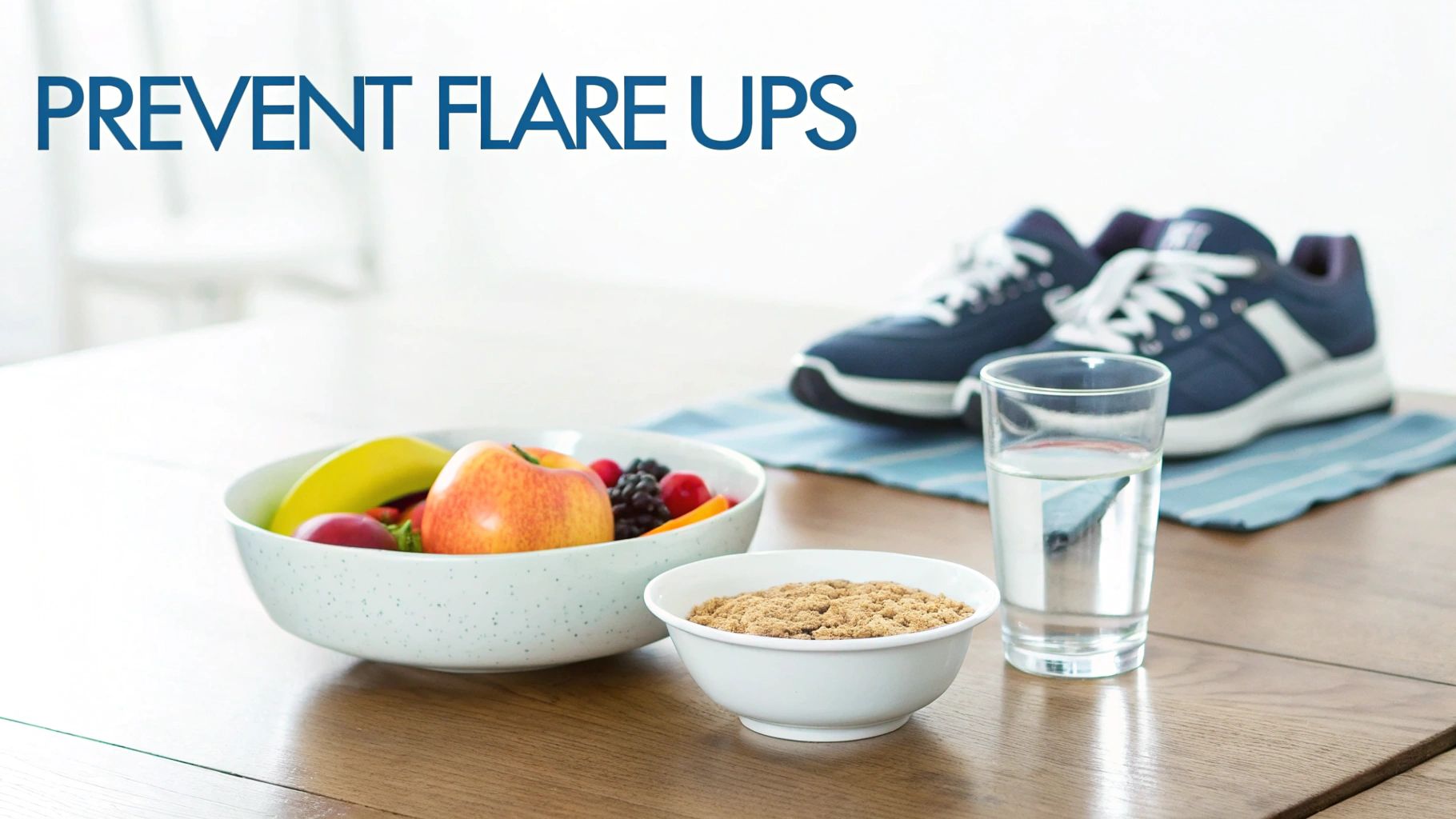
She learned a powerful lesson that many people eventually discover.
Prevention isn't a one-time fix... it's a daily commitment to your well-being.
Managing internal hemorrhoids is less about reacting to flare-ups and more about creating a lifestyle that doesn't invite them in. The best strategies focus on reducing pressure on your rectal veins day in and day out. It starts with simple, consistent choices that add up to significant, long-term relief.
Actionable Steps for Prevention
To make a real difference, focus on these key areas.
- Increase Your Fiber Intake: Fiber is your best friend. Aim for 25 to 35 grams per day from sources like fruits, vegetables, whole grains, beans, and nuts.
- Stay Hydrated: Water works hand-in-hand with fiber. Drink plenty of water throughout the day to keep everything moving smoothly.
- Go When You Feel the Urge: Don't hold it in. Waiting can make your stool harder and drier, which leads to straining.
- Avoid Straining: Let things happen naturally. If you have to push hard, it’s a sign that you need more fiber and water in your diet.
- Keep it Quick: Your time on the toilet should be for the task at hand. Aim to be in and out in just a few minutes to minimize pressure.
- Get Moving: Regular exercise, like a brisk 30-minute walk each day, helps promote healthy bowel function and improves circulation.
- Take Breaks from Sitting: If you have a desk job, stand up, stretch, and walk around for a few minutes every hour.
For additional soothing comfort, consider exploring the benefits of a sitz bath for hemorrhoids as part of your routine.
Sarah’s journey wasn’t about a dramatic overhaul. It was about consistently choosing the salad over the fries, taking the stairs instead of the elevator, and leaving her phone outside the bathroom. These small, daily commitments are what truly prevent flare-ups and lead to lasting comfort.
Frequently Asked Questions About Internal Hemorrhoids
When you're dealing with internal hemorrhoids, a lot of questions can pop into your head. Getting clear, simple answers is the first step toward peace of mind and figuring out what to do next. Let's tackle some of the most common concerns.
Can Internal Hemorrhoids Turn into Cancer?
No, internal hemorrhoids do not turn into cancer. They are just swollen veins. The confusion comes because painless rectal bleeding can also be a warning sign for colorectal cancer. That’s why you should never try to diagnose rectal bleeding on your own. Always see a doctor to get a proper diagnosis and rule out anything more serious.
How Long Do Internal Hemorrhoids Usually Last?
This depends on their severity and how you treat them. Minor flare-ups may clear up within a week with simple changes like more fiber and water. More persistent cases can last for several weeks or longer if the underlying causes, like chronic constipation, are not addressed.
Are There Permanent Cures for This Condition?
Yes, lasting relief is absolutely possible. For many, a permanent fix comes from committing to a high-fiber diet, staying hydrated, and adopting better bathroom habits. For more severe hemorrhoids, medical procedures like rubber band ligation can offer a direct solution. Even after a procedure, maintaining healthy habits is key to prevention.
When Should I Be Worried About My Symptoms?
Most of the time, hemorrhoid symptoms aren't an emergency. But you should see a doctor right away if you experience any of the following:
- Heavy or continuous bleeding
- Severe pain
- Dark, maroon, or black blood in your stool
- Other symptoms like dizziness, fever, or major changes in bowel habits
Research shows that hemorrhoids are most common between the ages of 45 and 65. You can discover more about hemorrhoid epidemiology and prevalence rates to understand these factors better.
For at-home temporary relief of the external burning, itching, and discomfort that can accompany internal hemorrhoids, Hemorrhoid.com offers Revivol-XR creams and soothing care products, applied externally. Explore our complete line at https://hemorrhoid.com and take the next step toward feeling comfortable.