How to Use a Suppository for Hemorrhoids: A Step-by-Step Guide
1 Comment

Most people don’t realize their daily routine is actually making their hemorrhoids worse. When you're in the middle of a flare-up, you want relief that works fast and hits the exact source of the pain. A suppository offers direct, targeted relief by delivering medication exactly where you need it, but using one for the first time can feel intimidating.
I’ve spent years helping people navigate hemorrhoid care, and the most common hurdle I see isn't the condition itself... it’s the uncertainty around the treatment. I once had a customer who bought suppositories and let them sit in his medicine cabinet for two weeks, suffering in silence because he was too embarrassed and unsure to use them. He thought it would be complicated or painful. When he finally called for advice, we walked through the simple steps, and his first reaction was, “That’s it? I could have felt better days ago.”
This experience is incredibly common. People build it up in their minds to be this big, complex medical procedure, but it’s not. It’s a straightforward process designed for at-home use. His relief wasn’t just physical once he used the product; it was the mental relief of overcoming that hesitation.
Knowing the steps isn't enough... having the confidence to follow them is what brings relief.
That’s why this guide exists. We’re going to break down exactly how to use a suppository for hemorrhoids in a way that removes all the anxiety and guesswork. It's about giving you the confidence to take control of your symptoms. Using a suppository is a simple mechanical process, but the real healing begins when you feel empowered enough to start. We will cover the preparation, the technique, and what to do afterward to ensure you get the maximum benefit from each dose, so you can stop suffering and start feeling better sooner.
Your Practical Guide to Using Hemorrhoid Suppositories
Dealing with hemorrhoids is uncomfortable enough without adding uncertainty about the treatment. This guide is here to walk you through the process, step by step, so it feels less intimidating and more like a routine part of getting relief.
Suppositories are a go-to for a simple reason: they work directly on the problem area. Unlike a pill that has to travel through your entire system, a suppository delivers its active ingredients right to the inflamed tissues inside your rectum. This focused action is what makes them so effective for internal hemorrhoids.
Understanding the Role of Suppositories
Think of a suppository as a tiny, targeted delivery vehicle for medication. The small, cone-shaped capsule is typically made from a base like cocoa butter that is solid at room temperature but melts once inside your body. As it dissolves, it releases medication designed to:
- Shrink Swelling: Ingredients like phenylephrine HCl help constrict and reduce swollen hemorrhoidal tissues.
- Soothe Irritation: Protectants create a coating over the inflamed area, which can reduce friction and discomfort.
- Promote Healing: By calming the internal environment, suppositories give your body a better chance to heal itself.
A suppository’s main advantage is its ability to deliver medication directly to internal hemorrhoids. This bypasses the digestive system, allowing for faster and more focused action right where you need it. Our goal isn't just to show you how to use a suppository for hemorrhoids but also to give you the knowledge to manage your symptoms for good. You can dive deeper in our guide on what a hemorrhoid suppository does.
Getting Ready for a Smooth and Hygienic Application
A little prep work can make all the difference between a stressful ordeal and a smooth, comfortable experience. The whole idea is to create a simple, calm routine.
First things first, find a private, clean space where you won’t be rushed or interrupted... your bathroom is perfect for this. Before you do anything else, get all your supplies together.
Your Pre-Insertion Checklist
A bit of organization takes all the guesswork out of the process. Before you start, it’s a good idea to have everything laid out and ready to go. Here's a quick checklist to make sure you're all set.
| Item | Purpose | Pro Tip |
|---|---|---|
| The Suppository | The medication itself. | Leave it in the wrapper until the very last second to keep it clean and firm. |
| A Towel | For lying on or for quick cleanup. | Lay it on the floor or bed where you plan to lie down for easy cleanup. |
| Mild, Unscented Soap & Water | For cleaning your hands and the anal area. | Unscented soap is key to avoiding potential irritation on sensitive skin. |
| Water-Based Lubricant (Optional) | To make insertion easier. | You only need a tiny dab on the tip of the suppository. Don't overdo it! |
Once your station is set up, get the suppository ready. If it feels too soft, hold it under cool running water for about 30 seconds or run an ice cube over it while it's still in the foil. This will firm it up fast.
Ensuring a Clean Application Area
Proper hygiene is crucial for making sure the medicine works effectively. Gently wash the anal area with warm water and a mild, unscented soap. Afterwards, pat it completely dry with a soft, clean towel.
One last detail that’s easy to overlook: your fingernails. Make sure they are trimmed short so there are no sharp edges. This simple step is your best defense against accidentally scratching the sensitive tissues you're trying to heal.
The Correct Technique for Inserting a Suppository
This is the most important part of the process. Honestly, knowing exactly how to use a suppository for hemorrhoids takes away all the guesswork and helps you get the relief you’re after.
Once you’ve unwrapped the suppository, the next move is getting into a comfortable position. This single step makes the insertion way easier and ensures the medication stays put to do its job.
Finding the Best Position
The main goal here is to relax your pelvic muscles. When those muscles are relaxed, everything goes a lot smoother. The hands-down best position is to lie on your left side. Keep your bottom leg straight and pull your top leg up toward your chest. This is called the Sims' position, and it anatomically aligns your rectum, making insertion about as easy as it can get.
This simple graphic covers those crucial first actions for a no-fuss routine.
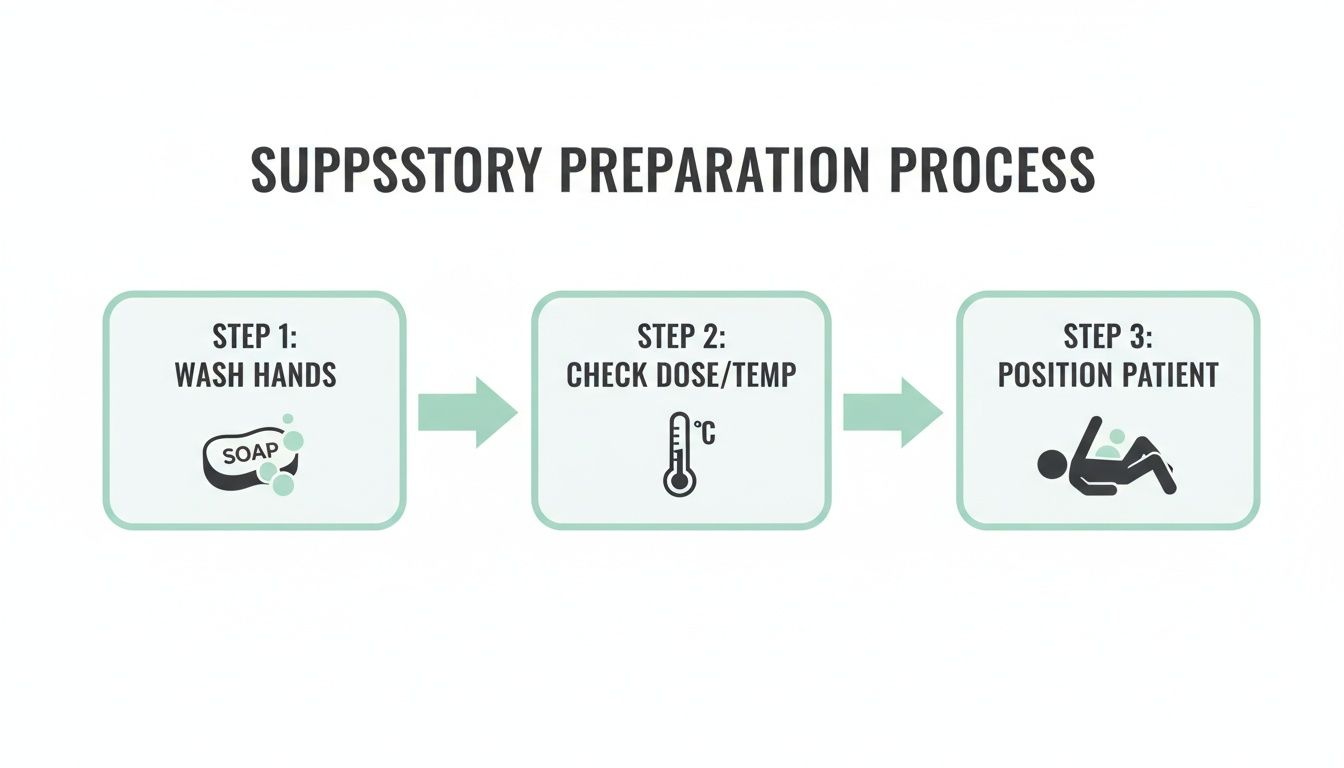
It’s a great visual reminder that success starts with good hygiene, checking the suppository's firmness, and getting into the right position.
The Insertion Process
Okay, you're in position and ready to go. This part is quick, but the key is to be gentle.
- Relax. Take a deep breath and consciously try to relax your buttock and anal muscles. It's natural to tense up, but that will make things more difficult.
- Position. Hold the suppository between your thumb and index finger, with the rounded end ready to go in first.
- Insert. Using your other hand, gently separate your buttocks. Then, gently but firmly, push the suppository into your rectum about one inch deep. You'll know it's in far enough when you don't feel it trying to slip back out.
Once it's in the right spot, you shouldn't really feel the suppository at all. This whole approach lines up with established clinical guidance. For more clinical details, check out this guide on hemorrhoid treatment options. The actual insertion should take less than a minute.
What to Do After Insertion for Maximum Effectiveness

You’ve inserted the suppository, but you're not quite finished yet. What you do in the next 15 minutes is crucial for getting the full benefit of the medication. The goal is simple: keep it inside long enough to melt and get to work.
The easiest way to do this is to just stay lying down in the same position you used for insertion. Give it at least 15 minutes. This quiet time allows your body heat to dissolve the suppository.
Keeping the Suppository in Place
Right after you’re done, you can gently clench your buttock muscles for a few seconds. It’s a simple trick that helps hold the suppository securely in place. It’s normal to feel the urge to have a bowel movement, but try to resist that feeling. Wait at least an hour before you use the toilet.
Resisting the urge for a bowel movement for that first hour is one of the most important steps. If you go too soon, you’ll likely expel most of the medication, making it far less effective.
What to Expect After Application
After that initial 15-minute wait, you can get up and go about your day. A small amount of waxy residue might leak out... this is perfectly normal. You might want to use a panty liner to protect your underwear.
Good after-care is also part of the healing process. Many people find extra relief by combining their suppository use with other treatments, like a warm soak. You can learn more in our guide on how to take a sitz bath for hemorrhoids. Following these simple post-insertion steps helps make sure you get the full benefit from each dose.
When to Expect Relief and When to See a Doctor
It’s important to have realistic expectations. Suppositories are designed to give you powerful, targeted relief from the worst of the symptoms... not an instant cure. They soothe pain, itching, and swelling from the inside out.
Timeline for Relief
So, when will you start feeling better? Thankfully, it’s usually quick. Most people feel at least some relief within the first 48 to 72 hours of using rectal treatments like suppositories. You can get more details from research on topical hemorrhoid treatments.
If your symptoms haven't gotten any better after three days, or if they’re still there after a full week, it’s time to check in with your doctor.
Red Flags: When to Call Your Doctor
While suppositories are generally safe, they aren't the right answer for every situation. You have to know when it’s time to call a professional.
Make a doctor's appointment if you notice:
- Persistent or Heavy Bleeding: Heavy bleeding, bleeding that won't stop, or dark blood needs to be checked out.
- Severe or Worsening Pain: If the pain gets worse or becomes unbearable, that’s a major red flag.
- A Hard Lump Near the Anus: This could be a thrombosed hemorrhoid, which almost always needs medical attention.
- No Improvement After One Week: If you’ve used a suppository for a week and aren’t feeling better, something else might be going on.
Knowing how to use a suppository for hemorrhoids is only half the battle. The other half is knowing its limits and when it's time to let a professional take over.
Safety Tips and Common Mistakes to Avoid
Learning how to use a suppository for hemorrhoids the right way is half the battle. Just as important is knowing when to stop. The biggest rule of thumb? Pay close attention to how long you’re using them.
Most over-the-counter suppositories are only meant for short-term relief, typically for 7-14 days. Read more about official safety protocols for suppository use if you have concerns.
Common Pitfalls to Sidestep
Even with the best intentions, a few simple missteps can make your treatment less effective. Being aware of these common slip-ups is the secret to a smooth experience.
Here are a few things you’ll want to avoid:
- Using a Suppository Right Before a Bowel Movement: This is the most common mistake. You’ll lose the medication before it has a chance to absorb.
- Not Inserting It Deep Enough: The suppository needs to go about one inch past the muscular sphincter or it can easily slip back out.
- Improper Storage: Most suppositories need to be kept in a cool, dark place so they don't become too soft to insert.
- Forgetting to Wash Your Hands: It seems obvious, but it’s a critical hygiene step before and after handling the suppository.
Correct timing and technique are everything. Always try to use a suppository after a bowel movement for maximum effectiveness.
Choosing Your Treatment Wisely
It’s also crucial to pick the right tool for the job. Suppositories are designed for internal hemorrhoids. If your main symptoms are on the outside, a topical product often provides more direct relief. If you're not sure which is best, our comparison of hemorrhoidal cream versus ointment can help.
By avoiding these common mistakes and using the right product, you’ll be on the fast track to feeling better.
Your Questions Answered
That customer I mentioned earlier... the one who waited two weeks to use his suppositories? He called back a few days later to say he was feeling immensely better. The process was far easier than he imagined, and the relief was real. The biggest change wasn't just the reduction in pain; it was the confidence he gained in managing his own health. He knew what to do, how to do it, and that he didn’t have to suffer in silence. That is the ultimate takeaway.
What if the suppository comes out after I insert it?
If it slips out within a few minutes and is still clean, you can gently try to re-insert it. If it's been more than 15 minutes, it has likely started to absorb. Don't insert another one; just wait for your next scheduled dose.
Can I cut a suppository in half?
No, you should never cut a suppository unless your doctor specifically tells you to. The medication might not be evenly distributed, and cutting it can create sharp edges that cause irritation.
How do I know it's inserted correctly?
You'll know it's in the right spot when you can't feel it anymore. The goal is to get it about one inch past the anal opening. If you can still feel it after standing up, it might not be in far enough.
If your symptoms are on the outside, Revivol-XR® Advanced Hemorrhoid Cream provides temporary relief of pain, itching and burning (external use only). USA-made care, delivered discreetly to U.S. addresses. Find your solution at https://hemorrhoid.com.
idrather notsay
March 17, 2026
If you’re gonna have AI generate your pictures for you, you should look at it first. Oh my god, people, Nothing in this picture makes sense. When is there ever 50 on a clock, especially when you’re supposed to lay down for 15 minutes. Escher’s knees— are my legs supposed to be bent and up? What about this alien arm creeping up from underneath a body (with a wristband on). And finally does anyone know who zippers work? You’ve got half of a zipper pictured here but the pants aren’t open. Just why can’t you get a picture of a person lying down, leave out the stupid clock no one uses any more anyway. Just no. No on AI, and how can I trust anything on this website after seeing this picture?