How Long Do Pregnancy Hemorrhoids Last?

Most pregnancy hemorrhoids resolve within a few days to six weeks after delivery, provided postpartum constipation is managed. A smaller group still has symptoms for several months, so recovery is usually a phased process rather than a fixed expiration date.
You may be sitting carefully, avoiding the bathroom, and wondering whether the swelling, itching, or pain will follow you into new motherhood. That worry is understandable, especially when every bowel movement feels like it could restart the problem.
Pregnancy hemorrhoids usually improve as pelvic pressure falls and bowel movements become easier. The key is to support that process while watching for severe pain, persistent symptoms, or bleeding that needs medical attention.
Table of Contents
- The Real Timeline for Pregnancy Hemorrhoid Recovery
- Why Hemorrhoids Flare Up During Pregnancy and Labor
- What to Expect Week by Week After Delivery
- How Delivery Method Affects Your Healing Speed
- Safe At-Home Measures for Soothing Postpartum Relief
- When Lingering Symptoms Mean It Is Time to See a Doctor
- Common Questions About Postpartum Hemorrhoid Care
The Real Timeline for Pregnancy Hemorrhoid Recovery
A new mother may feel a sharp flare during the first days after birth, then notice that sitting and bowel movements gradually become less uncomfortable. That pattern is common. A major NIH clinical review of postpartum hemorrhoids notes that most symptoms resolve spontaneously soon after birth, while an American College of Gastroenterology review reports that most hemorrhoids resolve within 6 weeks after delivery.
Recovery can happen in stages:
- First days: Swelling and tenderness may still be prominent, particularly after labor.
- First few weeks: Many people notice steady improvement as pelvic pressure normalizes and stools soften.
- By about 6 weeks: Most pregnancy-related hemorrhoids have resolved or improved substantially.
- Beyond that window: Persistent symptoms deserve more attention rather than indefinite self-treatment.
The NIH review summarizes a postpartum cohort in which 45% of patients' symptoms resolved within days, 27% within weeks, and 28% within months. It also reports that 16% still had symptoms at 6 months, confirming that lingering cases exist, although they're a minority.
Your recovery may not match someone else's. Hard stools, repeated straining, pelvic floor tension, and irritation from wiping can keep symptoms active even after pregnancy itself has ended. If you have severe pain, significant bleeding, worsening swelling, fever, or symptoms that concern you, contact your healthcare provider.
Why Hemorrhoids Flare Up During Pregnancy and Labor
Pregnancy hemorrhoids usually follow a pressure-and-constipation pattern. Rising progesterone slows gut motility, prenatal iron can make constipation worse, and the enlarging uterus increases pressure in the abdomen and pelvic veins. Together, these changes encourage venous congestion in the anal cushions, especially when bowel movements require straining. This mechanism is described in an NIH review of anorectal disorders during pregnancy.
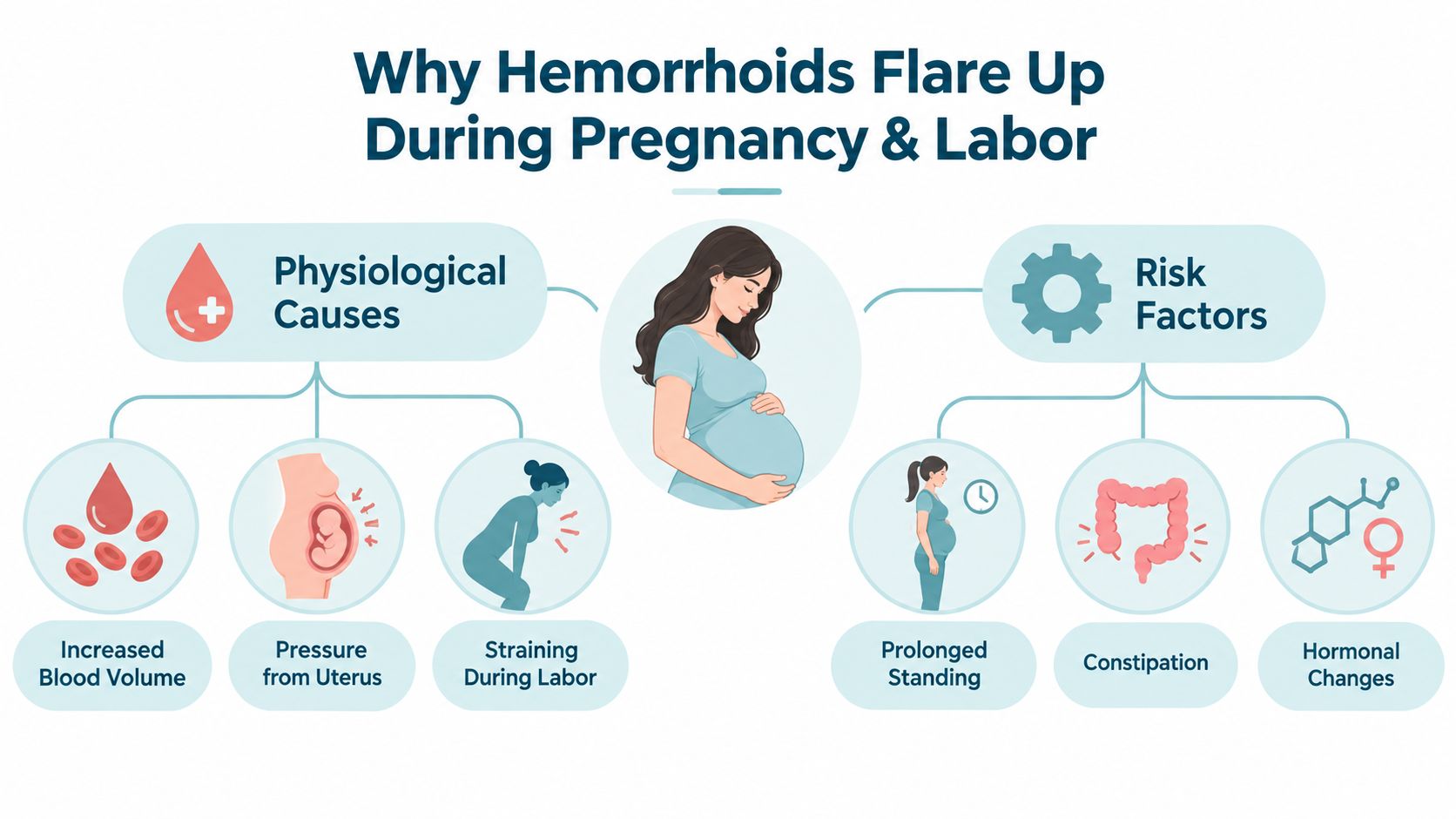
The third trimester often brings the greatest combination of pressure, slower digestion, and reduced comfort while moving. Labor can add intense pushing and pelvic strain. Symptoms may also flare during the first 1 to 2 days after birth, when the tissues are still recovering and bowel habits may be disrupted, as reported in a review of perianal diseases during pregnancy and after childbirth.
Pregnancy hemorrhoids aren't a sign that you've done something wrong. They're a physical response to changing circulation, digestion, and pressure. A prospective study of 280 women found that 123 women, or 43.9%, developed perianal disease. Of those cases, 61% appeared in the third trimester, 34.1% after delivery, and 3.3% remained at 1 month postpartum. The study identified hemorrhoids in 114 women, or 40.7%.
If you use a sitz bath for comfort, Revivol-XR® Sitz Bath Soak Mix contains Epsom salt as one of 20 listed natural and organic ingredients, including witch hazel, aloe vera, chamomile oil, calendula oil, and other botanical ingredients. It's for external use as a bath water additive only. Patch test first, avoid the eyes, and ask your healthcare provider before use if you're breastfeeding, have sensitive skin, or have ingredient allergies.
What to Expect Week by Week After Delivery
Postpartum recovery is easier to understand when you track direction rather than demand a perfect day. A little discomfort may remain while the overall trend moves toward less swelling, easier bowel movements, and longer periods of comfort.
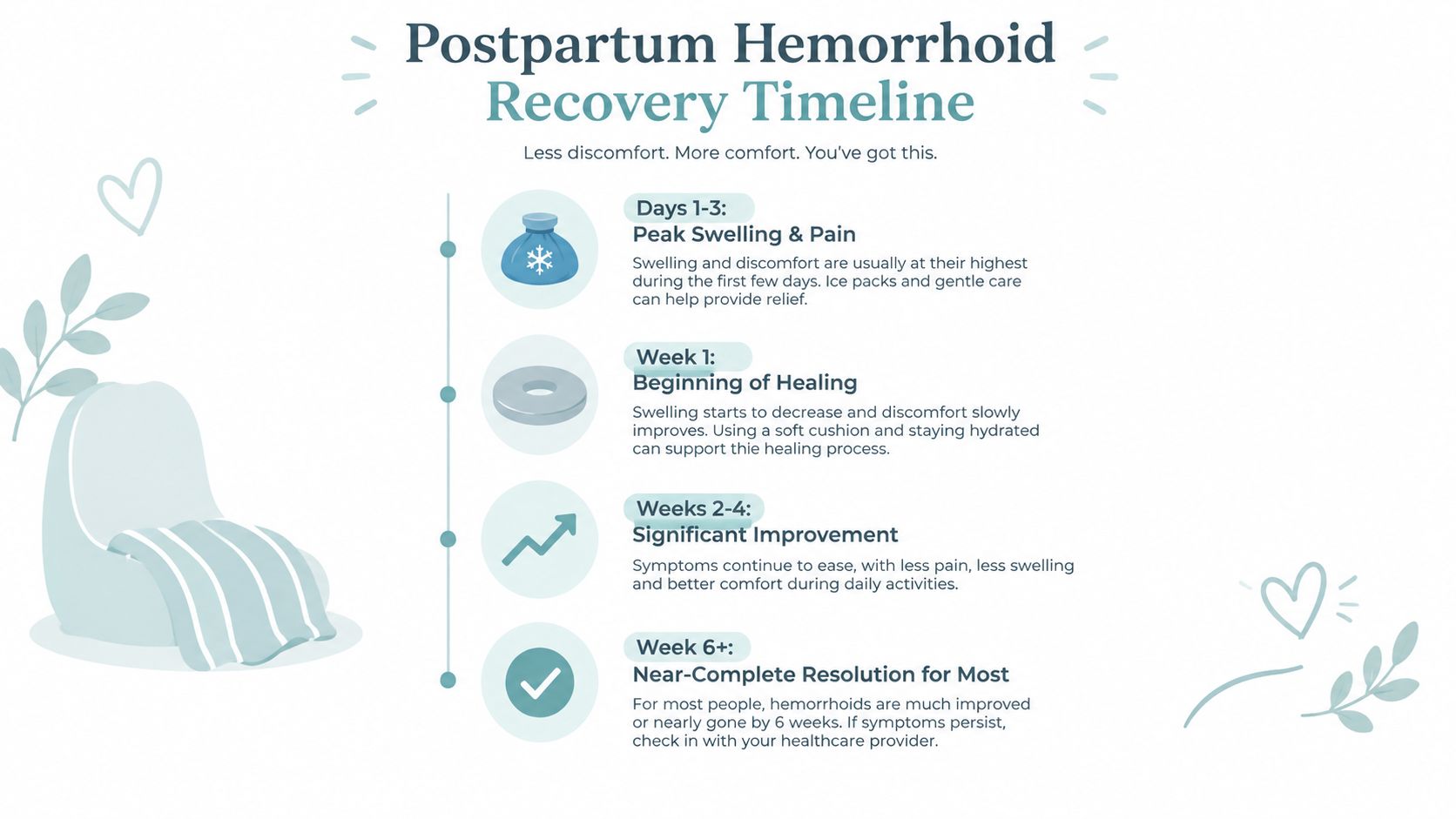
Days one through three
The first 1 to 3 days can bring peak tenderness or swelling, particularly after vaginal labor. Sitting, walking, and the first bowel movement may feel difficult. Use the comfort measures recommended by your maternity team, and avoid pushing when you're on the toilet.
The first bowel movement after birth guide can help you prepare for this sensitive milestone. If you're taking iron or pain medicine and stools become hard, ask your provider whether a stool-softening plan is appropriate.
Week one
During the first week, the tissues often begin to settle. You may still notice itching, pressure, or soreness, but repeated straining can interrupt progress. Keep fluids available, follow your provider's fiber guidance, and cleanse gently rather than scrubbing or wiping repeatedly.
For temporary discomfort, Revivol-XR® Advanced Hemorrhoid Cream contains 5% lidocaine for temporary pain, itching, burning, soreness, and discomfort relief, along with phenylephrine HCl 0.25%, glycerin, and petrolatum. Use it only as directed on the Drug Facts label. If you're pregnant or breastfeeding, ask a health professional before use. Stop and ask a doctor if bleeding occurs, symptoms worsen, or symptoms don't improve within 7 days.
Weeks two through six
The next several weeks are often when improvement becomes more noticeable. The American College of Gastroenterology review states that analgesics, sitz baths, and local anesthetic ointments are typically associated with resolution in 1 to 3 weeks, while most hemorrhoids resolve within 6 weeks.
Track the trend: A symptom that's gradually easing is different from one that's staying severe, worsening, or repeatedly returning after bowel movements.
How Delivery Method Affects Your Healing Speed
A vaginal delivery can create more immediate swelling because pushing places direct pressure on the pelvic floor and anal tissues. Some hemorrhoids may protrude or feel fuller after labor, then gradually retract as congestion decreases. That doesn't mean a vaginal birth guarantees a longer recovery, but the first postpartum days can feel more intense.
A Cesarean birth avoids the pushing trauma of vaginal delivery, yet it can create a different challenge. Surgical recovery, reduced movement, changes in diet, and pain medicines may contribute to constipation. If stools become hard or bowel movements require straining, hemorrhoid symptoms can continue even though the pregnancy-related uterine pressure has ended.
| Birth experience | Common source of postpartum irritation | What may prolong symptoms |
|---|---|---|
| Vaginal delivery | Pushing and pelvic pressure | Ongoing straining or swelling |
| Cesarean delivery | Constipation during recovery | Hard stools, limited movement, or medication effects |
The delivery method is only one part of the picture. Your bowel habits, hydration, fiber intake, pelvic floor comfort, and pain-control plan may matter just as much. A person who had a Cesarean can still have significant hemorrhoid discomfort, while someone who had a vaginal delivery may improve quickly.
If constipation starts after either type of birth, tell your maternity provider early. Don't stop prescribed medicine or change supplements without guidance. A simple adjustment to your postpartum bowel-care plan may be more useful than repeatedly applying topical products while the trigger continues.
Safe At-Home Measures for Soothing Postpartum Relief
Comfort care works best when it reduces irritation and prevents the next difficult bowel movement. Confirm medicines and topical products with your OB-GYN, midwife, or pharmacist, especially if you're breastfeeding.
Try these practical measures:
- Keep stools soft: Drink fluids according to your care team's advice and choose fiber-rich foods that you tolerate. Ask whether a stool softener or other bowel treatment is suitable for you.
- Avoid straining: Give yourself time, but don't sit on the toilet for long periods or force a bowel movement.
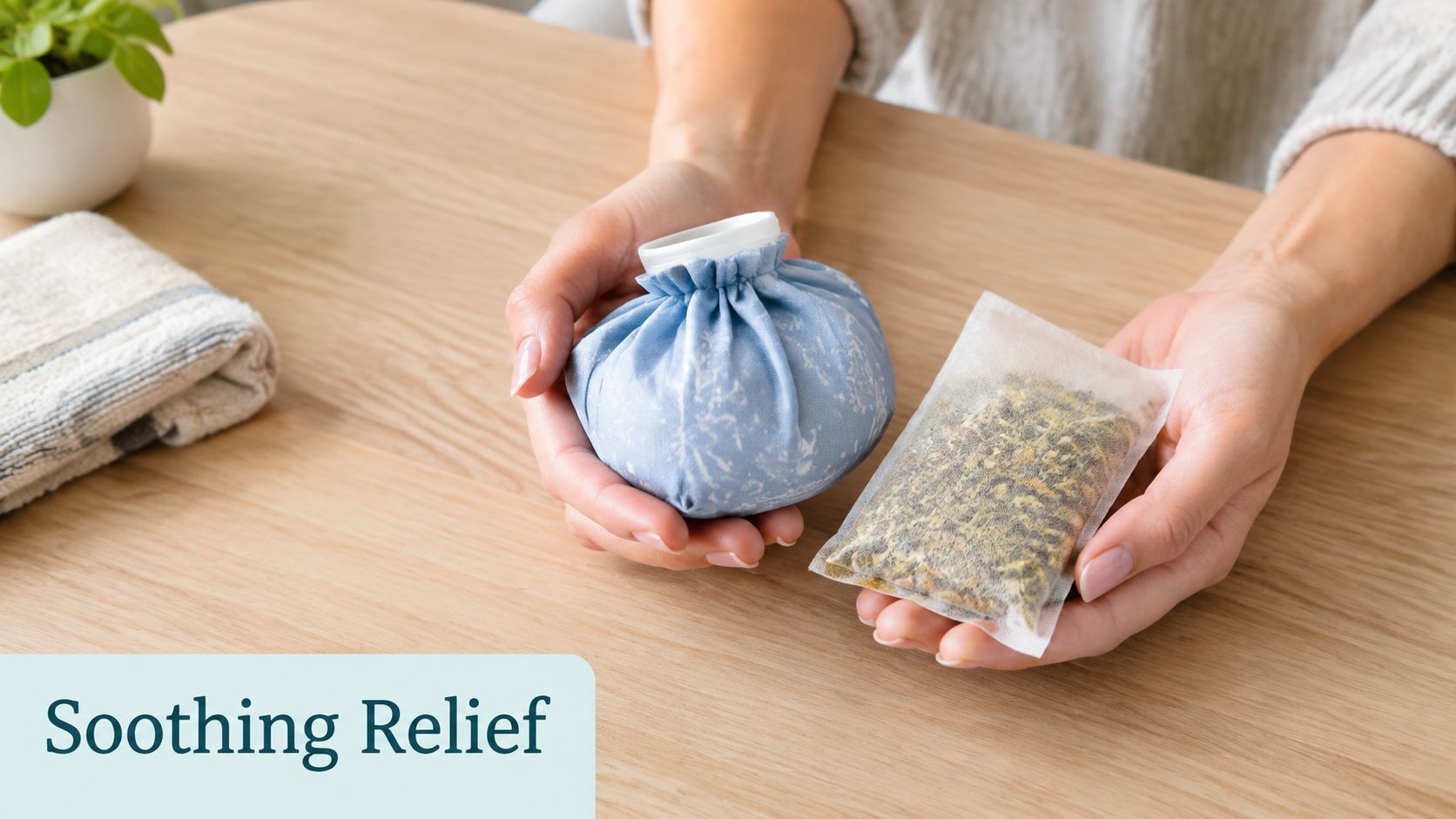
- Use gentle warmth: A comfortable sitz bath may soothe soreness. Follow the directions for any additive, and don't use very hot water. People with diabetes should ask a physician before using hot or warm baths.
- Cool the area: A wrapped cold pack may reduce the sensation of swelling. Don't place ice directly on skin.
- Clean without friction: Rinse gently with water or use a suitable cleansing lotion instead of repeated dry wiping. Pat the area dry.
- Ask before topical treatment: Witch hazel, lidocaine, and other ingredients may not be appropriate for everyone. Check the product label and ask a healthcare professional about breastfeeding compatibility.
You can find additional technique guidance in this postpartum sitz bath care guide. Relief products may soothe symptoms, but they don't replace evaluation when pain is severe, bleeding is present, or recovery is not progressing.
When Lingering Symptoms Mean It Is Time to See a Doctor
The phrase “pregnancy hemorrhoids” can become misleading after the early postpartum period. If discomfort continues through the 6 to 12 week window, constipation, pelvic floor strain, an anal fissure, or another anorectal problem may be contributing. Expert postpartum guidance increasingly treats symptoms beyond 12 weeks as a reason for formal assessment, rather than a reason to keep waiting.
A nationwide Taiwanese cohort study published in 2023 found that only 1.8% of pregnant patients required a procedure or surgery during pregnancy, showing that conservative care is usually enough during pregnancy. That finding doesn't mean persistent postpartum symptoms should be ignored. It means procedures are uncommon, while evaluation can still clarify what's causing ongoing pain.
Seek medical advice promptly if you have:
- Bleeding: Don't assume rectal bleeding is automatically from hemorrhoids.
- Severe or increasing pain: Especially if you can't sit, walk, or have a bowel movement comfortably.
- A persistent lump or prolapse: A clinician can determine whether tissue needs specific treatment.
- A possible fissure: Sharp, cutting pain during or after a bowel movement may need a different approach.
- No meaningful improvement: Use this guide to signs that hemorrhoid symptoms need medical attention.
Common Questions About Postpartum Hemorrhoid Care
Can I use a hemorrhoid cream while breastfeeding?
Ask your healthcare provider or pharmacist before using a cream while breastfeeding. Check the Drug Facts label, use only as directed, and stop if irritation develops. Lidocaine, phenylephrine, witch hazel, and botanical ingredients each deserve individual consideration based on your health and the product's instructions.
Can hemorrhoids permanently change pelvic floor function?
Hemorrhoids themselves don't automatically mean permanent pelvic floor damage. Persistent straining, constipation, pelvic floor tension, or unresolved postpartum injury can keep symptoms going, so ongoing discomfort deserves an assessment rather than assumptions.
How can I tell a fissure from a hemorrhoid?
A fissure often causes sharp or cutting pain during or after a bowel movement. Hemorrhoids may cause itching, pressure, swelling, soreness, or bleeding. Symptoms can overlap, so severe, persistent, or bleeding symptoms should be assessed by a healthcare provider.
What if symptoms are still present after six weeks?
Contact your provider, particularly if symptoms are unchanged, worsening, or still affecting bowel movements and daily activities. Recovery can extend beyond six weeks for some people, but continued symptoms shouldn't be managed indefinitely without clarification.
Revivol-XR offers topical options for temporary soothing relief and comfort, including lidocaine-based cream and sitz bath products for external use as directed. Visit Revivol-XR to review the product labels and choose a comfort-focused option to discuss with your healthcare provider.