Hemorrhoid Treatment for External: Real Relief 2026

Many don't realize that a small external hemorrhoid can turn an ordinary bathroom trip into hours of itching, pressure, and sharp pain.
You notice a tender lump while cleaning up, then spend the rest of the day sitting carefully and wondering whether you should touch it, treat it, or call a clinician. External hemorrhoids are common and often manageable, but relief usually comes from a layered routine rather than one miracle cream.
The practical order is simple: mechanics first, to reduce pressure and irritation; comfort second, to make daily life easier; and medical escalation third, so persistent, severe, or bleeding symptoms don't get ignored.
Table of Contents
- That Sudden Itch or Lump and What Comes Next
- What External Hemorrhoids Actually Are
- Home Care That Targets the Root Cause
- OTC Options and What Each One Does
- Applying Cream or Spray the Right Way
- When Home Care Stops Being Enough
- Your Daily Relief Plan and Common Questions
That Sudden Itch or Lump and What Comes Next
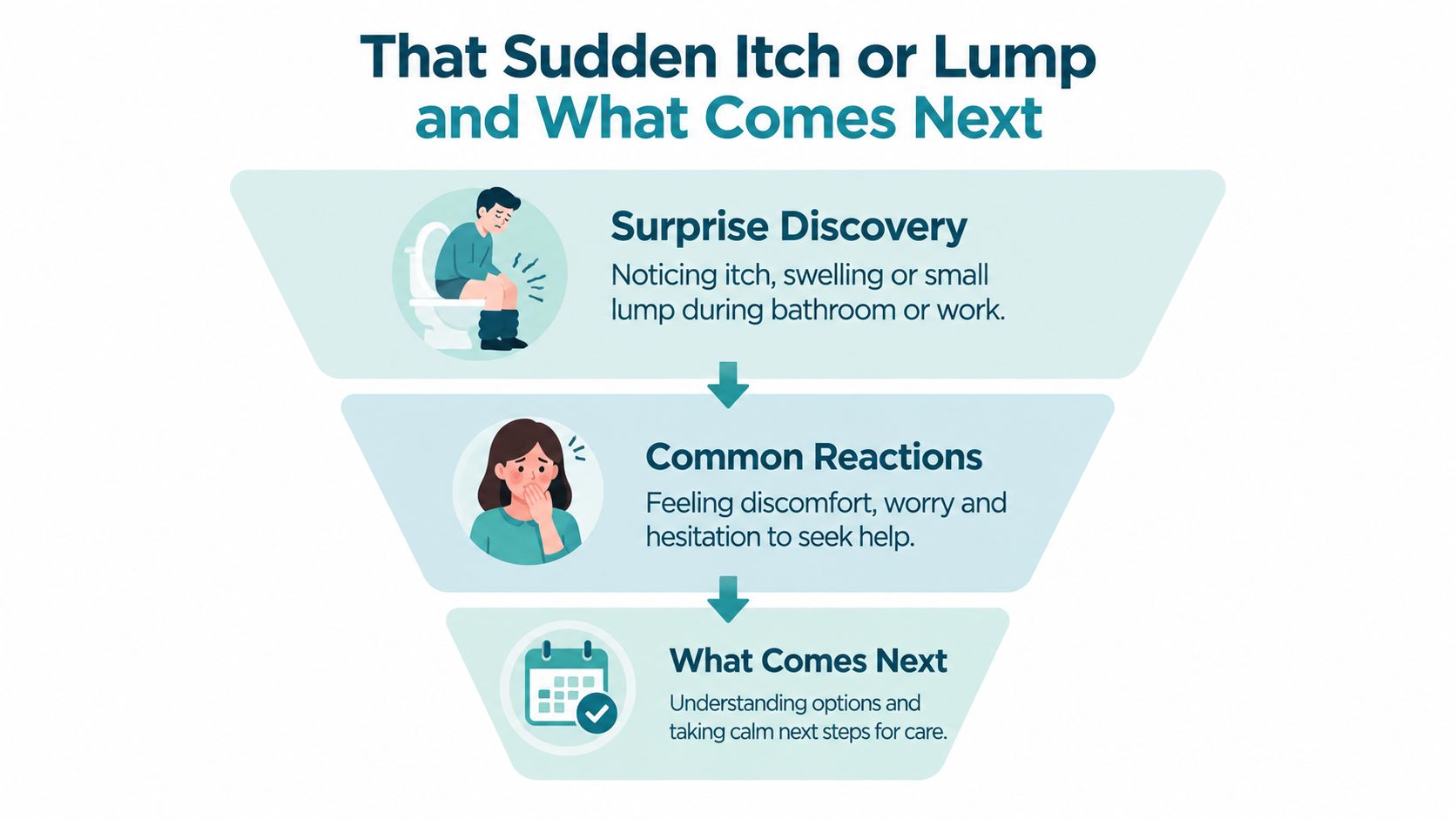
A person may discover an external hemorrhoid during a normal bathroom visit. Another may feel it after sitting through a long workday, shifting from one side to the other because the area feels swollen or sore. The first reaction is often a mix of surprise, embarrassment, and worry.
That reaction doesn't mean you're overreacting. External hemorrhoids can be painful because the skin around the anal opening contains many nerve fibers. A swollen area can make walking, sitting, wiping, and bowel movements feel much more uncomfortable than expected.
The first useful step isn't choosing a product. It's noticing what may be keeping the area irritated.
- Pressure: Straining, hard stool, and long toilet sessions can stress swollen tissue.
- Friction: Dry wiping, repeated cleaning, tight clothing, and prolonged sitting can aggravate sensitive skin.
- Symptoms: Pain, itching, burning, and swelling may need temporary comfort measures while the bowel routine improves.
- Escalation: Heavy bleeding, severe pain, a hard bluish lump, or symptoms that don't improve require medical attention.
A calm routine gives you a way to respond without repeatedly checking, squeezing, or scrubbing the area. You can also learn more about the typical sensations in this guide to what external hemorrhoids feel like.
Practical rule: Treat the cause you can change, soothe the symptoms you can manage, and get help when the pattern doesn't fit a minor flare-up.
What External Hemorrhoids Actually Are
External hemorrhoids are swollen veins beneath the skin around the anal opening. A useful comparison is a varicose vein in the leg. The vessel becomes enlarged, and the surrounding tissue feels stretched, tender, or irritated.
Straining during bowel movements can increase pressure in these vessels. Constipation, prolonged sitting, pregnancy, heavy lifting, and repeated irritation may all contribute to swelling. Chronic diarrhea can also keep the area exposed to frequent wiping and repeated bowel movements.
External hemorrhoids often hurt more than internal hemorrhoids because the outer skin is rich in nerves. When that skin stretches quickly, the result can be sharp pain, tenderness, itching, or burning. Minor friction can feel surprisingly intense when the tissue is already swollen.
A routine lump versus a thrombosed lump
A routine external hemorrhoid may feel like a soft or swollen bump. A thrombosed external hemorrhoid forms when a clot becomes trapped inside the swollen vessel. It may appear suddenly as a hard, dark, or bluish lump and can be intensely painful.
Timing matters with a thrombosed lump. A 2025 JAMA review states that outpatient clot evacuation within 72 hours of onset is associated with decreased pain and a reduced risk of repeat thrombosis. That doesn't mean every lump needs a procedure, but it does mean early medical advice can matter when pain is severe and the lump appeared suddenly.
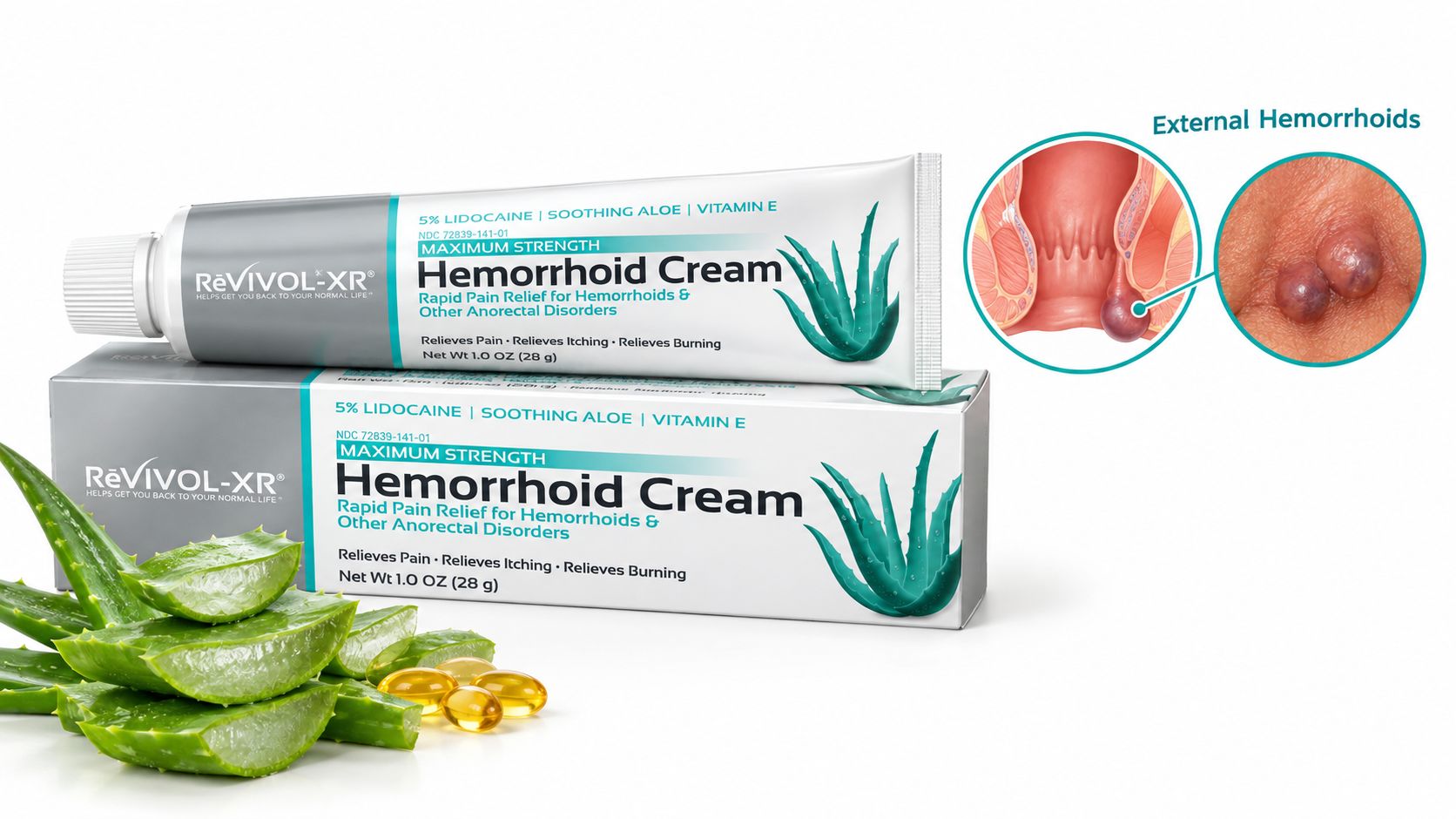
For temporary external symptom comfort, Revivol-XR 5% Lidocaine Numbing Cream contains 5% lidocaine with aloe and vitamin E. It's intended for external use only, and the product directions say to apply a thin layer up to 6 times daily, especially after bowel movements and before bedtime. Follow the label, and ask a healthcare professional before use if you're pregnant or breastfeeding.
Home Care That Targets the Root Cause
External hemorrhoid care works better when bowel movements create less pressure and friction. The aim isn't to force a swollen area to disappear immediately. It's to make each bathroom visit less traumatic while the tissue settles.
Start with warmth and gentle cleaning
Mayo Clinic recommends soaking the anal area in plain warm water for 10 to 15 minutes, two or three times a day Mayo Clinic hemorrhoid treatment guidance. Use comfortably warm water, not scalding water. Afterward, rinse gently if needed and pat the skin dry.
Avoid aggressive wiping, fragranced soaps, and scrubbing. A soft rinse usually creates less friction than repeated dry toilet paper. If you use a bath additive, read the ingredients and warnings carefully. For example, Revivol-XR Sitz Bath Soak Mix contains Epsom salt among a blend of botanical and oil ingredients, and its label advises external use, a patch test, and caution for people with sensitive skin or essential-oil allergies.
Make stool easier to pass
Fiber and fluid work together. First-line conservative care includes a high-fiber diet or fiber supplementation, increased water intake, stool softeners, and warm sitz baths to reduce hard stool and straining.
Choose foods such as fruit, vegetables, oats, or psyllium. Increase fiber gradually if your current diet is low in it, and pair it with adequate fluids. Bulky stool without enough fluid can feel difficult to pass.
Change the bathroom mechanics
Don't sit on the toilet longer than necessary, and avoid pushing when stool isn't ready to pass. Keep your phone outside the bathroom if it encourages you to linger. Short walks and breaks from a desk can also reduce the long, uninterrupted pressure that makes sitting uncomfortable.
For a practical guide to reducing force during bowel movements, see how to avoid straining during bowel movements.
OTC Options and What Each One Does
Over-the-counter products aren't interchangeable. Each category targets a different part of the discomfort, so the label should match your dominant symptom.
| Category | Primary Job | Symptom It Targets | Common Active Ingredients |
|---|---|---|---|
| Topical anesthetic | Temporarily numbs local sensation | Sharp pain, burning, itching | Lidocaine |
| Vasoconstrictor | Temporarily narrows swollen tissue | Swelling and fullness | Phenylephrine |
| Skin protectant | Coats and shields irritated skin | Rawness, moisture, friction | Zinc oxide, petrolatum, glycerin |
| Astringent | Provides cooling and tightening comfort | Itching, burning, irritation | Witch hazel |
A topical anesthetic can make pain feel less prominent, but it doesn't correct hard stool or straining. A vasoconstrictor is aimed at temporary swelling relief. A protectant creates a barrier, which may be useful when moisture and rubbing are making the outer skin feel raw.
Witch hazel is an astringent commonly used for cooling and soothing external irritation. Some people prefer pads, while others find a liquid or lotion easier to apply without repeated wiping.
Use products only as directed. Don't combine multiple products with overlapping active ingredients unless a pharmacist or clinician tells you it's appropriate. For a broader review of labels and categories, use this guide to over-the-counter hemorrhoid treatments.
Applying Cream or Spray the Right Way
A cream can be useful and still disappoint if it's applied to damp, irritated skin and wiped away moments later. Technique matters because the goal is to leave a thin layer on the affected external skin without adding more friction.
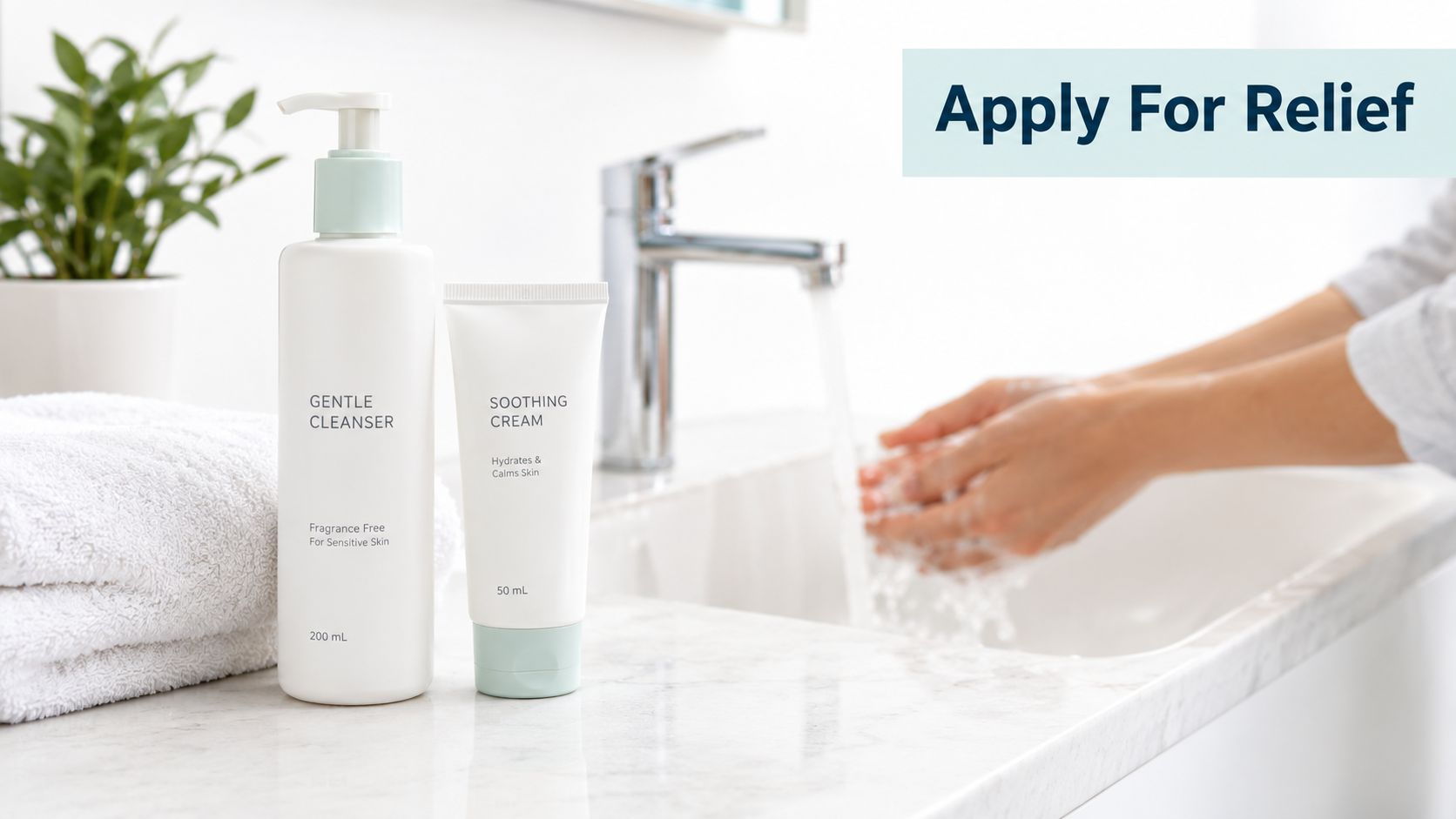
A simple application routine
- Clean gently: Rinse with warm water or use a mild, fragrance-free cleanser. Don't scrub.
- Pat dry: Press with soft toilet paper or a clean towel. Rubbing can increase irritation.
- Wash your hands: Do this before and after applying any product.
- Use a thin layer: For an ointment or cream, a small amount is usually enough. Avoid covering the area heavily.
- Keep external products external: Don't insert a cream, finger, or applicator into the rectum unless the product label specifically directs that use.
- Time the application: Applying after a bowel movement and after a warm soak may help the product remain in place longer.
- Stop if irritation develops: Burning, redness, swelling, or worsening pain can signal sensitivity.
Revivol-XR Hygienic Cleansing Lotion is described as an external cleansing lotion containing aloe, vitamin E, witch hazel, and chamomile. Its directions describe applying a dime-sized amount to toilet paper for cleansing, followed by external use only.
If you use a spray, follow its label and use brief sprays rather than soaking the skin. A protectant may be layered only when the labels are compatible and the first product has had time to settle.
Here is a demonstration of gentle external cleansing and application technique:
Temporary comfort is useful, but it shouldn't hide a worsening pattern. Product labels commonly advise stopping and seeking medical advice if symptoms persist, worsen, or bleeding occurs.
When Home Care Stops Being Enough
Home care can calm a flare, but symptom relief isn't the same as identifying the cause. If constipation, diarrhea, straining, or prolonged toilet sitting continues, the same mechanical stress can trigger another episode.
Recurrence is common with conservative care. StatPearls reports recurrence in more than 50% of patients after conservative management, while recurrence after surgery is reported as less than 5% to 10% in its summary of external hemorrhoid treatment evidence StatPearls external hemorrhoids overview. In a 2004 clinical outcomes study, recurrence was 25.4% with conservative treatment compared with 6.3% after surgery, and mean time to recurrence was 7.1 months versus 25 months, respectively, according to the same reference.
Seek prompt or urgent evaluation when
- Pain is severe or escalating: Especially when a hard, bluish, tender lump appeared suddenly.
- Bleeding is heavy or persistent: Constant bleeding, heavy bleeding, blood clots, or more than a few drops deserve medical evaluation.
- The lump feels unusual: A hard, irregular, or non shrinking lump shouldn't be assumed to be a hemorrhoid.
- Symptoms continue: Symptoms not improving after about a week should prompt medical advice, as cited in red-flag guidance for hemorrhoids.
- You have possible infection signs: Fever, spreading redness, drainage, or rapidly worsening swelling needs prompt attention.
- Flare-ups keep returning: Repeated episodes that interfere with work, sleep, exercise, or bowel movements may need a fuller evaluation.
A clinician may discuss prescription topical treatment or a procedure. For a thrombosed external hemorrhoid, early excision or clot evacuation can provide faster symptom resolution and lower recurrence than conservative care, while surgery decisions depend on timing, severity, and your overall situation.
Your Daily Relief Plan and Common Questions
A layered routine is easier to follow when attached to ordinary parts of the day.
Morning: After the first bowel movement, rinse gently, pat dry, and apply an appropriate external product according to its label. Drink water and include a fiber-containing breakfast.
Midday: Take short movement breaks instead of remaining seated for long stretches. Keep bathroom visits focused, and don't strain when stool isn't ready.
Evening: Use a warm sitz bath, dry carefully, and reassess the trend. Improvement means less pain, less swelling, easier bowel movements, and fewer interruptions to daily activities.
Common questions
How long does an external hemorrhoid take to settle?
The timeline varies. Many cases improve with conservative care, but a painful thrombosed lump can require early clinical assessment, especially when it began suddenly.
Can I pop or drain a thrombosed hemorrhoid at home?
No. Don't squeeze, puncture, or cut it. Doing so can cause bleeding, infection, and additional tissue injury. Ask a clinician about safe options.
Does exercise help or hurt?
Gentle movement can be more comfortable than long sitting. Avoid activities that sharply increase pain or pressure until symptoms have eased.
Should I keep using cream if symptoms aren't improving?
Don't keep extending self-treatment without advice. If symptoms worsen, bleeding occurs, or improvement hasn't started after about a week, contact a healthcare provider.
What symptoms need same-day care?
Severe pain, heavy or constant rectal bleeding, blood clots, or a hard bluish lump are reasons to seek prompt medical evaluation. Pregnant and postpartum readers should ask their healthcare provider or pharmacist before using medication, and surgery is generally delayed until after delivery unless there is acute thrombosis, based on pregnancy-specific guidance summarized in this clinical review.
The most durable habit is the least dramatic one: make bowel movements easier, reduce friction, use comfort measures carefully, and don't wait through warning signs.
Revivol-XR offers external comfort options such as lidocaine-based temporary numbing relief, gentle cleansing support, and a sitz bath soak for a layered hemorrhoid-care routine. Visit Revivol-XR to review the products and choose the option that fits your symptoms, while contacting a healthcare provider for persistent, severe, or bleeding symptoms.