Hemorrhoid Relief Natural: Proven Home Remedies

Many don't realize that the “natural” hemorrhoid remedy they reach for first may soothe the surface while constipation keeps recreating the problem underneath.
A sting during a bowel movement, a tender lump after lifting, or swelling during the first days after childbirth can make a private problem feel urgent and embarrassing. This guide puts hemorrhoid relief natural strategies in the right order: soften stool and reduce straining first, then calm irritated tissue, then add carefully selected OTC comfort measures when needed.
Table of Contents
- The Moment You Just Want It to Stop
- What Natural Hemorrhoid Remedies Actually Do
- Fiber and Hydration as the Foundation
- How to Run a Sitz Bath That Actually Works
- Witch Hazel, Aloe, and Topical Protectants
- Adding OTC Relief Without Overdoing It
- Safety Notes Most Natural Guides Skip
- Your One Page Natural Relief Routine
The Moment You Just Want It to Stop
Hemorrhoids often announce themselves at the least convenient time. You may notice burning when you wipe, an ache after sitting through a long shift, or a lump that feels more noticeable after using the toilet. After delivery, swelling and soreness can make an already demanding recovery even harder.
That embarrassment is common, but it shouldn't stop you from getting practical information. Hemorrhoids and anal fissures occur in about 40% of pregnant and postpartum women, with the highest occurrence in the third trimester and during the first or second day after delivery, according to a 2022 pregnancy and postpartum review.
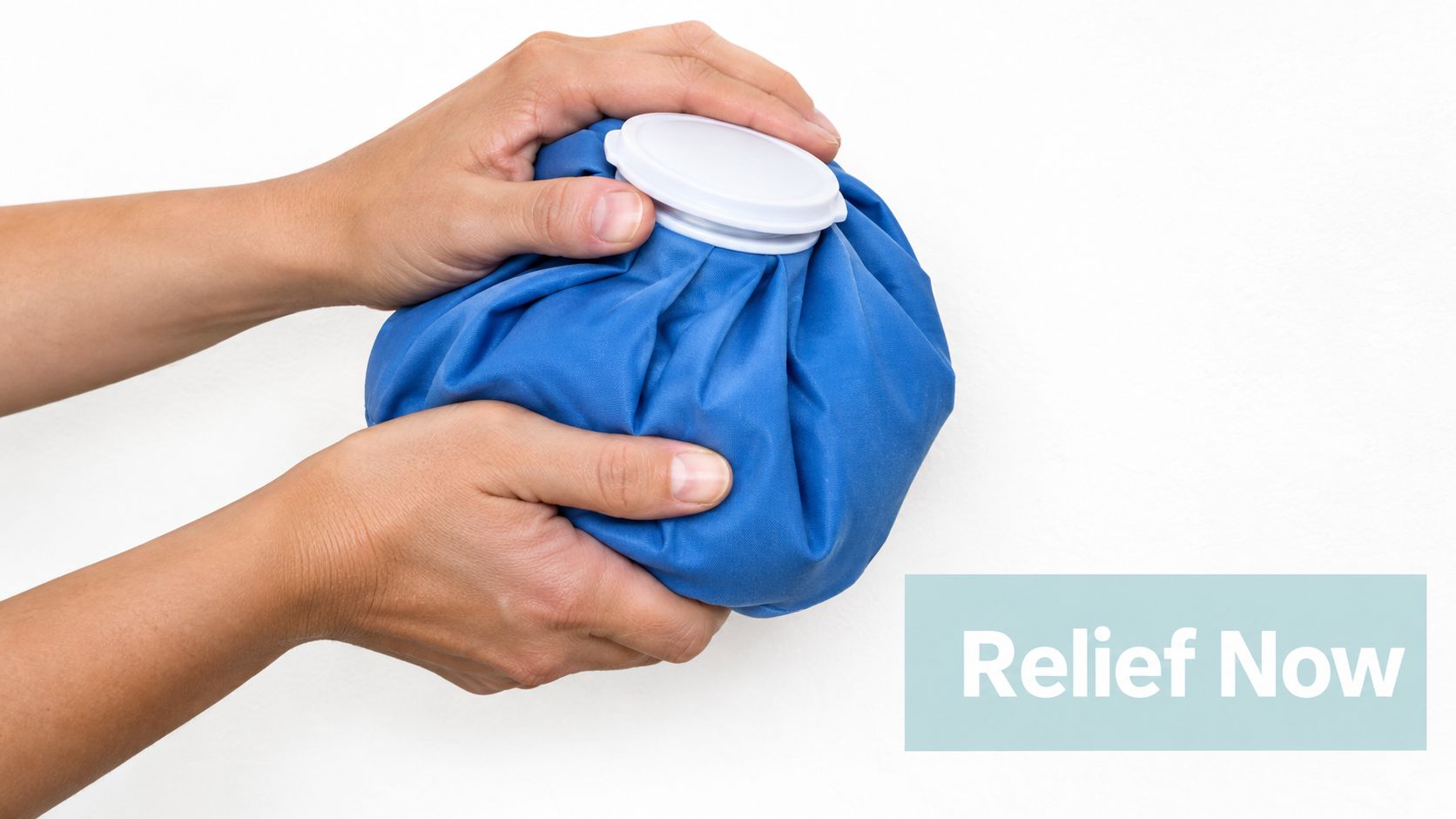
A cold pack can temporarily quiet swelling, but it isn't the whole plan. The most useful routine is layered: make bowel movements easier, use warm water to relax the area, cleanse without friction, and choose a topical product for the symptom that bothers you most.
The practical takeaway: Natural relief works best as a routine of small, repeatable actions, not as one miracle ingredient.
Pregnancy-focused literature describes hemorrhoids as a frequent, life-stage-linked concern. One review estimates hemorrhoidal disease during pregnancy at 24% to 35%, with some studies reaching an 85% peak in the second and third trimesters. An American College of Gastroenterology review also discusses studies reporting 86% prevalence during pregnancy and another cohort in which 40.7% developed hemorrhoids or perianal disease across pregnancy and postpartum. These figures are summarized in the pregnancy-focused clinical review.
What Natural Hemorrhoid Remedies Actually Do
The word “natural” groups together remedies that do very different jobs. A sitz bath can relax the anal sphincter and ease pain. Fiber changes stool consistency, which can reduce the pressure and straining that keep symptoms going. Witch hazel and aloe are mainly comfort measures for irritated external skin.
A colorectal review reports that fiber supplementation reduces bleeding and persistent hemorrhoid symptoms by around 50%, making stool-softening one of the strongest nonprescription approaches in this group. A randomized trial in pregnant Saudi Arabian women also compared sitz baths with ano-rectal cream, reporting complete healing in 100% of the sitz-bath group versus 84.8% in the cream group. The trial is available through PubMed's summary of the pregnancy sitz-bath study.
| Remedy | Main job | Best for | Typical timeline |
|---|---|---|---|
| Warm sitz bath | Relaxes the anal sphincter and eases local discomfort | Aching, spasm, soreness after a bowel movement | Temporary comfort during and after the soak |
| Witch hazel | Provides astringent, cooling comfort to external tissue | Itching, irritation, dampness | Short-term symptom relief |
| Pure aloe | Soothes and moisturizes irritated skin | Burning and surface dryness | Comfort while applied, if tolerated |
| Fiber | Makes stool softer and easier to pass | Constipation, straining, recurrent irritation | Builds over several bowel movements |
| Fluids | Helps fiber work and supports softer stool | Hard or dry stool | Depends on the rest of the diet and routine |
| Protectants | Coat skin against friction and stool contact | Raw external skin and chafing | Protection while the coating remains |
Topicals shouldn't be asked to solve a stool problem. If every bowel movement is hard, witch hazel may make the area feel calmer, but the mechanical irritation can continue.
For gentle external cleansing, Revivol-XR® Hygienic Cleansing Lotion uses aloe leaf extract, coconut, chamomile, and witch hazel, and its product directions describe applying a dime-sized amount to toilet paper for an external cleansing wipe. It's labeled for external use only, and sensitive users should avoid eye contact and stop if irritation develops.
Fiber and Hydration as the Foundation
The most evidence-backed natural step begins in the kitchen, not the medicine cabinet. Constipation and straining increase irritation, so the target is a soft, formed stool that passes without force.
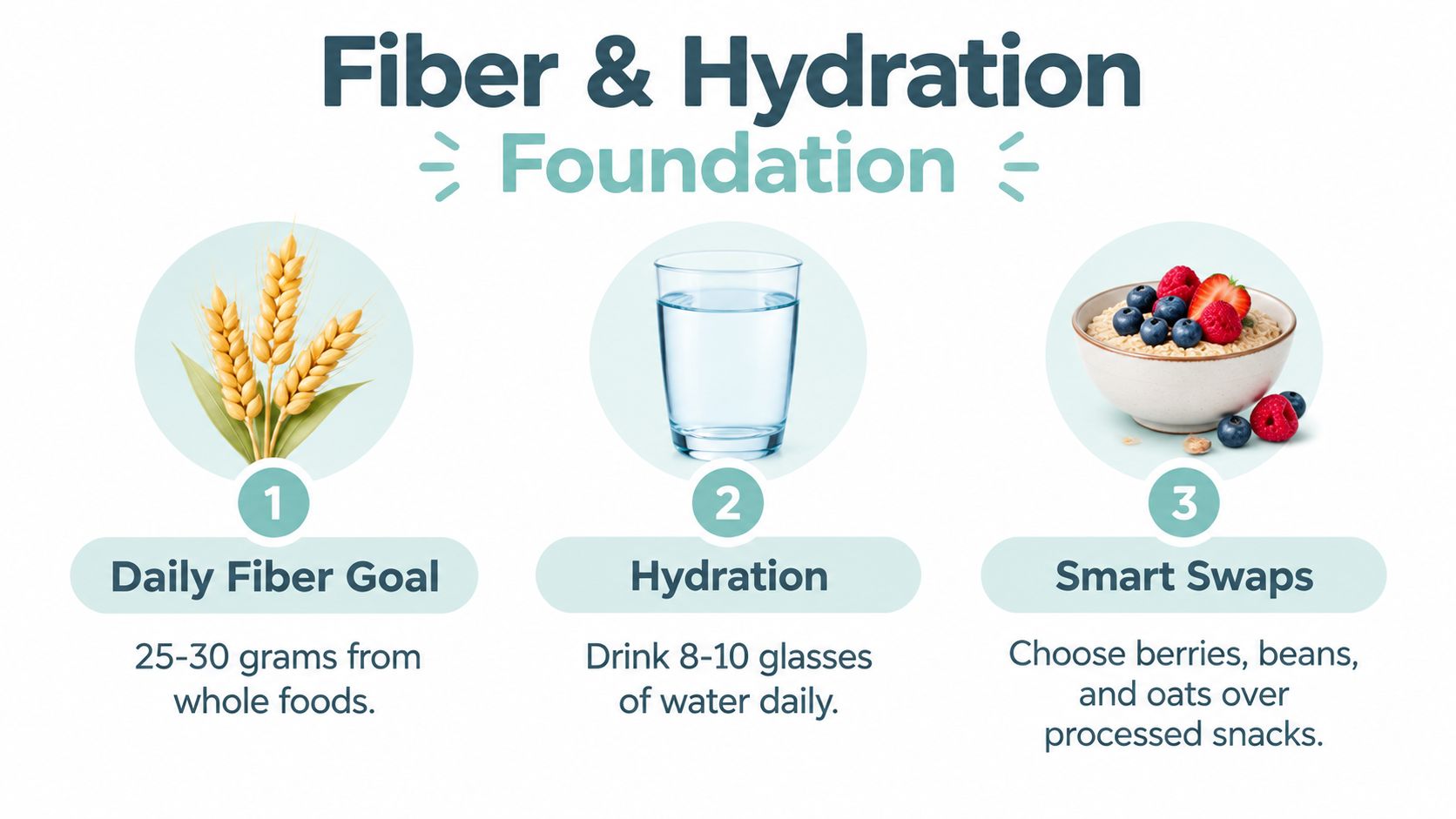
A practical grocery-based approach is to work toward 25 to 30 grams of fiber daily from foods such as beans, berries, vegetables, oats, and whole grains. Those targets are included in the required visual below, while clinical guidance from the NHS on hemorrhoid treatment during pregnancy supports adequate dietary fiber and plenty of water to reduce straining.
Build slowly, then adjust
If your current diet is low in fiber, increase it gradually. Start with an oat-based breakfast, add fruit to a snack, and replace a processed side with beans or vegetables. A sudden jump can cause bloating or gas, so let your digestion adapt rather than forcing a large change immediately.
Soluble fiber, including psyllium and oats, draws water into stool and can make passage easier. Insoluble fiber, found in foods such as vegetables and wheat bran, adds bulk. Both can fit into a balanced plan, but fiber needs fluid to work well.
This guide to psyllium husk for hemorrhoids can help you compare a food-first approach with a fiber supplement.
A simple two-week routine
During the first week, add one fiber-rich food to each main meal and keep a water bottle nearby. Avoid pushing or sitting on the toilet longer than necessary. During the second week, maintain the food pattern and assess the stool itself. If it remains hard, a pharmacist or healthcare provider can help you decide whether a stool softener is appropriate.
The goal isn't a perfect diet. It's a bowel movement that doesn't require holding your breath, forcing, or repeated wiping.
How to Run a Sitz Bath That Actually Works
A sitz bath is simple, but technique matters. Use warm, not hot, water and soak the anorectal area for about 10 to 15 minutes. Pregnancy guidance describes this duration for pain relief, while a colorectal review discusses warm bathing at 40 to 50°C for 10 minutes as a way to relax the anal sphincter and reduce local discomfort. See the colorectal review of conservative hemorrhoid care.
Keep the routine gentle
Use a clean bathtub or sitz-bath basin. Plain warm water is enough. If you add Epsom salt or witch hazel, use only a product intended for bath use and follow its label. Don't add undiluted essential oils, harsh soap, or fragrance to already irritated tissue.
Soak after a bowel movement when possible, then pat dry rather than rubbing. A warm bath before bed can also ease the ache that builds during the day.
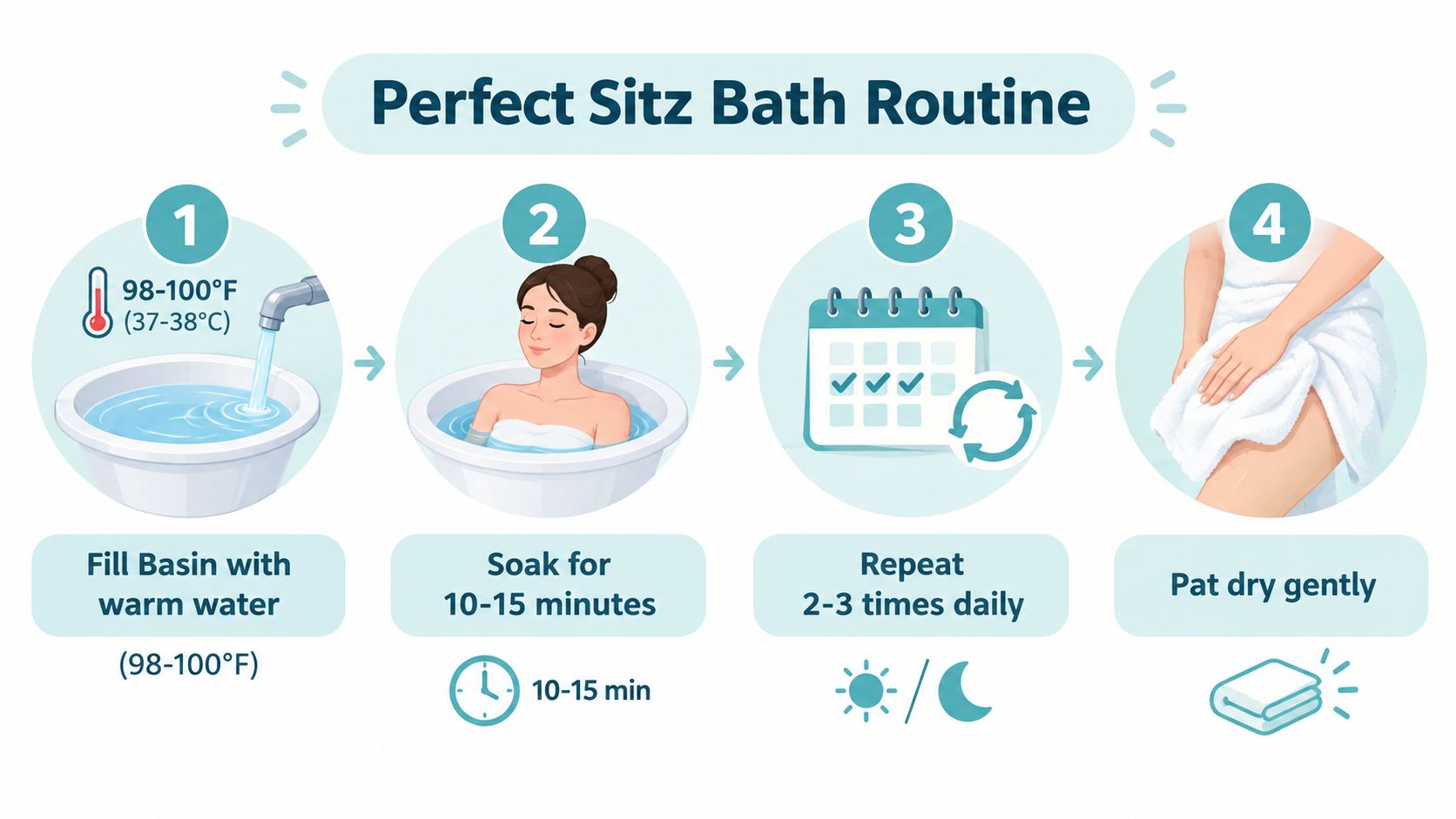
A straightforward schedule is a morning soak if symptoms are present, another after a bowel movement, and an evening soak if soreness returns. The sitz bath guide for home use covers setup and positioning.
A product such as Revivol-XR® Sitz Bath Soak Mix contains Epsom salt among a blend of salts, aloe, witch hazel, and essential oils. It's intended as a bath-water additive for external use only. Patch test first, avoid swallowing it, and ask a healthcare provider before use during pregnancy, with sensitive skin, or with essential-oil allergies.
Witch Hazel, Aloe, and Topical Protectants
Once the area is clean, topicals can reduce the volume of itching and burning for a while. Witch hazel is an astringent used in anorectal products, while aloe may provide a cooling, moisturizing feel. Neither replaces fiber and fluids when hard stool is driving repeated irritation.
FDA OTC anorectal labeling permits witch hazel at 10% to 50% and allows application up to 6 times daily or after each bowel movement, depending on the product label. Check the actual package, because formulations and directions differ.
Use a simple daytime order
- Clean gently: Rinse with warm water or use a fragrance-free cleansing method. Avoid scrubbing.
- Apply witch hazel: Use a labeled pad or liquid on external tissue. Stop if it stings or dries the skin.
- Add aloe if tolerated: Use pure aloe intended for skin, without alcohol or fragrance.
- Seal the surface: A petrolatum or glycerin-based protectant can reduce friction and contact with stool.
The aloe guidance for hemorrhoid comfort offers a useful ingredient-focused reference.
During a workday, cleanse after a bowel movement, apply witch hazel once the area is dry, and use a protectant later if friction continues. Don't stack multiple products that contain the same active ingredient, and don't keep applying a product that causes increasing redness, burning, or swelling.
Adding OTC Relief Without Overdoing It
Natural care and OTC care can occupy different roles. Lidocaine temporarily numbs localized pain, itching, and burning. Phenylephrine is a vasoconstrictor used in some anorectal products to temporarily shrink swollen hemorrhoidal tissue. Protectants coat irritated skin.
A DailyMed hemorrhoid product containing lidocaine HCl 5%, phenylephrine HCl 0.25%, and witch hazel 50% is labeled for temporary shrinking, swelling and irritation reduction, and protection of irritated anorectal areas. Its directions state application up to 4 times daily, especially at night, in the morning, or after a bowel movement. The label also says to stop if bleeding occurs, symptoms worsen, or symptoms last more than 7 days, as shown in the DailyMed product information.
For a separate lidocaine option, Revivol-XR 5% Lidocaine Numbing Cream is labeled for external use and temporary relief of pain, itching, and burning, with directions allowing application up to 6 times daily. Follow the product label, don't exceed its dose, and ask a healthcare provider before use if pregnant or breastfeeding.
A discreet evening sequence
Take a warm sitz bath, pat dry, and wait until the skin is dry. Apply witch hazel only if your skin tolerates it, then use a thin layer of lidocaine according to its label. A protectant can be used separately if the product directions allow it.
These products are symptom tools, not a reason to continue home treatment indefinitely. Stop and contact a healthcare provider if rectal bleeding appears, symptoms worsen, or there's no improvement within seven days.
Safety Notes Most Natural Guides Skip
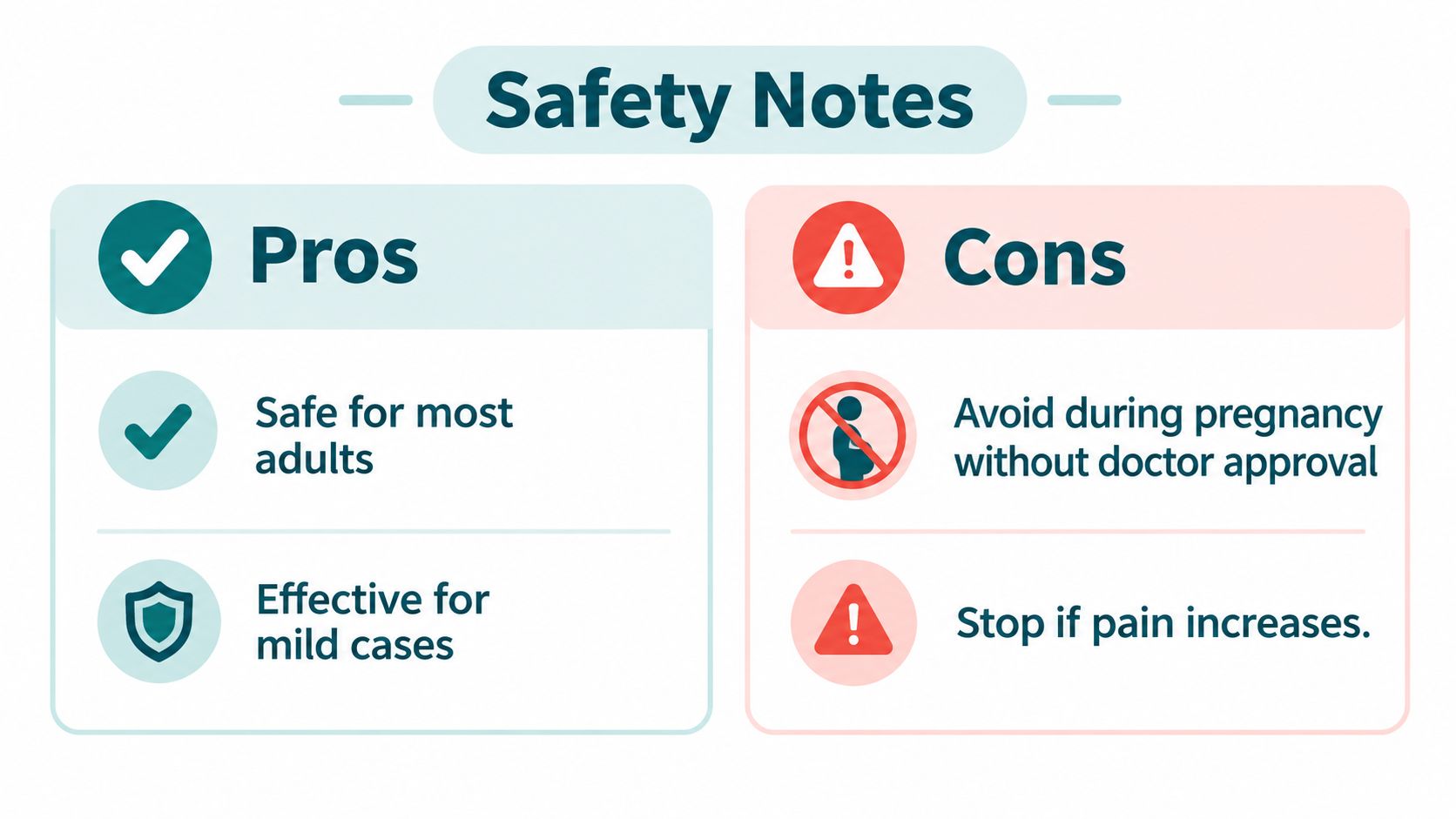
“Natural” doesn't automatically mean gentle. Essential oils can irritate broken skin, ice can injure skin when placed directly against it, and herbal creams can distract from constipation that still needs attention.
Pregnancy and postpartum symptoms deserve extra care. Warm sitz baths, witch hazel, and pure aloe are commonly used comfort measures, but run every medicated or botanical product past an OB, midwife, pharmacist, or other healthcare provider before use.
Stop home care and seek advice when
- Bleeding appears: Rectal bleeding should be evaluated, particularly if it's significant, recurrent, or unfamiliar.
- Pain becomes severe: Sudden, intense pain needs prompt medical attention.
- Infection seems possible: Fever, spreading redness, drainage, or rapidly increasing swelling aren't signs to manage with more topical products.
- A lump remains outside: A lump that won't go back inside should be assessed.
- Symptoms persist: If symptoms worsen or don't improve within seven days, contact a healthcare provider rather than escalating home treatment.
The same caution applies to postpartum recovery. Pain, bleeding, and swelling can have more than one cause, so don't assume every symptom is a hemorrhoid.
Your One Page Natural Relief Routine
Start tonight with a warm sitz bath after a bowel movement, gentle cleansing, and a protectant before bed. Over the next week, build fiber and fluids gradually, avoid straining, and use witch hazel or lidocaine only as directed for lingering discomfort. During the second week, maintain the bowel routine and reserve sitz baths for flare-ups. If bleeding, severe pain, or a prolapsed lump persists beyond seven days, consult a healthcare provider instead of adding more remedies.
Revivol-XR offers external cleansing with aloe and witch hazel, sitz-bath products, and a 5% lidocaine topical option for temporary comfort when used as directed. Visit Revivol-XR to review the formulas and choose the product that fits your current hemorrhoid or fissure-care routine.