Hemorrhoid Relief for Pregnant Women: Safe Options That Work

Many expectant mothers don't realize that sitting and straining on the toilet for just a few minutes can turn a mild pregnancy ache into days of burning, itching pain. If you're looking for Hemorrhoid Relief for Pregnant Women, you need more than generic advice to ask your doctor. You need to know what soothes safely today, what depends on your trimester, and what should prompt a call.
Table of Contents
- Why Pregnancy Hemorrhoids Are So Common and What You Can Do
- How Pregnancy Actually Causes Hemorrhoids
- The First-Line Plan for Pregnancy Hemorrhoid Relief
- Soothing Care You Can Start Today at Home
- A Trimester and Ingredient Guide to OTC Options
- What Changes After Delivery for Postpartum Recovery
- Red Flags and When to Call Your Clinician
- Your Action Plan and Common Questions
Why Pregnancy Hemorrhoids Are So Common and What You Can Do
It's 2 a.m. You're awake again, shifting on the edge of the bed because sitting hurts, lying on your back feels heavy, and the last trip to the bathroom left a sting that's still there. Then you wipe and see a little bright blood, and your mind goes straight to whether this is normal or something you should worry about.
For a lot of pregnant people, that moment is the first time hemorrhoids stop being an abstract word. They might've noticed itching after a long car ride, pressure after standing to cook dinner, or a tender swelling they could feel while washing. It's embarrassing to bring up, even at a prenatal visit, so many people search their phone and hope it goes away.
You're not dealing with something rare, and you didn't cause it by doing pregnancy wrong. A 2023 American Family Physician review reports hemorrhoids in approximately 15% to 41% of pregnancies, with rates reaching 85% in some populations. That wide range tells you how much constipation, pelvic pressure, prior hemorrhoids, and delivery can matter.
The reassuring truth: Common doesn't mean you have to just endure it, and relief doesn't have to start with a medicated cream.
A useful plan has three layers. First, you soften stools and reduce straining so you stop retraumatizing swollen tissue every day. Second, you use simple soothing care for pain, itching, and swelling. Third, you choose any medicated product by ingredient, trimester, and duration, with input from your OB-GYN, midwife, or pharmacist.
That order matters. A numbing cream can quiet a flare for a few hours, but hard stools tomorrow will restart it. When you work in the other direction, starting with bowel habits and comfort care, topical options become short term support instead of something you rely on endlessly. You'll also learn which postpartum symptoms are expected, which ones overlap with fissures or tears, and when bleeding needs medical assessment.
How Pregnancy Actually Causes Hemorrhoids
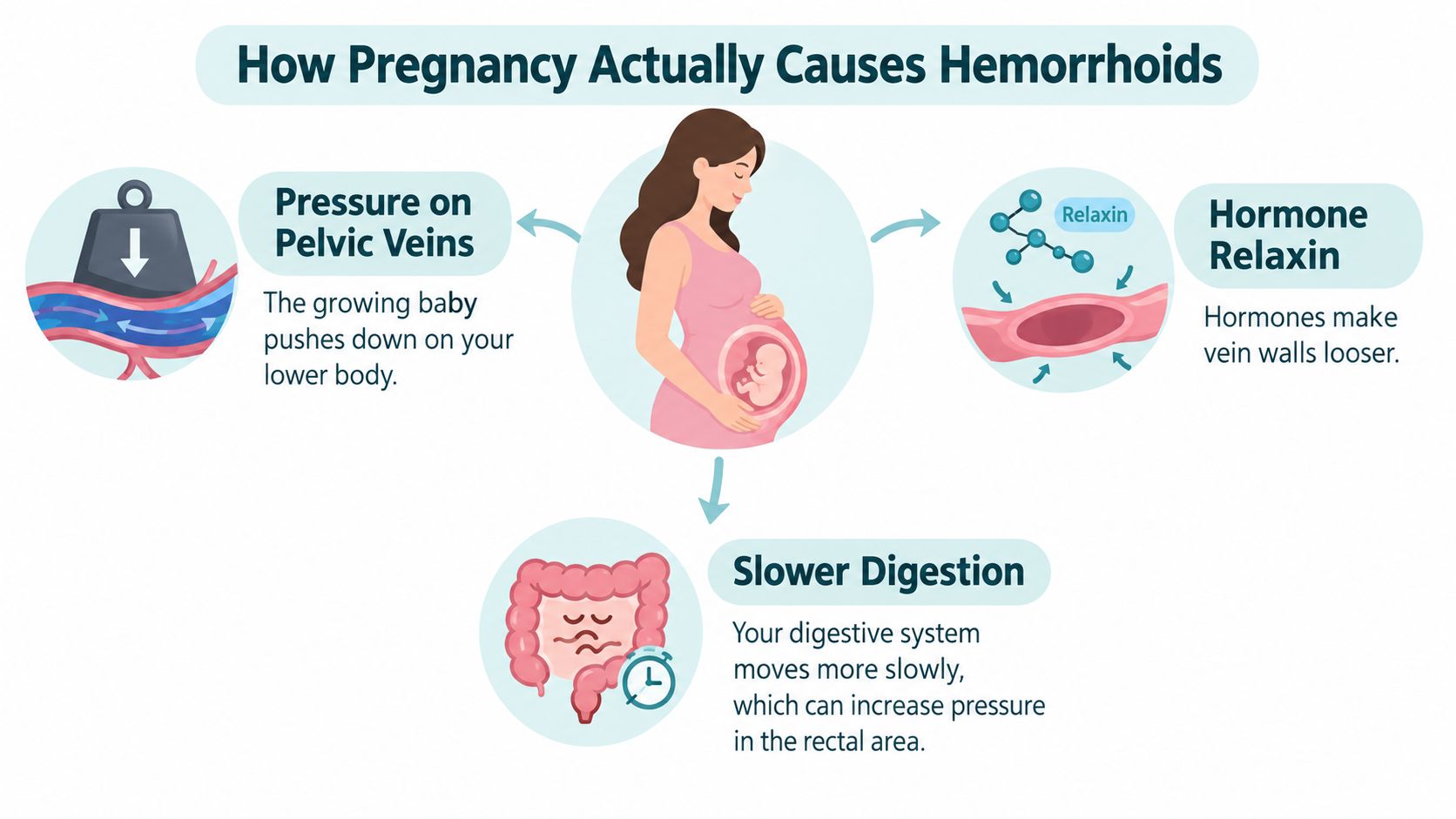
Hemorrhoids are swollen veins in the lower rectum or around the anus. In pregnancy, they rarely come from one single cause. They build up when pressure, slower bowels, and straining hit the same tissue over and over.
The visual below maps how those factors connect, from the growing uterus to the veins below it.
Pressure From Above
As your uterus enlarges, it presses on pelvic veins and makes it harder for blood to move back up from your lower body. Blood pools a bit more, veins swell, and the tissue around your anus feels full or heavy. That's why symptoms often worsen later in pregnancy, after prolonged sitting, or at the end of a long day on your feet.
Pregnancy hormones add to the problem by relaxing smooth muscle. Your bowel moves more slowly, stool sits longer and loses water, and vein walls can become more prone to swelling. Iron in some prenatal vitamins can also make constipation harder for some people, though you shouldn't stop a supplement without asking your clinician.
Constipation Turns Pressure Into Injury
Pressure alone can cause congestion. Constipation turns that congestion into pain.
- Hard stool: Dry, firm stool scrapes swollen tissue as it passes, which can trigger burning and bright red bleeding.
- Straining: Holding your breath and bearing down spikes pressure in rectal veins, exactly where it's already high.
- Delaying the urge: Waiting because you're busy, sore, or nervous lets stool get drier and harder to pass.
- Long toilet sitting: Sitting lets blood pool downward while the seat leaves the area unsupported.
That chain explains two sensations readers describe most often. The dull pressure after a car ride is venous congestion. The sharp sting during or after a bowel movement is irritated, swollen tissue being stretched or scraped, and sometimes it's a small fissure rather than a hemorrhoid.
Once you see the mechanism, prevention stops sounding like generic wellness advice. Softer stool means less scraping. Less straining means fewer pressure spikes. Shorter toilet time means less pooling. Every first line step that follows is aimed at breaking that cycle.
The First-Line Plan for Pregnancy Hemorrhoid Relief
Start with your bowels, not your medicine cabinet. That's the highest value shift for Hemorrhoid Relief for Pregnant Women, because it treats the daily trigger instead of only numbing the result.
Fiber has the strongest support here. A Cochrane review of seven randomized controlled trials found fiber reduced the risk of persistent hemorrhoid symptoms by 53%, with a relative risk of 0.47 and a 95% confidence interval of 0.32 to 0.68, and reduced bleeding with a relative risk of 0.50. That evidence wasn't limited to pregnancy, but the logic applies directly when constipation is driving your symptoms.
Your Daily Targets
Aim for 25 to 35 grams of insoluble fiber daily and approximately 1.5 to 2 liters of water per day, unless your clinician has given you a different fluid limit. Build fiber gradually so you don't trade constipation for bloating and gas.
- Breakfast anchor: Oats, whole grain bread, fruit with skin where you normally eat it, or a high fiber cereal you like.
- One legume, most days: Lentils, beans, or chickpeas in a soup, salad, or wrap adds fiber without a separate supplement.
- Water with fiber: Fiber without enough fluid can make stool bulkier but still hard, so pair each high fiber meal with a glass of water.
If food isn't getting you there, ask your obstetric clinician or pharmacist about a fiber supplement or stool softener that's appropriate for you. Don't stack laxative products on your own because labels and pregnancy considerations vary.
Toilet Habits That Lower Pressure
Go when you feel the urge. Delaying lets your colon absorb more water from stool.
Keep toilet sitting to roughly three minutes. If nothing's happening, get up, walk around, drink some water, and try again later. Scrolling on your phone turns three minutes into fifteen before you notice.
Don't strain to finish. A bowel movement you force today often buys you more swelling and pain tomorrow.
Stay as active as your clinician allows. Short walks after meals can help your bowels move and give you breaks from sitting. If your job keeps you seated, stand and move briefly when you can, and shift off direct pressure when you're sore.
This routine won't shrink a swollen vein overnight. What it does is remove the repeated injury, so soothing care has a chance to work instead of being undone at the next bowel movement.
Soothing Care You Can Start Today at Home
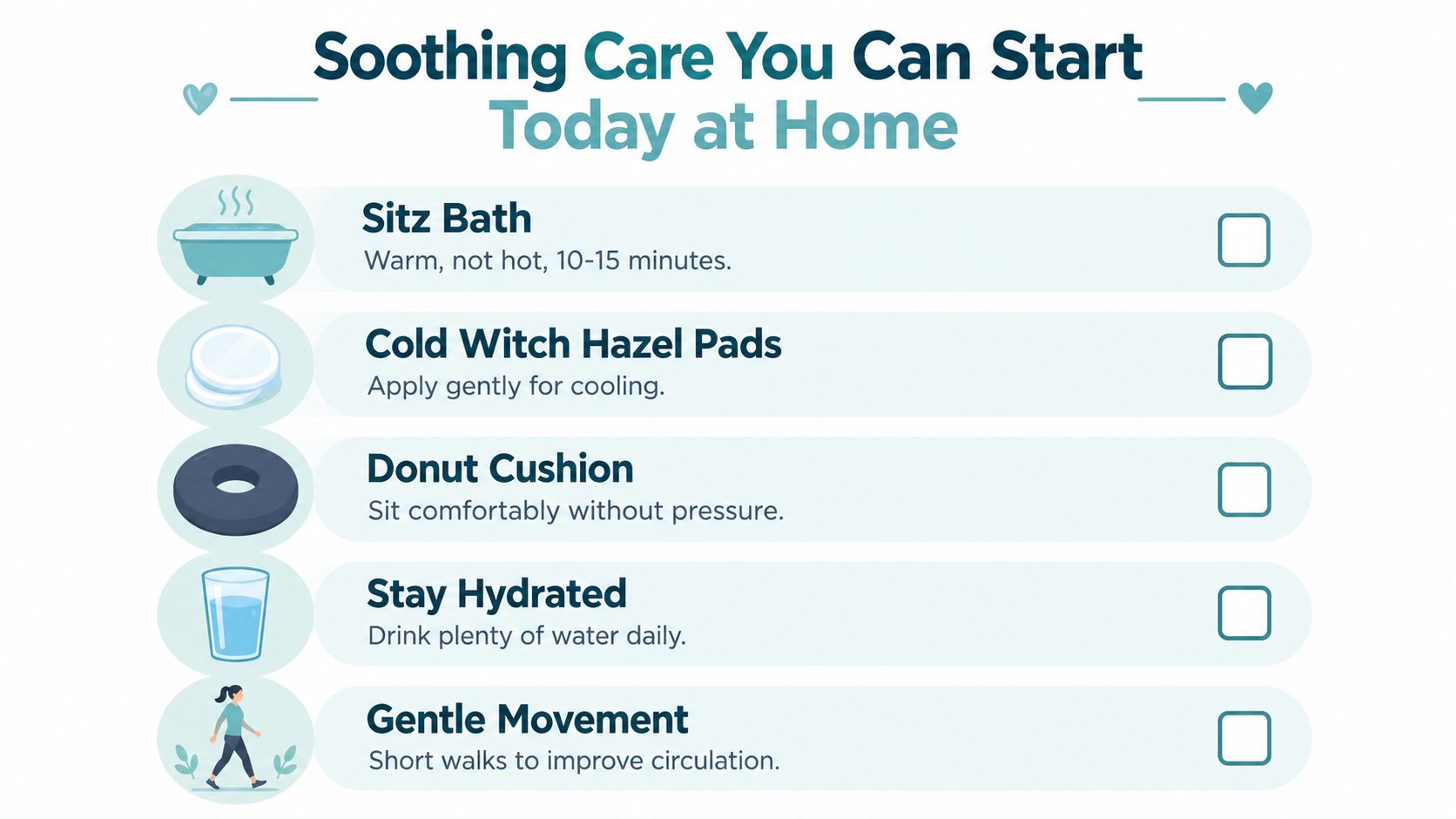
Non medicated comfort care is your base layer in every trimester and after delivery. It won't fix constipation, but it can calm itching, burning, and swelling while your bowel routine does the slower work.
This checklist shows the simple options that can be started without a medicated active ingredient.
Warm Soaks, Cold Pads, and Gentle Cleaning
A sitz bath means sitting in shallow warm, not hot, water that covers the area. Keep it brief and comfortable, then pat dry gently. ACOG recommends sitz baths, cold witch hazel compresses, and avoiding straining during bowel movements, and notes hemorrhoids commonly worsen right after childbirth before gradually improving. You can read more about setup and timing in this guide to using a sitz bath for hemorrhoid relief.
Be candid about the evidence. In one observational pregnancy study, 284 women who used salt sitz baths three times daily reported healing compared with 85% of 211 women using topical cream, but evidence for sitz baths remains limited and lacks formal randomized controlled trials. Treat them as comfort care, not a guaranteed cure.
Cold witch hazel pads or compresses suit a different moment. Use them when swelling and itching feel hot or throbbing, especially after a bowel movement. Intermittent ice wrapped so it doesn't touch skin directly can also feel numbing for short periods.
Dry toilet paper drags across sore tissue. Rinse with water when you can, pat instead of rubbing, and wear breathable cotton underwear that doesn't trap moisture. If you consider a soak additive, Revivol-XR® Sitz Bath Soak Mix – Super Concentrated 20-in-1 Blend with Epsom Salt & Essential Oils – 15 Soaks – USP Grade is one example, with Epsom Salt as 1 of 20 listed ingredients including witch hazel and aloe vera, and its directions advise a patch test and physician consultation if you have sensitive skin or essential oil allergies.
The short video below walks through basic sitz bath use so you can see the setup before you try it.
If any soak, pad, or cleansing product increases burning, redness, or itching, stop using it. Fragrance and essential oils irritate some people, and natural on a label doesn't guarantee your skin will tolerate it during pregnancy.
A Trimester and Ingredient Guide to OTC Options
Most advice gets vague at this point. Products differ by active ingredient, not by brand color or whether the box says gentle. UK medicines guidance emphasizes that no hemorrhoid preparation is specifically licensed for pregnancy and suggests simple soothing products may present less potential risk than products containing local anesthetics or corticosteroids. Start simple, use the smallest effective amount, and stop as soon as you can.
Read the Active Ingredient First
Protectants and soothing bases such as petrolatum or glycerin mainly shield irritated skin from stool and moisture. Witch hazel is an astringent used in pads for temporary relief of itching and swelling. These are often the first discussion point because they aren't numbing drugs or steroids, but you should still check the full label for fragrance or other actives.
Lidocaine temporarily numbs the area. It can help when burning makes sitting or bowel movements dreaded, but it doesn't diagnose why you hurt and it doesn't soften stool. NHS guidance on lidocaine for piles notes some local anesthetic preparations can cause sensitization, meaning irritation or itching may become worse after application. If that happens, stop and seek advice.
Pramoxine is another topical anesthetic. Phenylephrine is a vasoconstrictor in some creams and suppositories, intended to shrink swollen tissue temporarily. Combination products stack risks and label limits, so don't assume a familiar ingredient makes the whole formula appropriate. If you're weighing internal products, review what to consider about hemorrhoid suppositories and pregnancy before you buy.
Hydrocortisone is a corticosteroid for inflammation and itching. It's not a daily moisturizer, and prolonged use can irritate or thin sensitive skin. Duration matters as much as strength.
OTC Ingredients by Trimester at a Glance
| Ingredient or format | First trimester | Second and third trimesters | Typical duration |
|---|---|---|---|
| Protectant or witch hazel pads | Discuss simple options first | Discuss simple options first | As directed, stop if irritation worsens |
| Topical lidocaine | Limited safety data, ask first | Generally considered acceptable after the first trimester | Shortest effective use, follow label |
| Pramoxine | Ask first | Considered acceptable in the third trimester | Shortest effective use, follow label |
| Hydrocortisone 1% | Ask first | May be used briefly when clinically appropriate | Thin layer twice daily for up to 10 consecutive days |
| Phenylephrine combinations | Verify full formula first | Verify full formula first | Follow label, avoid prolonged use |
Evidence based guidance notes topical lidocaine is generally considered acceptable after the first trimester, pramoxine is acceptable in the third trimester, and low potency hydrocortisone 1% may be used briefly in the second and third trimesters when clinically appropriate. A prospective observational study of 88 pregnant patients found combined hydrocortisone acetate 1% and pramoxine hydrochloride 1% foam improved pain, pruritus, and swelling in late pregnancy, with p < 0.001 after adjustment for possible placebo effects and no observed adverse fetal effects. That doesn't prove every dose or formulation is safe.
As a label reading example, Revivol-XR 5% Lidocaine Numbing Cream – Maximum OTC Hemorrhoidal Grade Strength - Temporary Pain Relief Without a Prescription lists Lidocaine 5% as its active ingredient, is for external use only, and states if pregnant or breast feeding, ask a health professional before use. That's exactly the kind of product to run past your clinician or pharmacist, especially in the first trimester or if symptoms don't improve within 7 days according to its warnings.
If you can't name the active ingredient and how many days you'll use it, you're not ready to use it in pregnancy.
What Changes After Delivery for Postpartum Recovery
Many people expect instant relief once the baby is out. Instead, the first bathroom trip after delivery can be the moment they're searching for help, one hand on the wall, terrified to push at all.
The timeline below shows why the early postpartum peak doesn't mean recovery has failed.
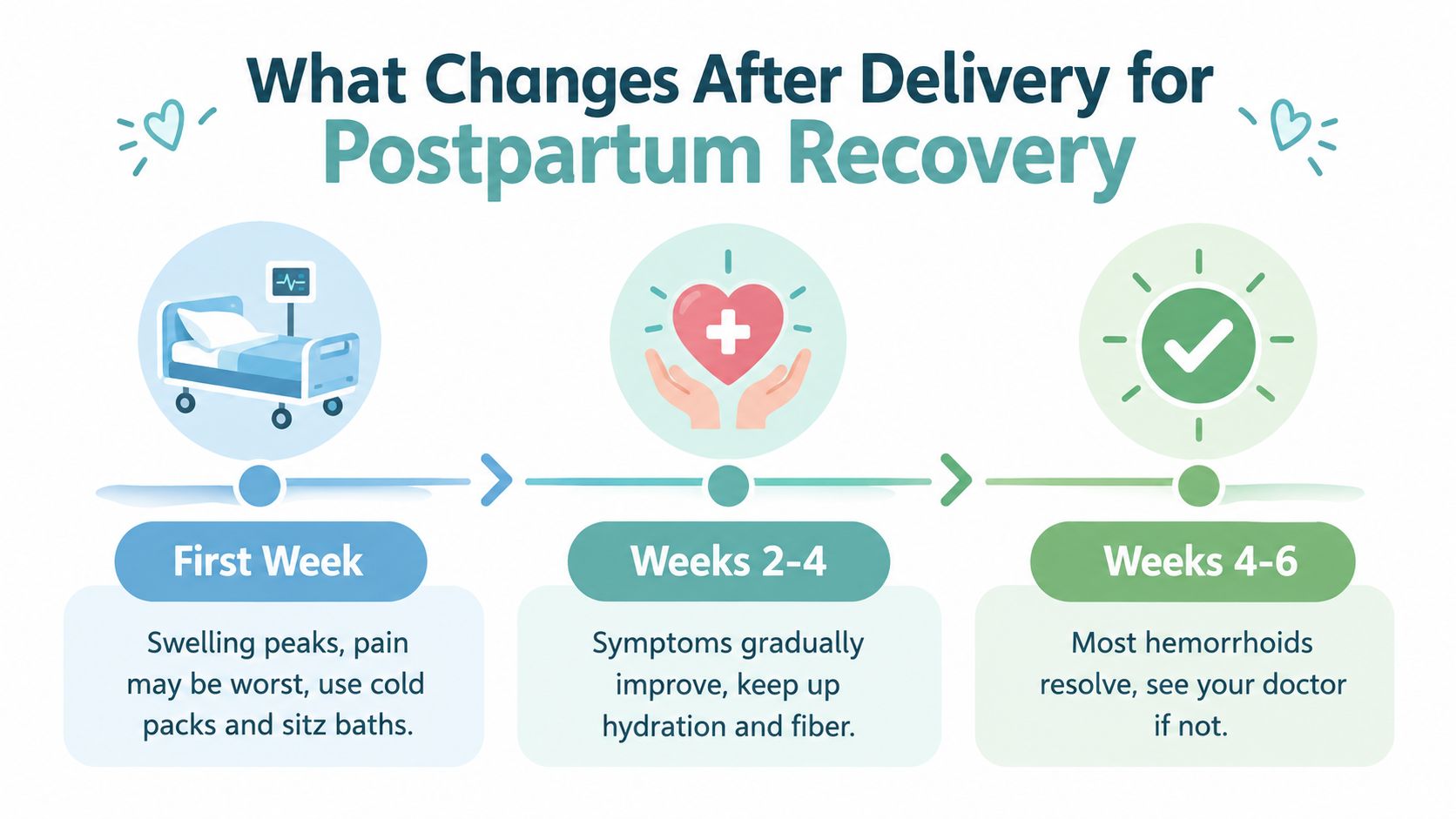
Intense straining during labor can make existing hemorrhoids swell or bring new ones forward. ACOG explains hemorrhoids commonly become worse right after childbirth and then gradually improve, and specifically lists cold witch hazel compresses or pads as an option to help relieve pain and reduce swelling. Plan for comfort in that first week, not a straight line down.
Layer Care Without Overdoing It
Keep the same foundation. Fluids, fiber, short toilet time, and no straining matter even more when you're healing from a tear, episiotomy, or cesarean incision and you're afraid of the first stools. Ask your obstetric clinician about a stool softener rather than guessing, especially if pain medicines are constipating you.
Use sitz baths or warm soaks for soothing, cold witch hazel pads when swelling feels hot, and gentle rinsing instead of dry wiping. For broader healing context, perineal care after birth covers how cleansing and pressure relief fit together. Don't layer three medicated products at once to chase relief. If you add a topical, change one thing at a time so you can tell what's helping or irritating.
Try to get off direct pressure when feeding. Side lying, a supportive cushion, and short walks as cleared by your clinician can feel better than sitting bolt upright for every feed. Small position changes add up when you're recovering and sleep deprived.
Breastfeeding Needs Its Own Check
Pregnancy guidance and breastfeeding guidance overlap for many topicals, but they aren't identical. Absorption, where you apply a product, how often, and what else you're taking all matter. Tell your clinician or pharmacist you're breastfeeding before using a local anesthetic, corticosteroid, combination cream, or suppository, even if you used it during pregnancy.
Most postpartum hemorrhoids gradually improve as pelvic pressure falls and bowels normalize. Persistent severe pain, heavy bleeding, or a lump that suddenly becomes firm and very painful isn't something to wait out.
Red Flags and When to Call Your Clinician
Not every postpartum ache is a hemorrhoid. A fissure can cause sharp pain during a bowel movement and burning afterward. Tear or episiotomy pain can make you guard and delay stools, which worsens constipation. Pelvic floor dysfunction can create pressure that feels rectal even when hemorrhoids aren't the main problem.
That's why triage matters more than another tube of cream. A 2025 review of postpartum anorectal and pelvic floor disorders reports hemorrhoid prevalence as high as 85% and lists persistent or severe disease among conditions that may require escalation beyond home care. Clinicians may use history, examination, and in some cases anoscopy to sort out the source.
Expected Versus Prompt Evaluation
- More typical: Mild itching, soft swelling, discomfort after a hard stool, and a small amount of bright red blood on toilet paper that settles as stools soften.
- Call promptly: Heavy or recurrent bleeding, bleeding you're unsure is rectal, black stool, dizziness, fever, discharge, or pain that's escalating instead of easing.
- Call promptly: A suddenly firm, very painful lump, a prolapse you can't gently manage as previously advised, severe difficulty passing stool, or symptoms that don't improve within about a week.
- Stop the product: Pain, redness, irritation, swelling, or itching that worsens after applying an OTC cream, pad, or soak additive.
Bleeding in pregnancy or postpartum should never be automatically blamed on hemorrhoids.
If you're debating whether it's worth calling, call. A short conversation can separate a thrombosed hemorrhoid, fissure, infection, or healing complication from routine swelling. That's safer than masking pain with numbing products while the underlying problem gets worse.
Your Action Plan and Common Questions
Screenshot this sequence. Soften stools with fiber and fluids, keep toilet time short and strain free, layer warm soaks and cold witch hazel for comfort, choose any OTC active by trimester and duration with clinician input, and treat postpartum as a recovery phase with its own peak before gradual improvement.
Quick Answers
Will hemorrhoids affect delivery? They commonly worsen from pushing, then gradually improve. Tell your delivery team if pain, prolapse, or bleeding is significant so they can advise you directly.
How long does recovery take? It varies with size, constipation, and whether a clot or fissure is present. Lack of improvement, severe pain, or recurrent bleeding deserves assessment instead of waiting indefinitely.
Is occasional lidocaine reasonable? It may be considered after the first trimester for temporary numbing, but confirm the product, amount, and duration first, and stop if irritation worsens.
When is home care not enough? When bleeding is heavy or recurrent, pain is severe, a painful firm lump appears, fever or discharge develops, or you're unsure where blood is coming from.
Hemorrhoids in pregnancy are common, uncomfortable, and usually manageable with a plain, steady plan. A quick ingredient check with your OB-GYN, midwife, or pharmacist can remove most of the guesswork.
If you're building a soothing routine around sitz baths, witch hazel comfort care, and clearly labeled OTC options you can discuss with your clinician, explore what Revivol-XR offers for at home hemorrhoid comfort. Read each active ingredient and warning before you buy, choose the simplest option that fits your trimester, and get care promptly for persistent, severe, or bleeding symptoms.