Epsom Salt Postpartum: Soothing Relief for Perineal Recovery

Most new mothers don't realize that the “more is better” approach to an Epsom salt postpartum soak can make tender tissue feel worse.
You're sore, tired, and trying to care for a newborn while dealing with swelling, stitches, hemorrhoids, or painful bowel movements. This guide explains how sitz baths may support comfort, when plain warm water is the better choice, and why delivery type matters before you soak.
Table of Contents
- Finding Relief After Delivery
- What the Research Says About Epsom Salt
- Preparing Your Sitz Bath Correctly
- Plain Water vs Epsom Salt Soaks
- Safety Timing and Common Mistakes
- Product Alternatives and Next Steps
Finding Relief After Delivery
The baby is finally asleep, but you're still awake because sitting, walking, and using the bathroom all hurt. Your perineum may feel swollen and bruised, while hemorrhoids add pressure, itching, or burning to an already exhausting day.
Many new mothers hear different advice from family, social media, product labels, and online forums. Some recommend large amounts of Epsom salt. Others say to use herbs, oils, soap, or several products together. That confusion can make a simple recovery routine feel unnecessarily complicated.
A sitz bath offers a more controlled option. It uses shallow, comfortably warm water to bathe the perineal area, including the tissue between the vagina and anus. Short, repeated sessions have long been used for temporary comfort during postpartum recovery, particularly when swelling or hemorrhoid discomfort makes sitting difficult.

Practical rule: A postpartum soak should leave the area calmer, not tighter, drier, itchier, or more irritated.
Epsom salt is popular because it feels familiar and easy to find. But the important question isn't whether it's traditional. It's whether your skin and healing wounds tolerate it. For more ideas on managing discomfort, see this guide to postpartum perineal pain relief.
What the Research Says About Epsom Salt
The evidence for Epsom salt postpartum care is still developing. A postpartum-care clinical trial registered on ClinicalTrials.gov in 2024 is testing whether perineal compresses soaked in 25% magnesium sulfate can reduce pain after birth. The protocol uses 15-minute applications, up to four times per day, and compares the compresses with a plain-water placebo in a hospital setting. The trial focuses on painful perineal tissue after delivery, but it doesn't establish that home Epsom salt baths improve healing or pain for everyone. Background on the postpartum magnesium sulfate trial
That distinction matters. Researchers are testing whether magnesium sulfate has a measurable benefit, rather than treating its traditional use as settled evidence. Results from a trial protocol shouldn't be presented as proof of effectiveness.
Clinical guidance is more conservative. The Cleveland Clinic sitz-bath guide states that Epsom salt isn't required because warm water alone can be sufficient. Other clinical instructions caution that salt, soap, or extra additives may irritate sensitive tissue and delay healing. In practice, Epsom salt is best viewed as an optional comfort measure, not a universal postpartum standard.
What this means at home
Start with the simplest approach your provider allows. Plain warm water gives you a way to assess how your perineal tissue responds without introducing fragrance, essential oils, or concentrated salts.
If you already know that your skin tolerates Epsom salt, follow the product label and use a small, fully dissolved amount. Stop if burning, itching, redness, swelling, or pain increases.
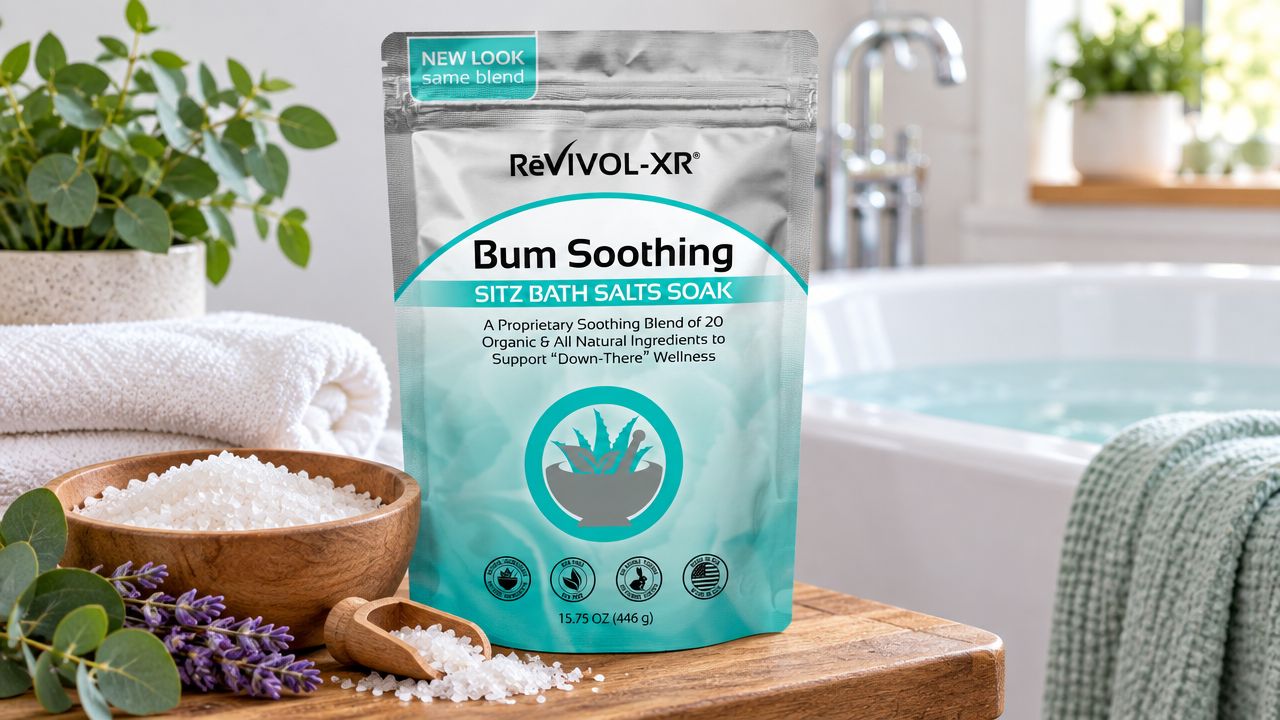
If you're considering a multi-ingredient option, Revivol-XR® Sitz Bath Soak Mix – Super Concentrated 20-in-1 Blend with Epsom Salt & Essential Oils – 15 Soaks – USP Grade contains Epsom salt as one of 20 listed ingredients, including Dead Sea salt, baking soda, witch hazel, aloe vera, coconut oil, calendula oil, chamomile oil, and other botanical oils. Because it contains essential oils, the product directions call for external use, a patch test with one teaspoon, and clinician advice if you have sensitive skin, essential-oil allergies, or irritation.
Preparing Your Sitz Bath Correctly
A good routine depends more on temperature, dilution, and drying than on adding a large quantity of salt. Use a clean sitz-bath basin or another setup your provider has approved.
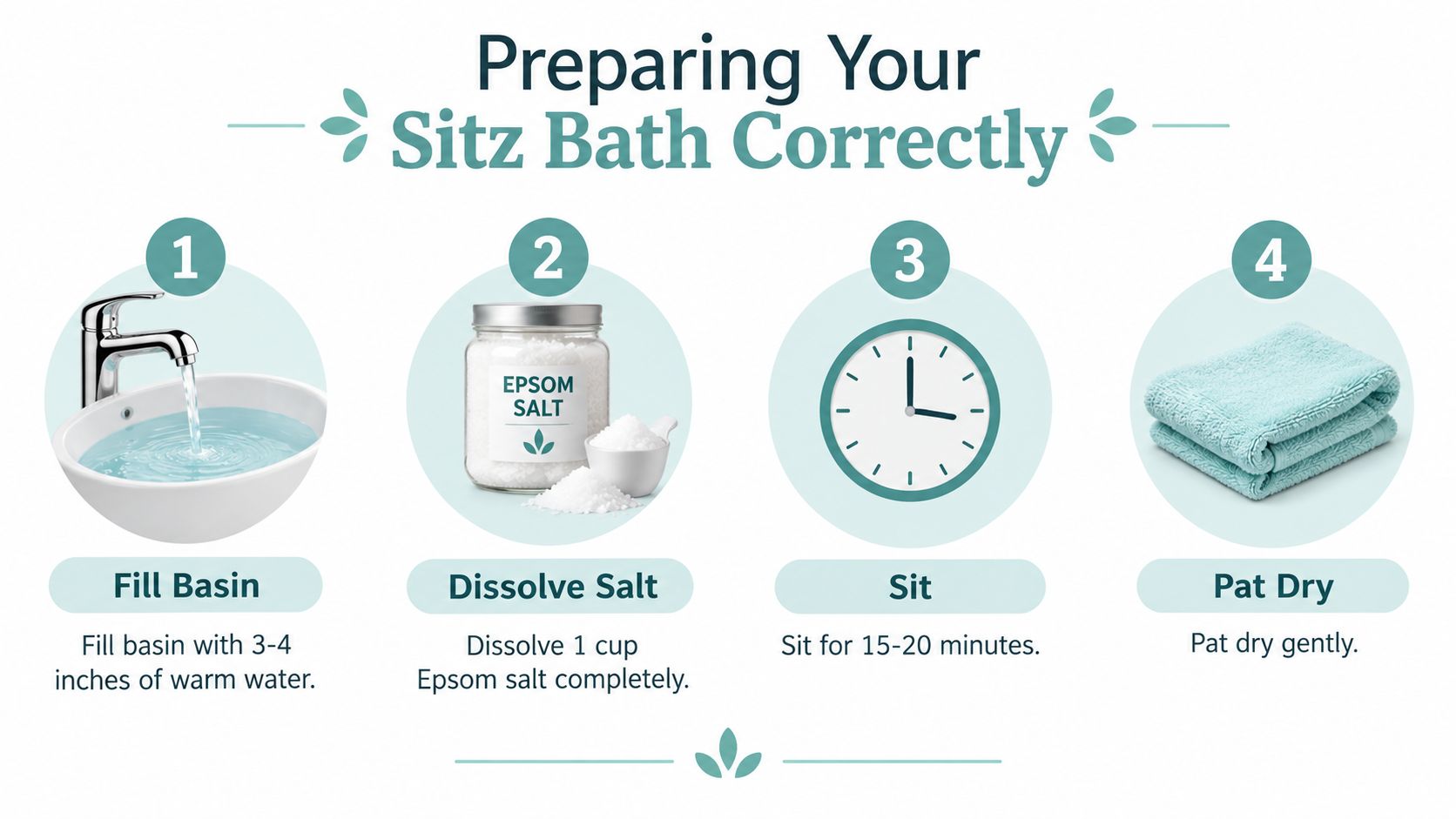
- Use warm water: Fill the basin with shallow, comfortably warm water. It shouldn't feel hot against your hand or perineal skin. Heat can worsen irritation and may increase bleeding.
- Dissolve the salt completely: Household guidance commonly ranges from 1 tablespoon to 1/2 cup, depending on the basin or tub, while some product directions use 1/2 cup to 1 cup in shallow warm water. Follow the product label or your provider's directions rather than combining measurements from different sources. Postpartum sitz-bath measurement guidance
- Keep the soak controlled: A practical session lasts 15 to 20 minutes. Other guidance supports 10 to 20 minutes, with home use commonly limited to no more than three times daily when managing symptoms. Guidance on Epsom salt soak duration and frequency
- Rinse and dry gently: Rinse with warm water if you used salt or another additive. Pat the area dry with a clean, soft towel. Don't rub, scrub, or leave crystals sitting against the skin.
Undissolved crystals can scratch tender tissue. Fragranced products may also irritate the area, so plain, unscented salts are less complicated than spa-style blends if you choose to use salt.
For a fuller walkthrough of the setup, follow these instructions for how to do a sitz bath at home.
Plain Water vs Epsom Salt Soaks
Plain warm water is often the safest starting point after delivery. It has no salt crystals, fragrance, essential oils, or botanical ingredients to trigger irritation. That makes it especially useful when you have stitches, a tear, raw skin, or uncertainty about what your tissue can tolerate.
Epsom salt may suit someone who has already received provider approval and wants a simple additive for comfort. It still needs to be fully dissolved, used in moderation, and stopped if symptoms worsen. Adding more salt won't necessarily produce more relief.
| Option | Useful when | Main trade-off |
|---|---|---|
| Plain warm water | Your skin is sensitive, healing, or reacting to products | It may feel less “active,” but it provides a simple baseline |
| Epsom salt soak | You've been cleared to use it and tolerate the ingredient | Salt can increase dryness or irritation if overused |
| Multi-ingredient soak | You want a pre-measured blend and tolerate each ingredient | Essential oils and botanicals add more potential irritants |
Some clinical sitz-bath guidance recommends avoiding salt or medication unless a healthcare professional specifically suggests it. That advice is sensible when healing tissue is already tender.
Choose the option that leaves you more comfortable afterward. If plain water works, you don't need to add anything to make the routine worthwhile.
Safety Timing and Common Mistakes
Postpartum recovery isn't one identical timeline. After a vaginal delivery with stitches or tearing, a shallow sitz bath may be discussed early, but your provider should confirm that bathing is appropriate for your wound. A full bath can involve longer immersion and more contact with healing tissue, so guidance may differ.
After a C-section, the incision changes the decision. A sitz bath may be considered for hemorrhoid or perineal symptoms if the incision stays out of the water, while full immersion is often delayed until the incision has healed. Don't assume that advice for a vaginal delivery applies to abdominal surgery. Postpartum safety timing and delivery-type considerations
Avoid these common errors:
- Too much heat: Warm water is enough. Hot water can increase irritation and may affect bleeding.
- Too many sessions: Repeated soaking beyond the recommended routine can dry or irritate tissue.
- Too many additives: Salt, oils, soap, and fragrance aren't automatically helpful.
- Ignoring symptoms: Stop and contact your healthcare provider for persistent, severe, worsening, or bleeding symptoms.
For separate external hemorrhoid discomfort, Revivol-XR 5% Lidocaine Numbing Cream is labeled for temporary relief of localized pain, itching, and burning. It's for external use only, and the product warnings say to stop use and seek medical advice if bleeding occurs or symptoms persist or worsen.
Product Alternatives and Next Steps
Epsom salt alone isn't the only option, and it isn't always the right one. Some people prefer plain water because it minimizes exposure to potential irritants. Others want a ready-to-measure sitz blend, but a postpartum product still needs careful ingredient review, especially when stitches, tears, allergies, or sensitive skin are involved.
A multi-ingredient soak can include ingredients such as witch hazel and aloe vera alongside salts. That may feel soothing for some users, but “natural” doesn't mean risk-free. Essential oils and botanical extracts can still cause irritation, so patch testing and provider guidance matter.
Keep your next steps simple:
- Ask your obstetric or postpartum care provider when a shallow soak is suitable for your delivery and wound status.
- Start with plain warm water if you're unsure about additives.
- If you use Epsom salt, dissolve it fully, keep the session brief, rinse, and pat dry.
- Stop if discomfort increases.
- Seek medical advice for persistent, severe, worsening, or bleeding symptoms.
Gentle cleansing can also matter after bowel movements, when wiping aggravates hemorrhoids or a tender perineum. Revivol-XR® Hygienic Cleansing Lotion is an external cleansing lotion with aloe, chamomile, coconut, and witch hazel, and its listed use is applying a dime-sized amount to toilet paper. Avoid the eyes, and stop if irritation develops.
For additional guidance on choosing a sitz soak, review where to buy sitz bath salts, then compare the ingredients with your provider's recommendations.
Revivol-XR offers sitz bath salts with Epsom salt and botanical ingredients, along with external products for temporary hemorrhoid discomfort and gentle cleansing. Visit Revivol-XR to review the available options, check the labels, and choose the approach that fits your postpartum recovery plan.