Doughnut Pillow for Tailbone Injury: Which Cushion Helps

Could a doughnut pillow for tailbone injury put pressure on the very spot you're trying to protect? A center hole may look reassuring, but the opening only helps if your painful area stays clear of the cushion's edges.
Say you buy a ring cushion after an uncomfortable car ride, then find yourself shifting around just as much as before. That doesn't necessarily mean you need a softer pillow. You may need a different shape, especially if your pain is directly over the tailbone rather than around the anus or perineum.
Table of Contents
- Doughnut and Wedge Cushions Compared Side by Side
- What the Evidence Says and How to Test a Cushion
- How to Use a Doughnut Pillow Safely
- How Long to Keep Using a Cushion
- When to See a Doctor and Your Next Step
- Doughnut Pillow FAQs
Doughnut and Wedge Cushions Compared Side by Side
A doughnut pillow is one option for tailbone pain, not the default choice. Start with where it hurts, then look for a design that takes pressure away from that area without making you perch, slump, or slide.
The Merck Manual's guidance on coccyx disorders describes pressure-relieving seating options for coccyx pain, including cushions that leave space behind the pelvis. For direct tailbone tenderness, a rear opening is often more useful than a fully enclosed ring.
Cushion designs by opening, best use and main caution
| Design | Opening | Best suited for | Main caution |
|---|---|---|---|
| Doughnut ring | Full center hole | Rectal or perineal soreness | Can concentrate pressure on the coccyx and sit bones |
| U-shaped cushion | Rear opening | Direct coccyx pain while sitting | Check whether the front edge presses into the thighs |
| Wedge with rear cut-out | Rear cut-out | Coccydynia and general sitting | Height may need adjusting for pelvic tilt |
| Gel donut | Center hole | Short sitting periods | Check warmth during use and fit against your body shape |
Look beyond the outline
Coccydynia means tailbone pain. The perineum is the area between the genitals and anus. Discomfort in these neighboring areas can make sitting unpleasant, but they don't necessarily need the same seating support.
A ring supports your weight around its opening. If the back of that ring still touches the sore tailbone area, the hole hasn't achieved the intended unloading.
A rear-cut cushion leaves an escape space behind you. However, a tall wedge that tips your pelvis into an uncomfortable position isn't a good fit just because it has the preferred outline.
Shopping rule: Choose the cushion that clears the painful spot while supporting the rest of your pelvis comfortably.
Firmness, height, and width matter alongside shape. Look for a stable surface that doesn't collapse beneath you, enough room for your sit bones, and a height that lets your feet rest comfortably.
Before shopping, name your main pain site: directly over the tailbone, around the anus, or across the perineum. If you can't tell, or several areas hurt after childbirth or an injury, a healthcare provider can help you sort out the cause.
What the Evidence Says and How to Test a Cushion
Wedge cushions beat doughnut cushions nearly five to one when patients with tailbone pain were asked which they preferred. That figure comes from a single chart review, so read it as a comfort pattern rather than a verdict on which shape relieves pain better.
Cushion preference among the 55 patients who had tried both types, in a chart review of 171 patients with coccydynia
| Preferred cushion | Patients | Share |
|---|---|---|
| Wedge cushion | 19 | 35% |
| Doughnut cushion | 4 | 7% |
| Neither | 23 | 42% |
| No preference recorded | 9 | 16% |
This was a retrospective chart review, which looks back at records instead of assigning treatments in a controlled trial. A stated preference can reflect comfort, convenience, or whatever cushion happened to be available that day. It says nothing about whether the cushion unloaded the tailbone, and a ring's center hole can still leave the sore spot pressed against its back edge. The shape on the label matters less than where the opening lands under your body.
Pressure measurements offer a second clue. A RESNA conference comparison of seating cushions reported coccyx peak pressure of 13.1 mmHg with an off-loading cushion versus 51.23 mmHg with an air cushion. Those results describe the specific cushions and test conditions studied; other products carrying similar labels may behave differently.
No study can predict how a cushion will behave beneath your body, so the practical step is a structured tryout.
Turn the evidence into a buying checklist
A product photo can't tell you how a cushion will behave beneath your body. Check these features before committing:
- Firmness: Choose firm-to-medium support that holds its shape rather than flattening against the chair.
- Rear clearance: Make sure the cut-out is deep enough that your tailbone doesn't land on its edge.
- Height: Your pelvis should feel balanced, with your feet supported rather than dangling.
- Width: Your sit bones should rest on the support without uncomfortable pressure beneath your thighs.
- Portability: Check carrying weight and packed size for your commute, car, or travel bag.
Memory foam should retain enough support under your weight, not merely feel soft when squeezed. With gel, notice whether an initially cool surface becomes uncomfortably warm during use. With inflatable cushions, check whether air movement makes you wobble or slide.
Check the cleaning instructions, too. Wipe a compatible cover with mild cleaner, let it air-dry, and inspect seams for wear. Don't machine-wash, heat, or tumble-dry a cushion unless its label allows it.
Compare comfort under similar conditions
Use the same chair and a comparable, brief sitting task for each cushion. Note your starting discomfort, where you feel pressure, whether you keep shifting, and how easily you stand afterward.
A useful cushion should make sitting more manageable without creating a new painful spot.
Stop the test if symptoms increase. Keep a cushion only if comfort improves or remains acceptable, and check whether discomfort lingers after you get up. There's no reason to push through pain to finish a test.
How to Use a Doughnut Pillow Safely
MedlinePlus tailbone-trauma aftercare recommends a donut or gel donut cushion when sitting because its opening is intended to remove direct pressure from the coccyx. It also advises limiting sitting. A cushion doesn't replace rest or make prolonged sitting harmless.
Use this visual as a positioning reminder, not a guarantee that a ring is right for you.
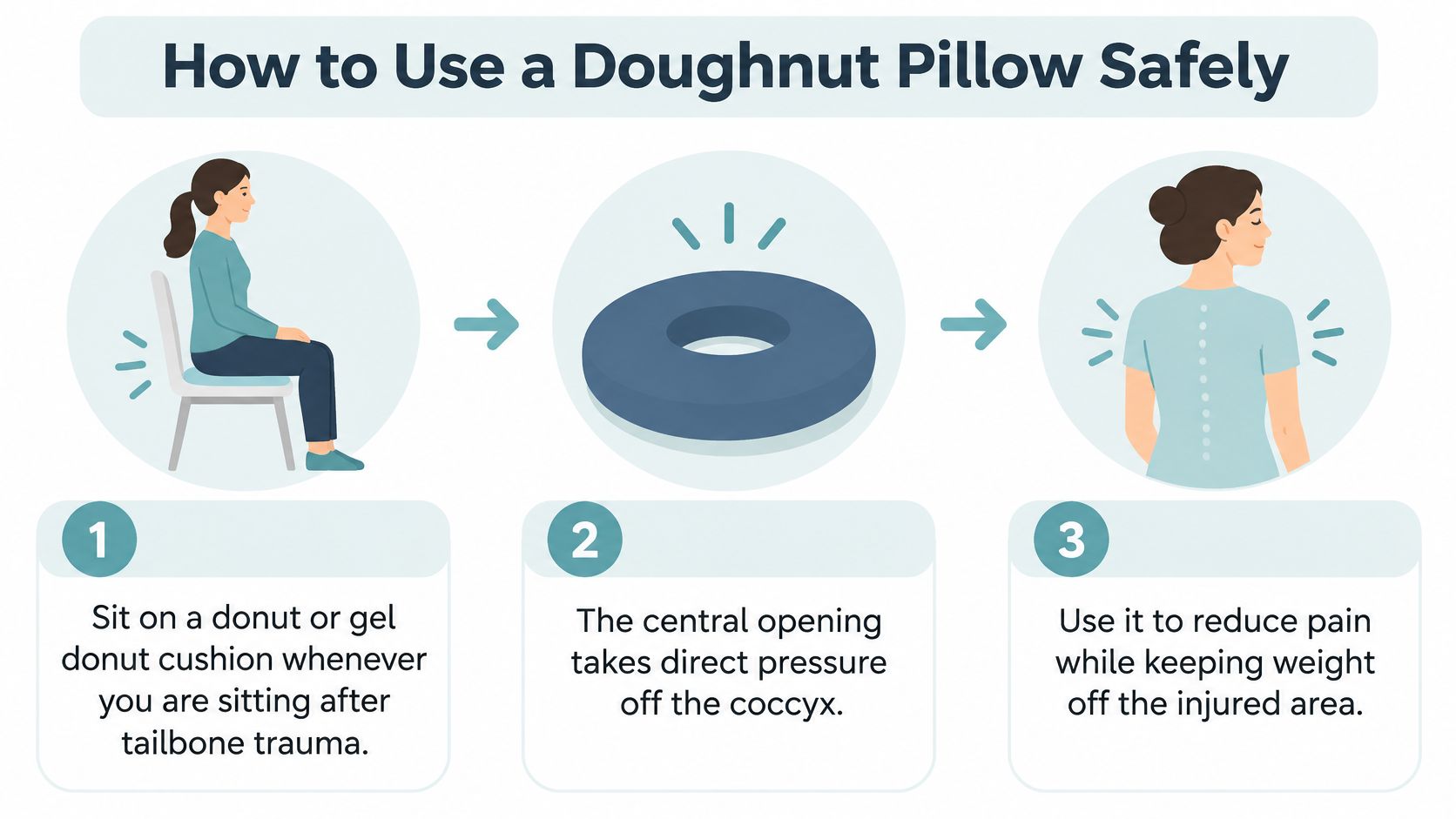
Set up your seat
- Match the design to your pain site. Consider a ring for rectal soreness and rear clearance for direct coccyx pain. Don't assume a cushion marketed for hemorrhoids is automatically suitable for a tailbone injury.
- Position the opening beneath the painful area. Let your sit bones carry your weight while the tailbone stays clear of the edge. A common mistake is sitting too far back on the ring.
- Keep sitting periods brief. Stand or walk between seated tasks, as your condition allows. Don't wait until pain becomes sharp before taking a break.
- Respond to increasing pressure. Get up and reassess if pain rises or shifts toward the ring's back edge. Repeatedly scooting around isn't a solution to poor fit.
- Check the whole chair setup. Support your feet and avoid slumping backward onto the sore area. Don't add so much cushion height that you have to perch on the seat.
- Ease out of support gradually. Try less-supported sitting as comfort returns rather than abandoning the cushion abruptly. Avoid turning a comfortable morning into a long, unsupported afternoon.
After delivery, sitting discomfort may involve more than the coccyx. Our guide to perineal pain after childbirth can help you describe the location more clearly when speaking with your maternity team.
The video below offers an additional visual reference for sitting with discomfort.
Good progress means sitting feels less sharp or guarded, and standing becomes easier. It doesn't mean you should immediately extend every sitting session.
Stop using the cushion if pain increases. Don't rely on a ring as your only approach when the tailbone remains the main pain site. Severe, worsening, or neurological symptoms need medical attention, not another seating adjustment.
How Long to Keep Using a Cushion
A coccyx fracture may take 8 to 12 weeks to heal, according to Leicester Hospitals' guidance on tailbone injuries. The same guidance warns that symptoms may flare when you return to sitting without support.
That timeline isn't a diagnosis or a personal recovery deadline. Feeling comfortable on a cushion doesn't prove that an injury has healed.
The timeline below summarizes the transition, but your symptoms and clinician's advice should guide the pace.
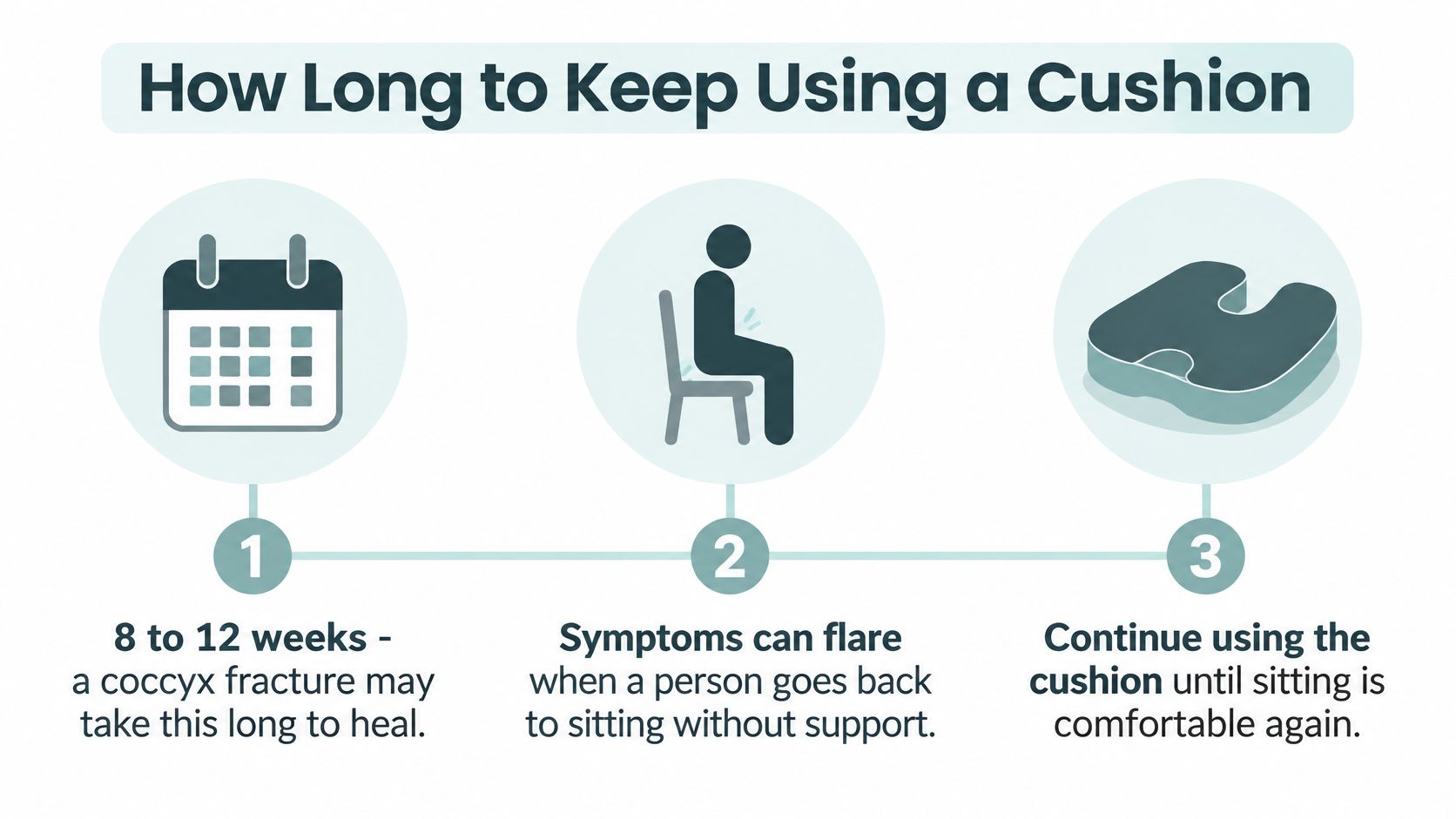
A gradual return to ordinary sitting
Consider someone returning to desk work after a tailbone injury. At first, they use a well-fitting cushion for necessary sitting and separate desk tasks with standing breaks.
As comfort improves, they try a brief task on an ordinary, comfortable seat. They pay attention both during the task and afterward, rather than deciding that getting through it means they should sit unsupported all afternoon.
- During the painful phase: Prioritize supported sitting and avoid unnecessary time seated.
- As tolerance improves: Test short periods without support and increase only when they remain comfortable.
- For demanding days: Keep the cushion available for travel or unavoidable seated activities, without using it to override rising pain.
Let improved tolerance guide the transition, not a deadline on the calendar.
You don't need to keep testing an uncomfortable seat to prove you're recovering. If a trial causes a flare, reduce the demand and discuss repeated setbacks with your provider.
The NHS advises medical review when tailbone pain hasn't improved after several weeks of home treatment. Steady improvement, even when gradual, is more reassuring than needing increasingly elaborate seating arrangements just to manage ordinary tasks.
When to See a Doctor and Your Next Step
A cushion can make sitting more comfortable, but it can't diagnose a fracture, nerve involvement, infection, or pelvic-floor problem. Comfort on a pillow isn't a reason to ignore a new warning sign.
Tailbone-injury aftercare guidance identifies worsening or persistent pain and concerning neurological, bowel, or bladder changes as reasons to seek medical attention. Use the actions below to decide when self-care should stop.
Symptoms and the right next step
| Symptom | What to do |
|---|---|
| Pain that stays the same or worsens after several weeks | Arrange a visit with a healthcare provider |
| Numbness, tingling or leg weakness | Seek medical care promptly |
| Loss of bowel or bladder control | Seek urgent medical care |
| Rectal bleeding or fever | Contact a healthcare provider the same day |
| Severe pain after a fall or a possible fracture | Get an emergency assessment |
| Pressure moves to the back edge of the ring | Stop using the ring and reassess |
New loss of bowel or bladder control warrants emergency attention, especially with weakness or numbness. Don't wait for a routine appointment or test another cushion first.
Describe the pain without embarrassment
Tell your provider where it hurts, what happened before it started, and whether sitting, standing, or bowel movements make it worse. Mention bleeding separately rather than assuming it comes from hemorrhoids.
If you're struggling to explain overlapping symptoms, our guide to pain that hurts when sitting can help you organize what to discuss. Persistent, severe, or bleeding symptoms always deserve a conversation with a healthcare provider.
For discomfort that is partly rectal or hemorrhoid-related, our Revivol-XR® Sitz Bath Soak Mix is a bath-water additive for soothing comfort, not a tailbone-injury treatment. We offer the soak and a hygienic cleansing lotion as companions to our numbing cream; consider comfort products alongside your provider's advice.
The soak shown below is for external use only. Follow the packaging, patch-test before use, and consult your provider first if you have sensitive skin or essential-oil allergies; people with diabetes shouldn't use warm or hot baths unless their physician advises it.
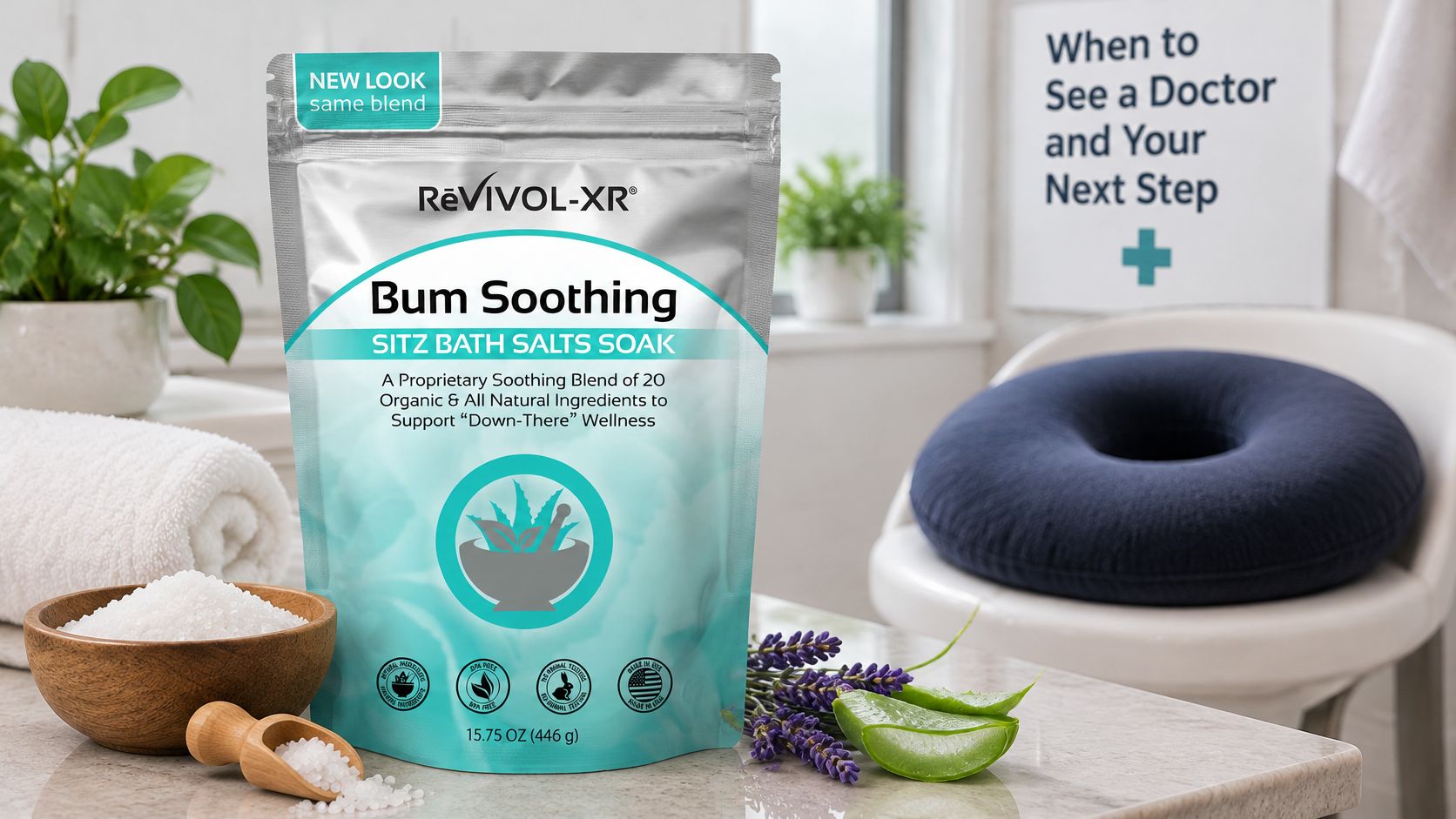
A cushion supports recovery, but it doesn't replace a medical assessment when symptoms persist.
Doughnut Pillow FAQs
Is a doughnut pillow the same as a coccyx cushion?
No. A purpose-built coccyx cushion typically has a rear opening, while a doughnut has a fully enclosed center hole. A clinical review of coccydynia cautions that doughnut cushions may concentrate pressure around the coccyx and sit bones, making them potentially more useful for rectal pain.
Is a ring or a U-shaped cushion better for a long commute?
For tailbone pain, the U-shaped cushion is the more targeted choice. Its rear cutout leaves the tailbone resting over open space, while a ring's centered hole mainly unloads the sit bones and middle of the seat. On a car seat, line the cutout up with the sore spot rather than centering yourself on the cushion. If your pain is rectal rather than at the tailbone, the ring may be the shape that helps.
Can I take a cushion on a plane?
A cushion is one of the easier supports to travel with. Choose a low-profile or inflatable design that fits in carry-on luggage, and test it at home before the trip: a ring that feels fine at the kitchen table may behave differently on a firm plane seat. Partially inflating a ring lets you adjust firmness so you don't sink through the hole and end up resting on the rim.
What if the cushion makes the pain worse?
Treat that as useful information. It usually means the shape or firmness doesn't match your pain site: if the ring's rim presses under the tailbone, for example, the hole is helping the sit bones while the injury still bears weight. Try a different cutout or a firmer surface, and if sitting hurts regardless of the cushion, bring that up with your healthcare provider.
Revivol-XR offers soothing comfort products for rectal and hemorrhoid-related discomfort that may occur alongside painful sitting. Visit Revivol-XR to explore those options, and choose your seating support according to where it hurts. If pain is persistent, severe, or accompanied by bleeding, contact your healthcare provider rather than relying on a cushion or comfort product alone.