Can You Exercise With Hemorrhoids? Safe Workout Tips

- Can You Exercise with Hemorrhoids? 5 Safe Workouts vs. 3 to Avoid
- The Ultimate Guide: How to Exercise with Hemorrhoids Without Pain
- Is Exercise Making Your Hemorrhoids Worse? Here’s How to Fix It
- Can You Exercise with Hemorrhoids? Yes... If You Follow These Rules
- Hemorrhoid Relief: Your Guide to Safe Exercises & What to Skip
The Ultimate Guide: How to Exercise with Hemorrhoids Without Pain
Most people don’t realize their daily workout routine is actually making their hemorrhoids worse.
I once worked with a client, a dedicated weightlifter, who was completely baffled by his recurring hemorrhoid flare-ups. He was in peak physical condition but couldn't shake the constant discomfort. He ate clean, stayed hydrated, and did everything "right," yet the problem persisted. We walked through his entire gym routine, lift by lift, and the issue wasn't his dedication... it was his breathing. During every heavy squat and deadlift, he was holding his breath, creating immense internal pressure that sabotaged all his other healthy habits.
That single moment of holding his breath to push through a tough rep was the direct cause of his pain. He was strong, fit, and unknowingly making his condition worse with every workout. It was a classic case of the right intention with the wrong execution.
The moment you hold your breath to complete a movement, you are generating excessive internal pressure.
That client's story is a perfect example of a common misunderstanding about exercise and hemorrhoids. The goal isn't to stop moving... it's to move smarter. A sedentary lifestyle is a huge culprit behind constipation, a primary trigger for flare-ups. So, the question isn't just "can you exercise with hemorrhoids?" but "how can you exercise to help them heal?" Gentle, low-impact activities are your best friend. They improve blood flow, strengthen supporting muscles, and stimulate bowel function... all crucial for healing and preventing future issues.
To find relief, you have to stop the very habits that are causing the strain. This means understanding which movements help and which ones hurt. For my client, swapping heavy lifts for lighter weights with controlled breathing and adding daily walks made all the difference. He didn't have to give up the gym... he just had to adapt his approach to work with his body, not against it.
Let's break down the practical steps you can take.
- Focus on low-impact activities like walking and swimming.
- Avoid exercises that cause you to strain or hold your breath.
- Incorporate gentle stretching and yoga to improve circulation.
- Always hydrate before and gently cleanse after your workout.
That lightbulb moment for my client wasn’t just about changing his squats... it was about realizing that his body was sending clear signals he had been ignoring. By learning to listen to those signals and choosing smarter movements, he finally found relief and could keep doing what he loved without pain.
The Quick Answer on Exercising with Hemorrhoids
Yes, you can and absolutely should exercise with hemorrhoids. The key is to choose the right kind of movement. Gentle, low-impact activities are your best friend here. They improve blood flow to the pelvic region, help strengthen supporting muscles, and stimulate bowel function... all of which are crucial for healing and preventing future issues.
Gentle Movement is Your Ally
Think of your digestive system as something that needs consistent, gentle encouragement to stay on track. Since constipation and straining are the main offenders, it’s no surprise that lifestyle guidance from medical experts consistently points to moderate physical activity. It helps keep things moving and your stools soft.
A review in the journal Frontiers in Surgery highlights this, noting that a lack of exercise can worsen constipation and even "trigger a recurrence, or even cause new problems in those who have never had a hemorrhoid before." The authors recommend 20–60 minutes of moderate activity, 3–5 days per week. You can learn more about these findings and support bowel regularity in their full review.
The biggest thing to avoid is anything that creates high intra-abdominal pressure. This is the force that builds up inside your abdomen when you strain, hold your breath, or do intense core work like crunches. This pressure is exactly what causes the veins in your rectum to swell and become irritated.
The infographic below gives a great visual summary of what to do and what to skip.
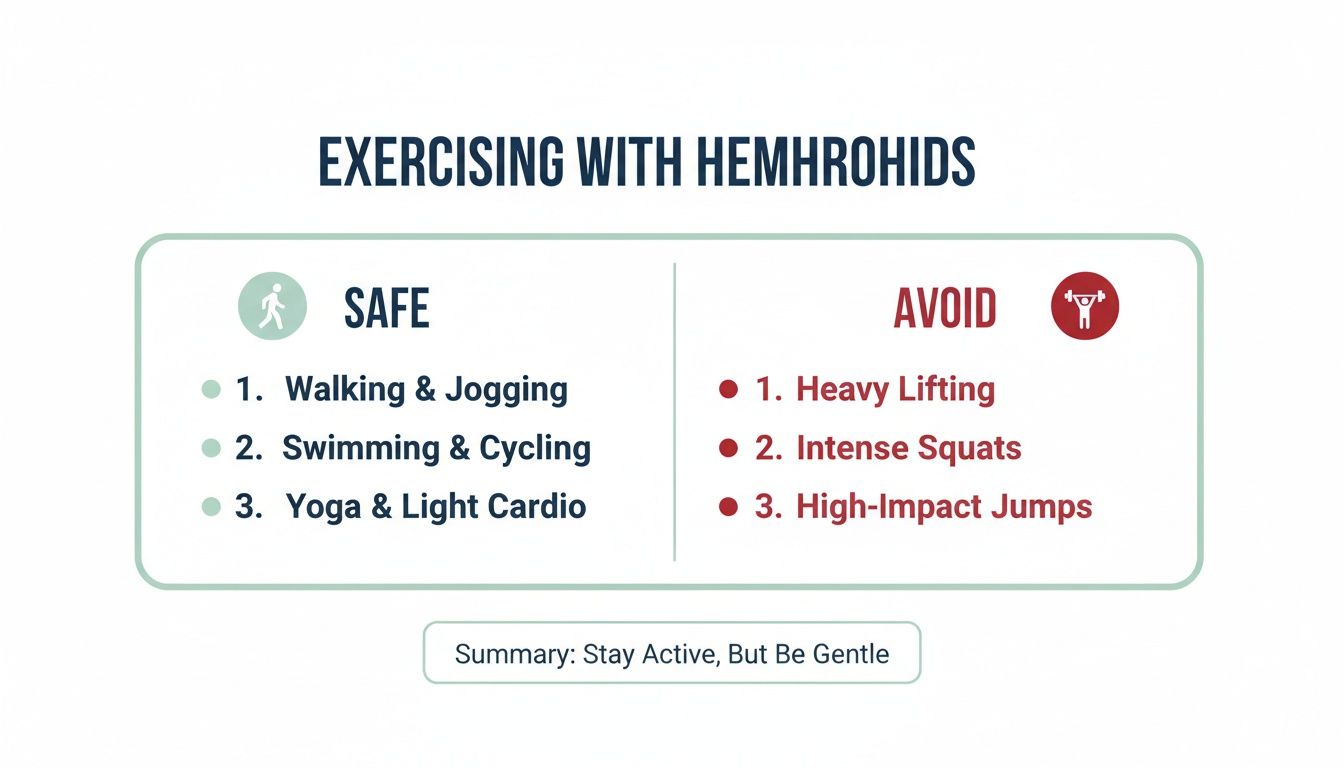
As you can see, low-impact activities like walking are a green light, while high-strain exercises like heavy lifting are best put on hold during a flare-up.
Safe vs High-Risk Exercises for Hemorrhoids
To make things even clearer, I've put together a quick-reference guide. It breaks down which exercises are generally beneficial versus those that can ramp up the pressure and make your symptoms worse.
| Exercise Type | Why It's Recommended or Risky | Best For |
|---|---|---|
| Walking or Brisk Walking | A low-impact way to stimulate bowel function and improve circulation without straining the sensitive pelvic area. | Daily activity, beginners, and promoting regularity. |
| Swimming or Water Aerobics | The water's buoyancy supports your body, taking all the pressure off your pelvic floor and anal region. | A full-body workout with zero impact or strain. |
| Yoga (Specific Poses) | Gentle poses like Child's Pose and Legs-Up-the-Wall can boost circulation and relax the pelvic floor muscles. | Improving flexibility, reducing stress, and gentle toning. |
| Heavy Weightlifting | Straining and breath-holding dramatically increase intra-abdominal pressure, which can cause hemorrhoids to swell or bleed. | To be avoided during flare-ups; modify with lighter weights. |
| Intense Cycling or Spinning | The combination of a hard, narrow seat and leaning forward puts direct, prolonged pressure on the perineal area. | To be avoided, especially if you have external hemorrhoids. |
| Sit-ups or Crunches | These exercises put direct strain on the abdominal and pelvic muscles, increasing pressure on rectal veins. | To be avoided; swap them for core exercises like planks. |
Choosing your activity wisely can mean the difference between relief and a serious setback. Stick to the "safe" column, and your body will thank you for it.
How Certain Workouts Can Make Hemorrhoids Worse
Ever finish a workout and feel worse than when you started? If you're dealing with a hemorrhoid flare-up, that intense session might be exactly why your pain and discomfort have ramped up. It all comes down to something called intra-abdominal pressure.
Imagine your abdomen is a sealed container. When you lift something heavy, hold your breath during a tough rep, or even strain on the toilet, you’re squeezing that container. This action dramatically increases the pressure inside, pushing down on your pelvic floor and the very delicate veins in your rectal area. That pressure is the enemy of hemorrhoid relief.
Many people don't make the connection at first. I've seen it with clients... they're in great shape, committed to their routine, but can't figure out why their hemorrhoids keep acting up. The culprit is often heavy squats, leg presses, or other strenuous lifts that put immense, targeted strain on the pelvic region.
The Problem With High-Impact and High-Strain Activities
Not all exercise is created equal, especially when you’re trying to let things heal. Activities that involve repetitive jarring or sustained straining are particularly problematic. They can directly irritate existing hemorrhoids and even contribute to new ones.
This isn't just anecdotal. One study of 312 athletes found that 34% of those who exercised at least twice a week had hemorrhoidal disease. High-pressure activities were the biggest offenders: 57% of participants who practiced cycling or horseback riding reported symptoms, and 48% of those involved in bodybuilding had them. You can learn more about how bodybuilding remained a significant risk factor in the research, which really drives home how much your choice of activity matters.
Here’s a quick look at common exercises that can cause more harm than good during a flare-up:
- Heavy Weightlifting: Think deep squats, deadlifts, and leg presses. These are notorious for spiking intra-abdominal pressure, especially if you hold your breath (the Valsalva maneuver).
- Intense Cycling or Spinning: The design of most bike seats, combined with a forward-leaning posture, puts direct and prolonged pressure on the sensitive perineal area.
- High-Impact Cardio: Things like running or jumping can jar the body. While it's less of a direct pressure issue, the repetitive impact can cause irritation for some.
- Certain Core Exercises: Traditional sit-ups and crunches put a lot of strain on the abdominal and pelvic floor muscles in a way that can aggravate hemorrhoids.

Recognizing Risky Movements in Any Workout
Understanding why certain exercises are an issue is the first step. The next is learning to spot risky movements no matter what activity you’re doing. The key is to pay close attention to your body and, most importantly, your breathing.
The moment you find yourself holding your breath to complete a movement, you are generating excessive intra-abdominal pressure.
This is your body’s signal to either stop or modify what you’re doing. For instance, instead of holding your breath during a lift, focus on exhaling on the exertion. This one small change can make a huge difference. If you're curious about the broader relationship between movement and symptoms, our guide on whether exercise helps hemorrhoids is a good place to start.
It isn't about having a "bad list" of exercises to avoid forever. It’s about building awareness of how your body responds to strain. This empowers you to adapt your routine on the fly... maybe switching a heavy squat to a bodyweight squat or swapping crunches for a plank that engages the core without that dangerous pressure spike. This smarter approach lets you stay active without sabotaging your healing.
The Best Exercises for Hemorrhoid Relief
After covering what not to do, let's get to the good stuff. Plenty of movements are not just safe but can actively help you feel better and keep future flare-ups at bay. The idea is to find activities that boost circulation and encourage regular bowel movements without adding any extra strain.
Think of it as working with your body, not against it. Consistent, low-impact exercise is one of the most powerful tools you have. It gets blood flowing, eases pressure down below, and keeps your digestive system moving like it should.
Walking Your Way to Better Health
If you're wondering where to start, the answer is refreshingly simple: just start walking. It’s arguably the best exercise you can do when dealing with hemorrhoids. It’s low-impact, almost anyone can do it, and it works.
A brisk walk for just 20-30 minutes a day gets your intestines moving, which is key to avoiding the constipation and straining that often cause hemorrhoids in the first place. It also improves blood flow to your pelvic area, which can help swollen veins heal. You can dig deeper into why this simple activity is so effective in our guide on if walking is good for hemorrhoids.
Swimming for Zero-Pressure Relief
Swimming and water aerobics are fantastic choices because they essentially make you weightless. The water’s buoyancy supports your body completely, taking virtually all the pressure off your pelvic floor and rectal area.
This makes it a go-to activity if you're in significant discomfort or dealing with painful external hemorrhoids. You get a fantastic full-body workout that benefits your heart without the jarring impact of land-based exercises.
The weightlessness of water provides the perfect environment for exercise without aggravating sensitive areas.
Embracing Gentle Yoga and Stretching
Yoga can be tricky, but the right poses are incredibly helpful. The secret is to stick with poses that improve circulation and relax the pelvic floor, not ones that create a lot of abdominal pressure.
A few great options include:
- Legs-Up-the-Wall Pose (Viparita Karani): This is one of the absolute best for hemorrhoid relief. It uses gravity to your advantage, helping drain blood from your lower body and reduce swelling in those rectal veins.
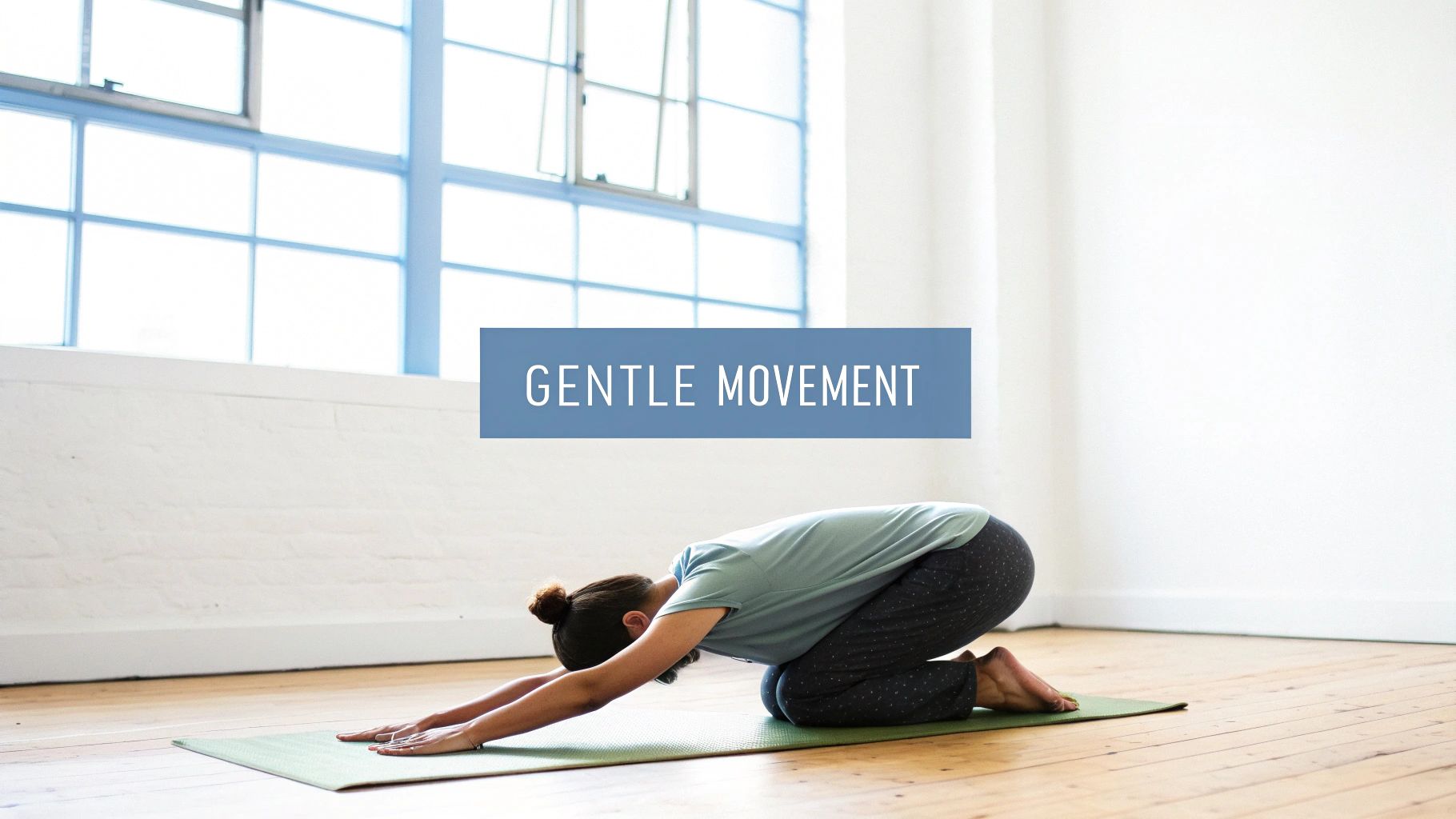
- Child’s Pose (Balasana): This classic resting pose gently stretches your lower back and hips, releasing a lot of built-up tension in the pelvic region.
- Wind-Relieving Pose (Pawanmuktasana): By hugging your knees to your chest while lying on your back, you can gently stimulate your abdomen to relieve gas and constipation.
Just as important is knowing what to skip. Avoid anything that requires intense core work (like Boat Pose) or puts direct pressure on your belly, especially during a flare-up.
The Connection Between Weight and Hemorrhoid Risk
Keeping a healthy weight through gentle exercise is another huge piece of the puzzle. Excess body weight, especially around the abdomen, puts constant, day-in-and-day-out pressure on the veins in your pelvic region.
The research is pretty clear on this. One analysis found that for every point your Body Mass Index (BMI) goes up, your risk for hemorrhoids increases by about 3.5%. This is exactly why clinical guidelines always recommend moderate physical activity... it improves circulation, promotes regularity, and helps manage weight. You can learn more about the research on BMI and hemorrhoid risk to see the science behind it.
By choosing smart, low-impact exercises, you're not just aiming for immediate relief; you're investing in your long-term health. The goal isn't to push through pain. It's to move in a way that helps your body heal and feel better.
Here are a few sample routines to give you an idea of how to structure your week, whether you're just starting out or already have a fitness habit.
Sample Gentle Exercise Routines for Hemorrhoid Sufferers
| Day | Beginner Routine | Intermediate Routine |
|---|---|---|
| Monday | 20-minute brisk walk | 30-minute swim or water aerobics |
| Tuesday | 15 minutes of gentle yoga/stretching | 30-minute brisk walk |
| Wednesday | Rest or light 10-minute walk | 20 minutes of gentle yoga/stretching |
| Thursday | 20-minute brisk walk | 30-minute swim or water aerobics |
| Friday | 15 minutes of gentle yoga/stretching | Rest or light 15-minute walk |
| Saturday | 30-minute leisurely walk | 45-minute walk or light hike on flat terrain |
| Sunday | Rest | Rest |
Remember, consistency is far more important than intensity. Listen to your body and adjust these routines based on how you feel each day. The best exercise plan is one you can stick with comfortably.
Adapting Your Workouts for Different Life Stages
Hemorrhoids don't play favorites. They can show up whether you're a new parent, a seasoned professional, or enjoying retirement. But your stage in life absolutely dictates how you should approach exercise for relief. A workout that feels great for a 25-year-old might be a terrible idea for someone over 60, and what's safe postpartum is a world away from what a desk worker needs.
The goal is always compassionate, smart movement that meets you where you are. Asking "can you exercise with hemorrhoids?" is just the first step. The real question is how to exercise safely for your specific body and circumstances.
For New Moms Postpartum
Pregnancy and childbirth put an incredible amount of stress on the pelvic floor. Between hormonal shifts, the baby's weight, and the strain of delivery, postpartum hemorrhoids are extremely common. One of the worst things you can do is rush back into high-impact workouts.
Your body is healing, plain and simple. Your focus should be on gentle, restorative movements that support recovery. It's essential to get the green light from your OB/GYN before starting any new routine. To learn more about the connection, read our guide on what causes hemorrhoids during pregnancy.
Once you're cleared, here are some excellent places to start:
- Pelvic Floor Exercises (Kegels): These are non-negotiable. Strengthening these muscles provides crucial support to the rectal area, improves blood flow, and helps everything heal.
- Light Walking: Begin with short, slow strolls. As you feel stronger, you can gradually pick up the pace and go a little farther. This gentle cardio gets your bowels moving without jarring your sensitive tissues.
- Postnatal Yoga: Find a class specifically designed for postpartum bodies. These will focus on gentle stretches and pelvic floor engagement while steering clear of any deep core work that could increase pressure.
For Older Adults Over 50
As we get older, our bodies naturally change. Muscle tone can decrease and our digestive systems often become a bit more sluggish, which makes constipation a more frequent problem. For adults over 50, exercise should be about maintaining mobility, supporting heart health, and promoting regularity... all without putting extra stress on your joints or pelvic region.
For those over 50, the best exercises are often those that build strength and balance without any high-impact jarring or heavy straining.
Heavy lifting or high-impact activities can be risky, not just for hemorrhoids but for overall joint health. The focus should shift to consistency and gentle, supportive movement.
Great options for this age group include:
- Water Aerobics or Swimming: The water’s buoyancy gives you a great workout with built-in resistance while taking all the pressure off your pelvic floor. It’s a fantastic choice for anyone with joint pain.
- Tai Chi: This slow, graceful martial art is wonderful for improving balance, flexibility, and circulation. Its gentle, flowing movements are perfect for staying active without any strain.
- Recumbent Biking: A recumbent bike has a wider, more comfortable seat that lets you sit back, removing the direct pressure on the perineal area that a traditional bike saddle creates.
For Sedentary Professionals
If you spend eight or more hours a day sitting at a desk, you’re in a high-risk group for hemorrhoids. That prolonged sitting puts constant pressure on the rectal veins and encourages a sluggish digestive system. The best "exercise" for you isn't necessarily a punishing one-hour gym session after work; it's integrating more movement throughout your entire day.
Here are a few practical strategies that work:
- Take Micro-Breaks: Set a timer on your phone to get up and walk around for 5 minutes every hour. It’s a simple act, but it resets the pressure and gets your blood flowing again.
- Use a Standing Desk: Alternating between sitting and standing is a game-changer for reducing the constant pressure on your lower body.
- Walk and Talk: If you don't need to be on video, take your phone calls while pacing around your office or home.
- Prioritize a Lunchtime Walk: Even a brisk 15-20 minute walk during your lunch break can kickstart digestion and undo some of the damage from a morning spent sitting.
No matter your age or daily routine, smart, gentle movement is a powerful tool. By adapting your approach to fit your body's needs right now, you can turn exercise into a source of relief, not another cause of pain.
Your Essential Pre and Post Workout Routine
Thinking about how to exercise with hemorrhoids isn't just about the movements themselves. Often, what you do right before and after you work up a sweat makes all the difference. A smart care routine can be the deciding factor between a good workout and a painful flare-up.
Think of it as your game plan for keeping irritation at bay. Just a few simple, intentional steps can turn exercise from something you dread into a powerful part of your healing. By prepping your body beforehand and taking care of it afterward, you build a sustainable habit that supports your health without making your symptoms worse.
Before You Start Your Workout
Preparation is everything. Jumping into a workout without a bit of planning can lead to friction, irritation, and a whole lot of unnecessary discomfort. These pre-exercise steps are designed to protect sensitive tissue and set you up for a successful session.
First, hydration is non-negotiable. Drink a glass of water 30-60 minutes before you start. Staying hydrated helps keep your stools soft, which is absolutely critical for preventing the straining that causes hemorrhoids in the first place. If you're dehydrated, your next bowel movement could be a painful event, especially after a workout.
Next, think about creating a protective barrier. The friction from movement and sweat can seriously aggravate external hemorrhoids. Applying a thin layer of a good cream provides a lubricating shield that cuts down on chafing. For comprehensive care, our Revivol-XR products are designed to provide soothing relief.
Here’s a simple pre-workout checklist:
- Hydrate Well: Drink at least 8 ounces of water before you even think about starting.
- Apply a Protective Cream: Use a product like Revivol-XR Advanced Hemorrhoid & Fissure Cream. Its formula not only creates that barrier but also contains ingredients like phenylephrine to help shrink swollen tissues before you even start moving.
- Wear the Right Clothes: Opt for loose-fitting, breathable fabrics. Tight workout gear can trap moisture and increase friction... exactly what you want to avoid.
Your Post-Workout Recovery Plan
What you do after you exercise is just as important as your prep. The goal here is simple: gentle cleansing and soothing recovery to calm down any inflammation that may have flared up.
Right after you finish, a gentle cleanse is a must. Sweat and bacteria can build up, leading to itching and irritation. Stay away from harsh soaps or rough wiping. Instead, take a quick, lukewarm shower or use a gentle cleansing product. A bidet is a fantastic tool, but if you don't have one, a peri bottle or even a spray bottle with warm water gets the job done.
Your post-workout routine is an opportunity to reduce inflammation and promote healing.
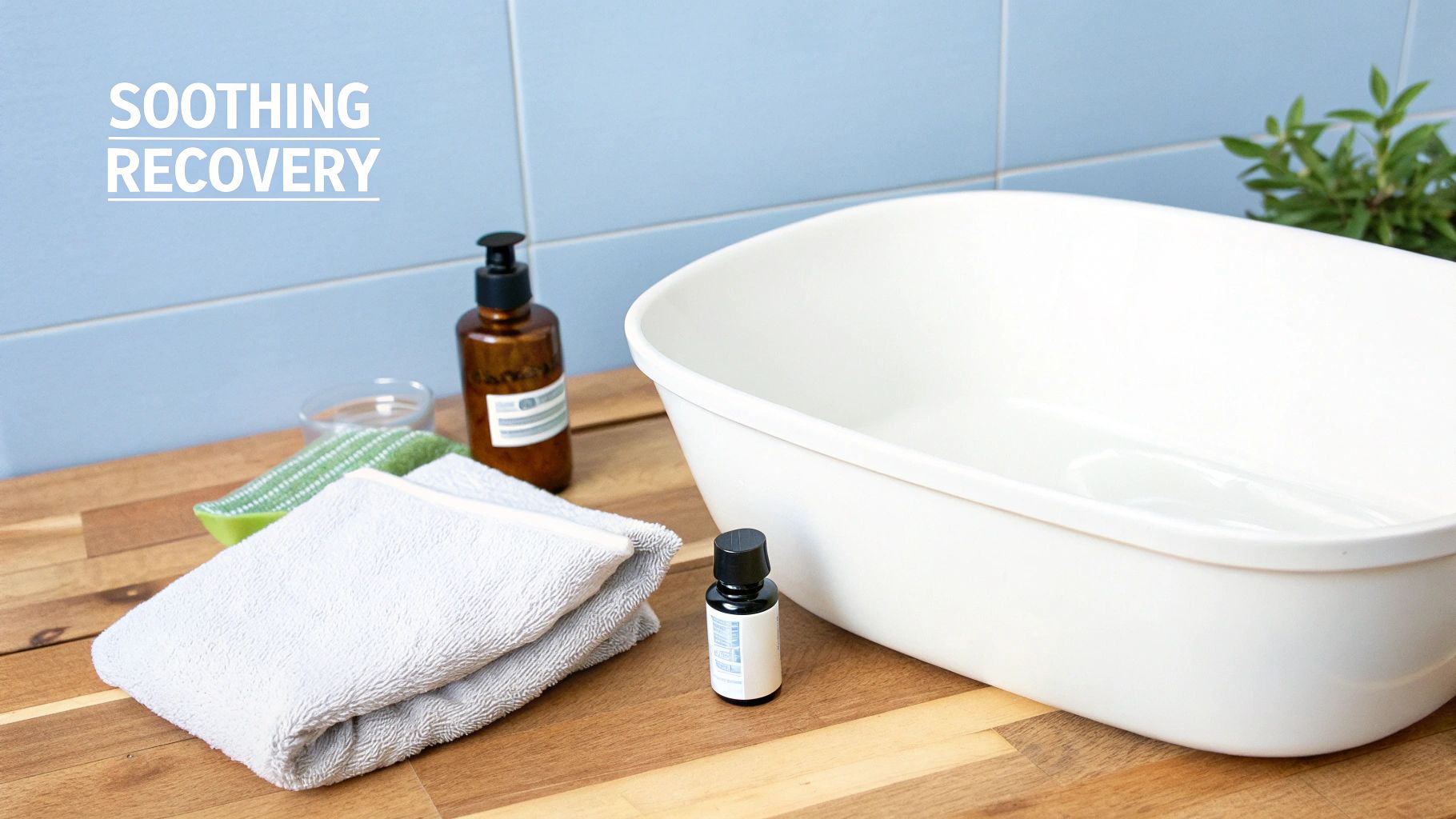
After cleansing, a sitz bath is one of the most effective recovery tools you have. This isn't just about getting clean; it's a therapeutic treatment. Soaking in warm water for 15-20 minutes helps relax the anal sphincter, improves blood flow, and can significantly reduce swelling and discomfort.
To boost the benefits, add specialized salts to the water. Revivol-XR Sitz Bath Salts are made with Epsom salt to tackle inflammation, plus a blend of soothing essential oils and botanicals that calm irritated tissues. This simple step can make a world of difference in how you feel hours after your workout.
By building these simple pre and post-workout steps into your fitness habits, you take back control of your comfort. This routine transforms exercise from a potential trigger into a sustainable and pain-free part of your healing journey.
When to Pause Exercise and Consult a Doctor
Listening to your body is non-negotiable when you’re exercising with hemorrhoids. While smart, gentle movement is a fantastic tool for healing, pushing through the wrong kind of pain can cause a serious setback.
It's one thing to feel a little discomfort, but some symptoms are clear red flags. You have to know when it’s time to stop, rest, and call your doctor.
Recognizing Warning Signs
You need to know the difference between manageable discomfort and a genuine medical issue. Ignoring serious symptoms won’t make them go away; in fact, it will likely make them worse. If you experience any of the following during or after a workout, stop what you're doing and get in touch with your doctor:
- A Sharp Spike in Pain: If your pain suddenly jumps from a dull ache to a sharp, stabbing sensation, stop immediately.
- Significant Bleeding: A tiny streak of bright red blood on toilet paper can happen. But any bleeding that is heavy, continuous, or looks dark in color is not normal.
- A Hard, Painful Lump: If an external hemorrhoid becomes intensely painful, hard to the touch, and turns a purplish color, you might have a thrombosed hemorrhoid. This is a blood clot inside the vein that requires medical attention.
- Dizziness or Lightheadedness: Never ignore this. It could be a sign of significant blood loss and should always be taken seriously.
- Symptoms Last More Than a Week: If your pain and discomfort don’t get better after a week of self-care and modified exercise, it’s time for a professional to take a look.
A good rule of thumb? If the pain makes you wince or change how you move, it's too much.
This isn't meant to scare you, but to empower you. Knowing these signs helps you make smart, safe decisions about your activity level. Exercise is a key part of long-term hemorrhoid management, but it should never come at the expense of your immediate health.
When in doubt, a quick call to your doctor provides peace of mind and ensures you're on the right track for healing.
Your Questions Answered … Exercise & Hemorrhoids
Navigating exercise when you have hemorrhoids brings up a lot of questions. Let's get you some clear, straightforward answers so you can feel confident and move safely.
What About Squats? Are They Safe?
Yes, but you have to be smart about it. The real enemy here is heavy, weighted squats where you find yourself holding your breath and straining. That kind of movement creates a massive spike in intra-abdominal pressure... exactly what you need to avoid.
Instead, stick with bodyweight squats. Concentrate on perfect form and, most importantly, exhale on the way up as you push from the bottom of the squat. This one simple trick helps manage that internal pressure. If you feel any sharp pain or a new sense of discomfort, that's your body telling you to stop. It's best to skip them altogether until the flare-up is gone.
How Soon After Treatment Can I Start Exercising Again?
This really depends on the kind of treatment you received. After a less invasive procedure, like rubber band ligation, your doctor will likely give you the green light for gentle activity like walking within a few days to a week.
For more significant procedures, the recovery will naturally take longer. The golden rule here is to always follow your doctor's specific advice. Jumping back into your routine too soon can mess with the healing process and lead to complications. When you do return, start slow and listen carefully to your body's feedback.
Can Kegel Exercises Actually Help With Hemorrhoids?
Absolutely. Kegels, or pelvic floor exercises, are fantastic for this. They work by strengthening the very muscles that support your rectum.
When these muscles are stronger, blood flow to the area improves, which can also help reduce the strain you feel during a bowel movement. Think of it as building a better, more reliable support system from the inside out. Making Kegels a consistent habit is a simple, low-impact way to boost your pelvic health and may even help ease hemorrhoid symptoms over time.
For complete care that soothes before and after your workout, trust Hemorrhoid.com. Our doctor-trusted products, like the Revivol-XR Advanced Hemorrhoid & Fissure Cream and Sitz Bath Salts, deliver the relief you need to stay active. Find your solution at https://hemorrhoid.com.