Can I Exercise With Hemorrhoids? Your Ultimate Guide to Safe Workouts

Most people don’t realize their daily workout routine could be the very thing making their hemorrhoids worse.
I once spoke with a marathon runner who was completely baffled by his recurring flare-ups. He was in peak physical condition, ate a high-fiber diet, and stayed hydrated, yet the pain persisted. He couldn't understand why someone so healthy was struggling with an issue he associated with a sedentary lifestyle. He was following all the general health advice but missing a critical piece of the puzzle specific to his condition.
The most common health advice can be misleading when you’re dealing with hemorrhoids.
His experience taught me a valuable lesson: it’s not just about being active, but about being smart with your activity. The constant, high-impact jarring of running was putting incredible strain on his pelvic floor, aggravating the very problem he thought his healthy lifestyle should prevent. He had to learn to modify his passion for running with lower-impact cross-training to finally find relief.
To get back to your active life without fear, you need a plan.
- First, understand which movements create harmful pressure.
- Second, swap those exercises for safer, more beneficial alternatives.
- Third, create a pre and post-workout care routine to protect the sensitive area.
That runner’s story isn’t about giving up what you love... it’s about adapting. By understanding the 'why' behind the pain, he was able to adjust his routine, incorporate supportive products like Revivol-XR for symptom management, and get back to training without the constant dread of a flare-up.
Understanding Exercise and Hemorrhoid Flare-Ups
When you’re dealing with the pain of a hemorrhoid flare-up, moving is probably the last thing on your mind. But sitting still can make things worse, especially when it comes to constipation, a major hemorrhoid trigger.
The goal isn't to stop moving... it's to move smarter. The main thing to avoid is any activity that skyrockets pressure inside your abdomen. Picture squeezing a balloon... too much force on your core and pelvic floor can cause those swollen veins to bulge and become even more painful.
Safe vs Risky Activities
This is exactly why high-strain workouts are off the table during a flare-up. Heavy lifting, intense straining, or holding your breath while you exert yourself (a move doctors call the Valsalva maneuver) puts direct pressure right where you don’t want it.
Given that up to 11% of the adult population lives with hemorrhoids, choosing workouts wisely is a big deal. The sweet spot is moderate exercise for 20-60 minutes, 3-5 days a week. Simple things like walking or swimming keep you moving, promote healthy bowel function, and get blood flowing without adding risky strain. You can even find research on how moderate exercise helps manage hemorrhoids by strengthening the pelvic floor.
The image below gives you a quick visual breakdown of which exercises are your friends and which are best to avoid for now.
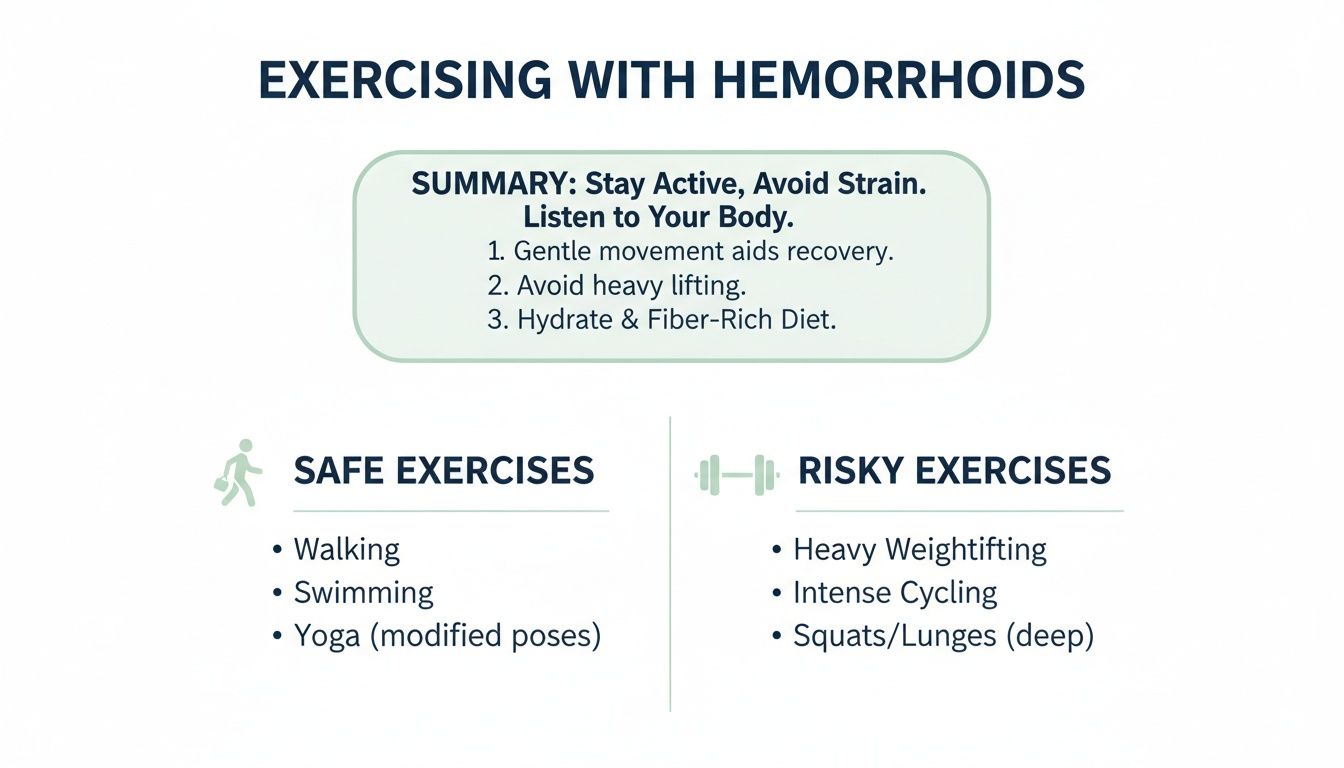
As you can see, it all comes down to pressure. The best exercises let your body move fluidly, while the risky ones involve the kind of straining that can turn a minor issue into a major one.
To make it even clearer, here’s a simple table to use as a quick reference.
Safe vs Risky Exercises: A Quick Reference
| Activity Type | Why It's Recommended | Activity Type to Avoid | Why It's Risky |
|---|---|---|---|
| Walking & Brisk Walking | Boosts circulation and promotes digestion without straining. | Heavy Weightlifting | Increases abdominal pressure and forces you to strain. |
| Swimming & Water Aerobics | The water supports your body, removing pressure from the pelvic area. | Intense Sit-ups & Crunches | Puts direct, focused pressure on the core and rectum. |
| Yoga & Pilates (Modified) | Improves flexibility and strengthens core muscles without high impact. | Cycling (on a hard seat) | The seat can put direct pressure on the affected area. |
| Light Elliptical or Recumbent Biking | Provides a cardio workout with minimal impact or direct pressure. | High-Impact Sports | Jarring movements can worsen swelling and discomfort. |
This table isn't about giving up your favorite workouts forever... it's about making smart swaps while you heal.
The Mental Hurdle of Working Out
It makes perfect sense to feel nervous or even scared about exercising when you’re in pain. The fear of making things worse can be a real roadblock.
But understanding what helps and what hurts puts you back in the driver's seat. The most important rule is to listen to your body. If any movement causes sharp pain or just feels wrong, that’s your signal to stop. This guide is here to give you the confidence to stay active safely.
Why Certain Exercises Make Hemorrhoids Worse
To figure out if you can exercise with hemorrhoids, you first have to understand what causes a flare-up. It all boils down to one key factor... intra-abdominal pressure.
Think of your abdomen as a water balloon. When you strain, hold your breath, or lift something heavy, you’re squeezing that balloon. That spike in pressure pushes down on the veins in your pelvic and rectal areas, causing them to swell and become painful.
This is exactly why some workouts can make your symptoms much worse. It’s not about movement itself, but the kind of strain it puts on your body.
The Pressure Problem in Your Workout
High-strain activities are the biggest culprits. They essentially force you to bear down, which is the last thing you want to do during a flare-up. When you put your body under that kind of stress, you're directly aggravating already-sensitive tissue.
Here are a few types of exercises that create this risky pressure:
- Heavy Weightlifting: Think squats, deadlifts, and leg presses. These moves require massive core stabilization, which often makes you hold your breath and strain, ramping up pressure on the rectum.
- Intense Core Workouts: Traditional sit-ups and crunches put a ton of force on your abdominal and pelvic floor muscles, which can easily worsen swelling.
- High-Impact Activities: The constant jarring from sports like running on hard surfaces can be uncomfortable and may irritate existing hemorrhoids.
The goal isn’t to give up on fitness. It's about understanding the mechanics of pressure so you can swap out problematic movements for safer ones while you heal.
The Hidden Danger of Prolonged Sitting
It’s not just intense movement that causes issues. Any activity involving prolonged sitting puts direct, sustained pressure on the rectal area. This includes spinning classes or long-distance cycling on narrow, hard seats.
Even just sitting at a desk for hours can make the problem worse by restricting blood flow. We dive deeper into this topic in our guide on how sitting too long can affect hemorrhoids.
Knowing which exercises increase this internal pressure is key. By avoiding activities that involve heavy straining, holding your breath, or prolonged direct pressure, you can stay active without making your hemorrhoids worse.
Best Exercises for Hemorrhoid Relief
Alright, let's talk about the good news. Switching up your workout isn't just about avoiding pain... it can actually help you heal faster. So, when you ask, “can I exercise with hemorrhoids?” the answer is a definite yes, as long as you choose helpful movements.
The trick is to find low-impact activities that improve your circulation and ease discomfort without putting strain on a sensitive area. This way, you can stay active... which is a huge help for preventing constipation... while giving your body space to recover.
Go-To Workouts for Comfort and Healing
Think gentle, supportive, and flowing. The exercises below are your best friends during a flare-up because they get your blood moving and strengthen key muscles without creating dangerous internal pressure.
Here are the top workouts that get a green light:
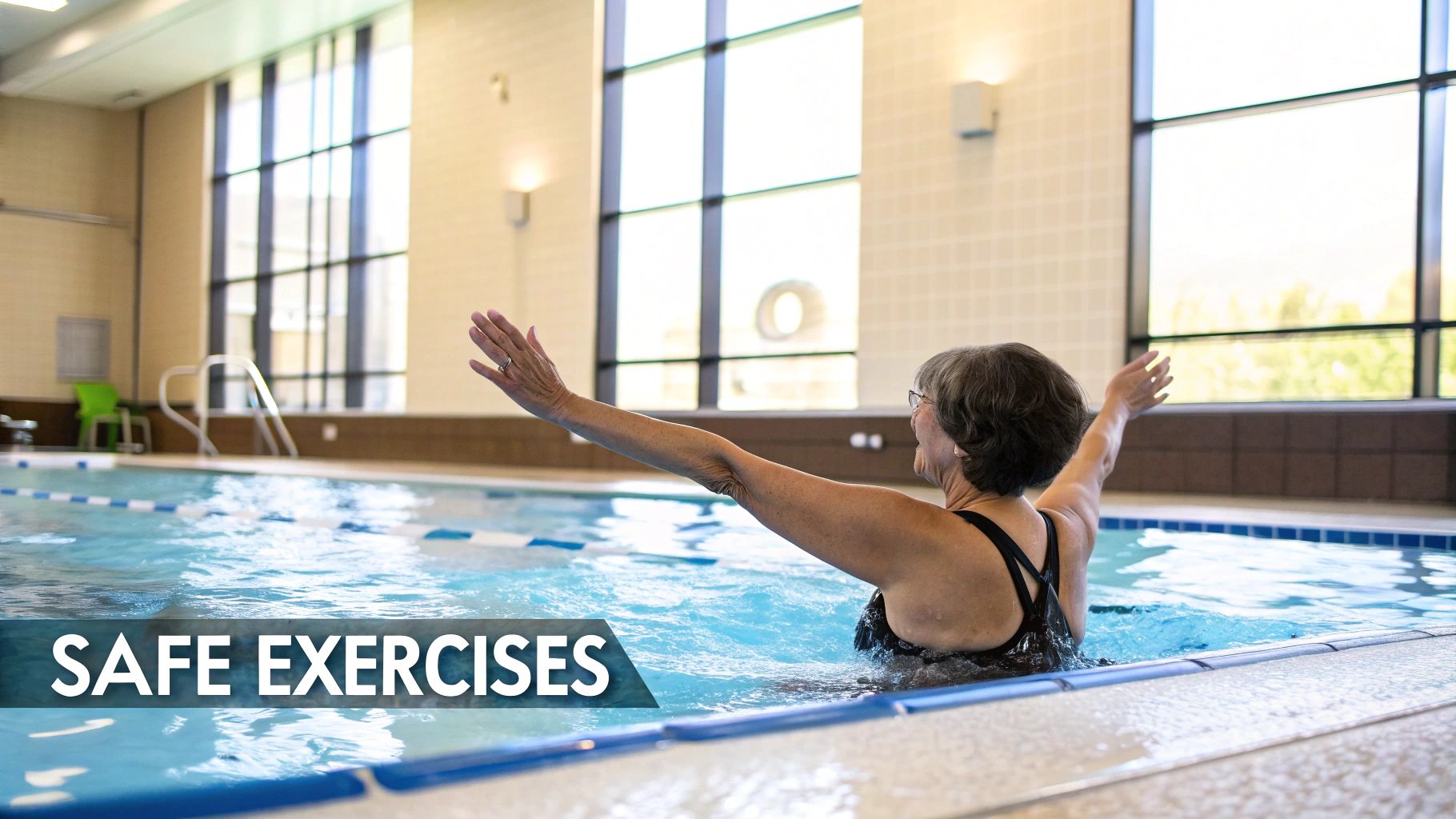
- Swimming and Water Aerobics: The buoyancy of water is a complete game-changer. It supports your body weight, taking all the pressure off your pelvic floor.
- Brisk Walking or Light Jogging: A simple walk is surprisingly powerful. It’s great for your heart and stimulates your bowels to keep things regular, all without jarring impact. Aim for 20-30 minutes on most days.
- Yoga and Pilates: Many poses are fantastic for improving flexibility and strengthening your core and pelvic floor. Just be sure to focus on gentle stretches and skip deep squats or intense crunches.
These activities don't just feel better... they're actively helping you heal by getting more blood flow to the area that needs it most.
The right exercise does more than just avoid irritation; it can actively promote healing by enhancing blood flow and reducing the risk of constipation, a primary hemorrhoid trigger.
Practical Tips for Safe Workouts
Even with the right exercises, how you do them really matters. A few simple tweaks to your technique can make all the difference.
- Breathe Correctly: Whatever you do, don't hold your breath. Always exhale during the hardest part of any movement to prevent the buildup of intra-abdominal pressure.
- Listen to Your Body: This is the golden rule. If you feel any sharp pain or your discomfort gets worse, just stop.
- Stay Hydrated: Drink plenty of water before, during, and after you exercise. Staying hydrated is key to keeping stools soft and avoiding straining.
By choosing smart activities like swimming or walking and paying close attention to your body’s signals, you can confidently stay active and support your overall well-being.
How to Modify Your Current Workout Routine
Good news... you probably don't have to give up the workouts you love. For most people wondering, “Can I exercise with hemorrhoids?” the answer isn’t about stopping, but about modifying. A few smart adjustments can make a world of difference.
This is a bigger issue for athletes than you might think. A 2023 study found that 34% of athletes also deal with hemorrhoids. The research pointed to high-strain sports like bodybuilding and cycling, which had even higher rates... affecting 48% and 57% of participants, respectively. You can dig into the details on how specific sports impact hemorrhoids.
Smart Swaps for Weightlifters
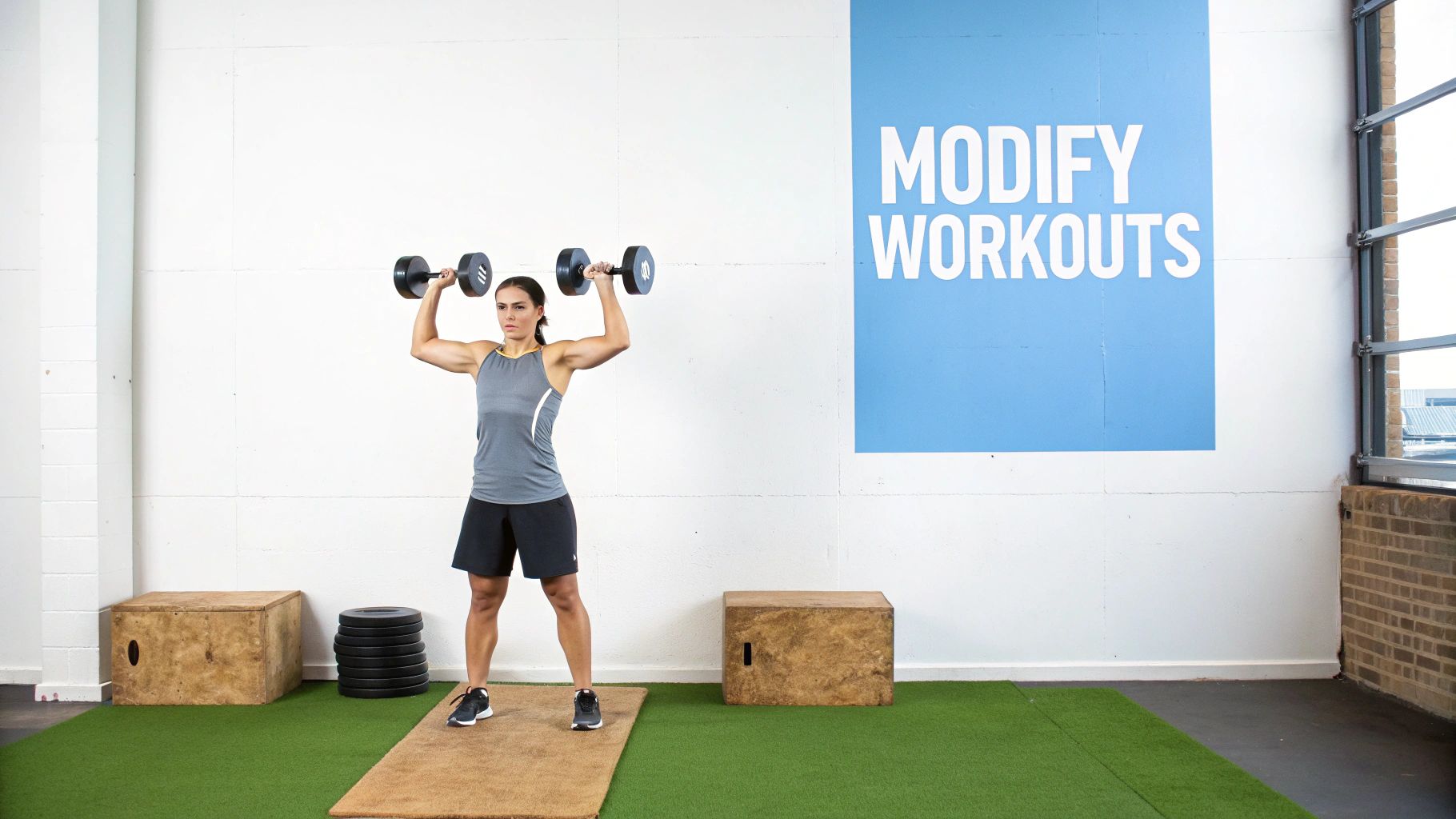
If you’re a lifter, the goal is to ease up on that intense intra-abdominal pressure. You can still build strength without putting your pelvic floor through the wringer.
- Go Lighter, More Reps: Instead of maxing out on heavy, low-rep sets, try switching to lighter weights with more repetitions.
- Master Your Breathing: This one is non-negotiable. Always exhale during the hardest part of the lift. Holding your breath creates that dangerous spike in internal pressure.
Modifications for Cyclists and Spin Enthusiasts
Cycling puts direct pressure on a very sensitive area. A few simple tweaks can make your ride much more comfortable.
- Upgrade Your Seat: Swap your narrow saddle for one that's wider and has more cushioning to distribute your weight more evenly.
- Take Frequent Breaks: Hop off the bike every 15-20 minutes to stand, stretch, and get the blood flowing again.
- Adjust Your Position: Try sitting a bit more upright to shift pressure away from your sit bones.
You don't have to choose between your fitness goals and your comfort. Small, intentional changes can allow you to continue your favorite activities safely.
Adjusting Your Core Routine
A strong core is vital, but classic ab exercises like sit-ups and crunches can aggravate hemorrhoids.
It’s better to focus on stabilization exercises that strengthen your core without the strain:
- Planks: These are fantastic for strengthening your entire core without a risky crunching motion.
- Bird-Dog: This move builds core stability while keeping pressure off the pelvic floor.
- Glute Bridges: These fire up your glutes and lower back without straining your abdomen.
By making these simple, practical adjustments, you can keep chasing your fitness goals without living in fear of a painful flare-up.
Essential Pre- and Post-Workout Care
When you’re dealing with hemorrhoids, what you do before and after your workout is just as important as the exercises you choose. The right self-care routine can prevent irritation, calm swelling, and help you heal.
Thinking, "can I exercise with hemorrhoids?" often comes down to how well you prepare and recover. Before you even start moving, make sure you're well-hydrated. Drinking enough water is key to keeping stools soft, which prevents the straining that makes hemorrhoids worse.
Before You Start Your Workout
A simple, protective step can make a world of difference. Applying a thin layer of a soothing ointment or cream, like one from our Revivol-XR line, to the affected area creates a barrier that minimizes friction from sweat and movement.
This small prep work allows you to focus on your workout, not your discomfort.
After Your Workout Is Done
Once you’ve finished, your focus should shift to gentle cleansing and recovery. Rubbing the area with a dry, rough towel is a definite no-go. Instead, pat the area clean with a soft, damp cloth or hop in a cool shower.
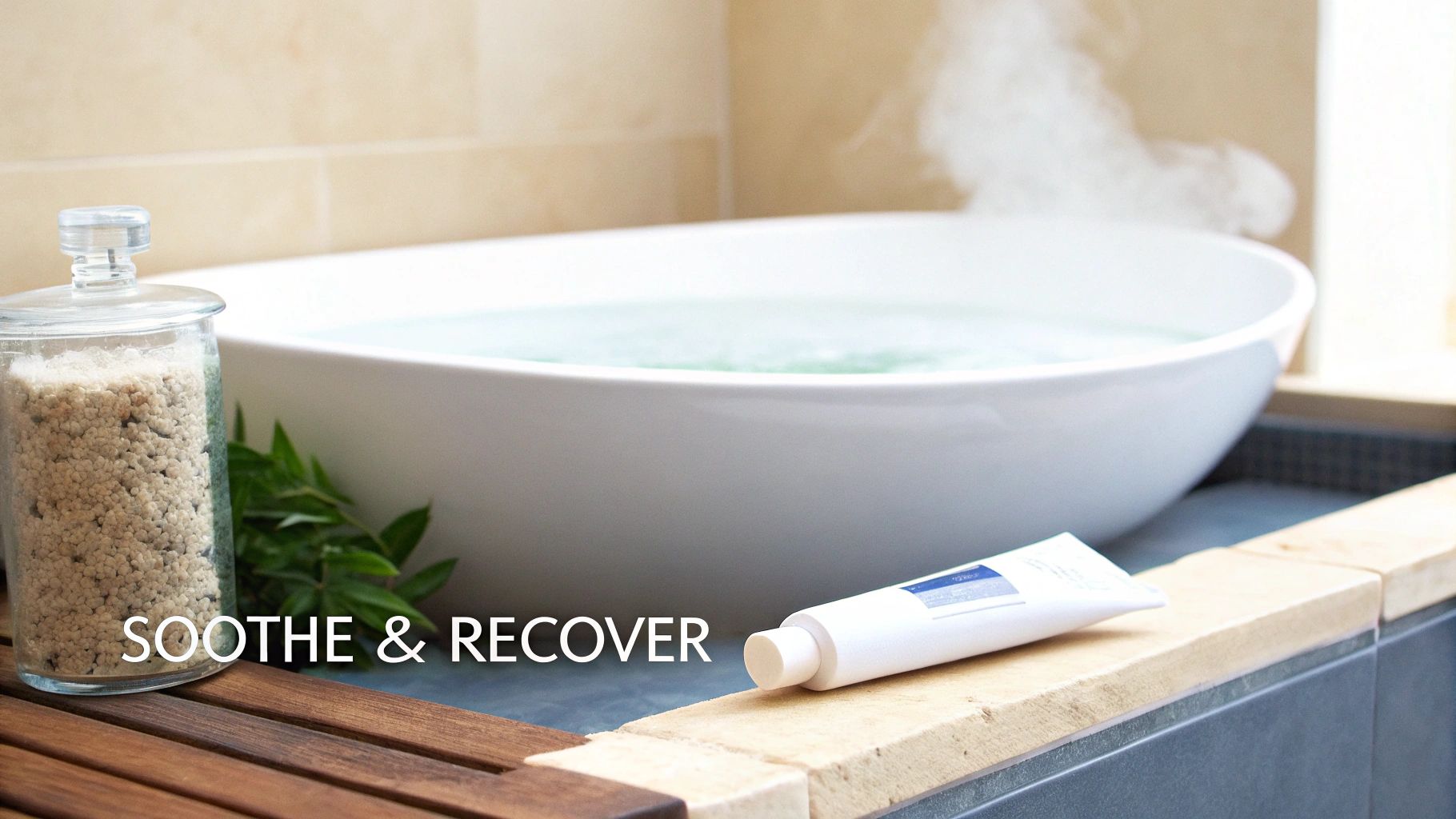
But the real game-changer after a workout? A sitz bath. This isn’t just about relaxation... it's a potent therapeutic tool.
A warm sitz bath for 15-20 minutes after exercise boosts blood flow to the rectal area. This simple act can dramatically reduce inflammation, ease pain, and speed up healing.
To get even more out of your soak, try adding therapeutic salts. Learning the ins and outs of this ritual can be a turning point, and you can explore more in our guide to using a sitz bath for hemorrhoids.
By weaving these simple habits into your routine, you can keep moving safely. This proactive approach helps you manage your symptoms, turning exercise into a helpful part of your healing journey.
When to Pause Exercise and See a Doctor
While you can usually exercise with hemorrhoids, it’s not always a good idea. The most important rule is to listen to your body. Some symptoms are clear signals that you need to stop and talk to a doctor.
A little discomfort is one thing, but sharp, unrelenting pain is a red flag. If your pain escalates to a severe, stabbing sensation during or after your workout, it’s time to pause. This could point to a more serious problem, like a thrombosed hemorrhoid, which needs medical attention.
Red Flags to Watch For
Ignoring your body’s warning signs can make things much worse. Be mindful of how you feel and stop exercising immediately if these symptoms show up.
- Excessive or Persistent Bleeding: A small streak of bright red blood on toilet paper can be common. But if the bleeding is heavy, won't stop, or gets worse, that's a serious concern. Learn more in our guide to bleeding hemorrhoids.
- A Feeling of Prolapse: If you feel a bulge or lump coming out of your rectum that doesn’t go back inside on its own, you might have a prolapsed hemorrhoid. A doctor needs to look at this.
- Symptoms That Worsen Drastically: If swelling, itching, or pain gets significantly worse even with gentle exercise and home care, it’s a clear sign your current routine isn't helping.
Your health always comes first. While products like Revivol-XR offer excellent symptom management, they are not a substitute for a professional diagnosis when your body is sending clear warning signals.
If you experience any of these symptoms, don't try to power through the pain. Stop your workout, try gentle care like a sitz bath, and make an appointment with your healthcare provider.
Your Questions About Exercise and Hemorrhoids Answered
Let's dig into some of the most common questions people have about hemorrhoids and fitness. General advice is a good start, but sometimes you just need a straight answer.
It’s no secret that hemorrhoids are incredibly common, affecting a massive 50-85% of people at some point. A 2023 study confirmed a direct link between a higher BMI and an increased risk of hemorrhoids, even for active people. The good news? Most mild cases get better with simple lifestyle adjustments, including smart exercise. You can read the full research on hemorrhoid risk factors if you want to dive deeper.
Are Squats Completely Off-Limits?
For the most part, you should steer clear, especially deep, heavy squats. That movement cranks up the pressure inside your abdomen... exactly what you’re trying to avoid.
Gentle, bodyweight-only partial squats might be okay if they don’t cause pain. The trick is to focus on engaging your pelvic floor muscles, avoid straining, and never hold your breath.
How Soon Can I Exercise After a Flare-Up?
This is when "listen to your body" is the best advice. If you’re dealing with a lot of pain, swelling, or bleeding, rest for a few days. Stick to very gentle movement, like short, slow walks.
Once the worst symptoms calm down, you can slowly work your way back to low-impact activities like swimming or using an elliptical. Don't jump right back into your old routine; give your body time to heal.
What Are the Safest Exercises for Postpartum Hemorrhoids?
New moms need to be extra gentle. The goal is to carefully restore core strength without putting extra pressure on sensitive areas.
- Pelvic Floor Exercises (Kegels): These are fantastic for rebuilding the muscles that support your rectum.
- Walking: It sounds simple, but a good walk is one of the best and safest ways to get moving again.
- Postnatal Yoga: Find a class specifically designed for postpartum recovery where the instructor knows which poses to avoid.
- Swimming: Once your doctor gives you the green light, the buoyancy of water makes for an amazing, pressure-free workout.
Do Kegel Exercises Help or Hurt Hemorrhoids?
They absolutely help. When your pelvic floor muscles are strong, they provide better support for the veins in your rectum. This reduces straining and improves blood flow to the entire area.
Think of it as building a better support system from the inside out. Doing Kegels regularly is a proactive step that strengthens the very foundation that can keep hemorrhoids from getting worse.
At Hemorrhoid.com, we believe that the right care plan empowers you to stay active and live comfortably. Combining smart exercise with effective, targeted relief is the key. Our Revivol-XR products are designed to support your active lifestyle, providing comfort when you need it most. Learn more at https://hemorrhoid.com.