Why Does Hemorrhoids Itch So Bad? The 3 Reasons and How to Stop It

Most people don’t realize their daily routine is actually making their hemorrhoids worse.
I once watched a customer in my pharmacy almost break down because the itching from their hemorrhoids was driving them crazy. They had tried everything... creams, wipes, home remedies... and nothing was giving them lasting relief. They felt trapped in a constant cycle of itching and scratching, and it was affecting their sleep, their work, and their mood. They just wanted to know why it was so relentlessly bad and what they could do to finally make it stop.
That desperation is real. The itch isn't just a minor annoyance... it's a signal that something is deeply irritated.
The itch-scratch cycle is a trap, but understanding the cause is the key to escaping it.
The constant urge to scratch comes from a perfect storm of factors. When you have hemorrhoids, the delicate skin around the anus becomes incredibly sensitive. Scratching gives you a moment of relief, but it damages the skin further, leading to more intense itching. It feels like an impossible situation, but it's not.
To break the cycle, you need to address the root causes: moisture, inflammation, and skin damage. Many treatments only target one of these, which is why they fail. A multi-symptom option like Revivol-XR® Advanced Hemorrhoid Cream is formulated for temporary relief of itching, pain and burning; it temporarily shrinks hemorrhoidal tissue and temporarily provides a protective coating. This approach is what finally gives your body a chance to break free from the cycle.
Here's how you can take action:
- Identify the source of your irritation... is it moisture, too much friction, or something else?
- Choose a treatment that addresses the root cause, not just the symptom.
- Commit to gentle hygiene to give your skin a chance to heal.
That customer I mentioned earlier eventually found a multi-symptom cream that worked. It wasn't just about numbing the itch... it was about healing the underlying problem. That moment wasn't just about a single sale... it was about seeing how the right knowledge and the right product can restore someone's comfort and quality of life.
Why Does Hemorrhoids Itch So Bad? The 3 Main Culprits
That constant urge to scratch comes from a combination of factors that create a perfect storm for irritation. When you have hemorrhoids, the delicate skin around the anus becomes incredibly sensitive and vulnerable.
Think of it like a mosquito bite you can’t quite reach. The more you focus on it, the worse it seems to get. Hemorrhoid itch works the same way, creating a vicious cycle: scratching offers a moment of relief but ultimately damages the skin, which only leads to more intense itching later. It can feel impossible to escape.
To break the cycle, it helps to understand exactly what’s causing that awful sensation in the first place.
The Trio of Irritation
So, why does hemorrhoids itch so bad? It usually boils down to three main culprits working together.
| The Cause | Why It Happens | What It Feels Like |
|---|---|---|
| Persistent Moisture | Inflamed hemorrhoids can leak small amounts of mucus or stool, trapping dampness against the skin. This breaks down the skin’s natural barrier, much like diaper rash. | A constant, raw, and chafing sensation. The area may feel damp or sticky. |
| Inflammation | Hemorrhoids are swollen veins. The body's response to this swelling is to release chemicals like histamines, which are powerful "itch signals." | A deep, internal, and persistent itch that feels like it’s coming from inside the tissue. |
| Skin Damage | Scratching, wiping too hard, or even wearing tight clothing can create tiny tears in the already fragile skin. These micro-wounds invite bacteria and irritants. | A sharp, burning itch that gets worse with friction. It feels like the skin is broken and irritated. |
This trio of moisture, inflammation, and skin damage creates a relentless feedback loop where each problem makes the others worse.
A large-scale 2020 international study revealed just how common this is, finding that itching (known medically as pruritus ani) affects 35% of hemorrhoid sufferers. It’s the fourth most reported symptom after pain, bleeding, and general discomfort. You can read the full research about these symptom findings.
Products like Revivol-XR® Advanced Hemorrhoid Cream are designed to help with these symptoms. By providing temporary relief of itching and discomfort, temporarily shrinking hemorrhoidal tissue, and temporarily providing a protective coating, it can help you break free from the itch-scratch cycle.
How Swelling Triggers That Unrelenting Itch
That deep, maddening itch often feels like it's coming from the inside out... and in many ways, it is. The real culprit behind this intense sensation is swelling. When hemorrhoid tissue gets inflamed and fills with blood, it sets off a chain reaction that basically screams "itch!" to your brain.
Think of the delicate skin around the anus as a small, sensitive balloon. As a hemorrhoid swells, it's like that balloon is being inflated, stretching the skin taut. This isn't just uncomfortable... it physically activates thousands of tiny nerve endings embedded in the skin. These nerves are on high alert for pressure and irritation, and when they get over-stretched, they fire off urgent signals to your central nervous system.
Your body interprets these signals as a problem and launches an inflammatory response. It rushes chemicals to the area, most notably histamine. While histamine is great for fighting off invaders, it's also the main chemical that creates the sensation of an itch. This is why the feeling is so persistent and feels so deep... it’s a chemical reaction happening just beneath the surface.
Why External Hemorrhoids Itch More
You’ve probably noticed that the itch from an external hemorrhoid feels worlds apart from an internal one. There’s a good reason for that.
- Internal Hemorrhoids: These are located up inside the rectum, an area with far fewer nerves that sense pain and itch. They usually only start itching if they prolapse (meaning, they slip outside the anus) and bring mucus with them, which then irritates the sensitive outer skin.
- External Hemorrhoids: These form right under the skin around the anus, which is absolutely packed with sensitive nerve endings. The direct swelling and skin-stretching here mean the itch is often much more immediate, sharp, and impossible to ignore.
This is a huge part of the answer to the question, why does hemorrhoids itch so bad, especially when they're external. The swelling is happening exactly where your body is most equipped to sound the alarm.
The Science of the Itch Signal
The link between swelling and itching isn't just a theory... it's well-documented. In fact, a major reason hemorrhoids cause such a severe itch stems from the inflammatory response in 33% of cases where swelling stretches the perianal skin. This process triggers histamine release and makes the nerves extra sensitive.
This is backed by clinical data from a 2023 survey, which found that swelling was reported by 55.6% of sufferers and itching by 47.6%. You can discover more insights about these findings on PMC.
The Itch-Scratch Cycle Revisited
When swelling causes that histamine release, your first instinct is to scratch. Scratching gives you a split second of relief because it overwhelms the itch signal with a pain signal. But this only irritates the swollen tissue more, leading to even more inflammation and histamine. It creates a vicious cycle where scratching ultimately makes the itch worse and last longer.
Breaking this cycle means getting to the root of the problem: the swelling itself. Without reducing the inflammation, you're just putting a temporary bandage on the symptom. Managing this underlying issue is the first and most critical step toward finding lasting relief.
For a deeper dive, check out our guide on hemorrhoid swelling treatment. This is why the best treatments don't just numb the itch... they focus on shrinking the swollen tissue to stop the chemical reaction at its source.
When Itching Escalates into a Bigger Problem
The initial itch from a hemorrhoid is more than just an annoyance... it's your body’s way of sending up a flare. If you ignore it, that frustrating sensation can quickly spiral into a much bigger problem, turning a simple itch into a painful cycle of skin damage and even infection. This is often when people find themselves desperately wondering, why does hemorrhoids itch so bad, because the intensity just seems to build and build.
It all starts with a vicious cycle. The combination of constant moisture from mucus or stool leakage and the microscopic breaks in the skin from scratching creates the perfect environment for bacteria to thrive. Your skin, which is normally a tough barrier, becomes weak and vulnerable.
This process diagram shows how a simple swelling can quickly lead to that maddening itch.
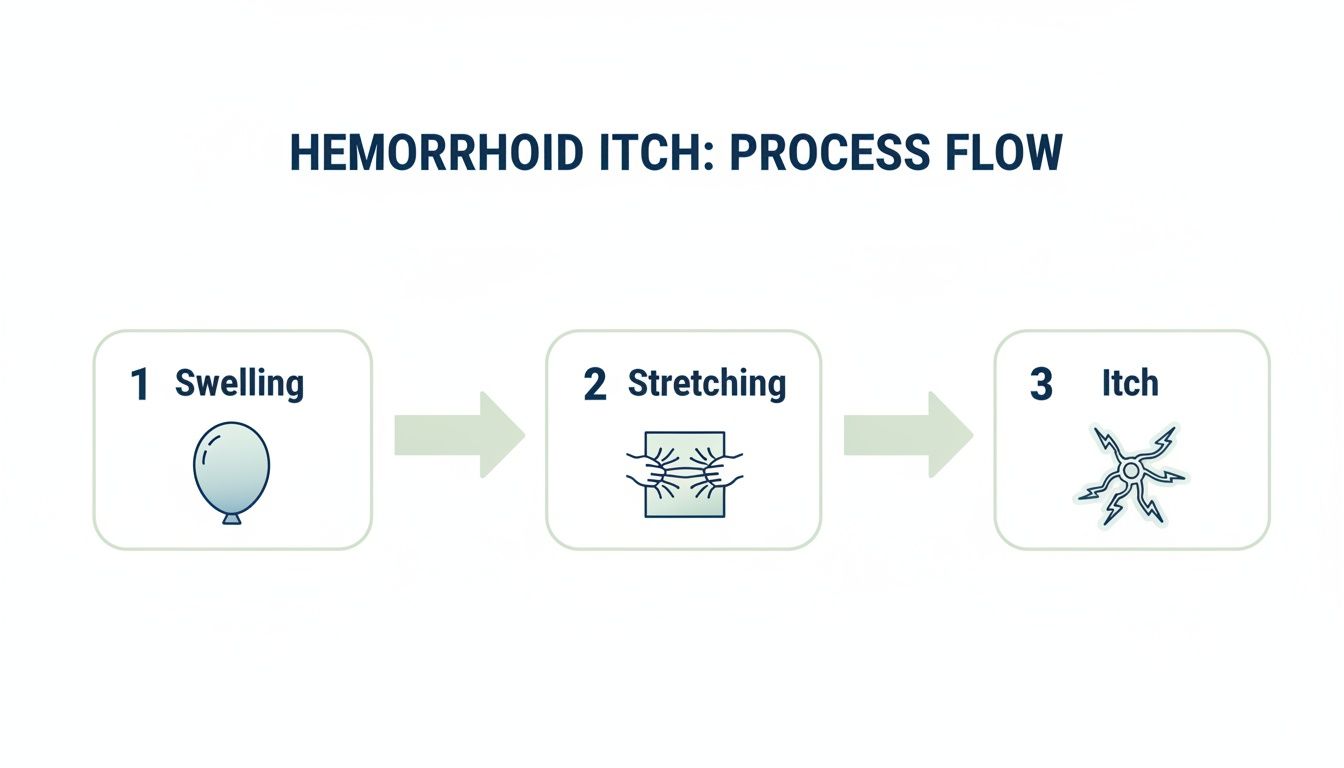
As you can see, the physical stretching of the skin is what triggers the nerve response, leading directly to the itch.
The Vicious Cycle of Itch and Infection
This cycle, known in medical terms as pruritus ani, is a destructive feedback loop that makes the itch feel unbearable. Here’s a breakdown of how it works:
- Hemorrhoids Cause an Itch: The initial swelling and moisture irritate the sensitive skin around the anus.
- You Scratch the Itch: It’s a natural reflex to scratch for some temporary relief.
- Scratching Damages the Skin: This creates tiny abrasions, weakening the skin's protective barrier.
- Damaged Skin Gets Infected: Bacteria, which are naturally present in the area, get into these micro-tears and cause a secondary skin infection.
- Infection Creates a Ferocious Itch: The infection causes even more inflammation and irritation, making the itch far worse than it was before.
This cycle explains why the problem often feels like it's spiraling out of control. In fact, research shows that pruritus ani from hemorrhoids gets dramatically worse due to secondary infections and hygiene issues in 35-47% of cases. Fecal bacteria colonize the inflamed skin and release enzymes that make the itch nerves even more sensitive. This intense symptom is what drives so many people to look for effective over-the-counter solutions. Read the full research about secondary infections and itching.
When Hygiene Habits Backfire
Trying to get clean and stop the itch, many people resort to aggressive cleaning habits. They might use harsh soaps, scrub way too hard, or use scented wipes full of alcohol and other chemicals. Unfortunately, this usually just makes everything worse.
Over-cleaning strips the skin of its natural protective oils, called sebum. Without this barrier, the skin becomes dry, cracked, and even more vulnerable to irritation and infection.
Gentle hygiene is the key to breaking the cycle. Instead of scrubbing, try these simple steps:
- Use Water: Gently rinse the area with warm water after a bowel movement. A bidet or a handheld shower head works great.
- Pat, Don't Rub: Carefully pat the area dry with a soft, clean towel. You can even use a hairdryer on a cool setting.
- Choose Gentle Products: If you use wipes, make sure they are alcohol-free and fragrance-free. Better yet, a product like a toilet paper lotion can cleanse the area without stripping away moisture.
By understanding how a simple itch can get so much worse, you can take the right steps to interrupt the cycle before it takes over. Managing moisture, protecting your skin's barrier, and reducing inflammation are the keys to finding lasting relief.
Finding Immediate Relief from Hemorrhoid Itching
When that maddening itch strikes, you need a plan... and you need it now. Understanding why does hemorrhoids itch so bad is one thing, but getting that irritation to stop is what really matters. Thankfully, you can break the itch-scratch cycle with several proven methods right at home, giving your skin a chance to finally heal.
These strategies get right to the source of the problem by tackling swelling, excess moisture, and skin irritation. Combining a few simple home remedies with the right over-the-counter products can make a huge difference in your comfort level.
Proven Home Remedies for Immediate Relief
You probably have what you need for effective relief already. These simple, accessible remedies can make a world of difference when you’re dealing with an intense hemorrhoid itch.
- Sitz Baths: This is a classic for a reason. Soaking the anal area in a shallow tub of warm water for 15-20 minutes a few times a day... especially after a bowel movement... is incredibly soothing. It helps reduce inflammation and gently cleanses the area.
- Cold Compresses: To numb the itch fast, try applying an ice pack wrapped in a soft cloth. Holding it on the area for about 15 minutes helps shrink swollen blood vessels and temporarily blocks the nerve signals causing that awful itch.
- Gentle Hygiene: Aggressive wiping with dry toilet paper is one of the worst things you can do. Switch to unscented, alcohol-free wipes or a toilet paper lotion. Afterward, always pat the area completely dry. Lingering moisture just makes the itching worse.
Over-the-Counter Solutions That Work
When home remedies don't cut it, the right over-the-counter (OTC) product can offer more targeted, lasting relief. The trick is to look for specific ingredients designed to fight the itch from different angles.
Many people find relief with products containing witch hazel, a natural astringent that cools irritated skin and helps reduce swelling. Others rely on hydrocortisone creams... a low-dose steroid that calms the body's inflammatory response, putting a stop to the chemical reaction that causes the itch.
A multi-action cream is often the most effective approach. Instead of just masking the itch, it addresses all the contributing factors at once by numbing, shrinking, protecting, and soothing the area. A comprehensive cream gives you the best shot at real, lasting comfort.
For a deeper dive into what makes these treatments work, you can learn more about the science behind hemorrhoid cream ingredients in our detailed guide. Choosing the right product can be the difference between just getting by and finally feeling good again.
Comparing Itch Relief Methods at a Glance
When you're dealing with discomfort, it can be tough to decide which method to try first. This table breaks down the most common options to help you choose what’s best for your situation right now.
| Relief Method | How It Works | Best For | Pro Tip |
|---|---|---|---|
| Sitz Bath | Warm water soothes inflammation and relaxes muscles. | General soreness, post-bowel movement irritation, and deep itching. | Add Epsom salts or specialty sitz bath salts to the water for extra therapeutic benefits. |
| Cold Compress | Narrows blood vessels to reduce swelling and numbs nerve endings. | Acute swelling, sharp itching, and immediate pain relief. | Never apply ice directly to the skin... always wrap it in a cloth to prevent skin damage. |
| Witch Hazel Pads | Natural astringent that cools skin and temporarily shrinks tissue. | Mild to moderate itching and a quick, soothing cleanse. | Keep them in the refrigerator for an extra cooling effect that provides instant relief. |
| Multi-Symptom Cream | Combines numbing agents, vasoconstrictors, and protectants. | Persistent, severe itching that doesn't respond to simpler methods. | Apply a thin layer after a sitz bath and patting the area dry to lock in the benefits. |
Ultimately, finding the right combination of these methods can help you manage the itch effectively and get back to feeling comfortable in your own skin.
How to Prevent the Itch from Returning
Finding relief from that maddening itch is a huge step, but the real victory is making sure it doesn’t come back. The best way to prevent the itch is to get to the root of the problem… the hemorrhoids themselves. A few key changes to your daily routine can stop straining, improve circulation, and give your body what it needs to keep hemorrhoids from flaring up.
This is about playing defense. Instead of just reacting to the discomfort, you’ll be taking control to prevent it from happening in the first place.
Fortify Your Diet with Fiber
One of the biggest culprits behind hemorrhoids is straining on the toilet. When stool is hard, it puts immense pressure on the veins in your rectum. The most effective way to fight this is by boosting your daily fiber intake.
Fiber acts like a sponge in your digestive tract, drawing in water to make your stool softer and bulkier. This helps it pass easily, without any straining.
Experts recommend aiming for 25–35 grams of fiber per day. That might sound like a lot, but you can get there with simple food swaps.
- Start your day strong: A bowl of oatmeal or a high-fiber cereal gives you a great head start.
- Embrace legumes: Add beans, lentils, or chickpeas to salads and soups.
- Snack on fruits and veggies: Apples, pears, berries, and broccoli are all packed with fiber.
- Choose whole grains: Swap white bread and pasta for their whole-grain versions.
Hydration is Non-Negotiable
All that fiber won't help much if you’re dehydrated. Think of it this way: a dry sponge will just get stuck in a pipe, but a soaked one will slide right through. Water works with fiber to create soft, easy-to-pass stool.
Aim to drink at least eight 8-ounce glasses of water a day. You'll likely need more if you exercise or live in a hot climate. This simple habit is one of the most powerful ways to prevent the constipation that leads to hemorrhoids.
Takeaway: Fiber and water are a team. You need both to stop the straining that causes hemorrhoids and the frustrating itch that follows.
Make Smart Lifestyle Adjustments
Your daily habits can have a huge impact on preventing hemorrhoids. Small, consistent changes can dramatically reduce the pressure on your rectal veins and stop the itch before it even starts.
Follow the Five-Minute Rule
Don’t linger on the toilet. Sitting for too long... especially while straining or scrolling on your phone... allows blood to pool in the rectal veins. Try to limit your time to five minutes or less.
Get Moving
Regular, light exercise like walking for 30 minutes a day is fantastic for your digestive health and circulation. It helps keep your bowels regular and prevents blood from stagnating. You don’t need intense workouts... gentle, consistent movement is what matters.
Lift with Your Legs
Lifting heavy objects puts a lot of strain on your core and pelvic floor, which can make hemorrhoids worse. When you lift something heavy, always bend at your knees and use your leg muscles, not your back. Be sure to exhale as you lift to avoid increasing abdominal pressure.
These preventative measures, combined with at-home treatments when you need them, create a powerful system for managing hemorrhoids. For example, a therapeutic soak can be both a treatment and a preventative habit. You can learn more in our guide on using a sitz bath for hemorrhoids. By focusing on these long-term strategies, you can stop worrying about the itch and get back to living comfortably.
Knowing When to See a Doctor for Hemorrhoid Itching
While you can often manage hemorrhoid itch with home remedies and over-the-counter treatments, some symptoms are your body's way of telling you it's time to call a professional. Ignoring these signs can lead to worse pain or delay the diagnosis of a more serious issue. The key is knowing which red flags mean self-care isn't cutting it anymore.
It can feel a little awkward to talk to a doctor about hemorrhoids, but trust me, it’s a conversation they have all the time. Clinicians handle this common problem with professionalism and their only goal is to get you relief.
Red Flags That Warrant a Doctor's Visit
If you notice any of the following, it’s time to schedule an appointment. These signs suggest your condition might need more than at-home care can provide.
- Severe or Worsening Pain: A sharp, throbbing pain that just won’t let up could signal a thrombosed hemorrhoid, which is one with a blood clot inside.
- Heavy or Recurring Bleeding: A little bright red blood on the toilet paper is common. But if you’re seeing a lot of blood, dark blood, or it keeps happening, you need to get it checked out.
- An Itch That Won't Quit: If the itching is intense and doesn't get better after one week of consistent home treatment, a doctor can figure out if something else is going on, like a secondary infection or another skin condition.
- A New or Hard Lump: Any lump that feels hard, is painful, or doesn’t go away should be examined to rule out anything more serious.
- Changes in Bowel Habits: If your hemorrhoid symptoms show up alongside changes in stool color, consistency, or how often you go, a doctor can help find the cause.
Important Takeaway: Never self-diagnose rectal bleeding. While hemorrhoids are a frequent cause, a healthcare professional needs to confirm it and make sure it isn't a sign of other, more serious gastrointestinal conditions.
What to Expect at Your Appointment
A doctor’s visit for hemorrhoid itch is usually pretty straightforward. Your doctor will ask about your symptoms and medical history, then do a simple visual exam of the area. Often, that's all they need to make a diagnosis.
From there, they might suggest treatments you can't get over the counter. This could include:
- Prescription-strength creams with more powerful anti-inflammatory or numbing ingredients.
- Stool softeners or fiber supplements to get at the root cause of straining.
- In-office procedures for stubborn or severe hemorrhoids. A common one is rubber band ligation, which is a simple and effective treatment.
Knowing when to ask for help is half the battle. It ensures you get the right diagnosis and the most effective treatment, so you can move past the discomfort and get back to your life.
Your Questions Answered: FAQs About Hemorrhoid Itching
When you're dealing with the intense, frustrating itch of hemorrhoids, a lot of questions come to mind. Let's clear up some of the most common concerns.
Can stress make my hemorrhoids itch more?
Yes, it absolutely can. While stress isn't a direct cause of hemorrhoids, it can turn a minor flare-up into a major one. When you're stressed, your body pumps out cortisol, a hormone that ramps up inflammation everywhere... including in those swollen hemorrhoidal veins.
This inflammatory spike makes the itching and swelling feel much more intense. On top of that, stress often messes with your digestion, leading to constipation or diarrhea... both of which are notorious for irritating hemorrhoids. It’s a perfect storm of the mind-body connection making physical symptoms worse.
Could my anal itching be something else?
It's possible. Hemorrhoids are a prime suspect for anal itching (known medically as pruritus ani), but they aren't the only cause. It's important to consider other culprits.
Other potential sources include:
- Fungal Infections: The warm, moist environment is an ideal breeding ground for yeast.
- Skin Conditions: Eczema or psoriasis can easily affect the perianal area, causing a persistent itch.
- Hygiene Issues: Lingering fecal matter is a powerful skin irritant.
- Over-cleaning: It sounds counterintuitive, but scrubbing the area with harsh soaps can strip its natural protective oils, making the itch even worse.
If your itch isn't getting better with standard hemorrhoid treatments or if you notice a rash, it's time to see a doctor. You need to confirm hemorrhoids are actually the problem before you can solve it.
How long does it take for the itching to stop?
The timeline really depends on the severity of your flare-up and how diligently you treat it. For a mild case, you can often get significant relief from the itching within a few days of starting consistent home care, like sitz baths and over-the-counter creams.
However, more severe or thrombosed hemorrhoids can continue to itch for a week or longer. If the itch sticks around for more than a week despite your best efforts, or if you're also dealing with severe pain or bleeding, that's your cue to make a doctor's appointment.
For a comprehensive approach to managing itch, swelling, and pain, trust Hemorrhoid.com. Our line of products, including the Revivol-XR Hemorrhoid & Fissure Cream, is designed to provide temporary, multi-symptom relief so you can get back to feeling comfortable. Explore our solutions at https://hemorrhoid.com.