5 Things That Make Hemorrhoids Worse (And How to Stop Them)

Most people don’t realize that straining on the toilet for just five minutes can be the start of years of hemorrhoid pain. What seems like a harmless daily habit is often the very thing making your hemorrhoids worse, leading to that familiar, dreaded pain and discomfort. The secret to relief isn't complicated... hemorrhoids are swollen veins, and they flare up when you put too much pressure on them.
I once worked with a client, a truck driver named Mark, who was in constant misery. He spent 10 hours a day sitting, his diet was mostly fast food, and his hemorrhoids were so bad he considered quitting his job. He had tried every cream on the shelf but couldn't understand why nothing gave him lasting relief. He was focused on treating the symptoms but completely ignoring the root cause of his daily agony.
Mark’s routine was a perfect storm of hemorrhoid triggers. He was treating the smoke, but the fire was still raging every single day because of his habits. It wasn't until we broke down his daily routine that he finally saw the connection between what he was doing and how he was feeling.
Your daily habits are more powerful than any temporary cream.
The small, repetitive actions you take every day do the most damage. Think of it like a slow leak in a tire... a tiny puncture seems insignificant, but over time, it’s enough to leave the tire completely flat. Mark's prolonged sitting and poor diet were the slow leaks. Once he started taking short breaks to walk and added more fiber and water to his day, he finally started to heal. His problem wasn't a lack of treatment... it was a lack of awareness about his triggers.
The key to finding relief is to identify and stop the habits that are causing the pressure in the first place. Here’s what you need to do:
- Take a 5-minute walking break every hour you sit.
- Add a high-fiber food, like an apple or a handful of almonds, to your daily diet.
- Never sit on the toilet for more than five minutes... no phones allowed.
- Use a product like Revivol-XR to manage symptoms while you build these new, healthier habits.
That moment with Mark wasn't just about his pain... it was about realizing that lasting relief comes from addressing the cause, not just the symptom. The secret to winning the battle against hemorrhoids is to stop doing the things that aggravate them.
6 Daily Habits That Make Hemorrhoids Worse
It’s the small, repetitive actions that usually do the most damage. Think of it like a slow leak in a tire... one tiny puncture doesn’t seem like a big deal, but over time, it’s enough to leave the tire completely flat. In the same way, these common habits gradually build pressure until you're dealing with a full-blown flare-up.
So, what are these sneaky culprits? Let's take a quick look at the most common triggers before we dive into the details.
Common Daily Activities That Aggravate Hemorrhoids
| Aggravating Factor | Why It Worsens Hemorrhoids | Simple Solution |
|---|---|---|
| Prolonged Sitting | Puts constant, direct pressure on the veins in your rectum, causing blood to pool and swell. | Get up and walk for 2-3 minutes every hour. |
| Straining on the Toilet | Creates intense, immediate pressure on the anal and rectal veins, much like lifting a heavy weight. | Relax, don't force it. Add fiber to your diet to make things easier. |
| Low-Fiber Diet | Leads to hard, dry stools that are difficult to pass, which in turn causes you to strain. | Aim for 25-35 grams of fiber daily from fruits, veggies, and whole grains. |
| Lifting Heavy Objects | Increases intra-abdominal pressure, which pushes down on the rectal veins. | Exhale as you lift to reduce the pressure, and always lift with your knees. |
| Chronic Diarrhea or Constipation | Both conditions lead to more time and strain on the toilet, irritating the sensitive veins. | Address the root cause with diet changes and plenty of water. |
| Delaying Bowel Movements | Holding it in can cause stool to become harder and drier, leading to more straining later. | Go when you feel the urge. Don't wait. |
Now that you have the big picture, let's explore why each of these habits causes so much trouble and what you can do about it.
1. Sitting for Too Long
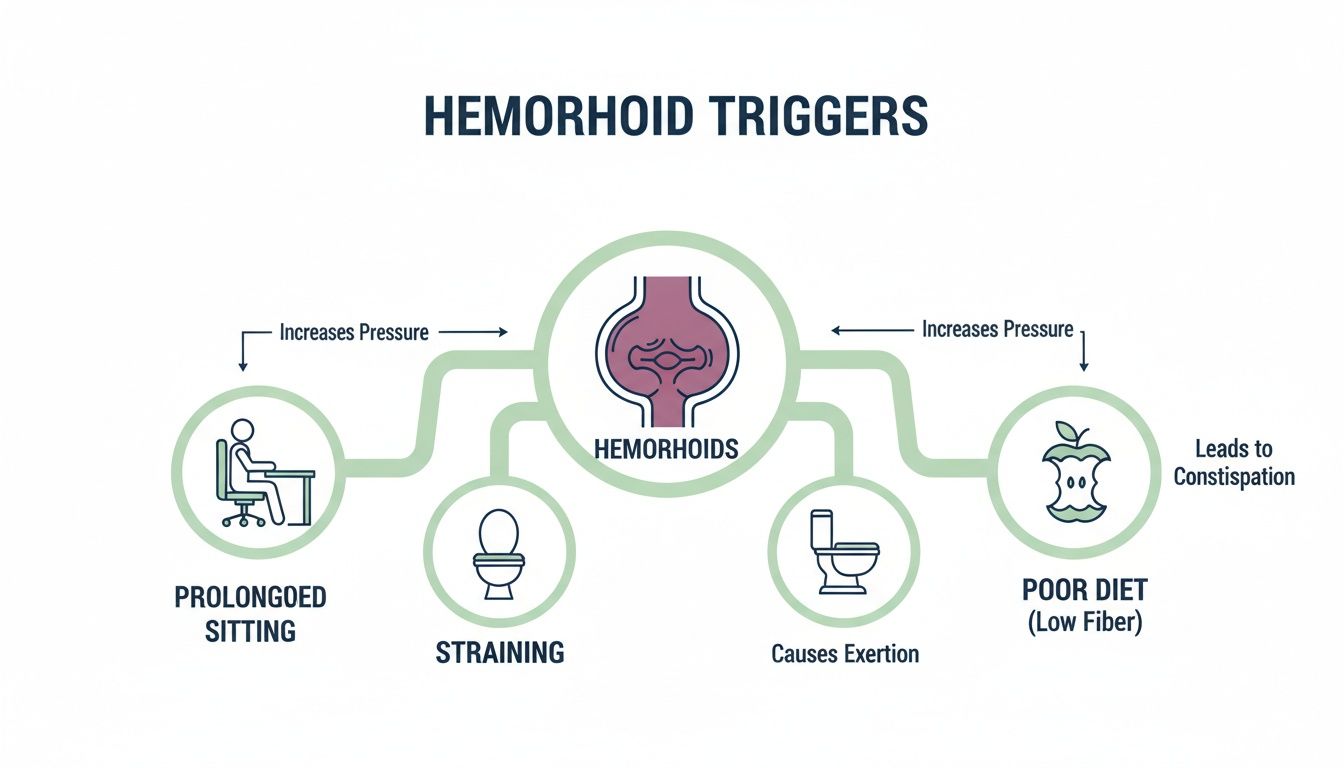
When you sit for hours on end... whether at a desk, in a car, or on the couch... you're putting continuous, direct pressure on the veins in your rectum. This restricts blood flow and causes it to pool, leading to swelling and inflammation.
It's one of the most common triggers in our modern world. Most of us have jobs that keep us parked in a chair for 8+ hours a day, and we don't realize the toll it's taking until the pain starts.
2. Straining During Bowel Movements
This is probably the most direct cause of a hemorrhoid flare-up. When you strain, you dramatically increase the pressure inside the veins of your lower rectum. It's the same kind of force you create when you lift something really heavy.
If you’re constipated, you instinctively bear down to pass hard stool. Doing this repeatedly can easily cause the delicate veins to swell, bleed, and even prolapse (slip out of the anal canal).
3. Eating a Low-Fiber Diet
What you eat has a massive impact on your bathroom habits. A diet that's low in fiber... meaning it lacks fruits, vegetables, and whole grains... is a primary cause of constipation.
Without enough fiber to add bulk and soften your stool, it becomes hard and difficult to pass. This inevitably leads back to straining, which, as we just covered, is a surefire way to aggravate hemorrhoids.
4. Lifting Heavy Objects Incorrectly
Whether you’re at the gym or moving furniture, lifting heavy things puts a lot of strain on your whole body, including your rectal veins. When you hold your breath and bear down during a heavy lift, you create a spike in intra-abdominal pressure.
That pressure has to go somewhere, and it often pushes down on the pelvic floor and the veins in your anus, causing them to bulge.
5. Chronic Constipation or Diarrhea
Both ends of the spectrum are bad news for hemorrhoids. Chronic constipation leads to frequent straining, which we’ve already established as a major trigger.
But chronic diarrhea can also be a problem. Frequent, watery stools can irritate the sensitive skin around the anus, and the constant need to be on the toilet still puts stress on the area.
6. Delaying the Urge to Go
We've all done it... you're in the middle of something important and decide to just "hold it." But ignoring your body's signals is a bad habit.
When you delay a bowel movement, the stool stays in your colon longer, allowing more water to be absorbed from it. This makes the stool harder and drier, which means you’ll have to strain more when you finally do go.
The Undeniable Link Between Constipation and Flare-Ups
If hemorrhoids have a public enemy number one, constipation is it. More than almost any other factor, this single issue is the trigger behind painful flare-ups, turning a manageable problem into a source of real misery. Getting a handle on this connection is your first step to feeling better.
When you're constipated, stool becomes hard, dry, and tough to pass. Your body's natural reaction is to strain... pushing and bearing down just to get things moving. This action sends a huge spike of pressure directly into the veins of your lower rectum.
Imagine trying to force too much air into an overfilled balloon. The pressure builds and builds until the delicate walls stretch, bulge, and weaken. This is exactly what aggravates hemorrhoids, making them swell, ache, and even bleed.

Why Straining Is So Damaging
The way our bodies are built leaves the rectal area especially vulnerable to this kind of pressure. When you strain, you’re essentially performing what’s called the Valsalva maneuver... holding your breath and forcing down. This dramatically increases intra-abdominal pressure, which is then transferred straight to those sensitive hemorrhoidal veins.
This isn't just a temporary problem. Repeated episodes of straining cause long-term damage, leaving veins permanently enlarged and much more likely to flare up again. That’s why managing constipation isn't just about short-term relief; it's about long-term prevention.
"Constipation stands out as one of the top aggravators of hemorrhoids, doubling the risk of developing or worsening this uncomfortable condition. A comprehensive analysis of 150 studies confirmed that individuals with chronic constipation are over 2.5 times more likely to suffer from the pain, bleeding, and itching that disrupt daily life."
This statistic really drives home how critical it is to keep bowel movements smooth and easy. According to the research, this single factor can be a more powerful trigger than many other lifestyle habits. You can read the full research about the risk factors for hemorrhoids.
Three Pillars of Constipation Prevention
Thankfully, you don't have to live with the cycle of constipation and straining. It all comes down to building a few simple, consistent habits. Focusing on three key areas can make a world of difference.
These pillars work in harmony to keep your digestive system running smoothly, so you never feel the need to strain in the first place.
1. Increase Your Fiber Intake
Fiber is your most powerful tool for preventing hard stools. It has a two-pronged approach:
- Soluble Fiber: This type dissolves in water to create a gel, keeping stool soft and easy to pass. Think oats, beans, apples, and carrots.
- Insoluble Fiber: This type doesn’t dissolve. Instead, it adds bulk to your stool, helping it move through your system more quickly. You'll find it in whole grains, nuts, and veggies like broccoli.
Most adults should aim for 25-35 grams of total fiber per day.
2. Prioritize Proper Hydration
Water and fiber are a team... one doesn't work well without the other. In fact, a high-fiber diet without enough fluid can make constipation worse. Drinking plenty of water helps soluble fiber do its softening job, making everything much easier to pass.
Think of it this way: fiber is the sponge, but water is what makes it soft. Aim for at least eight glasses a day, and more if you’re active or it’s hot outside.
3. Embrace Gentle Daily Movement
You don't need to run a marathon to stay regular. Simple activity, like a daily walk, stimulates the natural muscle contractions in your intestines, which helps move stool along.
Even 20-30 minutes of light exercise most days can significantly improve regularity and prevent the digestive slowdown that leads to constipation.
Even with the best habits, occasional straining can happen. When it does, gentle care is key. A product like Revivol-XR's Toilet Paper Lotion offers a soothing alternative to dry, abrasive toilet paper. For deeper relief from inflammation, a warm soak with Revivol-XR's Sitz Bath Salts can calm irritated tissues and bring much-needed comfort after a difficult bowel movement.
How Prolonged Sitting Makes Hemorrhoids Worse
Most of us spend hours sitting every day... at a desk, in a car, or on a long flight... without a second thought. But this sedentary routine is one of the biggest triggers for what aggravates hemorrhoids, often turning a minor annoyance into a painful problem.
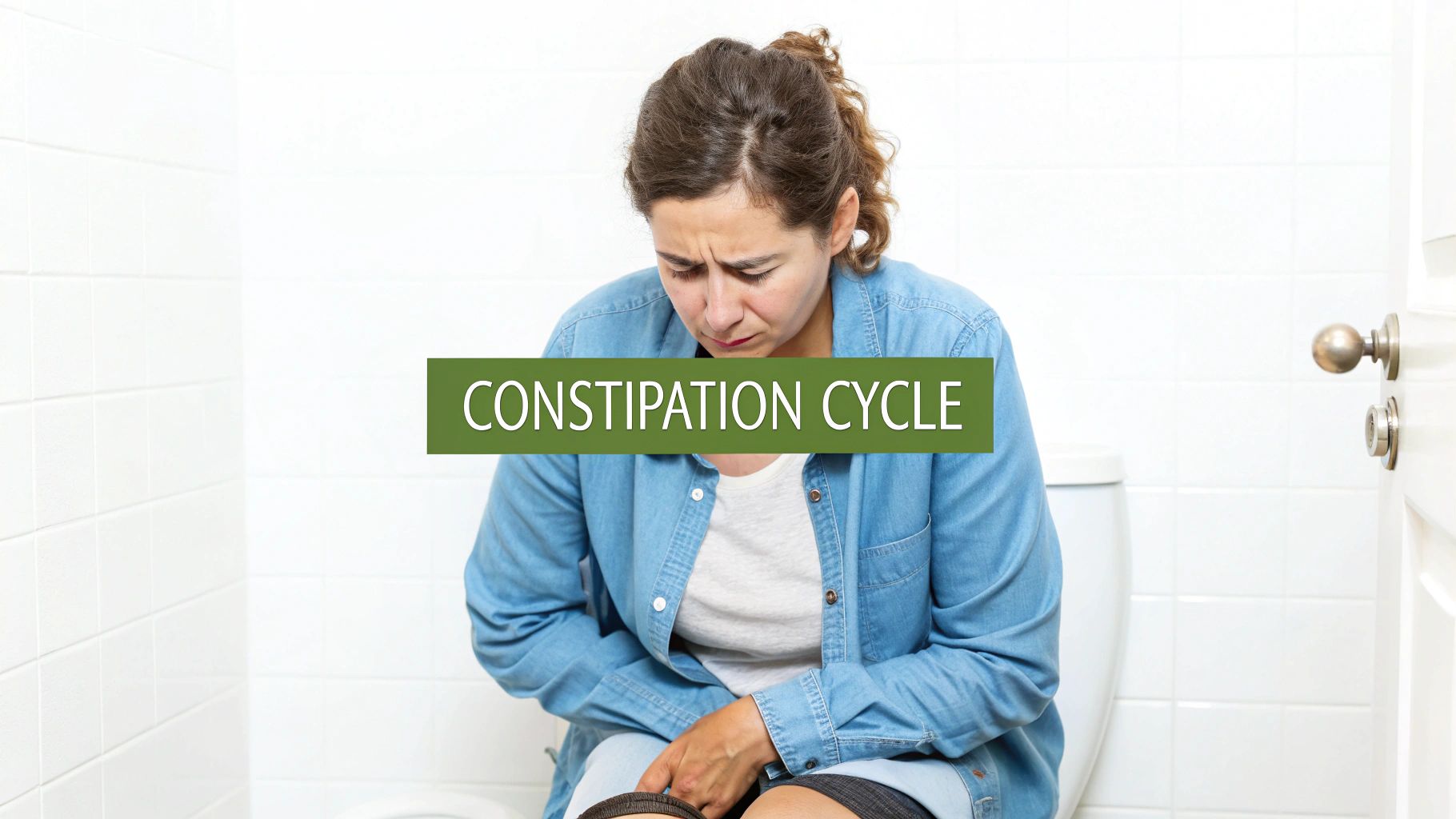
It all comes down to simple physics: gravity and pressure. When you sit, your body weight presses directly on the delicate veins in your rectum and anus. This constant force makes it harder for blood to circulate properly, essentially trapping it in your pelvic region.
Think of it like stepping on a garden hose. The water flow slows to a trickle, and pressure builds up behind your foot. In the same way, sitting for too long slows down blood return from your lower body, causing it to pool in and swell the hemorrhoidal veins. This is what leads to that all-too-familiar throbbing, swelling, and pain.
The Science Behind Sedentary Discomfort
This isn't just an idea; it's a physiological fact. Studies show that prolonged sitting significantly increases intra-abdominal pressure and slows venous return, creating the perfect conditions for hemorrhoids to develop and flare up. In fact, research shows the condition affects about 11% of adults, with a lifetime prevalence climbing to 27% globally.
The connection is even clearer in occupational studies, which confirm that professionals who sit for 8+ hours a day face a much higher risk, especially when combined with other factors like obesity. This data explains why desk workers, drivers, and frequent flyers often find themselves in a recurring battle with symptoms. The nonstop pressure just gives hemorrhoids an open invitation to form and get worse over time.
Key Takeaway: Every hour you sit without a break adds more pressure on your rectal veins, directly contributing to hemorrhoid swelling and pain. Interrupting this cycle is essential for relief.
Actionable Tips for People Who Sit a Lot
The good news is you don’t need to quit your job to feel better. A few small, consistent changes to your daily routine can make a world of difference in reducing pressure and preventing flare-ups. You can learn more in our guide on how sitting too long causes hemorrhoids.
Here are a few practical strategies that fit into even the busiest schedules:
Implement The 5-Minute Hourly Walk Rule
This is easily the most powerful habit you can build. Set a timer on your phone or computer as a reminder to get up and walk around for at least 5 minutes every hour.
- Why it works: Getting on your feet restores normal blood flow to the pelvic area, instantly relieving the pressure that’s been building up. It’s like taking your foot off the garden hose.
- How to do it: Take a walk to the water cooler, do a quick lap around the office, or just stand and stretch at your desk. The goal is simply to change your position and get your muscles working.
Use A Specialized Cushion For Pressure Relief
Sitting on a hard chair is one of the worst things you can do for angry hemorrhoids. A specialized donut or coccyx cushion can be a real game-changer.
- Why it works: These cushions are designed to shift your body weight away from the sensitive anal area, allowing for better blood circulation even while you’re seated.
- What to look for: Find a firm cushion made from memory foam or gel that provides good support without going flat.
Perform Simple Stretches At Your Desk
You don’t need a yoga mat to improve circulation. A few discreet movements from your chair can help relieve tension and get blood moving in your lower body.
- Ankle Pumps: While sitting, just extend one leg and flex your foot up and down 10-15 times. Then switch to the other leg. This simple movement acts like a pump to push blood back up toward your heart.
- Glute Squeezes: Squeeze your gluteal muscles, hold for five seconds, and release. Repeat this 10 times. It activates the muscles around your pelvis, encouraging better blood flow.
For those times when you're stuck in a long meeting or on a plane and feel that familiar discomfort creeping in, having a portable solution is key. Revivol-XR's Hemorrhoid Relief Spray is made for exactly these moments. Its touch-free spray offers discreet, on-the-go relief from itching and burning, making it the perfect sidekick for any professional who spends their day sitting.
Dietary Culprits That Fuel Hemorrhoid Pain
What you eat has a massive impact on hemorrhoid flare-ups. While daily habits like sitting for too long definitely play a part, your diet is often the real root of the constipation and straining that lights the fuse. To get real relief, we need to move past generic advice and look at what aggravates hemorrhoids from the inside out.
The connection is actually pretty simple. Certain foods create hard, dry stools that are a real struggle to pass. This forces you to strain, putting huge pressure on the veins in your rectum and kicking off a vicious cycle of swelling, itching, and bleeding.
Low-Fiber and Processed Foods
Highly processed foods are probably the number one offender. Think white bread, pasta, most cheeses, and fast food... all of them have had their natural fiber stripped away during production. Without that fiber to add bulk and soften your stool, your digestive system has to work way too hard.
This lack of fiber is a direct cause of constipation. When stool becomes hard, you instinctively strain to pass it, creating the exact kind of painful pressure that makes hemorrhoids swell. A great starting point is to aim for 25-35 grams of fiber every day from whole food sources. For a deeper dive, check out our complete guide on what food causes hemorrhoids.
Dehydrating Drinks Like Caffeine and Alcohol
It’s not just what you eat; what you drink is just as important. Both caffeine and alcohol act as diuretics, meaning they make your body push out more fluid than it’s actually taking in.
This dehydration hits your digestive system hard. When your body is running low on water, it tries to compensate by pulling more moisture from your colon. The result? Harder, drier stool that’s much more difficult to pass, which leads right back to straining and angry hemorrhoids. Just swapping one coffee or beer for a glass of water can make a real difference.
The Surprising Role of Spicy Foods
Here's one that surprises people. Spicy foods don't actually cause hemorrhoids, but they can make an existing flare-up feel a whole lot worse. The compounds that give chili peppers their kick can seriously irritate the sensitive tissue around the anal canal.
When you pass stool that contains these spicy compounds, it can trigger an intense burning sensation, magnifying the itching and discomfort you’re already feeling. If you're in the middle of a bad flare-up, it’s a smart move to dial back the heat for a few days to give the area a chance to heal.
To help you put this all into practice, here’s a quick-glance guide to making smarter food choices.
Hemorrhoid Diet Guide Foods to Eat and Foods to Avoid
| Food Category | Foods to Favor (Helps Soothe) | Foods to Limit (Can Aggravate) |
|---|---|---|
| Grains | Whole-wheat bread, oatmeal, brown rice, quinoa. These are rich in insoluble fiber that adds bulk to stool. | White bread, white rice, regular pasta, pastries. These are low in fiber and can contribute to constipation. |
| Fruits & Vegetables | Berries, apples (with skin), pears, broccoli, beans, lentils. These provide both soluble and insoluble fiber. | Bananas (if underripe), high-sugar fruit juices. Focus on whole fruits and vegetables for maximum fiber benefit. |
| Dairy | Yogurt with live cultures (probiotics) can support gut health. | Cheese, high-fat milk, and ice cream can be constipating for many people. |
| Proteins | Lean proteins like chicken, fish, and legumes. Legumes are an excellent source of fiber. | Red meat and processed meats (like bacon and sausage) are low in fiber and high in fat, which can slow digestion. |
| Beverages | Water (at least 8 glasses a day), herbal tea. Hydration is essential for soft stools. | Caffeinated drinks (coffee, soda), alcohol. These can lead to dehydration and worsen constipation. |
The best approach is to make small, sustainable changes. Instead of trying to overhaul your entire diet overnight, just focus on adding one new high-fiber food to your day. These little steps can add up to big relief and help you manage your symptoms for good.
Common Bathroom Mistakes That Intensify Symptoms
The bathroom should be a place of relief, but when you have hemorrhoids, it can quickly become a source of dread. You might not realize it, but a few seemingly harmless habits are often the main culprits behind what aggravates hemorrhoids, turning a minor annoyance into a seriously painful problem.
Believe it or not, the modern toilet itself can be part of the issue. The design, with its open bowl, leaves the anus completely unsupported. When you sit there, gravity goes to work, causing blood to pool in the veins of your lower pelvis. This puts direct, steady pressure on those already swollen hemorrhoidal tissues.
This is exactly why your smartphone is probably your worst enemy in the bathroom. It’s so easy to get lost scrolling through your feed or answering a few emails, turning a quick two-minute trip into a ten or fifteen-minute session. All that extra time massively increases the pressure down there and can make a flare-up so much worse.
The Problem with Prolonged Toilet Time
Hanging out on the toilet for too long is one of the biggest mistakes people make. That seated, relaxed position, combined with the lack of support from the toilet seat, creates the absolute perfect storm for hemorrhoidal veins to swell and throb.
A simple rule for relief: Your time on the toilet is for one thing and one thing only. If a bowel movement doesn't happen within about five minutes, get up. Go do something else and try again later when the urge returns. Don't just sit and wait.
Making this one small change can dramatically cut down on the daily pressure that fuels chronic hemorrhoid pain. If you need to, set a timer on your phone. It’s a tiny habit that pays off big by preventing needless strain on very sensitive tissues.
Aggressive Wiping and Its Consequences
When you’re itchy and uncomfortable, the first instinct is to wipe the area thoroughly to feel clean. But using dry, abrasive toilet paper is like rubbing sandpaper on a sunburn. It just irritates the delicate, swollen skin, which can easily cause bleeding and make the pain even more intense.
Even worse, dry toilet paper often leaves behind tiny particles that can worsen the irritation and itching. This creates a miserable cycle: you wipe more to get clean, but the wiping itself makes the problem worse. It’s a classic case of the "solution" actually making the condition more painful.
Breaking this cycle starts with being more gentle.
- Pat, Don't Wipe: Instead of rubbing, gently pat the area with soft, unscented toilet paper.
- Use a Cleansing Lotion: A product like Revivol-XR's Toilet Paper Lotion can be a game-changer. It turns regular toilet paper into a soothing, gentle wipe. The formula, with aloe and witch hazel, cleans you up without all that painful friction from dry paper.
- Consider a Bidet: If you have one, a bidet is a fantastic tool. It cleans the area with a gentle stream of water, which means you can avoid the friction of wiping altogether.
Ignoring Your Body's Signals
Finally, one of the most damaging bathroom mistakes happens before you even sit down: ignoring the urge to go. When you decide to "hold it in," your stool sits in the colon for longer, and your body continues to absorb water from it.
This process makes the stool harder, drier, and a lot more difficult to pass later on. The end result? You have to strain much harder, which creates the exact kind of intra-abdominal pressure that causes hemorrhoids to flare up in the first place. Always listen to your body... when you feel the urge, find a bathroom as soon as you can.
Your Action Plan For Soothing Aggravated Hemorrhoids
Knowing what aggravates hemorrhoids is one thing, but when you're caught in a painful flare-up, you need a plan. Here's a step-by-step strategy that combines immediate relief with the long-term habits you need to break the cycle of pain and irritation for good.
This isn’t about just slapping a band-aid on the symptoms. It’s about actively calming the inflammation while putting smart changes in place to keep this from happening again. The goal is simple: feel better now, and stay better later.
Step 1 Start With Immediate Symptom Control
When pain, itching, and swelling are at their worst, you need relief that works fast. Over-the-counter treatments are your first line of defense to get that inflammation under control and just feel more comfortable.
Look for a multi-symptom product that tackles all the main issues at once. For instance, Revivol-XR's Advanced Hemorrhoid & Fissure Cream is designed with ingredients that work together for complete relief. It has 5% lidocaine to numb pain and itching, phenylephrine to help shrink swollen tissues, and protectants that create a soothing barrier. This kind of all-in-one approach gives you immediate comfort so you can actually focus on healing.
Step 2 Use Therapeutic Soaks For Deeper Relief
While creams provide direct, on-the-spot relief, therapeutic soaks can help dial down inflammation from the outside in. A sitz bath... just a shallow, warm bath for that specific area... is a classic remedy for a reason. The warmth helps relax spasming muscles and boosts blood flow, which is exactly what you need to speed up healing.
Key Insight: A simple warm water soak is good, but adding medicated salts takes the therapeutic benefits to the next level, helping to reduce swelling and soothe irritated skin far more effectively.
You can really enhance your soak by using specialized salts. Revivol-XR's 20-in-1 Sitz Bath Salts blend mineral-rich Epsom salt, well-known for its anti-inflammatory properties, with a mix of soothing botanicals. This turns a simple bath into a powerful, targeted treatment that eases irritation and provides a much deeper level of comfort. You can check out more ideas in our guide to effective hemorrhoid home remedies.
Step 3 Reinforce Your Long-Term Prevention Habits
Getting quick relief is critical, but lasting comfort comes from making those lifestyle changes we’ve talked about stick. This final step is all about cementing those good habits.
- Prioritize a high-fiber diet: Shoot for 25-35 grams every day from things like fruits, vegetables, and whole grains. This is key for soft, easy-to-pass stools.
- Stay consistently hydrated: Aim for at least eight glasses of water throughout the day to keep constipation at bay.
- Keep moving: Even a gentle daily walk can do wonders for promoting healthy digestion and circulation.
By combining fast-acting treatments with these foundational habits, you can knock out a current flare-up and seriously reduce the odds of dealing with another one.
Frequently Asked Questions
We get a lot of questions about what makes hemorrhoids worse. Here are some of the most common ones, with clear answers to help you understand your triggers.
Can Stress Aggravate Hemorrhoids
Yes, it absolutely can, though it's more of an indirect trigger. High stress doesn't physically cause hemorrhoids, but it can wreak havoc on your digestive system.
When you're stressed, you might experience constipation or diarrhea... both are well-known culprits for a flare-up. Stress also makes you tense up, including the muscles in your pelvic floor, which puts more pressure on those sensitive rectal veins. Think of managing stress as a key part of your hemorrhoid care plan.
Does Heavy Lifting Make Hemorrhoids Worse
Without a doubt. Lifting something heavy creates a huge spike in pressure inside your abdomen, which is very similar to the force from straining on the toilet.
When you hold your breath and bear down to lift, you're essentially forcing blood down into the pelvic region. This sudden surge of pressure can make hemorrhoidal veins swell and bulge. A simple fix? Always exhale during the toughest part of the lift. This simple habit can dramatically reduce that internal pressure.
How Long Does An Aggravated Hemorrhoid Take To Heal
Healing time really varies based on how severe the flare-up is and how diligent you are with your care. A mild case might clear up in a week or so if you're consistent with home treatments like topical creams and sitz baths.
However, more severe or thrombosed hemorrhoids can take several weeks to fully go away. The single most important thing you can do for faster healing is to stop doing the things that aggravate them in the first place... like straining or sitting too long. This gives that delicate tissue the break it needs to repair itself properly.
Are Certain Sleeping Positions Better For Hemorrhoids
Lying on your side is definitely better than sleeping on your back. Sleeping flat on your back can put direct, sustained pressure on your anal area.
To make it even better, try sleeping on your side with a pillow tucked between your knees. This little trick helps align your spine and hips, which takes even more pressure off the pelvic region. It's a small change that can ease discomfort and improve blood flow overnight, helping the healing process along.
When a flare-up strikes, you need relief you can count on. Hemorrhoid.com offers a full line of products, from our fast-acting Advanced Hemorrhoid & Fissure Cream to our soothing Sitz Bath Salts. Each one is designed to give you comprehensive, multi-symptom relief. Take back your comfort by exploring our doctor-trusted solutions at https://hemorrhoid.com.