Sitz Bath While Pregnant: Is It Safe and Does It Help

A warm, not hot, sitz bath is commonly recommended for comfort during pregnancy, with a practical target of about 104°F (40°C) for roughly 15 to 20 minutes, and it does not cure hemorrhoids. Any bath additive should be checked with a clinician before you use it.
You're up late, the baby is sitting low, and the sting after a bowel movement makes the couch feel like a bad idea. Looking up a sitz bath while pregnant usually means you want something you can do tonight, without a prescription and without guessing.
The soak is comfort care. It can take the edge off soreness for a little while. It will not fix constipation, and it will not shrink a swollen vein by itself. Plain warm water and a soak with salts or oils are not the same thing, and the weeks of pregnancy are not the same as the weeks after birth.
Table of Contents
- Is a Sitz Bath Safe While Pregnant
- How to Take a Warm Sitz Bath Step by Step
- Why Warm Water Helps and What It Cannot Fix
- Sitz Baths During Postpartum Recovery
- Frequently Asked Questions About Sitz Baths and Pregnancy
- When to Call Your Doctor Before Your Next Soak
Is a Sitz Bath Safe While Pregnant
Say it's night and you're on the edge of the tub, one hand on the faucet, not sure warm water is allowed this far along. For plain warm water, deep enough to cover your buttocks and hips, the usual answer is yes. That shallow sit is what people mean by a sitz bath.
ACOG guidance on hemorrhoids in pregnancy recommends soaking in a warm, not hot, bath several times a day for this kind of discomfort, and it says to contact a health professional if symptoms persist. Warm is not hot. No universal temperature, length, or daily count has been set for pregnancy, so the figures below are common reference points. Where a personal limit is missing, ask your obstetric clinician.
Bath options and pregnancy guidance at a glance
| Bath option | Water temperature | Duration | Pregnancy guidance |
|---|---|---|---|
| Plain warm water sitz bath | About 104°F (40°C), warm not hot | 15 to 20 minutes | Commonly recommended for comfort, confirm timing with your clinician |
| Hot tub or very hot bath | Too hot | Do not soak | Avoid, since hot water can burn skin |
| Bath with added salts or oils | Warm, not hot | Follow the label | Ask your clinician first, since additive safety in pregnancy is not established |
| Cold pack or witch-hazel pad | Cold | Brief contact in the first 24 to 72 hours after birth | Most emphasized in the first 24 to 72 hours after birth |
Plain warm water stays on the skin and does not ask your whole body to sit in deep heat. A hot tub or very hot bath is the option to skip. Salts, essential oils, and botanicals are a separate choice, and their fit in pregnancy is not settled by a one-size routine.
Practical rule: If the water feels hot on your hand, it is too hot. If you are unsure about anything mixed into the water, check with your obstetric clinician before you use it.
How to Take a Warm Sitz Bath Step by Step
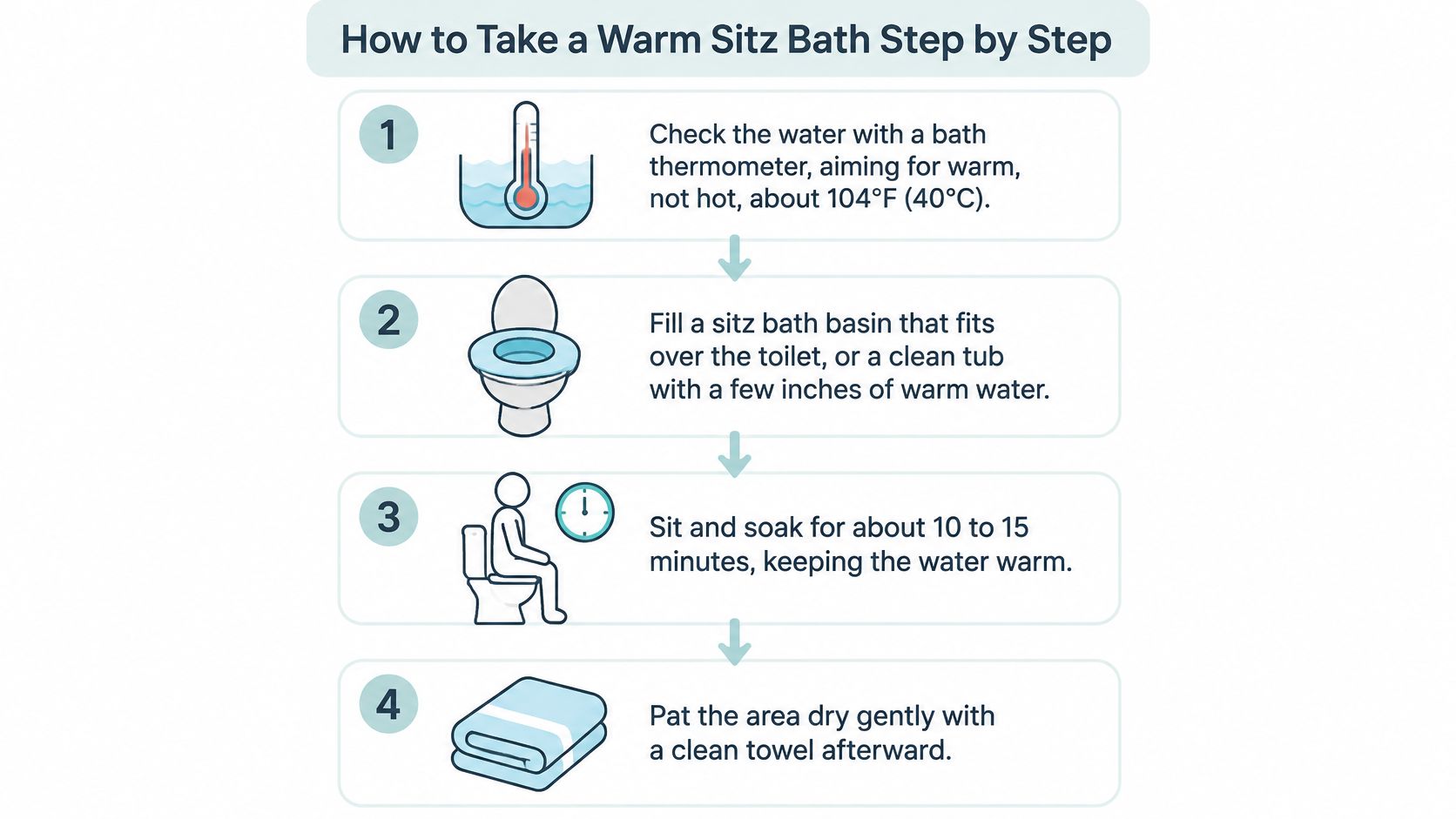
Pregnancy-specific instructions on heat, time, and add-ins are thin, so a thermometer beats a guess. The Cleveland Clinic sitz bath guidance gives a practical benchmark of about 104°F (40°C), recommends soaking for 15 to 20 minutes, and warns that overly hot water can burn skin. Poor cleaning can rarely cause infection, and pregnant patients should ask their clinician about timing and technique.
The main risk is not the soak itself. It is excess heat, a dirty basin, irritated or broken skin, and an add-in nobody has reviewed. Plain warm water and a packaged soak are different products.
A simple routine
- Check the water with a bath thermometer, aiming for warm, not hot, about 104°F (40°C). Testing it with your hip instead of a thermometer is the usual slip, because sore skin is a poor judge of heat.
- Fill a basin that fits over the toilet, or a clean tub with a few inches of water, enough to cover the buttocks and hips. Dumping in extra hot water so it "feels stronger" is how people get a burn.
- Clean the basin before and after each use, and keep it for one person only. Sharing a basin, or letting it sit damp, is the cleaning miss that can rarely lead to infection.
- Sit for 15 to 20 minutes with your upper body relaxed so the warm water can reach the sore area. Don't hunch forward the whole time. That just loads your back.
- Stand up slowly. Warm water can make you lightheaded, especially late in pregnancy.
- Pat the area dry with a clean towel. Rubbing puts the sting right back.
- Repeat through the day if your clinician is fine with it, and stop if you feel faint or the pain gets worse.
A useful soak feels like some relief during the bath and a quieter ache afterward. No burning, and no new redness or swelling. Pain that climbs during the soak is a signal to get out and call your provider.
A short walk-through of the setup can help if the basin hardware is new to you.
Why Warm Water Helps and What It Cannot Fix
As the uterus grows, it presses on major pelvic blood vessels and slows blood flow from the lower body. ACOG names pregnancy as a risk factor for hemorrhoids for that reason. Prolonged sitting and straining with constipation pile more pressure on the veins around the anus. Those veins swell. They sting.
A garden hose kinked in one spot is a fair picture of that pressure. Warmth can loosen the tissue gripping the swollen vein, the way warmth softens a stiff hose. The kink stays. The uterus is still sitting on those pelvic vessels. A warm shallow soak eases soreness and itch for a while by relaxing the tissue around the vein. It leaves the pregnancy pressure where it is.
A sitz bath means sitting in plain warm, shallow water deep enough to cover the buttocks and hips. ACOG's non-drug comfort measures include soaking in a warm, not hot, tub several times a day, ice packs, and witch-hazel pads. The water, the ice, and the pad are three different tools. The soak is only the warm water. That guidance supports plain warm water as a simple starting point, and it does not set a universal temperature, duration, frequency, or success rate.
The American Gastroenterological Association calls sitz baths commonly advised, says the scientific data are limited, and notes hemorrhoids occur in up to two-thirds of women during pregnancy. Fiber, constipation care, and skipping straining or long toilet sits are the reasonable first steps. If symptoms worsen or fail to improve after two or three baths, contact a clinician rather than adding more soaks. If symptoms hang on, evaluation comes next, and some people later need procedures such as banding or infrared coagulation.
What the water can and cannot do
- Soreness, itch, and that burning feeling after a bowel movement: a warm soak can ease these for a while.
- Constipation, straining, a clot (thrombosis), a fissure, or infection: water does not treat these. They need their own plan.
First-line habits that go after the cause:
- Fiber-rich foods so stool is easier to pass.
- Enough fluids through the day.
- A stool softener only if your clinician approves it.
- Shorter toilet sits, so you are not straining while the veins are already under load.
- A cushion when you do have to sit.
A soak is comfort care. "Natural" does not mean it cures the vein, and extra baths should not delay a visit.
If pregnancy hemorrhoids are new to you, our guide to being pregnant with hemorrhoids walks through daily pressure, bathroom habits, and when comfort care is not enough. Call your obstetric clinician for bleeding that keeps going, severe pain, fever, or symptoms that are not improving.
Sitz Baths During Postpartum Recovery
After birth, recovery follows its own timeline. ACOG's postpartum pain guidance defines postpartum as the 12 weeks following birth. Perineal swelling and pain may last several weeks after a vaginal delivery. Cold therapy is most effective in the first 24 to 72 hours, according to ACOG's postpartum pain guidance. As healing continues, a warm sitz bath may ease discomfort for a while.
A hemorrhoid that was quiet during pregnancy can become more noticeable after labor, or appear for the first time. The pressure of pushing, added to months of venous pressure, can aggravate the area. Sitting may sting, even when the discomfort is difficult to talk about.
Postpartum timeline for sitz baths and comfort care
| Postpartum window | Main focus | Role of a sitz bath |
|---|---|---|
| First 24-72 hours after birth | Cold measures such as ice packs are most emphasized | Ask your clinician when warm soaks can start |
| After the first two to three days | Warm shallow-water bathing presented as an option | Can lessen swelling and pain while healing |
| Several weeks after vaginal delivery | Perineal swelling and pain may still be present | Supportive comfort, alongside clinician advice |
| Up to 12 weeks postpartum | Recovery window as defined by ACOG | Comfort care for hemorrhoid symptoms |
| Symptoms that do not improve | Persistent hemorrhoid symptoms | Soaking should not replace a clinician visit |
A sitz bath is one comfort measure, not a treatment for the underlying cause. ACOG also lists medicated sprays, topical ointments, dry heat, and cold witch-hazel compresses for swelling and itching. Its guidance does not say that soaks cure hemorrhoids or provide a success rate.
If you have stitches, a tear, or a surgical wound, ask your clinician when it is appropriate to soak. Healing needs vary from one birth to another. For practical guidance on caring for the area, read about perineal care after birth.
The aim is modest: less stinging while you sit, feed, and recover. Warm water may offer temporary comfort, while your clinician can guide care for the vein or any tear.
Frequently Asked Questions About Sitz Baths and Pregnancy
Is Epsom salt safe in a sitz bath during pregnancy?
Evidence on Epsom salt in pregnancy is limited, so ask your clinician before adding it to bath water. Plain warm water avoids uncertainty about additives. If you are considering an additive, ask specifically whether its ingredients are suitable during pregnancy.
How often can I take a sitz bath while pregnant?
There is no universal schedule for plain-water soaks during pregnancy. Ask your clinician how often and for how long to soak, based on your symptoms and pregnancy. Follow the steps in section 2, and contact your care team if symptoms persist or change.
Can a sitz bath shrink hemorrhoids?
A sitz bath may ease discomfort, but it does not shrink hemorrhoids or address their cause. Fiber and fluids can help keep bowel movements softer, while ongoing bleeding or pain deserves medical advice.
Can I use a sitz bath after a C-section?
Ask your surgeon or clinician whether sitting in water is appropriate for you, especially if you have an incision. A useful question is whether the wound can safely get wet and whether your specific recovery changes the advice. Comfort from a soak does not treat the surgical wound.
When to Call Your Doctor Before Your Next Soak
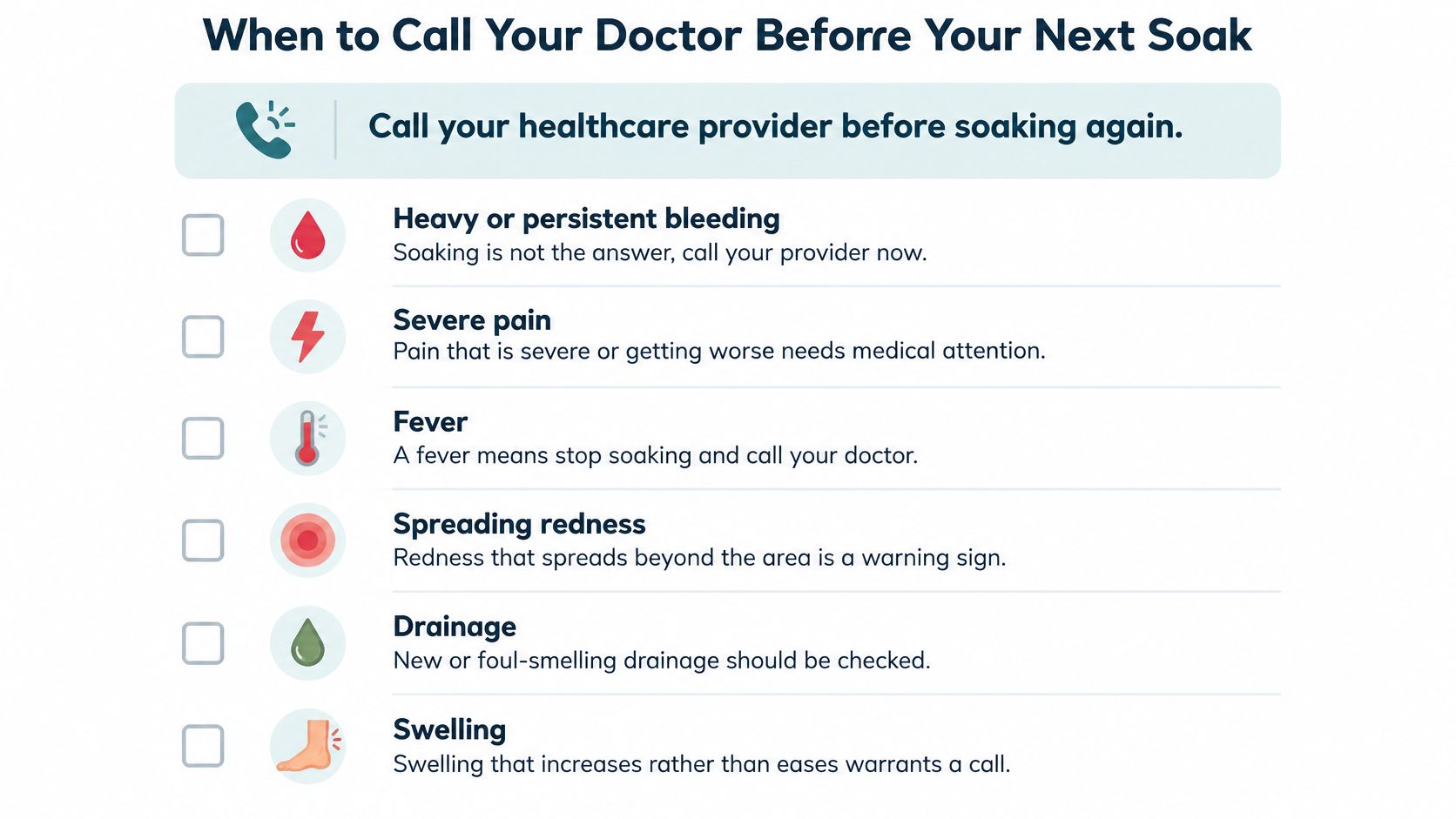
Another soak is the wrong next step when warning signs show up. Call a healthcare provider now for heavy or persistent bleeding, severe pain, fever, spreading redness, drainage, swelling that keeps growing, or symptoms that are not easing. A bath is never a reason to wait those out.
If you have diabetes, including gestational diabetes, skip hot or warm baths unless your physician has advised them. That limit applies to a soak mix as well as to plain water.
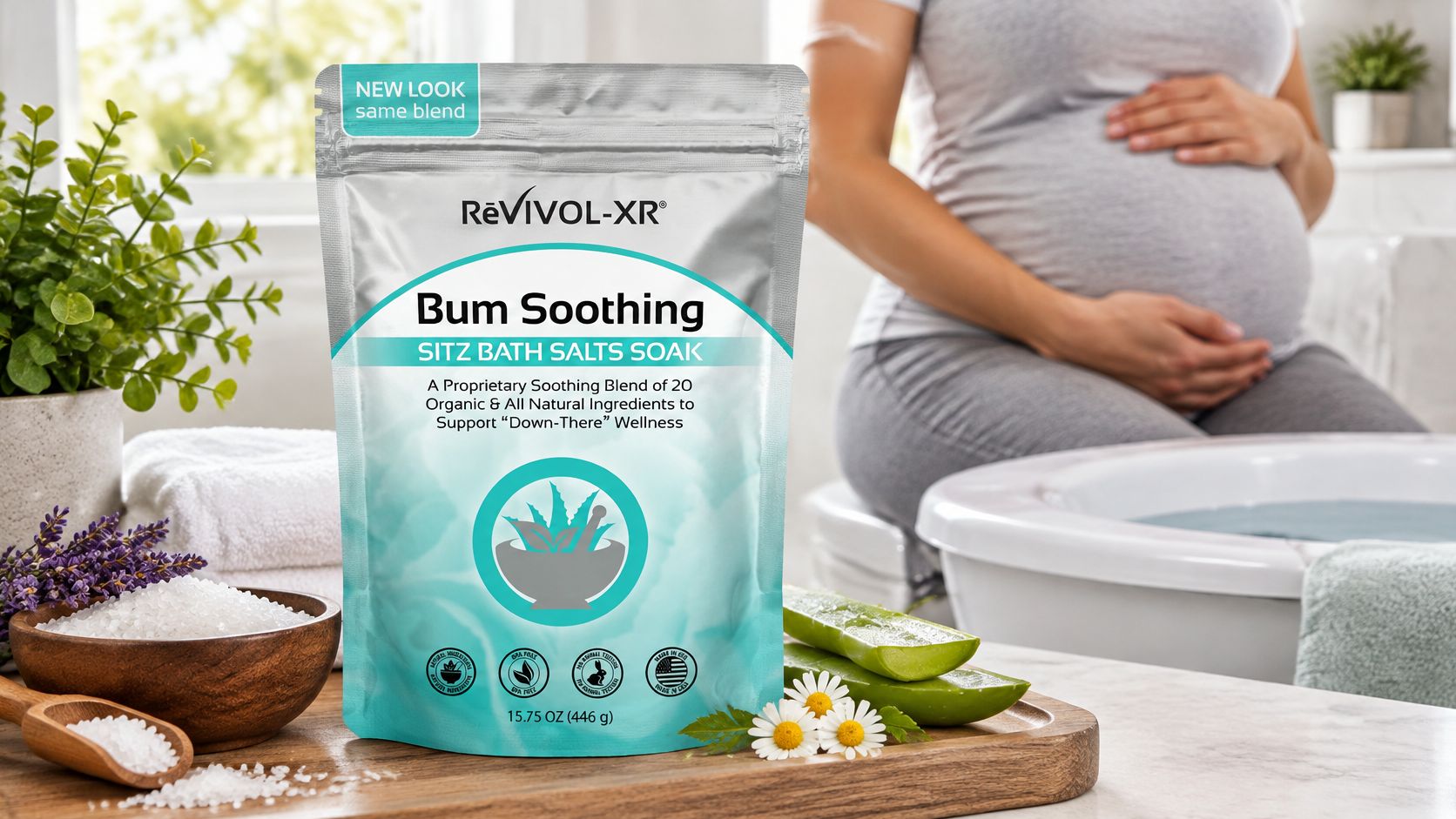
Before any additive, ask whether it fits this pregnancy or this recovery. If your provider says yes, Revivol-XR® Sitz Bath Soak Mix is a bath-water product for external use only. Patch-test a small amount on skin first. Dissolve one scoop in a few inches of warm (not hot) water in a basin or clean tub, sit for 10 to 15 minutes, follow the pouch directions, and stop if irritation shows up. It offers soothing comfort only. It does not treat, cure, or prevent any condition, and it does not replace clinical care.
Not sure who should look at a hemorrhoid that will not settle? Start with which doctor to see for hemorrhoids. Asking the question is the right move.
Revivol-XR makes soothing care for hemorrhoid soreness, including a sitz soak you use only after your clinician agrees it fits pregnancy or postpartum recovery. It is comfort for the end of a long day, not a cure and not a substitute for medical care. Visit Revivol-XR when you are ready to see the soak and the rest of the care line.