FAST & FREE 📦 3-DAY SHIPPING!*

Most new mothers don’t realize that the simple act of soaking in warm water for 15 minutes a day can cut their perineal pain and infection risk in half.
I once spoke with a new mom who was in tears, convinced the intense discomfort after childbirth was just something she had to endure for weeks on end. She was trying her best... using numbing sprays and ice packs... but the constant, throbbing pain was making it impossible to bond with her baby or even sit comfortably. She felt isolated and overwhelmed, believing this was her new, painful reality. It wasn't until she tried a consistent sitz bath routine that she finally felt a wave of relief, a moment of peace in the chaotic postpartum period.
A consistent sitz bath routine isn't just a comfort measure... it's a critical healing tool.
The experience of that new mother isn't unique. The postpartum period, often called the "fourth trimester," is a time of immense physical and emotional change. The body has performed a miracle, but it's left with swelling, stitches, and soreness that can be debilitating. A sitz bath for postpartum care is one of the kindest, most effective things you can do for yourself. The warm water boosts blood flow, which is essential for repairing tissues, while also providing immediate, soothing relief from pain and itching. It’s a targeted therapy that helps calm discomfort and keep the perineal area clean, drastically reducing infection risk.
After you’ve given birth, your body needs gentle, consistent support to recover. A sitz bath delivers exactly that. It’s a shallow, warm-water soak designed specifically to soothe the perineal area... the space between the vagina and anus that takes the brunt of delivery.
This simple ritual is a staple recommendation from OB/GYNs and experienced moms, and for good reason. The warm water boosts blood flow to your perineal tissues, which is crucial for healing tears, stitches, and swelling. It offers a much-needed moment of relief in a day that is often overwhelming and physically demanding.
The benefits go far beyond just feeling good. For a new mother, a sitz bath can be a lifeline, offering a quiet moment of self-care while actively helping your body heal.
This isn't just old-fashioned advice. Research actually confirms how well this works. One study compared sitz bath therapy to infrared light for healing episiotomy wounds and found that the sitz bath group had significantly better healing scores by day three. The combination of increased blood flow and gentle cleansing creates the ideal environment for your body to repair itself.
The goal isn't to find a miracle cure, but to support the body's own incredible ability to heal... a sitz bath does exactly that.
Ultimately, making a sitz bath for postpartum care part of your daily routine does more than just ease physical symptoms. It carves out a necessary space for you to focus on your own well-being... a critical, yet often overlooked, part of the fourth trimester. That mom in tears didn't need a complicated solution... she just needed a simple, consistent action that supported her body's natural healing process, giving her back comfort and control.
Getting your sitz bath setup right is the key to unlocking its full healing potential. Just a few simple tweaks can turn a basic soak into a powerful, soothing therapy session. Taking a moment to prepare makes all the difference in your postpartum care, helping you find consistent, reliable relief when you need it most.
First things first, decide where you'll be soaking. Many new moms swear by a dedicated sitz bath basin that fits right over the toilet. They’re convenient, use less water, and save you from having to get all the way down into a tub... a real challenge in those early days. If you don't have one, your bathtub works perfectly well… just make sure it’s scrubbed clean before each use.
The goal here is a comfortable, stress-free environment. For most, a toilet-top basin is the most practical choice.
If you go with the bathtub, you only need to fill it with three to four inches of water. That's just enough to submerge your hips and perineum without the hassle of a full bath.
The real magic of a sitz bath comes from two things... the warm water and what you add to it. The water should always be comfortably warm, never hot. A good way to check is by testing it on your wrist; it should feel pleasant and soothing, not scalding. Water that's too hot can actually increase swelling and irritate already sensitive tissues.
This is also where you can really supercharge your soak. While plain warm water is great, adding the right ingredients can amplify the healing.
Your sitz bath isn't just about cleansing... it's about delivering therapeutic ingredients directly where your body needs them most.
Many women turn to Epsom salt to help with swelling, while others prefer soothing botanicals to calm irritation. For a perfectly balanced and effortless option, a product like Revivol-XR's 20-in-1 Sitz Bath Salts takes all the guesswork out of it. It’s specifically formulated for postpartum recovery, combining the power of Epsom salt with a blend of healing botanicals.
This helpful infographic breaks down the core benefits you're aiming for with each soak.
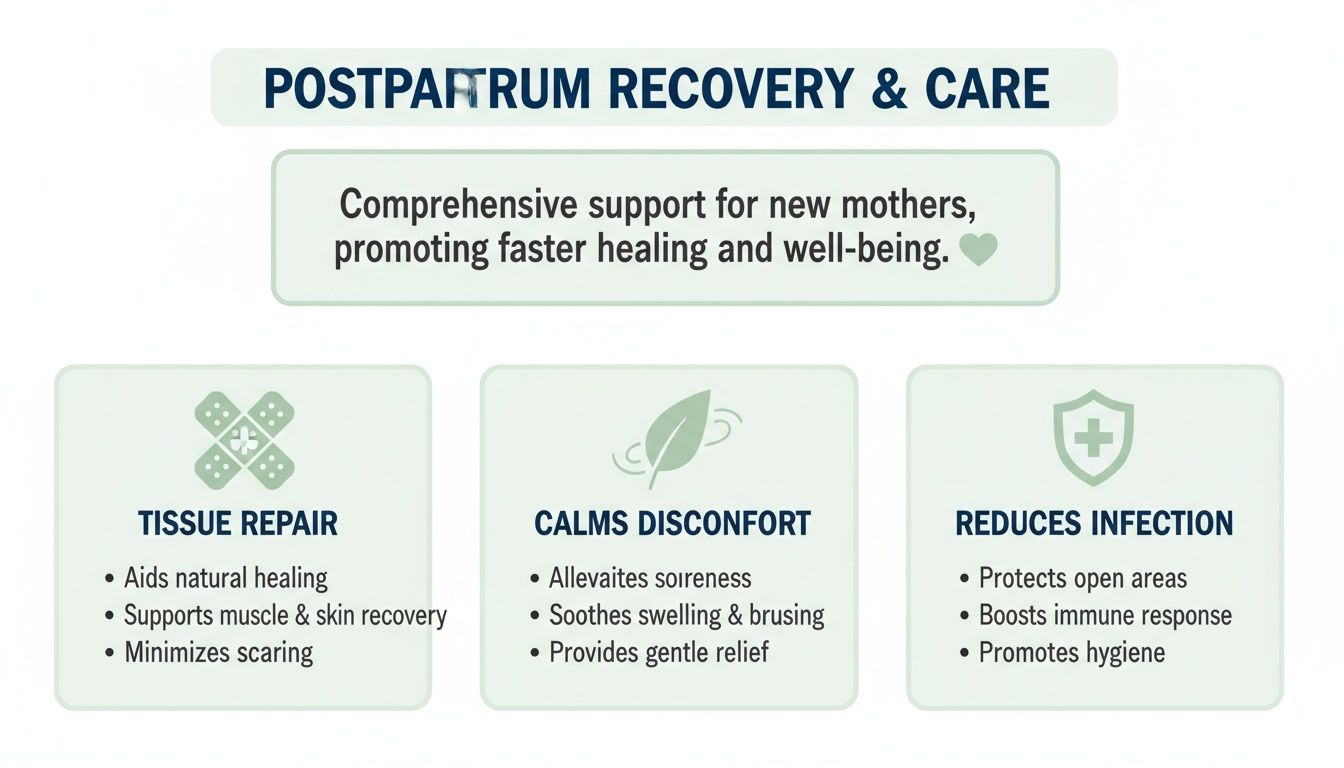
Each of these goals... promoting tissue repair, calming discomfort, and reducing infection risk... is directly supported by the ingredients in a well-prepared sitz bath.
Choosing what to add to your sitz bath can feel overwhelming, but different ingredients offer unique benefits. Here’s a quick comparison to help you decide what’s best for your recovery needs.
| Additive | Primary Benefit | Best For |
|---|---|---|
| Epsom Salt | Reduces swelling and eases muscle soreness. | General postpartum swelling, hemorrhoid relief, and soothing sore perineal muscles. |
| Witch Hazel | Astringent properties help shrink swollen tissues. | Soothing the itchiness and swelling from hemorrhoids and stitches. |
| Aloe Vera | Cools, moisturizes, and calms irritated skin. | Providing a protective, soothing barrier for raw or chafed skin. |
| Botanical Oils | Anti-inflammatory and calming aromatherapy. | Reducing overall inflammation and creating a relaxing, spa-like experience. |
While each ingredient is effective on its own, combining them creates a powerful soak that addresses multiple postpartum issues at once. If you're also dealing with hemorrhoids, our guide on using a sitz bath for hemorrhoids offers more targeted advice.
Ultimately, keeping your prep simple is the best way to ensure you’ll stick with the routine, which is exactly what your body needs to heal.
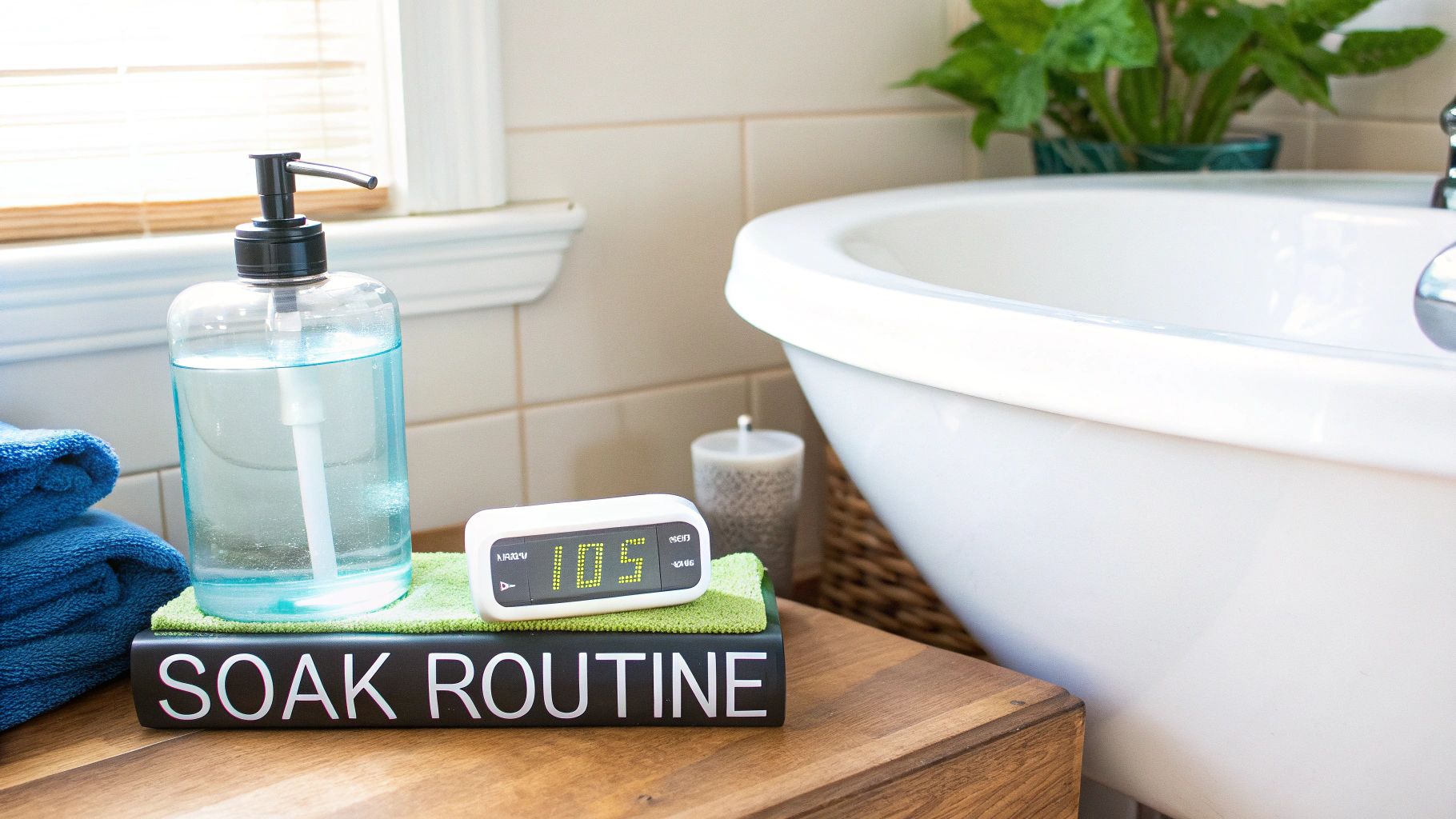
Let’s be honest... an occasional soak feels good, but it won’t move the needle on your healing. If you want to get the most out of a sitz bath for postpartum care, consistency is everything.
Think of it as physical therapy for your perineum. Each session builds on the last to calm inflammation, soothe sore tissues, and keep the area clean. Creating a simple, predictable routine makes it easier to fit this essential self-care into the beautiful chaos of life with a newborn.
When it comes to sitz baths, more isn't necessarily better. Soaking for too long can sometimes dry out your skin, which is the last thing you need right now.
The sweet spot for a postpartum sitz bath is between 10 and 15 minutes. That’s just enough time for the warm water to work its magic... improving blood flow and relaxing muscles... without causing irritation.
I recommend setting a timer on your phone. That way, you can truly unplug and relax instead of constantly watching the clock.
Just as important as how long you soak is how often you do it. For a new mom dealing with stitches, hemorrhoids, or general soreness, a regular schedule is your best friend.
Most midwives and OB/GYNs suggest taking a sitz bath two to three times a day. This frequency keeps the perineal area clean and provides consistent, gentle relief. A good rhythm might look like this:
A consistent routine transforms a sitz bath from a simple comfort measure into a proactive healing tool.
This schedule gives you regular relief and cleansing, which is crucial for preventing infection and managing pain. Of course, listen to your body. If you feel like you need an extra soak, that’s perfectly fine, but try not to go over four sessions in a 24-hour period.
What you do after the bath is just as critical as the soak itself. Rushing this part can undo all the good you just did. Your goal is to keep the area clean and completely dry to promote healing.
First, stand up slowly. It's normal to feel a little lightheaded, so take your time.
Once you’re steady, it’s time to dry off. Do not rub the area with a towel. Your skin is incredibly delicate right now, and rubbing can cause serious irritation or even pull at your stitches.
Instead, gently pat the perineal area dry with a soft, clean towel. Some women I’ve worked with even prefer using a hairdryer on its coolest, lowest setting to get the area perfectly dry without any friction at all.
Make sure you grab a fresh, clean towel every single time. It’s a small detail, but it’s a non-negotiable for preventing bacteria from being introduced to a very sensitive area.
Finally, keep your equipment clean. Rinse your sitz bath basin with hot water after every use. Once a day, wash it more thoroughly with a mild soap and water, then rinse it well. This simple habit stops bacteria from growing and ensures every single soak is a safe one.
Beyond just feeling good, a sitz bath for postpartum care plays a crucial role in protecting your body from infection. The perineal area is incredibly vulnerable after childbirth, and a simple soak is a powerful hygiene tool. It creates a clean environment that lets your body heal naturally, without causing more irritation.
Think of the warm water as a gentle flush. It cleanses away bacteria and lochia (the normal postpartum discharge) far more gently and effectively than wiping ever could. If you have stitches from a tear or an episiotomy, this is a game-changer. Trying to clean the area with toilet paper can be painful and risks introducing bacteria to the wound, but a sitz bath is a touch-free way to stay clean.
There’s another key benefit at play here... increased blood flow. The warmth from the water draws more blood to your perineal tissues. That means more oxygen and infection-fighting white blood cells are delivered right where you need them most, helping your body's defenses work more efficiently.
This isn't a small perk... it's a critical part of postpartum health. Postpartum infections like puerperal sepsis are a serious, though often overlooked, threat. Globally, these infections are responsible for 75,000 maternal deaths each year.
Despite this, one survey found that only 27.7% of postnatal women strongly believed sitz baths could prevent sepsis. This shows a major awareness gap about such a simple and effective practice. You can learn more about the research behind postpartum hygiene and infection rates to understand the full picture.
Proper hygiene isn't just about feeling clean... it's an active strategy to prevent serious complications during your recovery.
By keeping the area pristine and boosting your body's natural defenses, a sitz bath makes it tough for harmful bacteria to thrive. It’s a gentle, proactive step that puts you in control of your healing.
Even with the best care, it’s vital to know what to look for. Your body will signal if something is wrong, and paying attention means you can get help right away.
Call your doctor immediately if you experience any of these warning signs:
To get the most protective benefits from your sitz bath, keeping everything clean is non-negotiable. This goes for your equipment and your personal habits. It’s a simple routine that makes a world of difference.
Here are the essential steps to follow:
These small habits create the safest conditions for your recovery. By pairing the gentle cleansing of a sitz bath for postpartum care with vigilant hygiene, you give your body the best shot at healing quickly and without issues.
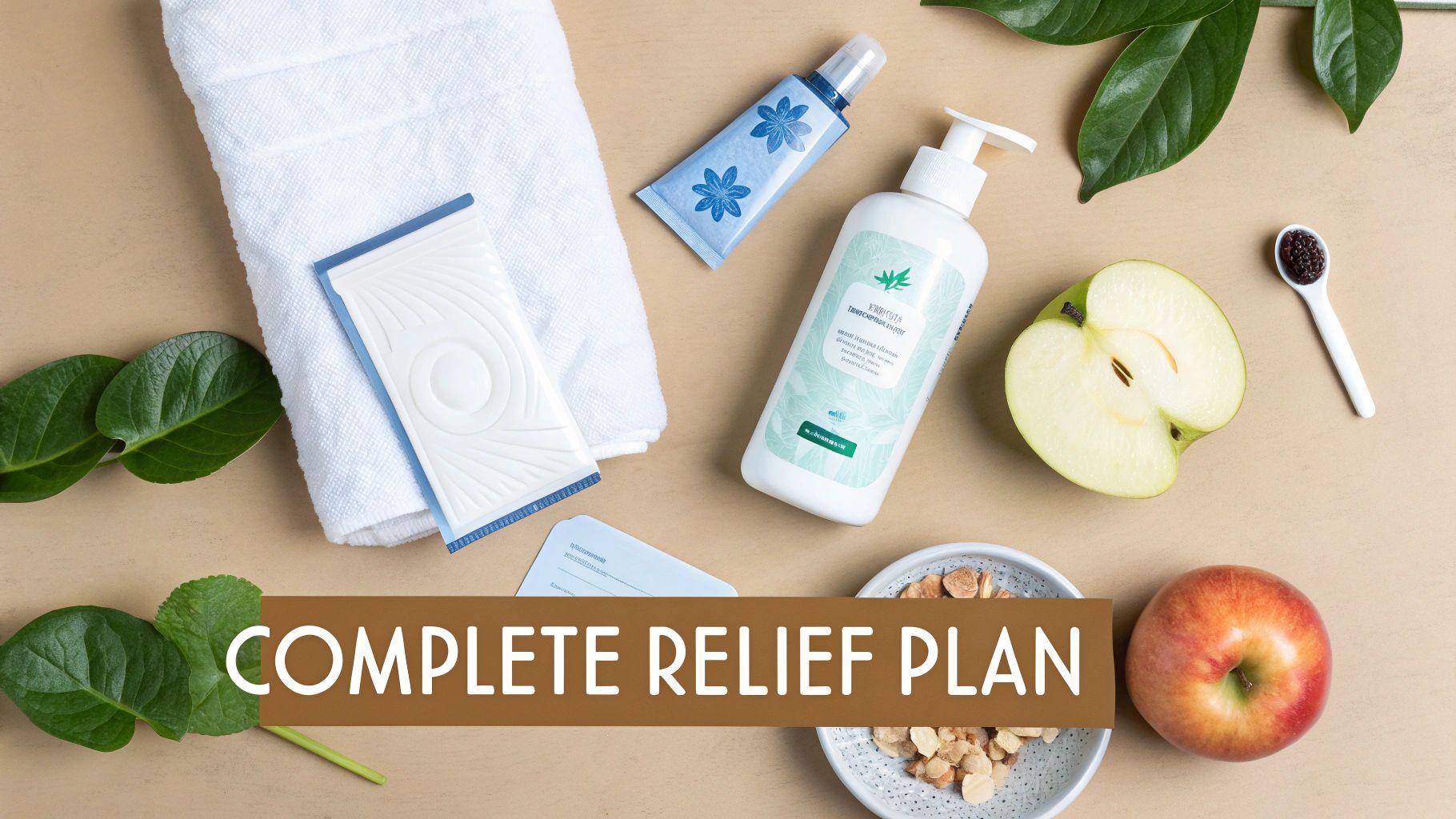
A sitz bath for postpartum care is an absolute game-changer for healing, but it works best as part of a bigger strategy. Think of it as the foundation of your recovery toolkit. To get the fastest, most comfortable relief, you’ll want to layer different methods that support healing from every angle.
This means combining your soothing soaks with targeted treatments and a few smart lifestyle tweaks. When you do this, you create a 360-degree care plan that tackles pain, hygiene, and the root causes of discomfort all at once.
Your sitz bath is incredible for calming the entire perineal area. But sometimes you need to address specific spots of intense pain from hemorrhoids or a fissure. This is where layering treatments comes in handy.
After you gently pat the area dry from a soak, you can apply a medicated cream directly to the source of the pain. This one-two punch is super effective because the warm water has already cleansed the area and improved blood flow, making your skin more receptive to the cream.
Consider these options for your post-soak care:
This approach ensures you’re getting both broad, soothing comfort from the bath and potent, targeted relief from a medicated product.
What you do between soaks is just as important as the soaks themselves. The main goal here is to prevent straining during bowel movements, which is one of the biggest setbacks for postpartum healing.
Straining puts a ton of pressure on your perineum, stitches, and any hemorrhoids. A few simple daily habits can make a huge difference in avoiding this.
True postpartum relief isn't found in a single product... it's created through a system of care where each part supports the others.
Here are the non-negotiables for your daily routine:
By managing your diet and hydration, you’re tackling a major source of postpartum pain from the inside out.
A complete postpartum plan weaves all these elements into a seamless daily routine. It might sound like a lot to remember when you're sleep-deprived, but creating a simple ritual makes it automatic.
Here’s what a complete care cycle could look like:
This holistic approach means you’re always one step ahead of the pain. Combining the gentle power of a sitz bath for postpartum care with targeted creams and smart habits creates the best possible environment for a fast, comfortable recovery.
For more helpful postpartum tips, check out our article on using witch hazel for pads after birth.
Postpartum recovery can feel like a crash course in a new language your body is speaking. When it comes to something like a sitz bath for postpartum care, a lot of questions come up. Getting clear, trustworthy answers is the best way to feel confident and safe while you heal.
Let's cut through the noise and get straight to the practical advice you need.
This is usually the first question on every new mom's mind. For a vaginal delivery, you can generally start taking sitz baths about 24 hours after giving birth. But... and this is a big one... you absolutely need the green light from your doctor or midwife first.
They know the specifics of your delivery and can give you personalized instructions, which is especially important if you had a significant tear or an episiotomy.
If you had a C-section, the rules are different. You’ll need to wait until your incision is fully healed and your doctor has officially cleared you for any kind of soaking. Submerging an unhealed C-section incision can lead to serious infections.
It’s so tempting to add your favorite bubble bath to make it feel more like a spa moment, but please resist the urge. Regular soaps, scented bath bombs, and bubble baths are a hard no for a postpartum sitz bath.
These products are packed with fragrances, dyes, and chemicals that can badly irritate your sensitive perineal tissues. They can also mess with your natural pH balance, which is your body’s front line against infection, putting you at a higher risk for bacterial vaginosis or yeast infections.
Stick to plain warm water. If you want to add something, make sure it's specifically formulated for postpartum recovery. A gentle option like Revivol-XR's 20-in-1 Sitz Bath Salts, which uses healing ingredients like Epsom salt and witch hazel, is designed to soothe without causing irritation.
Your body is pretty good at telling you when something isn't right. Listening to those signals is crucial. Stop using the sitz bath immediately and call your doctor or midwife if you notice any of these things:
Trust your gut. If something feels off, it's always better to be safe and get a professional opinion.
Keeping your equipment clean is non-negotiable for preventing infection. It's a simple but critical part of your sitz bath for postpartum care routine.
This little bit of effort ensures every soak is safe, hygienic, and purely beneficial for your healing. Your postpartum recovery deserves a complete system of care. From soothing soaks with Revivol-XR's Sitz Bath Salts to targeted relief creams, our full suite of doctor-trusted solutions is designed to help you heal comfortably and confidently.