5 Reasons Your Numbing Spray After Childbirth Isn't Working

The soothing spray the hospital gives you might not be providing much more relief than a simple, plain cream.
I remember my sister’s first few days home after her son was born ... a whirlwind of joy, exhaustion, and a whole lot of pain. Every little movement, from shifting in bed to that first daunting trip to the bathroom, felt agonizing. She had the standard-issue recovery kit with mesh underwear, giant pads, and a peri bottle, all meant to help her heal.
A can of numbing spray was part of that kit. It's a postpartum care staple, with hospitals often handing out sprays like Dermoplast because they're budget-friendly. But here's the catch ... while many women swear by the temporary cooling sensation, some clinical evaluations suggest anesthetic sprays and creams offer no significant advantage over a basic, bland cream. My sister felt that firsthand, wondering why the relief was so fleeting. You can dig deeper into postpartum care guidelines on acog.org.
Effective postpartum pain relief is not a luxury... it is a medical necessity.
That experience taught me that not all relief is created equal. The reality is that whether you had a tear or an episiotomy, your perineal area is going to be sore, swollen, and unbelievably sensitive. Finding an effective numbing spray after childbirth is a critical piece of the recovery puzzle. It’s about more than just managing pain ... it's about getting back the ability to move without wincing so you can care for yourself and your newborn.
Your First Days of Postpartum Recovery

The first few hours and days after giving birth are a whirlwind of joy, exhaustion, and, for many, a whole lot of pain. Every little movement ... from shifting in bed to that first daunting trip to the bathroom ... can feel agonizing. You're handed a recovery kit with mesh underwear, giant pads, and a peri bottle, all meant to help you heal.
A can of numbing spray is usually part of that kit. It's a postpartum care staple, with hospitals often handing out sprays like Dermoplast because they're budget-friendly. But here's the catch ... while many women swear by the temporary cooling sensation, some clinical evaluations suggest anesthetic sprays and creams offer no significant advantage over a basic, bland cream. You can dig deeper into postpartum care guidelines on acog.org.
The Reality of Perineal Pain
Whether you had a tear or an episiotomy, your perineal area is going to be sore, swollen, and unbelievably sensitive. This discomfort can make it a struggle to sit, walk, or even just focus on bonding with your new baby.
Finding relief quickly becomes your number one mission. This is where having the right tools is non-negotiable.
Finding an effective numbing spray after childbirth is a critical piece of the puzzle. It’s about more than just managing pain; it's about getting back the ability to move without wincing so you can care for yourself and your newborn.
How Numbing Sprays Actually Stop Postpartum Pain
Think of postpartum pain as a tiny, persistent alarm bell going off in a very tender area. A good numbing spray after childbirth acts like a switch, temporarily silencing that alarm and giving you immediate, targeted relief right where you need it.
The secret is in the active ingredients. Most numbing sprays use a topical anesthetic, like lidocaine, which gets to work the moment it’s sprayed on the perineal area.
It essentially works as a gatekeeper for your nerve endings. Instead of letting pain signals race up to your brain, lidocaine blocks the gate. Your brain never gets the "ouch" message, so you don't feel the discomfort. This all happens very quickly, which is why the relief feels almost instant.
The Key Ingredients That Provide Relief
While the anesthetic is the main pain-blocker, the best sprays include other ingredients to soothe and help you heal. Knowing what’s in the bottle can help you choose the right one for your recovery.
Here are some common ingredients you'll see:
- Lidocaine: This is the workhorse that numbs the area by blocking nerve signals.
- Menthol: Provides a gentle cooling sensation that feels incredible on swollen, irritated skin.
- Witch Hazel: Known for its anti-inflammatory properties, witch hazel helps bring down swelling and soothe discomfort.
- Aloe Vera: This natural botanical moisturizes and calms the skin, which helps with the healing process.
This combination of numbing and soothing agents makes a numbing spray an indispensable tool in your postpartum kit.
The need for these targeted solutions is real. The global market for postpartum recovery sprays was valued at around $410 million, showing just how many new moms rely on effective topical pain management. This market is expected to grow, pointing to a worldwide trend toward non-invasive, localized relief. To learn more about this growing market, you can explore the research on marketintelo.com.
To get the relief you deserve, you must take these steps:
- Start clean. Always wash your hands with soap and water before and after you spray.
- Aim from a distance. Hold the can about 6 to 8 inches away from your perineum.
- Spray and let it settle. A quick one to two-second spray is usually all it takes.
- Let it air dry for a moment before pulling up your underwear.
My sister’s moment of realization wasn’t that the spray didn't work ... it was that she needed a stronger, better-formulated one to truly get the relief she deserved.
Using your numbing spray for maximum relief
Getting the most out of your numbing spray is about more than just a quick spritz. A few simple steps will help you get safe, effective relief every time, so you can focus on healing and bonding with your new baby.
The process itself is straightforward. The key is consistency, especially for managing that sharp, stinging pain after using the restroom or changing your pad.
How to apply your spray correctly
For the best results, just think clean, aim, and repeat. This little routine will help you manage discomfort safely and effectively.
- Start clean. Always wash your hands with soap and water before and after you spray. This is a crucial step to avoid introducing bacteria to the sensitive perineal area, especially if you have stitches.
- Aim from a distance. Hold the can about 6 to 8 inches away from your perineum. This helps the mist cover the area evenly without feeling too intense or concentrated in one spot.
- Spray and let it settle. A quick, one to two-second spray is usually all it takes to cover the area. There’s no need to rub it in ... just let it air dry for a moment before pulling up your underwear.
If you have stitches from a tear or episiotomy, this touch-free application is a massive advantage. It delivers relief without any painful contact.
Tips for better application
To make the process even easier, think about the design of your spray bottle. Many new moms find it's a real struggle to aim a traditional spray can while sitting on the toilet.
A product with a 360-degree sprayer can be a game-changer. It lets you spray from any angle ... even upside down ... making it easy to reach the right spot without any awkward gymnastics.
You can typically reapply the spray 3 to 4 times a day, often after each trip to the bathroom, but always read the label for specific instructions. If you're looking for other ways to soothe the area, many women find combining a numbing spray with other gentle methods works wonders. For instance, our guide on using witch hazel for pads after birth offers another great option for postpartum care.
By using your numbing spray correctly, you can manage pain confidently and make your recovery a more comfortable experience.
Building Your Complete Postpartum Relief Toolkit
A numbing spray after childbirth is an incredible tool for that sharp, immediate pain, but it's just one piece of your recovery puzzle. Think of it as your go-to specialist for that "ouch, that stings!" moment. For all-around comfort and healing, it works best when you team it up with other soothing methods.
Creating a full postpartum toolkit means having different options ready for whatever your body throws at you. While a numbing spray is perfect for the stinging pain when you pee, something like an ice pack is much better for bringing down generalized swelling and offering that deep, cool relief.
Layering these approaches gives you a well-rounded strategy for managing pain and helping your body heal. You can mix and match your routine based on what feels right each day.
Layering Your Relief Methods
True postpartum comfort rarely comes from a single product. A numbing spray gives you that fast-acting relief you need right now, while other methods offer more sustained soothing and help reduce inflammation over the long haul.
For instance, postpartum hemorrhoids can be a huge source of discomfort. A spray can definitely numb the area for a bit, but you'll also want to address the actual swelling. Our guide on how to treat hemorrhoids after childbirth dives deeper into how to combine treatments for the best results.
Let's break down how each tool fits into your recovery plan.
The routine is simple: clean the area, spray from a slight distance, and reapply as the package directs.
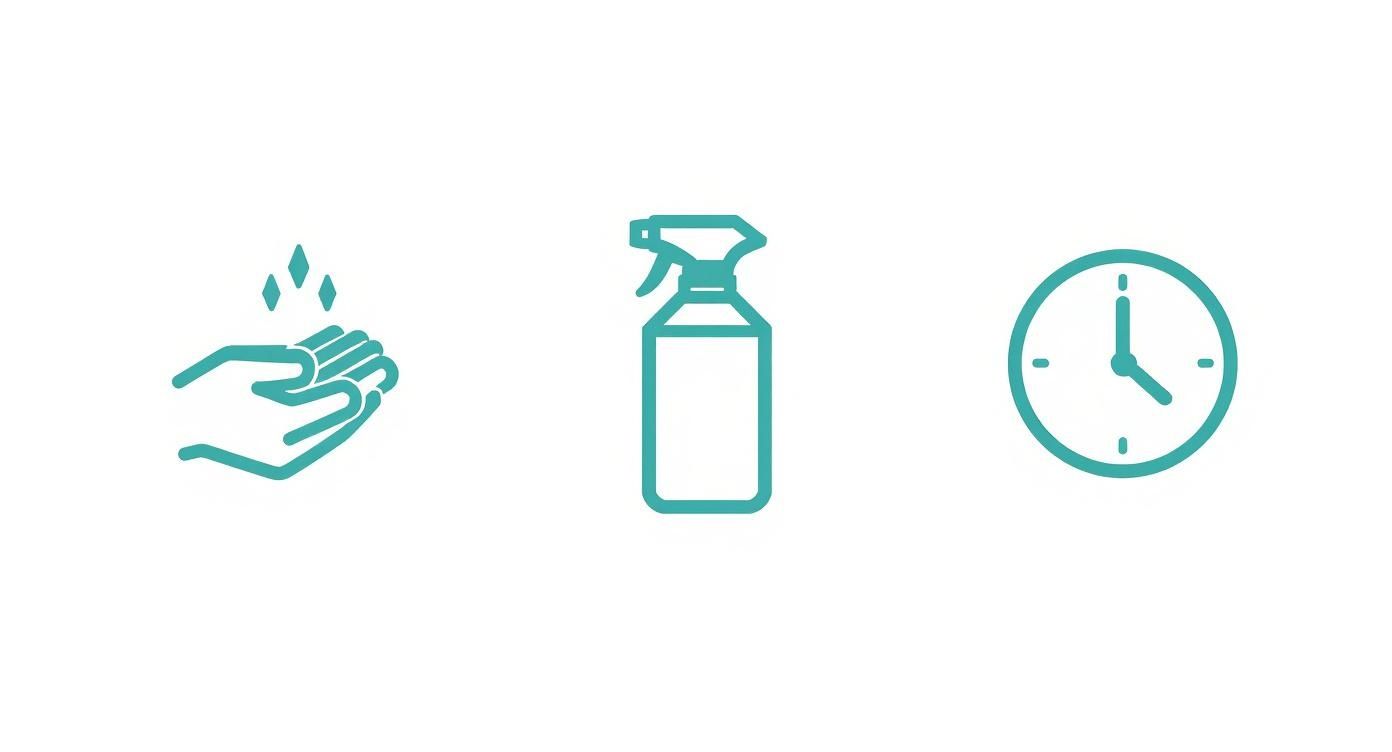
This simple three-step process helps ensure you're using it safely and effectively every single time.
Comparing Your Postpartum Pain Relief Options
Knowing when to reach for which tool is half the battle. Some remedies are built for instant relief, while others focus on long-term soothing and healing. A balanced approach makes sure you're covered for every type of ache and pain you might feel.
This table compares common postpartum relief methods to help you build the best recovery plan for your needs.
| Relief Method | Best For | Speed of Relief | Duration | Ease of Use |
|---|---|---|---|---|
| Numbing Spray | Sharp, stinging pain (e.g., urinating, stitches). | Immediate (within seconds). | Short-term (30-60 mins). | Very easy, point and spray. |
| Ice Packs ('Padsicles') | General swelling and deep, throbbing aches. | Fast (within minutes). | Medium-term (20-30 mins of use). | Easy, but requires prep/freezing. |
| Sitz Bath | Soothing sore muscles, cleaning the area, and promoting circulation. | Gradual, during the soak. | Lasting comfort after use. | Takes time (15-20 mins). |
| Perineal Balm/Cream | Moisturizing and soothing irritated skin; creating a protective barrier. | Slow and gentle. | Long-term, with consistent use. | Easy to apply. |
Your postpartum toolkit isn’t about finding one perfect solution ... it’s about having a team of solutions ready to work together.
A great daily routine might look like this: use your numbing spray before and after using the bathroom, apply a cool "padsicle" for 20 minutes a few times a day to manage swelling, and take a warm sitz bath in the evening to relax and cleanse the area. This strategy ensures you’re covered from all angles, helping you heal faster and feel much more comfortable along the way.
Knowing When to Call Your Doctor
While a **numbing spray after childbirth** is a fantastic tool for managing the expected discomforts of recovery, it’s not a replacement for your doctor's care. It's crucial to know the difference between the normal aches and pains of healing and the red flags that signal a potential problem.
Your body just did something incredible, and some soreness is absolutely part of the deal. But always, always trust your instincts. If something feels off, it probably is.
Red Flags You Should Never Ignore
Some symptoms are your body’s clear signal that it’s time to call your healthcare provider right away. These signs could point to an infection or another complication that needs prompt medical attention.
Be on the lookout for any of these warning signs:
- A foul or unusual odor coming from your vaginal area.
- Yellowish or greenish discharge, which is different from the normal postpartum bleeding (lochia).
- Increased redness, warmth, or swelling around your stitches or the entire perineal area.
- A fever of 100.4°F (38°C) or higher.
- Pain that gets worse over time instead of slowly getting better.
Think of these symptoms as your body's alarm system. Don't second-guess yourself ... just make the call.
When Discomfort Becomes a Concern
Beyond those urgent signs of infection, pay attention to other persistent issues. For instance, postpartum hemorrhoids can be a major source of pain and can sometimes bleed. You can learn more about how to handle bleeding hemorrhoids in our detailed guide. If the pain from hemorrhoids becomes severe or doesn’t improve with at-home care, it's time to talk to your doctor.
Ultimately, your well-being is the top priority. Using a numbing spray after childbirth helps you manage the expected pain, but it should never be used to mask a more serious issue. Your doctor is your partner on this recovery journey, so never hesitate to reach out for their guidance and support.
Common Questions About Numbing Sprays
Postpartum recovery brings a ton of questions, and you deserve clear answers. Here’s a straightforward look at what new moms most often ask about using a numbing spray after childbirth.
Can I Use a Numbing Spray if I Have Stitches?
Yes, absolutely. Most numbing sprays are made exactly for this situation ... to be safely used over stitches from an episiotomy or a perineal tear. They can be a game-changer for the sharp, stinging pain that often comes with them.
That said, it’s always a good idea to get a quick thumbs-up from your doctor or hospital staff before trying any new product on the area for the first time.
How Often Can I Use My Postpartum Numbing Spray?
This depends a bit on the specific product, but a great rule of thumb is to reapply the spray each time you use the restroom or change your pad. For most women, that works out to about 3 to 4 times a day.
Always double-check the product’s label for its maximum recommended dose. If you feel like you need relief more often than that, it’s smart to check in with your doctor just to make sure everything is healing as it should be.
Is It Safe to Use a Numbing Spray While Breastfeeding?
Yes, topical numbing sprays are widely considered safe for breastfeeding mothers. The active ingredients, like lidocaine, are barely absorbed into your bloodstream.
This means a tiny amount, if any, could ever make its way into your breast milk. Of course, for total peace of mind, running it by your OB/GYN or your baby's pediatrician is always a wise move when starting anything new.
What’s the Difference Between a Numbing Spray and Witch Hazel Pads?
Think of them as two different tools that work beautifully together in your recovery kit. Each one has a specific job.
- Numbing Spray: This is your direct pain blocker. It contains an anesthetic like lidocaine that gets right to the source of the pain signals, giving you immediate, powerful relief from that intense, stinging feeling.
- Witch Hazel Pads: These offer a more general, cooling comfort. Their job is to soothe irritation, calm inflammation, and bring down swelling, providing a gentle sense of relief.
To get the ultimate soothing combination, use the numbing spray first to get that instant pain-blocking power. Then, follow up by placing a cool witch hazel pad on top of your sanitary pad for longer-lasting, calming comfort. This one-two punch tackles both the sharp pain and the general inflammation.
For postpartum hemorrhoid discomfort, Revivol-XR® 5% Lidocaine Numbing Cream offers temporary external relief of pain, itching, and burning. Ask your healthcare provider before use if you are breast-feeding. Find the support you need for your recovery at Hemorrhoid.com.