Lifting and Hemorrhoids: Your Guide to Pain-Free Training

Most people don’t realize that the same heavy lift that gives you a new personal record can also trigger years of hemorrhoid pain.
I once worked with a powerlifter who was completely sidelined after hitting a new deadlift PR. He was on top of the world for a moment, but within hours, he was dealing with a thrombosed hemorrhoid so painful he couldn't sit, let alone train. He felt betrayed by his own body, not understanding how his source of strength had become his source of agony. He thought his lifting days were over.
Customer trust is worth more than your margin on one sale... and trust in your own body is worth more than one heavy lift.
That lifter’s experience taught me a critical lesson. The problem wasn't his strength... it was his technique. He was creating immense intra-abdominal pressure by holding his breath and bearing down, forcing all that pressure directly onto the delicate veins in his rectum. It was a classic case of the Valsalva maneuver gone wrong, a common habit among lifters that turns a powerful tool for stability into a direct cause of hemorrhoids. The triumph of the lift was completely overshadowed by the painful consequence he hadn't prepared for.
To get back to training safely, he had to completely rebuild his technique from the ground up. Here’s what you need to do to avoid the same fate:
- Focus on your breathing. Exhale during the hardest part of the lift.
- Engage your core by pulling "up and in," not pushing "down and out."
- Listen to your body and back off when you feel that familiar pressure.
That lifter's painful PR wasn’t the end of his journey. It was a wake-up call that forced him to learn how to train smarter, not just harder. By prioritizing technique over ego, he was able to return to the sport he loved without the constant fear of another flare-up.
The Hidden Link: Why Lifting Causes Hemorrhoids
Ever pushed for a new deadlift PR, felt that incredible surge of power, and then later felt that familiar, dreaded discomfort? It’s not just bad luck. Understanding the connection between lifting and hemorrhoids is the first step toward pain-free training.
That flare-up is often a direct consequence of the immense pressure your body creates during a heavy lift.
When you lift heavy, you instinctively do something called the Valsalva maneuver. It's that moment you hold your breath, brace your core, and bear down to move the weight.
This technique is fantastic for creating the intra-abdominal pressure needed to stabilize your spine, but it’s terrible for the delicate veins in your lower rectum.
The Pressure Problem
All that internal pressure has to go somewhere. Think of it like squeezing a water balloon... the force pushes outward and downward, putting a massive strain on your pelvic floor and the veins around your anus.
Over time, or even from a single intense set, this can cause those veins to swell, bulge, and turn into painful hemorrhoids.
It’s really a simple plumbing issue. Too much pressure in the system, and the weakest points are going to give.
Why Your Form Is Everything
A lot of lifters get so focused on moving the weight from A to B that they forget how their body is generating the force.
When you breathe improperly or fail to engage your core the right way, you end up concentrating all that pressure directly onto your pelvic region. This makes flare-ups practically inevitable.
You might be hitting your numbers in the gym, but you could also be setting the stage for chronic pain. Understanding how exercise helps hemorrhoids when done correctly is key to building safer, more sustainable lifting habits.
Smarter Lifting Techniques To Prevent Hemorrhoids
Anyone who tells you to just "lift with your legs, not your back" has probably never dealt with hemorrhoids. That advice is a starting point, but it barely scratches the surface.
Real protection comes from completely rethinking your technique. You need to focus less on just moving the weight and more on managing the pressure inside your body.
The idea isn't to lift less or become weaker. It's about lifting smarter so you can keep training for the long haul.
Master Your Breathing To Reduce Pressure
The single biggest change you can make is to stop holding your breath. That common gym practice of taking a huge gulp of air and locking it in... the Valsalva maneuver... creates a massive spike in intra-abdominal pressure.
This is the exact force that causes hemorrhoid flare-ups. Instead, you need to learn to breathe with the movement, not against it.
- Inhale on the easy part. For a squat, that's on the way down. For a bench press, it's as you lower the bar.
- Exhale through the hard part. This is the moment of exertion. As you power up from the bottom of a squat or press the weight off your chest, you should be forcefully pushing air out.
Switching from holding your breath to exhaling on the lift acts like a pressure release valve. It lets you keep your core tight and stable but prevents that dangerous downward pressure from building up.
This flowchart shows exactly how straining during a lift creates the pressure that leads to swelling.
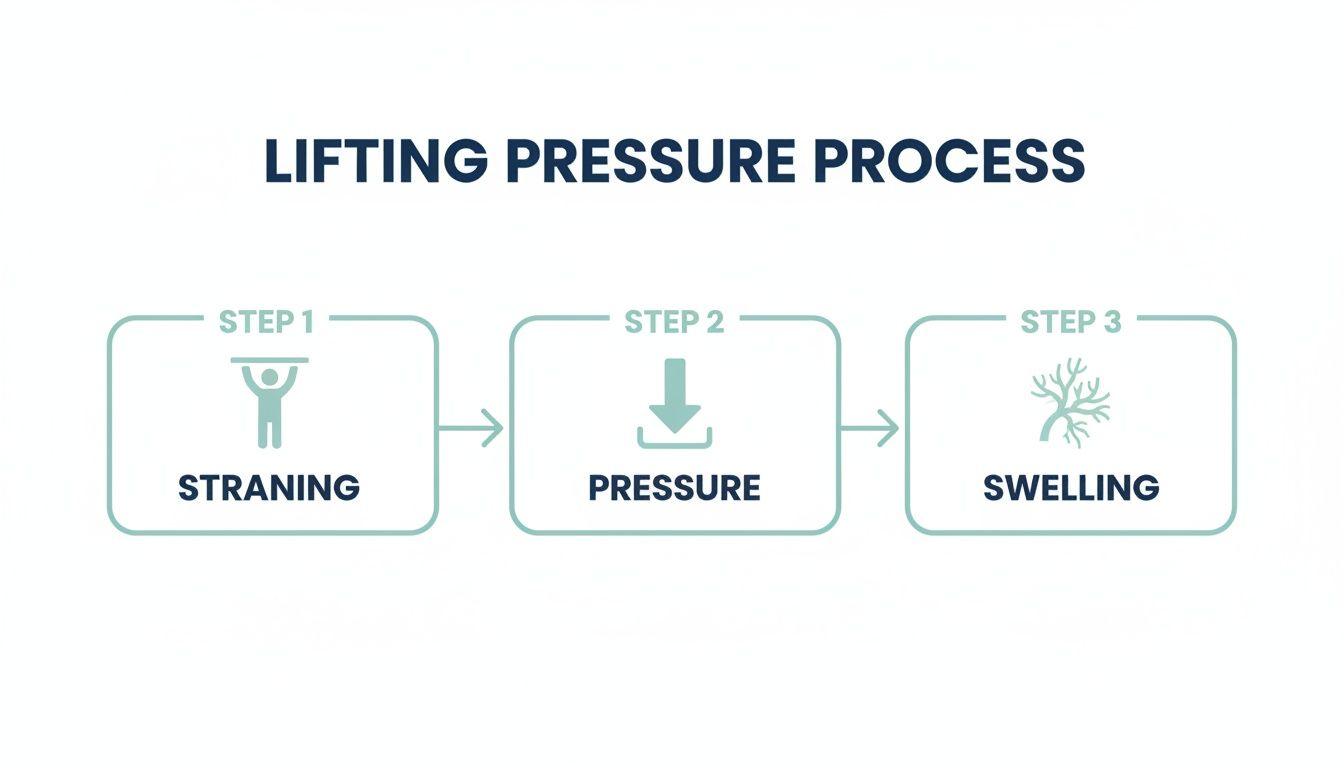
It’s a clear visual reminder that the initial strain is the trigger for the entire painful process.
Proper Core And Pelvic Floor Engagement
Breathing is only one piece of the puzzle. You also have to engage your core correctly... without pushing down on your pelvic floor.
A lot of lifters make the mistake of "bearing down" to feel stable, similar to the pressure of a bowel movement. This is the absolute wrong approach.
The goal is to create a strong, supportive cylinder around your torso. Think of it this way:
- Brace your abs. Imagine someone is about to poke you in the stomach. That instant tightening of your abs is the brace you’re after.
- Lift your pelvic floor. This is a more subtle move. Gently contract the same muscles you’d use to stop the flow of urine. The sensation should be "up and in," not "down and out."
When you combine these two actions, you create a solid trunk that supports your spine while actively pulling pressure away from the rectal area.
Lifting Technique Modifications Quick Guide
This table breaks down the high-risk habits to avoid and the safer, low-pressure alternatives to adopt for better hemorrhoid management during your workouts.
| Technique | High-Risk Method (Avoid) | Low-Risk Method (Adopt) |
|---|---|---|
| Breathing | Holding your breath during the hardest part of the lift (Valsalva maneuver). | Exhaling forcefully through the exertion phase of the lift. |
| Core Engagement | Bearing down on the pelvic floor, like you're having a bowel movement. | Bracing the abs (like you're about to be poked) while gently lifting the pelvic floor "up and in." |
| Squat Execution | Dropping quickly and bouncing out of the bottom of the squat. | Controlling the descent, pausing briefly, and driving up with a controlled, forceful exhale. |
| Deadlift Execution | Jerking the bar off the floor and holding your breath for the entire lift. | Taking the slack out of the bar and exhaling steadily as the bar breaks the floor and you stand up. |
Making these adjustments might mean you have to lower the weight for a little while, but the payoff is huge. You’ll be able to train hard without the pain and frustration of hemorrhoid flare-ups.
Essential Gear And Lifestyle Habits For Lifters
What you do outside of your workout is just as critical as your form during a heavy set. True prevention is a 24/7 strategy.
It's built on the right gear, smart nutrition, and daily habits that keep overall pressure on your body to a minimum.
Even perfect technique can't fully protect a body that's already under stress from other sources.
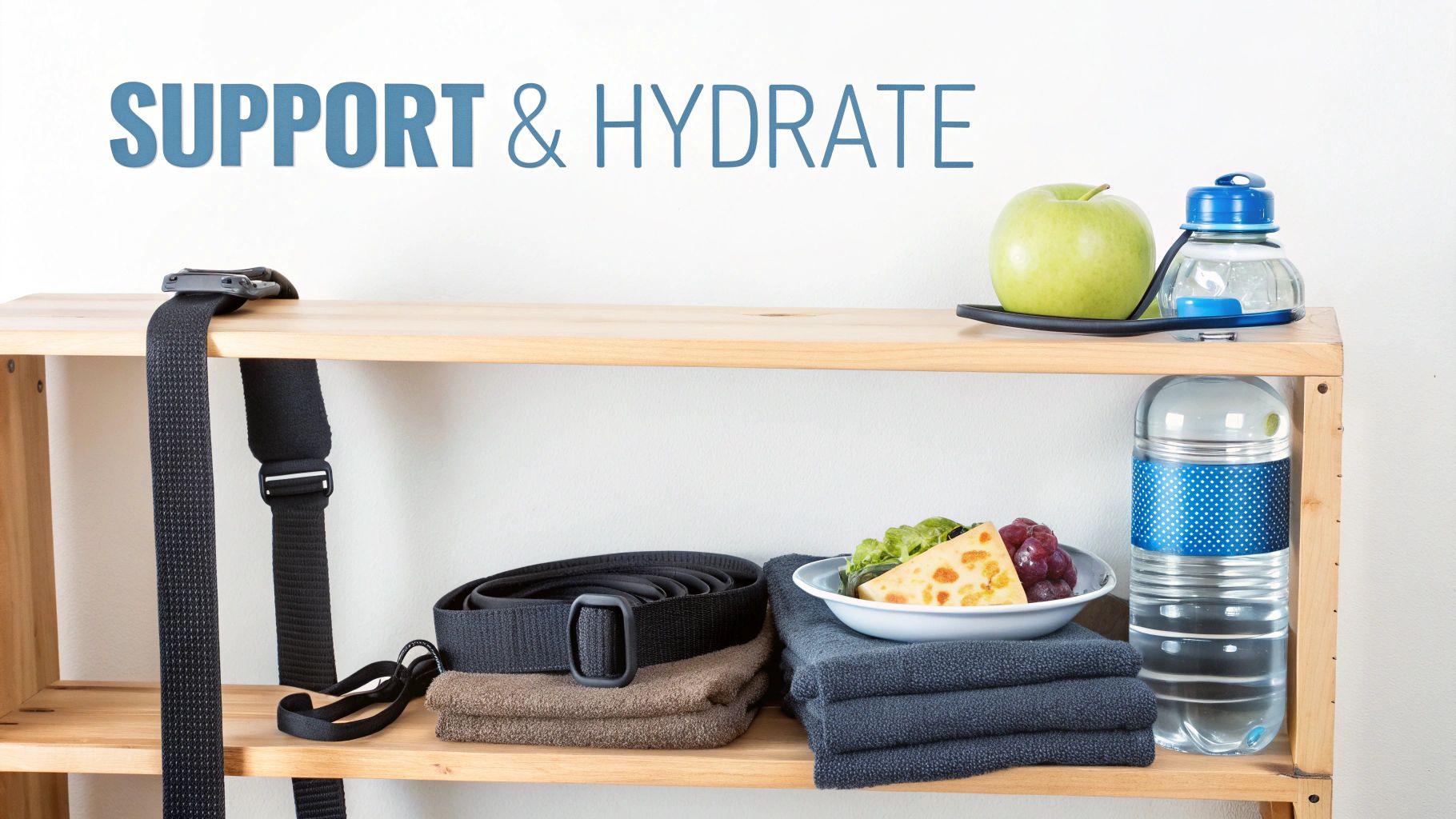
Using A Lifting Belt The Right Way
Lots of lifters think a belt is a magic shield. But if you use it wrong, a lifting belt can actually make hemorrhoid problems much, much worse.
The classic mistake? Cinching it as tight as humanly possible and then performing the Valsalva maneuver... holding your breath and bearing down hard against the belt.
This combination sends intra-abdominal pressure through the roof, directing a massive force straight down onto your pelvic floor.
To use a belt safely, keep these points in mind:
- Don't Overtighten It: The belt should feel snug, not like a corset. You need to be able to take a comfortable breath.
- Breathe Into It: A belt is a tactile cue. Use it to feel your abs bracing, but keep practicing the "exhale on exertion" technique.
- Use It Strategically: Save the belt for your heaviest, most demanding sets... think 1-3 rep maxes.
Fuel Your Body To Prevent Strain
What you eat and drink directly impacts the pressure in your rectal area. When you're dehydrated and not getting enough fiber, you get hard stools.
That means straining on the toilet, which is a major trigger for hemorrhoid flare-ups.
Your nutritional game plan is simple but non-negotiable:
- Serious Hydration: Drink plenty of water every day. On training days, you need even more. Good hydration keeps stools soft and easy to pass.
- Fiber-Rich Foods: Get plenty of vegetables, fruits, and whole grains. Fiber adds bulk to your stool, preventing constipation. For more, check our guide on diet changes for hemorrhoids.
Warm-Ups And Cool-Downs Matter
Finally, never skip the bookends of your workout. A solid warm-up gets blood flowing to all your muscles, including your core and pelvic floor.
A cool-down with some gentle stretching is just as important. It helps reduce muscle tightness and improves circulation, which is key for helping tissues recover.
What To Do When Hemorrhoids Strike
Even when you’ve nailed your form, a bad flare-up can still ambush you after a tough workout.
That sudden pain and pressure can be alarming, but what you do in those first few hours makes a huge difference.
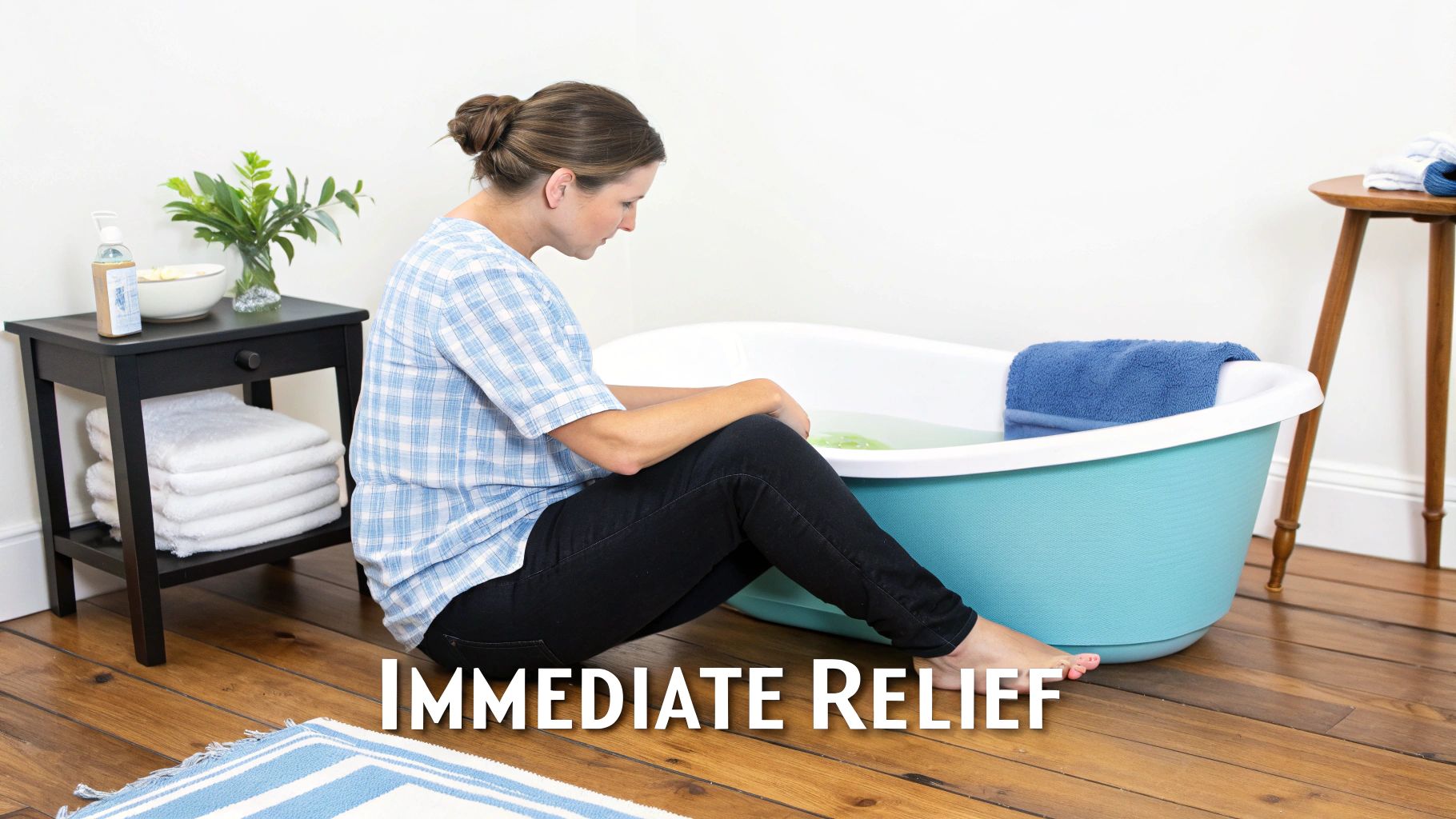
When you feel that all-too-familiar flare, it’s critical to pause all heavy lifting. Pushing through and putting more pressure on an already inflamed area is a recipe for a longer, more painful recovery.
This doesn’t mean you have to be a couch potato. Light activity like walking can keep blood flowing, but squats and deadlifts are off the table.
Your Immediate Action Plan
Once you've pumped the brakes on your training, focus on at-home remedies to get that discomfort under control.
- Sitz Baths: This is one of the best things you can do. Soaking the area in warm water for 15-20 minutes a few times a day soothes irritation. For a bigger boost, try our Revivol-XR 20-in-1 Sitz Bath Salts.
- Cold Compresses: If you're dealing with sharp pain and swelling, a cold pack wrapped in a cloth is your friend. Apply it for 10-15 minutes at a time to numb the area.
- Topical Relief: A high-quality cream is a must-have. Our Revivol-XR Advanced Hemorrhoid & Fissure Cream was designed with lifters in mind. It uses pharmaceutical-grade ingredients to numb pain and shrink swollen tissue. For more tips, see our guide on hemorrhoid swelling treatment.
When To See A Doctor
While most flare-ups from lifting can be handled at home, some symptoms are red flags that you can't ignore.
Trust in your body disappears the moment you tolerate severe symptoms.
Get medical advice right away if you experience any of these:
- Pain that's severe, getting worse, or just won't let up.
- Bleeding that is heavy, won't stop, or is dark in color.
- A lump that is extremely painful or has turned dark purple or black.
Handling a flare-up is all about being smart and responsive. Hit pause on the heavy lifts, jump on effective home remedies, and know when it’s time to see a doctor.
Returning to the Gym After a Flare-Up
Getting back under the bar after a painful hemorrhoid flare-up can be intimidating. You’re itching to regain your strength, but the fear of another setback is always there.
Let me be clear... the goal isn't to rush back to your old routine. It’s about returning smarter.
Think of this as a strategic reset. Your first week back shouldn't be about hitting any personal records. Your entire focus needs to be on nailing the safer techniques we've already covered.
Your Progressive Return Plan
First thing's first... slash your usual lifting weights by at least 50%. I know it feels like a massive step backward, but it’s absolutely critical.
This much lighter load lets you concentrate purely on your form without the kind of strain that triggers flare-ups.
Listen to your body. It’s your best feedback tool. If you feel even a hint of pressure or discomfort, stop the set immediately.
Here’s a simple framework to ease back into your training:
- Week 1: Aim for higher reps, somewhere in the 12-15 range, with that lighter weight. Prioritize exercises that put less direct pressure on your pelvic floor.
- Week 2: If week one went off without a hitch, you can bump the weight up by about 10-15%. Keep your focus laser-sharp on perfect breathing and form.
- Subsequent Weeks: From here, just keep making small, gradual increases in weight as long as you remain completely symptom-free. Slow and steady wins this race.
Exercises to Approach With Caution
Look, some movements are just riskier than others when you're in recovery mode. You need to be extra careful with these big three:
- Heavy barbell squats
- Deadlifts from the floor
- Leg presses
Remember the powerlifter I mentioned who got sidelined? By following a measured approach like this, he got back to the gym armed with a new understanding of his body. That painful setback transformed into a powerful lesson... one that taught him how to train for a lifetime of strength and health, not just for a single lift.
FAQs: Lifting And Hemorrhoids
Let's tackle a few common questions that pop up when you're trying to balance training with hemorrhoid flare-ups.
Do all types of lifting cause hemorrhoids?
Not exactly, but certain lifts are riskier. The real problem is any movement that creates massive intra-abdominal pressure. Think heavy compound lifts like barbell squats, deadlifts, and leg presses. These are when you're most likely to hold your breath and strain. Lighter weight exercises, yoga, and swimming are generally much safer.
Will I have to give up lifting forever?
Absolutely not. For most people, lifting and hemorrhoids can coexist if you're smart about it. The goal isn't to quit; it's to adapt your technique. By mastering proper breathing (exhaling on the effort) and learning to engage your core correctly, you can dramatically lower the downward pressure that triggers flare-ups.
How do I know if lifting caused my hemorrhoids?
It can be tough to point to one single cause, but there's a strong clue. If you start feeling symptoms... like itching, pain, or a lump... right after a tough gym session, that workout was likely a trigger. This is especially true if you remember holding your breath or straining hard. However, it's often a combination of lifting and other lifestyle factors like constipation.
Can wearing a lifting belt make things worse?
Yes, it definitely can if you use it the wrong way. A lot of lifters crank a belt on tight, hold their breath, and push their abs out against it. That move spikes your internal pressure through the roof. A belt should be a tool to help you brace your core, not a crutch that encourages dangerous breathing patterns.
When a flare-up does happen, having a plan is crucial. Revivol-XR offers a complete system to manage symptoms and support recovery, from soothing sitz soaks to fast-acting creams. Don’t let discomfort derail your progress. Get the doctor-trusted relief you need to get back in the gym with confidence at https://hemorrhoid.com.