Lidocaine Rectal Cream: Your Guide to Fast Hemorrhoid Relief

Most people don’t realize that straining on the toilet for just five minutes can be the start of years of hemorrhoid pain.
When you're dealing with the persistent pain, itching, and burning from hemorrhoids or anal fissures, you need something that works fast. That's where lidocaine rectal cream comes in. This maximum-strength topical anesthetic is designed to numb the affected area on contact, giving you powerful, targeted relief right when you need it most. It's a trusted way to manage symptoms that can disrupt your life.
The Secret To Lasting Rectal Relief
For many, the struggle with rectal discomfort is a silent one. You might be a new mom, trying to soak in the joys of a newborn while secretly battling the painful aftermath of childbirth. Or maybe you're a busy professional stuck at a desk for hours, finding it impossible to focus because of the constant discomfort. You've probably tried it all... wipes, sitz baths, every home remedy you could find... but that sharp pain and maddening itch just won't quit.

Experience: The Hidden Agony of "Just a Little Discomfort"
I once spoke with a warehouse manager who spent nearly a year trying to ignore his hemorrhoid pain. He thought it was just a minor annoyance from lifting heavy boxes all day. He’d shift his weight, use cheap wipes, and tell himself it would go away.
But it didn't. The constant burning and itching made it impossible to focus on inventory sheets or lead his team. The pain was a thief, stealing his concentration and his patience. He finally broke down and sought a real solution after a particularly bad flare-up left him unable to sit through a family dinner. He realized his "minor annoyance" was controlling his life.
Label: The Powerful Solution You Might Be Missing
Customer trust is worth more than your margin on one sale.
Main Point: How It Flips The "Pain Switch" Off
The powerful solution he was missing was a maximum-strength lidocaine rectal cream. At its core, lidocaine is a local anesthetic. It works like a light switch for your nerves. When you apply the cream, the lidocaine molecule temporarily blocks the pain signals in the nerve endings right at the source.
This process is incredibly fast and direct. It doesn't just dull the discomfort; it stops the pain message from ever reaching your brain in the first place. This targeted action is why lidocaine is a go-to for fast relief from the sharp pain of an anal fissure, the fiery burning from inflamed hemorrhoids, and the constant, distracting itch.
Its effectiveness is why the market for topical anesthetic creams is booming, projected to hit USD 4.36 billion by 2034. Within that market, lidocaine-based products dominate, holding a massive 48% market share. This is especially true for conditions like postpartum hemorrhoids, which affect up to 40% of new mothers. You can discover more insights about the skin anesthetic cream market on towardshealthcare.com.
Take Action: Choosing a Trusted Formula
- Look for Maximum Strength: Choose a product with 5% lidocaine, the highest concentration available over-the-counter.
- Trust the Science: Opt for a doctor-trusted formula like Revivol-XR, designed for serious relief.
- Follow the Guide: Use this guide to learn how to apply it safely and effectively to reclaim your comfort.
Final Thought
That warehouse manager’s moment of truth wasn't about the pain itself... it was about realizing that ignoring a problem doesn't make it go away. Choosing a trusted, maximum-strength lidocaine rectal cream like Revivol-XR gave him the control he needed to get back to his life, free from the constant distraction of rectal pain.
How Lidocaine Actually Stops Pain Signals
Ever wonder how a simple cream can silence something as persistent as hemorrhoid pain? It’s not magic... it's neuroscience. The process is all about blocking the pain message before your brain can even receive it.
Think of your nerves as a network of tiny telephone lines, constantly buzzing with signals from your body to your brain's "pain switchboard." When you have a hemorrhoid, these lines are firing off frantic alert signals that your brain interprets as burning or itching.
Lidocaine rectal cream acts like a skilled operator that temporarily unplugs those specific phone lines.
When you apply the cream, the active ingredient... lidocaine... sinks into the skin and mucous membranes. It gets to work right away on the local nerve endings, creating a temporary barrier that stops pain signals in their tracks. Essentially, your brain never gets the "pain call," which is why you feel relief so quickly.
The Science Behind the Numbness
Let's get a little more technical. Lidocaine works by blocking something called sodium channels in your nerve cell membranes. These channels are like tiny gates that open and close to let sodium ions flow through, which is how a nerve generates and sends a pain signal.
Lidocaine’s job is to hold these gates shut.
Without that flow of sodium ions, the nerve can't fire. It's a highly localized, temporary shutdown of the pain communication system. This is why lidocaine is called a local anesthetic... it works precisely where you put it without affecting your entire body. For rectal discomfort, this targeted approach is exactly what you need.
This targeted relief is a huge reason for the product's popularity. The global lidocaine market was valued at a whopping USD 2.55 billion in 2024 and is expected to keep growing. You can read the full research about the global lidocaine market on databridgemarketresearch.com for a deeper dive.
Why Maximum Strength Matters
You can find over-the-counter (OTC) lidocaine rectal cream in different strengths, but the highest concentration you can get without a prescription is 5%. This percentage is a big deal when you're trying to manage intense pain.
Here’s why that 5% is so important:
- Potency for Intense Pain: A 5% concentration packs enough punch to numb the sharp, severe pain of fissures and inflamed hemorrhoids.
- Rapid Onset: Higher concentrations generally get to work faster. A 5% formula is designed for speed when you're in real discomfort.
- Proven Safe for Anorectal Use: The FDA has deemed 5% lidocaine safe and effective for over-the-counter anorectal use.
Products like Revivol-XR are formulated with this maximum OTC strength to give you the most powerful and reliable pain relief you can get. It provides the confidence of knowing you're using a product built on proven science, designed to give you immediate control over your symptoms.
A Step-By-Step Guide To Safe And Effective Use
Getting real relief from lidocaine rectal cream is all about using it the right way. Proper application isn’t just a suggestion... it’s the key to making it work effectively and safely. This guide will walk you through a simple routine to help you manage your symptoms with confidence.
Think of these few steps as a small habit that can make a massive difference in your comfort.

Preparing The Area For Application
Before you even touch the tube, a little prep work goes a long way. A clean, dry surface ensures the cream can work without interference and helps prevent further irritation.
- Gently Cleanse: Start by washing the affected anal area with mild soap and warm water. A sitz bath is also a fantastic option.
- Pat Dry Carefully: Next, take a soft, clean towel and gently pat the area completely dry. Do not rub, as this can aggravate the sensitive tissue.
This quick two-step prep clears the way for the medicine to directly target the nerve endings.
Applying The Cream Correctly
When it comes to application, a little goes a long way. The goal is to cover the sore external area with a thin, even layer.
Here’s the best way to apply it:
- Wash Your Hands: Always start with clean hands to avoid introducing bacteria to a delicate area.
- Use a Pea-Sized Amount: Squeeze a small, pea-sized dab of cream onto your fingertip.
- Apply Gently: Carefully dab the cream onto the affected skin on the outside of the anus. This cream is for external issues like hemorrhoids and fissures, so don't apply it internally unless your doctor has specifically told you to. For internal symptoms, our guide on how to use hemorrhoid suppositories might offer the targeted relief you need.
- Wash Hands Again: Once you're done, wash your hands thoroughly with soap and water.
Proper application is the bridge between a good product and great results. Following the steps ensures you receive the maximum numbing benefit safely.
The formula of the cream itself can make a big difference. For example, Revivol-XR's 5% lidocaine cream was formulated to have a smooth, non-greasy feel, making it more discreet and comfortable to apply.
Understanding Dosing And Frequency
Using the cream consistently is important, but it's just as crucial to stick to the recommended frequency. Overdoing it won't add extra benefits.
- How Often To Apply: You can generally apply lidocaine rectal cream up to 3-4 times per day. Many people apply it in the morning, at night, and after each bowel movement.
- Do Not Exceed The Maximum Dose: Never use the cream more than the recommended number of times in a 24-hour period.
- Listen to Your Body: If your symptoms haven't improved after a week, it's time to stop and talk to your doctor.
Using Lidocaine Cream During Pregnancy and Postpartum
Pregnancy and the postpartum period are incredible, but they can be tough on your body. Hemorrhoids are a common issue, affecting up to 40% of pregnant women. When you're in pain, you want relief fast, but you also need to know it's safe.
That’s when the conversation about lidocaine rectal cream comes up. The first question is always... is it okay to use?
Your Health and Your Baby's Safety Come First
Here's the good news: when you use a topical cream like lidocaine as directed, very little of the active ingredient enters your bloodstream. Because absorption is minimal, it's generally considered a low-risk way to get localized relief.
But that doesn't mean you should use it without a second thought. It is absolutely essential to talk with your doctor or OB/GYN before starting any new medication while pregnant or breastfeeding. They know your health history and can give you personalized advice.
Why Are Hemorrhoids So Common Right Now?
If you're dealing with hemorrhoids, you are not alone. The body goes through huge changes during pregnancy that create a perfect storm for them.
- Hormonal Shifts: A surge in progesterone relaxes your vein walls, making them prone to swelling.
- Increased Pressure: Your growing baby and uterus put pressure on the veins in your lower body.
- Constipation: Hormones and prenatal vitamins can lead to constipation. Straining during a bowel movement is a major cause of hemorrhoids.
After delivery, the strain of childbirth can trigger hemorrhoids or make existing ones worse. For more tips, check out our guide on what helps hemorrhoids during pregnancy.
Making a Smart Choice for Postpartum Recovery
Lidocaine rectal creams are a go-to for this kind of discomfort. The global market for lidocaine ointment was valued at USD 1,657.2 million in 2022 and is expected to keep growing, largely because so many people, including new mothers, are looking for powerful numbing relief. You can see these market findings on cognitivemarketresearch.com.
A steroid-free formula like Revivol-XR can be a great option. It provides maximum-strength 5% lidocaine to numb the pain quickly without the steroids that many new moms prefer to avoid.
When you're navigating postpartum recovery, every little bit of comfort counts. Choosing a trusted, steroid-free cream is a small act of self-care that can make a huge difference.
Ultimately, using lidocaine rectal cream can be a safe tool for managing postpartum hemorrhoid pain. It lets you focus less on discomfort and more on healing and bonding with your new baby. Just remember the golden rule: always start with a conversation with your doctor.
Comparing Your Options For Topical Rectal Relief
Walking into the pharmacy for rectal care can feel overwhelming. The shelves are packed with different products, but what's really the difference? It all comes down to the active ingredients.
When you're dealing with the sharp pain of hemorrhoids or anal fissures, you need a specialist. While many products offer soothing benefits, a lidocaine rectal cream is built for one job: numbing pain and itching, fast. It's a local anesthetic that stops discomfort signals at their source.
This flowchart walks through a safe way to think about lidocaine during sensitive times like pregnancy, always starting with a doctor's advice.
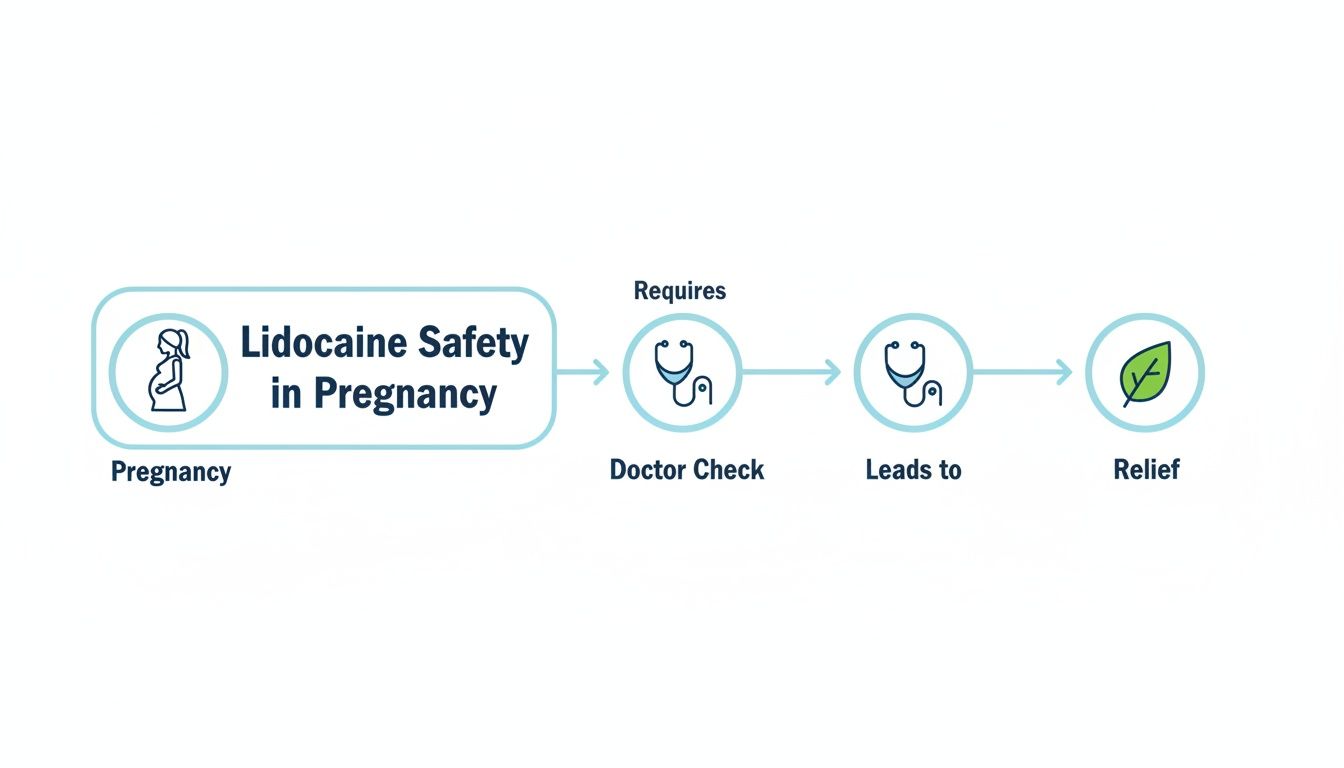
The bottom line is clear: getting professional medical advice is the non-negotiable first step.
Understanding The Active Ingredients
To pick the right product, you have to know what you're buying. Let's break down the most common over-the-counter ingredients.
Topical Rectal Relief Options Compared
| Ingredient | How It Works | Best For | Key Consideration |
|---|---|---|---|
| Lidocaine | Local Anesthetic... temporarily blocks nerve signals. | Pain & Itching... provides rapid numbing for severe discomfort. | 5% is the maximum OTC strength for powerful, targeted relief. |
| Hydrocortisone | Corticosteroid... reduces the body's inflammatory response. | Inflammation & Itching... helps with swelling and redness. | It's a steroid, which some people may prefer to avoid. |
| Witch Hazel | Astringent... temporarily shrinks irritated tissues. | Mild Irritation & Swelling... offers a soothing effect. | May not be strong enough for intense pain. |
| Phenylephrine | Vasoconstrictor... works by narrowing swollen blood vessels. | Swelling... directly targets and shrinks hemorrhoidal tissue. | Focuses on shrinking the hemorrhoid, not on numbing pain. |
As you can see, if your biggest complaint is pain, lidocaine is the clear frontrunner. It’s the only ingredient in this group designed specifically to shut down pain signals. When you're weighing a hemorrhoidal cream vs ointment, the active ingredients are what matter most.
The Power Of A Multi-Symptom Formula
So, what if you’re dealing with more than just pain? For many, it's a frustrating mix of pain, itching, and swelling. This is where a smart, multi-symptom formula can make all the difference.
Why settle for addressing one symptom when you can get relief from them all? A combination formula offers a more complete path back to comfort.
This is the approach behind Revivol-XR Advanced Hemorrhoid & Fissure Cream. It brings together two powerful ingredients:
- 5% Lidocaine: This maximum strength numbs pain and itching right away.
- 0.25% Phenylephrine: This vasoconstrictor shrinks swollen hemorrhoidal tissue.
By combining these two, you get a smarter solution. The lidocaine gives you immediate relief, while the phenylephrine works on the underlying cause of the swelling. This multi-action approach delivers more complete and lasting comfort.
When You Should See A Doctor About Rectal Pain
Over-the-counter treatments like lidocaine rectal cream are fantastic tools for managing the acute pain of hemorrhoids or anal fissures. They deliver powerful, targeted relief. But they're designed for short-term symptom control, not as a permanent fix.
Knowing when to switch from self-care to professional medical advice is key. A doctor can give you a firm diagnosis and rule out anything more serious.
Red Flags That Mean It's Time for a Doctor's Visit
While most rectal discomfort is harmless, some symptoms need a professional opinion.
If you experience any of the following, it’s time to make an appointment:
- Any Rectal Bleeding: A tiny bit of bright red blood can be common with hemorrhoids, but let a doctor confirm it.
- Pain Doesn’t Improve After a Week: If you've used a cream as directed for seven days and aren't feeling better, get it checked out.
- Severe or Worsening Pain: If the pain is intense or getting worse, don't wait.
- A Hard or Acutely Painful Lump: A firm, tender lump could be a thrombosed hemorrhoid, which often needs a doctor's help.
- Changes in Bowel Habits: Unexplained changes in stool color, shape, or frequency warrant a conversation with your doctor.
Seeking a professional opinion isn't a sign of failure... it's a sign of responsible health management.
Your Path to Peace of Mind
Talking about rectal pain can feel awkward. But for your doctor, this is a routine conversation. Getting an accurate diagnosis is the most important step toward feeling better for good.
The good news? Most hemorrhoid and fissure cases are resolved with OTC treatments and a few lifestyle tweaks. Your doctor can give you personalized advice on diet and habits to treat the current problem and prevent it from coming back.
Frequently Asked Questions
When you're dealing with discomfort, you need clear, straightforward answers. Let's walk through common questions about using lidocaine rectal cream.
Getting the right information is the first step toward taking control of your symptoms.
How Quickly Does Lidocaine Rectal Cream Work?
When you're in pain, speed is everything. You should start to feel the numbing effect within about 5 to 15 minutes of applying the cream.
The full pain-blocking power kicks in shortly after, delivering targeted relief that can last for several hours. This rapid action is why it's a go-to for acute flare-ups when you just need the pain to stop.
Can I Use Lidocaine Cream For Internal Hemorrhoids?
This is a really important safety question. Lidocaine rectal cream is designed and tested only for external use.
You should apply it gently to the skin around the outside of your anus to numb pain from external hemorrhoids and fissures. Never apply the cream internally unless a doctor has specifically told you to.
For internal hemorrhoid symptoms, look at products designed for that purpose, like suppositories.
Using the right product for the right location is key to getting effective relief safely.
Is It Okay To Use Lidocaine Cream Every Day?
For consistent relief, daily use is often necessary, but you must follow the guidelines. Yes, it’s generally safe to use lidocaine rectal cream every day, as long as you stick to the directions.
This usually means applying a thin layer up to 3 or 4 times a day. Many people apply it in the morning, at night, and after bowel movements to manage symptoms.
But here's the crucial part: if you've been using the cream for a full week and things aren't getting better, stop and call your doctor.
What Is The Difference Between Lidocaine And Hydrocortisone?
It's easy to mix these two up, but they work in completely different ways.
-
Lidocaine: This is a local anesthetic. Its only job is to block nerve signals to stop you from feeling pain and itching. Think of it as a pure pain-blocker.
-
Hydrocortisone: This is a mild corticosteroid. Its purpose is to reduce inflammation, calming redness, swelling, and itchiness.
While both can help, they tackle the problem from different angles. That's why advanced formulas like Revivol-XR combine a powerful numbing agent like 5% lidocaine with another active ingredient that helps shrink swollen tissue for more complete relief.
For a comprehensive, multi-symptom solution that numbs pain, shrinks swollen tissue, and protects irritated skin, trust the doctor-formulated power of Hemorrhoid.com. Explore our Advanced Hemorrhoid & Fissure Cream and the full range of relief products at https://hemorrhoid.com.