Itchy Anus Relief: Causes, Care and When to See a Doctor

You're awake again, trying not to scratch, and the extra wiping you hoped would help may be making the itch worse. Itchy anus relief often starts with removing irritants, not adding another cream. A gentle nighttime routine, a few symptom clues, and clear limits on self-care can help you get comfortable without overlooking a problem that needs attention.
Table of Contents
- Quick Relief Steps for an Itchy Anus Tonight
- Common Causes Behind an Itchy Anus
- OTC Options and Their Limits
- Itch During Pregnancy and After Childbirth
- Common Questions About Itchy Anus Relief
- When Self-Care Stops and What to Do Next
Quick Relief Steps for an Itchy Anus Tonight
When you're tired and uncomfortable, it's tempting to scrub until the area feels completely clean. Resist that urge. The aim tonight is to remove residue gently, let the skin dry, and reduce friction, not to disinfect sensitive skin.
Start with a gentler routine
- Pause irritating products. Set aside scented soap, fragranced wipes, deodorizing sprays, and rough washcloths during the flare. These can keep irritated skin in an itch-scratch cycle, even when you're using them to feel cleaner.
- Clean without scrubbing. Rinse the outside of the anus with lukewarm water from a bidet, shower, or squeeze bottle. If you use a cleanser, choose a mild, fragrance-free one, rinse it away, and pat dry with a soft towel rather than rubbing.
- Try a warm, shallow soak. Use comfortably warm water after a bowel movement, then dry gently before dressing. A plain-water soak is a reasonable starting point because it doesn't introduce additional ingredients to already-sensitive skin.
- Cool the area if it's sore or swollen. Place a cloth between your skin and a wrapped ice pack, never ice directly against the anus. The NHS guidance on anal pain recommends a wrapped ice pack for up to 20 minutes every 2 to 3 hours, along with warm baths and supportive bowel care.
- Choose protection or temporary numbing thoughtfully. A thin layer of a simple barrier product can help protect external skin from moisture. An external lidocaine cream is a different option for temporary discomfort, but use its labeled amount and frequency rather than adding more whenever you notice the itch.
- Make the next bowel movement easier. Drink fluids regularly, include fiber-rich foods, and avoid pushing or lingering on the toilet. The goal is a soft, formed stool that passes without repeated straining, not a sudden diet change that leaves you with diarrhea.
- Reduce accidental scratching. Keep your nails short and wear soft, loose cotton underwear. Change damp underwear rather than staying in sweaty clothing, and use a cool compress instead of scratching when the urge returns.
This visual offers a simple nighttime reminder.
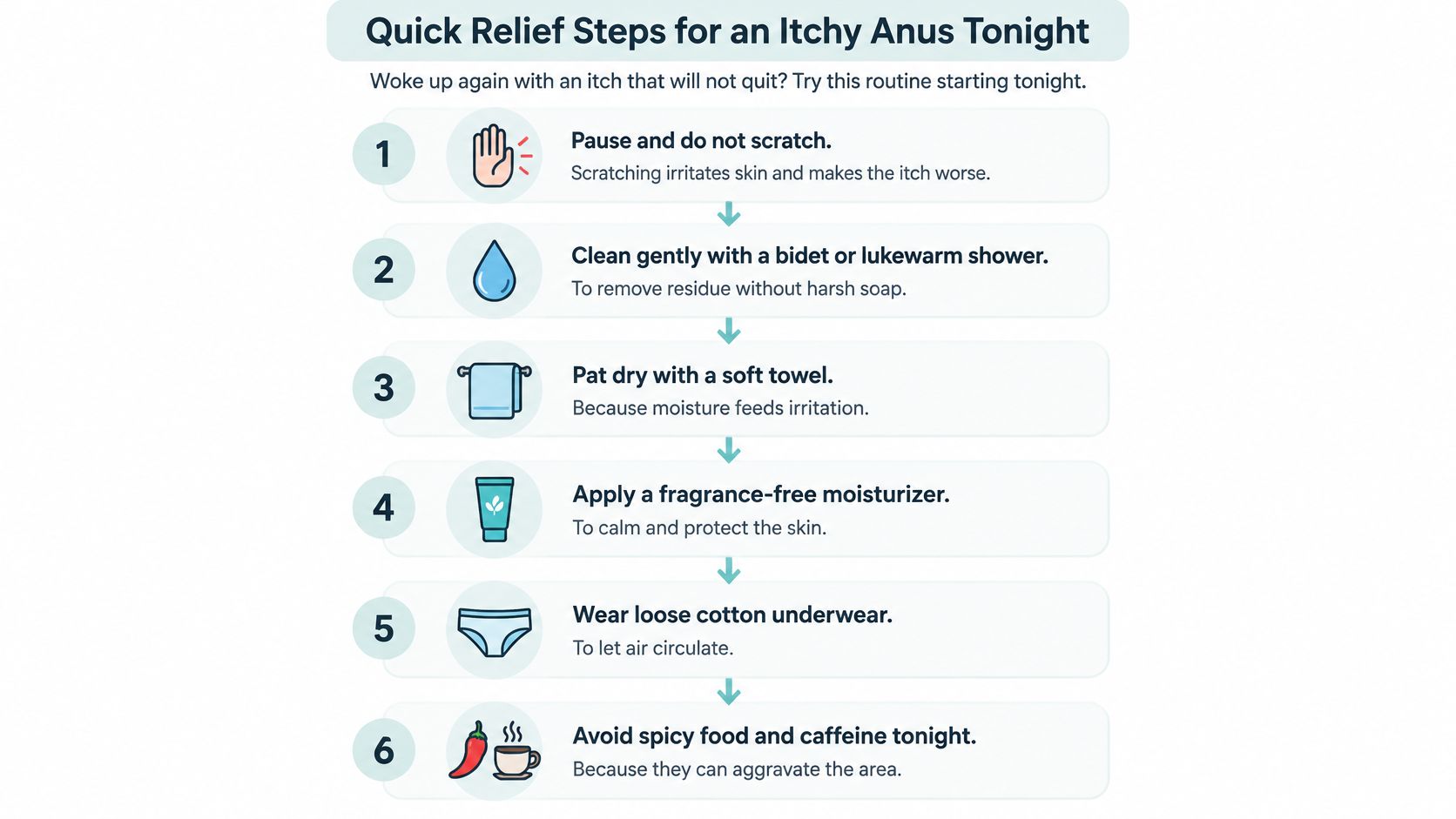
Food triggers aren't universal. If coffee or spicy food seems to make symptoms worse, note the pattern rather than cutting out many foods at once. Likewise, a moisturizer or botanical product isn't automatically suitable just because its packaging describes it as gentle.
Why doing less can help
Say you start using scented wipes during a flare because you're worried about cleanliness. Each bathroom visit leaves you feeling fresh briefly, but the itch returns, so you wipe more often. In that situation, stopping the wipes may be more useful than buying a stronger anti-itch product.
Practical rule: Clean enough to remove residue, not enough to leave the skin feeling stripped or sore.
Our guide to a hemorrhoid relief sitz bath explains how a shallow soak fits into gentle care. Keep the order simple: soak, pat dry, then apply any suitable external product according to its directions.
Medication can help selected symptoms, but it shouldn't replace finding the trigger. A 2012 American Family Physician review reported a 68% reduction in itching with topical hydrocortisone in a small trial, which supports short-term symptom control rather than indefinite use.
Set a check-in point rather than continuing the same routine indefinitely. If an OTC cream hasn't helped within its labeled treatment window, or symptoms become painful, severe, or bleeding, contact a healthcare provider instead of layering on another product.
Common Causes Behind an Itchy Anus
Pruritus ani means itching or burning around the anus. The American Society of Colon and Rectal Surgeons estimates that it affects 1% to 5% of the general population, and notes that published reviews find coexisting conditions in roughly 25% to 75% of cases, depending on the population and diagnostic criteria.
That broad range doesn't tell you what's causing your symptoms. It does explain why assuming every itch is hemorrhoids can send you toward the wrong treatment.
Clinicians distinguish primary itching, where no clear cause is identified, from secondary itching, where an irritant or another condition contributes. Hemorrhoids and fissures can accompany anal itching, but skin problems, moisture, leakage, and infections also matter.
Common causes of anal itching by clue
The Merck Manual's guidance on anal itching describes this broad range of possible causes. Use these clues to decide what to discuss, not to diagnose yourself.
| Clue | Likely cause | What to check first |
|---|---|---|
| Itch that starts after a new wipe, soap or detergent | Contact irritant dermatitis | Switch to plain water and fragrance-free products |
| Itch that is worse at night, sometimes with tiny white worms seen in stool or underwear | Pinworm infection | Ask a clinician about testing |
| Soreness, itch and a soft lump after straining | Hemorrhoids | Reduce straining and long sitting |
| Sharp pain and blood on toilet paper after bowel movements | Anal fissure | Softer stools and a warm soak |
| Itch with discharge, leakage, rash or sores | Infection, skin disease or bowel disorder | Clinician evaluation |
| Sweaty, moist skin folds with redness and odor | Fungal overgrowth or trapped moisture | Dry thoroughly and keep the area breathable |
| Itch with a flaky or scaly patch | Psoriasis or eczema | Clinician assessment |
Read the pattern, not just one symptom
Timing helps. Itch that begins soon after changing laundry detergent raises a different question from sharp pain that starts as stool passes. Nighttime itching is worth mentioning, but it doesn't prove that you have pinworms.
The same caution applies to a lump or blood on toilet paper. Those findings may fit a familiar condition, but bleeding shouldn't be automatically attributed to hemorrhoids, especially if it hasn't been assessed.
A clue helps you ask a better question. It doesn't confirm the answer.
Keep a brief symptom note over the coming week. Record when the itch appears, products used, foods that seem relevant, bowel movements, and any leakage or skin changes. Bring that note to an appointment if symptoms persist, and don't delay seeking care just to finish the log.
OTC Options and Their Limits
Relief stalls when another tube goes onto skin that is still damp, soapy, or coated with yesterday's cream. Remove the irritant first: leftover cleanser, rough wiping, and trapped moisture. Then match one product to the one symptom you are trying to ease. A numbing cream, a barrier, and a cleanser do different jobs, so a second purchase rarely fixes an itch you have not named yet.
Lidocaine works like a short mute button on skin nerves. It can quiet the evening. It does not show you what started the itch.
OTC options for anal itching and their limits
| Option | Key ingredients | Best for | Limits |
|---|---|---|---|
| 5% lidocaine numbing cream | Lidocaine 5% | Pain, burning and itching | External use only; stop and ask a clinician if no better within 7 days |
| Advanced cream with lidocaine and phenylephrine | Lidocaine 5% and phenylephrine 0.25% | Swelling along with pain and itch | External use only; do not insert into the rectum |
| Low-strength hydrocortisone cream | Hydrocortisone 1% (confirm on the package label) | Short-term itch from irritation | Short courses only; follow the days printed on that label |
| Witch hazel and aloe cleanser | Witch hazel extract, aloe | Gentle cleansing and soothing | Cleans and soothes the surface; leaves the cause in place |
| Petrolatum or zinc barrier | Petrolatum or zinc oxide | Protecting skin from moisture | Reapply after cleansing |
Lidocaine at 5% is the highest strength sold over the counter for topical anorectal products without a prescription. On its own, it is meant for pain and itching, not for shrinking swollen tissue. External burning may feel manageable for a few hours. Use a numbing cream for the evening, then book an assessment if the itch is back the next morning.
Phenylephrine is a vasoconstrictor. It narrows small vessels so swollen hemorrhoidal tissue can feel smaller for a while. A cream that pairs 5% lidocaine with 0.25% phenylephrine is built for swelling plus pain and itch. Lidocaine alone covers pain and itching. A new, painful, or enlarging lump still needs a clinician, including when the swelling feels smaller after the cream.
A barrier of petrolatum or zinc oxide sits on skin the way a light raincoat sits on cloth. It limits contact with moisture and residue. A thin coat wipes away more gently than a thick layer you have to scrub.
Check the formula and your health history
Hydrocortisone can settle itch that comes from irritation. Use only the strength and number of days printed on that package, or the schedule a clinician gives you. Steroid cream does not belong in an everyday routine.
A witch hazel and aloe cleanser can stand in for dry wiping. Botanical ingredients can still sting sensitive skin, so the ingredient list matters more than a "natural" front label. Stop any product that increases stinging, redness, or itch.
Ask a pharmacist or physician before a medicated cream if you have heart disease, high blood pressure, thyroid disease, diabetes, trouble urinating, or you take prescription medicines. Combination products often carry extra warnings. Two boxes with similar branding can list different active ingredients.
Before applying: Identify the symptom, check the active ingredients, and read the warnings on that specific package.
Clean with mild soap and warm water, rinse, and pat dry. Spread a thin layer on the external skin only. Keep these products outside the anus. Do not push cream in with a finger or an applicator unless that exact product is labeled for internal use and a clinician has directed you to use it that way.
One medicated product at a time is easier to judge. Several creams at once raise the chance of irritation and hide which ingredient helped. Stop and ask a doctor if rectal bleeding occurs, the problem worsens, an allergic reaction appears, or you are no better within 7 days.
Itch During Pregnancy and After Childbirth
Consider a new mother who waits weeks to mention itching and tenderness because she assumes they're an unavoidable part of recovery. She's already managing feeding, interrupted sleep, and soreness, so another symptom feels like something she should tolerate. She doesn't have to.
A 2024 study published in the Journal of Women's & Pelvic Health Physical Therapy reported that 61.4% of participants developed perianal pathology after delivery, and 35.1% developed postpartum hemorrhoidal disease. Those findings describe the study participants, not every postpartum patient, but they show that these concerns deserve attention.
Adapt care to your recovery
Pregnancy pressure, pushing during labor, constipation, and healing tears can complicate comfort around the anus. Don't assume every sore spot is a hemorrhoid, particularly if you also have stitches or a healing wound.
- Keep cleansing simple. Use gentle water cleansing and pat dry without dragging a towel across tender skin.
- Ask about soaking. Check with your maternity care team before adding bath products, especially around healing tears or stitches.
- Support softer stools. Choose fiber-rich meals and drink regularly rather than straining through constipation.
- Check every OTC product. During pregnancy or breastfeeding, ask a clinician before using medicated creams, botanical cleansers, or soak additives.
The NHS postpartum recovery guidance recommends fluids, fiber-rich foods, and avoiding pushing or straining, with persistent constipation discussed with a midwife or doctor. Our guide to hemorrhoids during pregnancy offers additional context for that conversation.
Know when to call
Heavy bleeding, fever, severe pain, or a growing lump needs same-day medical assessment. Seek emergency help for heavy ongoing bleeding or bleeding with faintness.
Comfort products require individual safety checks during this stage.
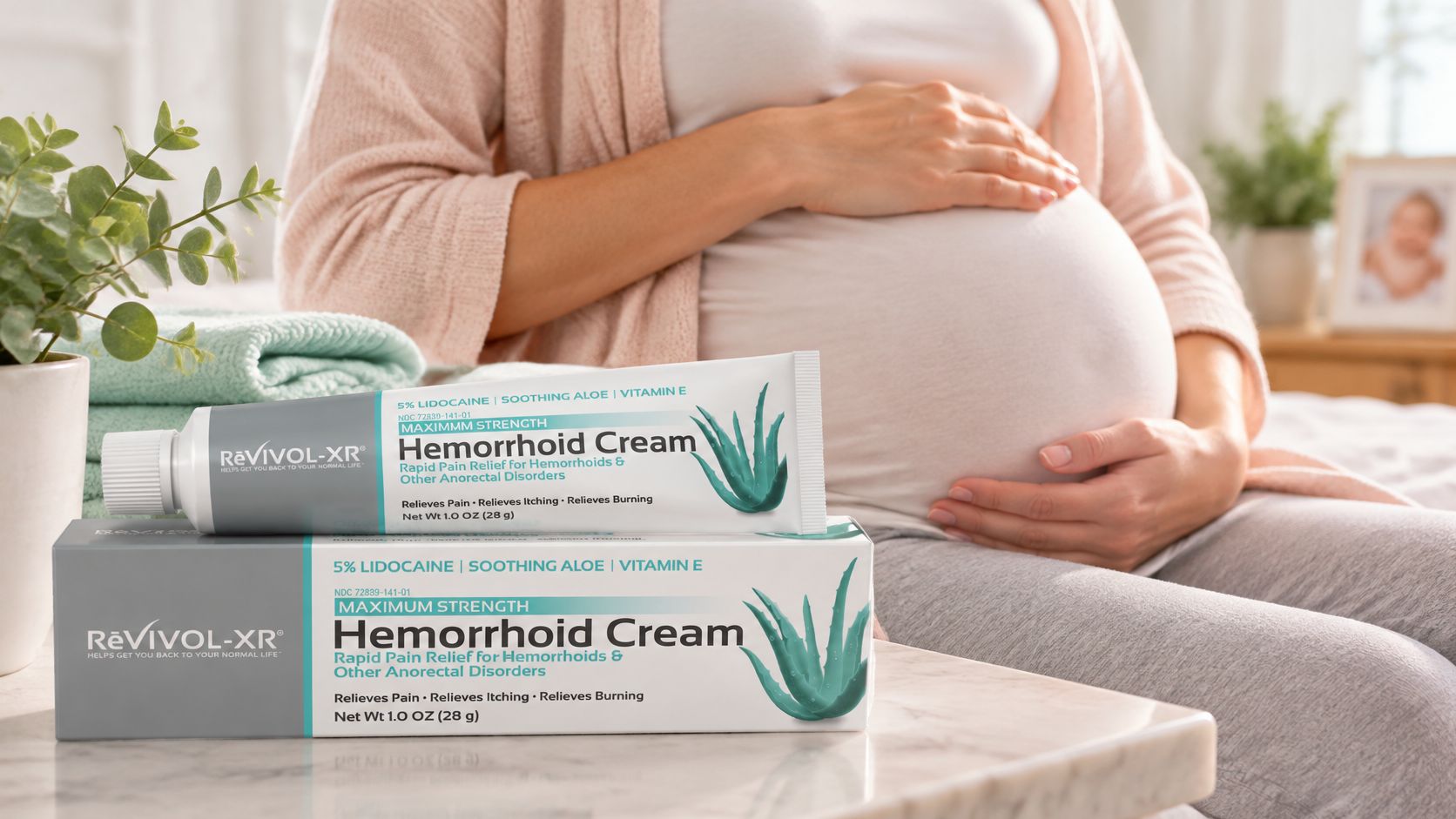
Many postpartum symptoms improve during recovery, but you don't need to wait until discomfort becomes unbearable to ask for help.
Common Questions About Itchy Anus Relief
You are in the pharmacy aisle with three tubes, and the itch began the week you changed wipes. The useful first move is to name the irritant and match the clues, before another cream covers the same unknown cause.
Does an itchy anus always mean hemorrhoids?
A new wipe, trapped moisture, a skin condition, a small tear, or an infection can itch in the same place. Pain, discharge, sores, or a change in bowel habits belong in the description you give a clinician, alongside the itch, so the pattern can point to a likely cause.
How long can I use an anti-itch cream?
Each formula has its own limit, and steroid creams are a separate case covered in the OTC section. If the active ingredient is unclear, hand the box to a pharmacist and ask them to read the Drug Facts panel with you. Quieting the itch while the irritant stays on the skin works like turning down a smoke alarm and leaving the pan on the stove.
Can I use hemorrhoid cream every day?
Follow the symptoms and schedule printed on that package. Reaching for it most days, or having the itch return as soon as you stop, is a clue that the cause still needs checking. A stronger tube will not identify a wipe, moisture, or a skin problem that the first cream never addressed.
Will a numbing cream change an exam?
A numbing cream dulls pain and itching for a short time, so tenderness can feel milder than it did earlier. Before a rectal exam or procedure, tell the clinician the product name and when you last applied it. Leave off a fresh layer that morning unless the clinic said to use one. If the label says external use only, do not place it inside the rectum as preparation.
What can I say at the counter?
A short script is enough:
"The itch started after I switched wipes. It is worse at night and after bowel movements. I have not seen bleeding. I used a soothing cream for four days. Can you check whether this product fits that pattern, or whether I should see a clinician?"
When Self-Care Stops and What to Do Next
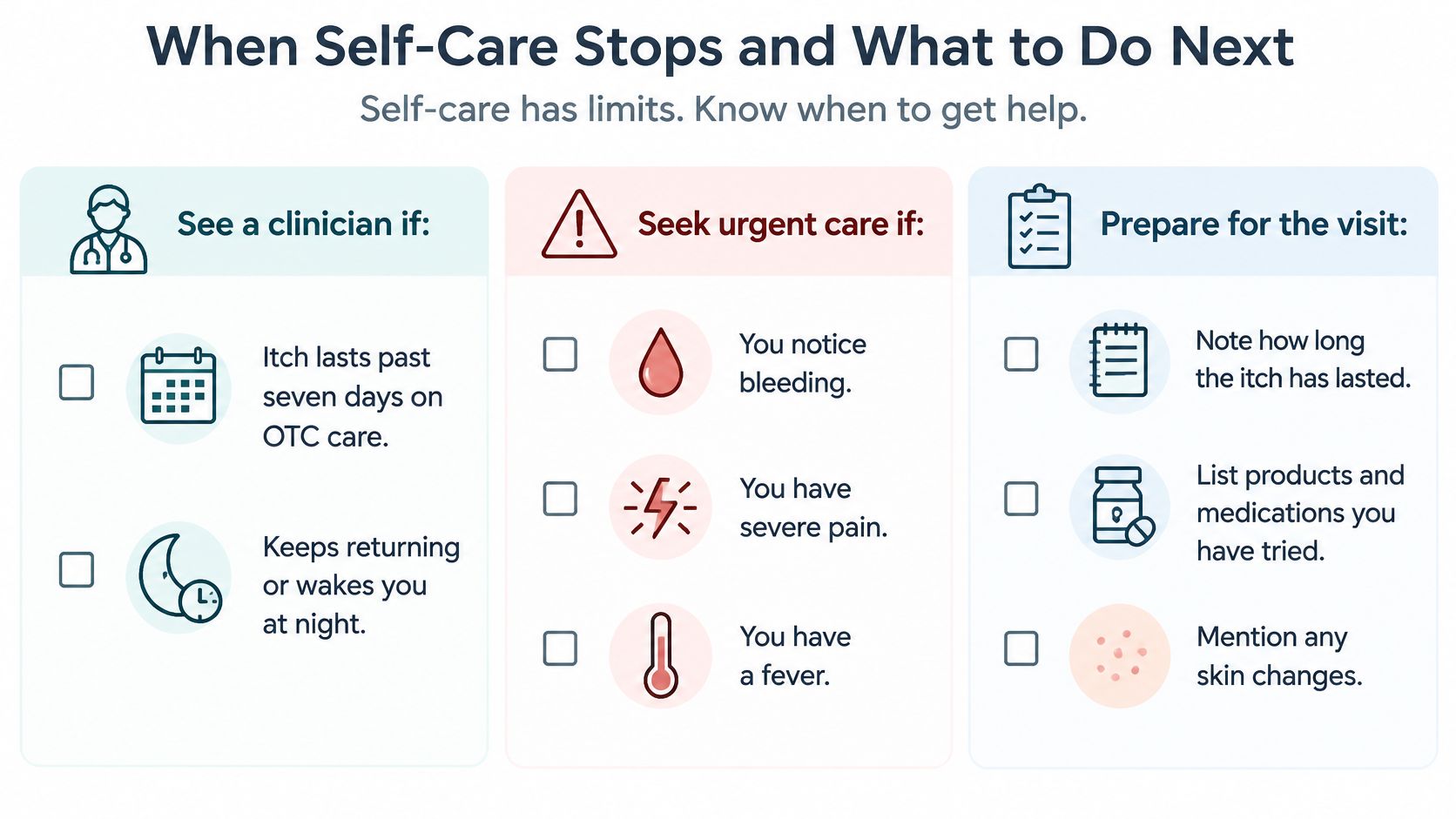
A symptom diary can help a clinician spot what is driving the itch. Record when it occurs, products used, bowel habits, and any visible changes. Bring the notes and product packaging to an appointment.
Seek medical advice if the itch persists, repeatedly returns, regularly wakes you at night, or does not improve with appropriate care. Rectal bleeding, severe or worsening pain, or stool leakage also needs prompt attention. For other warning signs during pregnancy or after childbirth, see the pregnancy and postpartum guidance.
The FDA labeling information for lidocaine products advises stopping use and seeking medical advice for bleeding, worsening symptoms, an allergic reaction, or no improvement within seven days. Contact a clinician sooner if a concerning symptom appears.
Discharge, pus, foul odor, rash, sores, a lasting lump, changes in bowel habits, or unexplained weight loss are also reasons to arrange an assessment. These symptoms can have different causes, including infection, a fissure, or an inflammatory bowel condition. A primary care clinician can be a starting point; a gastroenterologist, colorectal surgeon, or OB/GYN may also help. Read more about which clinician treats hemorrhoids and related symptoms.
For temporary relief of hemorrhoid pain, burning, or itching, Revivol-XR 5% Lidocaine Numbing Cream is an over-the-counter option. Follow its label, and consult a healthcare professional if symptoms persist for more than seven days. Comfort measures can ease symptoms while you seek care, but a clinician can assess what is causing them.
For an additional explanation of anorectal care, this video may be useful.
At an appointment, you can say, “I've had anal itching, and it isn't settling.” Clinicians routinely assess these concerns. You do not need to apologize for asking.
Revivol-XR offers over-the-counter options for temporary hemorrhoid symptom relief. Visit Revivol-XR to review product ingredients and directions, and contact a healthcare provider about persistent, severe, or bleeding symptoms.