How to Treat Hemorrhoids Postpartum: A New Mom's Survival Guide

Most new moms don't realize that the "home remedy" their grandmother swears by might actually make postpartum hemorrhoids worse.
I once spoke with a new mother who broke down in tears because she thought the awful pain from her hemorrhoids would never go away. She was exhausted, overwhelmed, and the constant discomfort made it hard to even sit down and feed her newborn. She felt completely alone, but the truth is, she was going through something incredibly common.
This experience stuck with me because it highlights a huge problem: new mothers are often so focused on their baby that their own painful, disruptive health issues get pushed aside. They suffer in silence, thinking it's just part of the deal.
Postpartum recovery isn't just about the baby... it's about healing your own body, too.
The physical recovery from childbirth is a marathon, not a sprint. Hemorrhoids are one of the most common complaints, caused by the immense pressure of pregnancy and delivery. Studies show that they affect roughly 40% of women during this time. That burning, itching, and swelling can turn a beautiful moment with your baby into an agonizing one. But you don't have to just endure it. The path to relief starts with understanding how to treat hemorrhoids postpartum safely and effectively.
To get better, you need a plan that soothes the immediate pain while also tackling the root causes like constipation. This is where combining gentle at-home care with targeted, safe treatments like Revivol-XR can make all the difference, helping you heal faster so you can focus on what truly matters.
Here are the concrete steps you can take to find relief right now.
Soothe and Shrink with Immediate At-Home Care
Bringing home a new baby is one of life's greatest joys, but the physical recovery can be rough. Hemorrhoids are right at the top of the list of common postpartum complaints, brought on by all the pressure from pregnancy and delivery.
If you're dealing with them, you are far from alone. Thankfully, you don't have to wait for a doctor's appointment to start feeling better.
Harness the Power of Cold Therapy
One of the fastest ways to calm an angry hemorrhoid is with cold. A simple cold compress or an ice pack wrapped in a soft, clean cloth can feel like a lifesaver.
The cold works in two ways: it temporarily numbs the sensitive nerve endings for instant pain relief and helps constrict the swollen blood vessels, which brings down inflammation and stops that awful throbbing sensation.
For the best results:
- Apply the cloth-covered ice pack for 15-20 minutes at a time.
- Feel free to repeat this a few times a day whenever the discomfort flares up.
- Just remember to never put ice directly on your skin to avoid causing any damage.
This straightforward process... cool, soak, soothe... is a powerful first line of defense in your recovery plan.
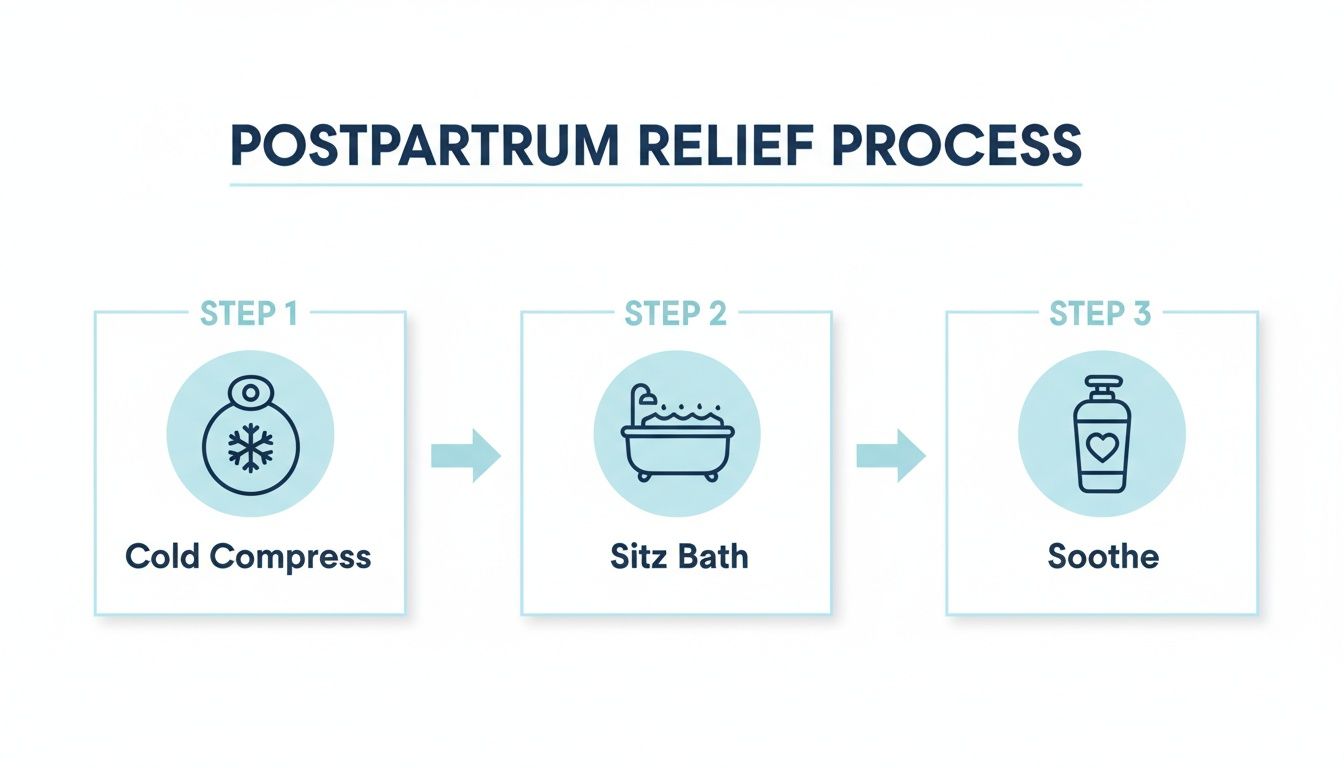
As the infographic shows, these gentle steps are designed to work together to bring you comfort and promote healing right from the start.
Find Comfort in a Soothing Sitz Bath
If there’s one tool every new mom should have in her recovery kit, it's the sitz bath. This is more than just a quick soak; it’s a targeted therapeutic treatment.
A sitz bath involves soaking just your hips and bottom in warm water, providing incredible relief for both hemorrhoids and any perineal healing you're going through. The warm water works wonders by increasing blood flow to the area, which is essential for speeding up the healing process.
To get started, you can either buy a small basin that fits right over your toilet or just fill your bathtub with a few inches of warm... not hot... water. Aim to soak for about 15 minutes, two to three times a day.
After your soak, always gently pat the area dry with a soft towel. Whatever you do, don't rub! Rubbing will only make the irritation worse.
To give you a quick overview, here's how these two remedies stack up.
Immediate Postpartum Hemorrhoid Relief Techniques
| Technique | How It Helps | Best Practice | Frequency |
|---|---|---|---|
| Cold Compress | Numbs pain instantly and reduces swelling by constricting blood vessels. | Wrap an ice pack in a soft cloth. Never apply ice directly to the skin. | 15-20 minutes at a time, several times a day as needed. |
| Warm Sitz Bath | Soothes irritation and promotes healing by increasing blood flow and relaxing muscles. | Use a basin or a few inches of warm (not hot) water in a bathtub. | 15 minutes per session, 2-3 times daily. |
Combining cold compresses for immediate numbing with warm sitz baths for deep, soothing healing creates a one-two punch against postpartum hemorrhoid pain. For more ideas, you can explore our full guide to at-home hemorrhoid relief.
Choosing Safe Over The Counter Treatments
Walking into a pharmacy to find relief for postpartum hemorrhoids can feel overwhelming, especially for a new mom. With a wall of creams, sprays, and suppositories staring back at you, how do you know what’s effective... and more importantly, what’s safe if you’re breastfeeding?
It’s not a guessing game. Understanding what’s inside these treatments is the key to making a confident choice. Most over-the-counter (OTC) products are designed to give you targeted relief right where you need it most.
Key Ingredients in Postpartum Treatments
The most effective hemorrhoid treatments usually combine a few active ingredients to tackle the different symptoms you might be feeling. Pain, swelling, itching, and bleeding are all common, and knowing what works for each is a huge help.
Here are the main types of ingredients you’ll find:
- Anesthetics: These are for immediate pain relief. Ingredients like lidocaine work by numbing the nerve endings in the area, quickly calming that awful burning and stinging. This can be a lifesaver right before or after a bowel movement.
- Vasoconstrictors: The main job of ingredients like phenylephrine is to shrink swollen blood vessels. This directly reduces the size of the hemorrhoid itself, which eases pressure, discomfort, and that feeling of fullness.
- Protectants: Think of these as a gentle barrier for your skin. Ingredients like glycerin create a protective layer over the irritated tissue. This helps prevent more friction from clothing or bowel movements, giving sensitive skin a chance to heal without being constantly aggravated.
Creams vs Sprays vs Suppositories
The best format really comes down to your specific symptoms and what feels most comfortable to use. Each one offers a different benefit.
A cream is often the best all-around pick for external hemorrhoids. You can apply it directly to the swollen tissue to numb, shrink, and protect all at once. For more tips on soothing irritated skin, you might find our guide on using witch hazel for anal fissures helpful.
Sprays offer a touch-free application, which is a massive plus when the area is too sore to touch. They're great for quick, on-the-go relief and are easy to apply without any mess.
Suppositories are made for internal hemorrhoids. You insert them into the rectum, where they dissolve and deliver medication directly to the internal tissue, helping to reduce swelling and discomfort from the inside out.
Making a Confident Choice for Relief
Finding a good treatment is so important because postpartum hemorrhoids can really interfere with your recovery. Studies show that beyond bleeding, which happens in about 29% of cases, new moms also report significant pain (60%), itching (43%), and swelling that gets in the way of daily life. You can read more about these postpartum hemorrhoid symptom findings.
This is where multi-symptom formulas, like those offered by Revivol-XR, are incredibly useful. Instead of juggling separate products for pain and swelling, you can choose one that does it all. A single cream that combines a pain reliever, a vasoconstrictor, and a protectant gives you a much more complete approach to healing.
Here is a look at the Revivol-XR homepage, where you can find products that combine these key ingredients.
The site highlights a range of solutions, including creams and sprays, designed for comprehensive care.
By choosing a trusted, doctor-recommended brand, you can feel good about using a safe and effective product. That way, you can spend less time worrying about discomfort and more time focusing on what really matters... bonding with your new baby.
How to Manage Postpartum Constipation
Let’s be honest: the thought of that first bowel movement after giving birth can be downright terrifying. You’re sore, you’re healing, and the last thing you want is more pain. But putting it off only makes things worse.
Straining on the toilet is the absolute enemy of hemorrhoid healing. It puts a ton of pressure on those already swollen, sensitive veins. Just five minutes of straining can set you up for years of pain. The goal isn't just to eat right; it's about creating a gentle, no-stress bathroom routine that helps your body recover.
Prioritize Hydration and Fiber
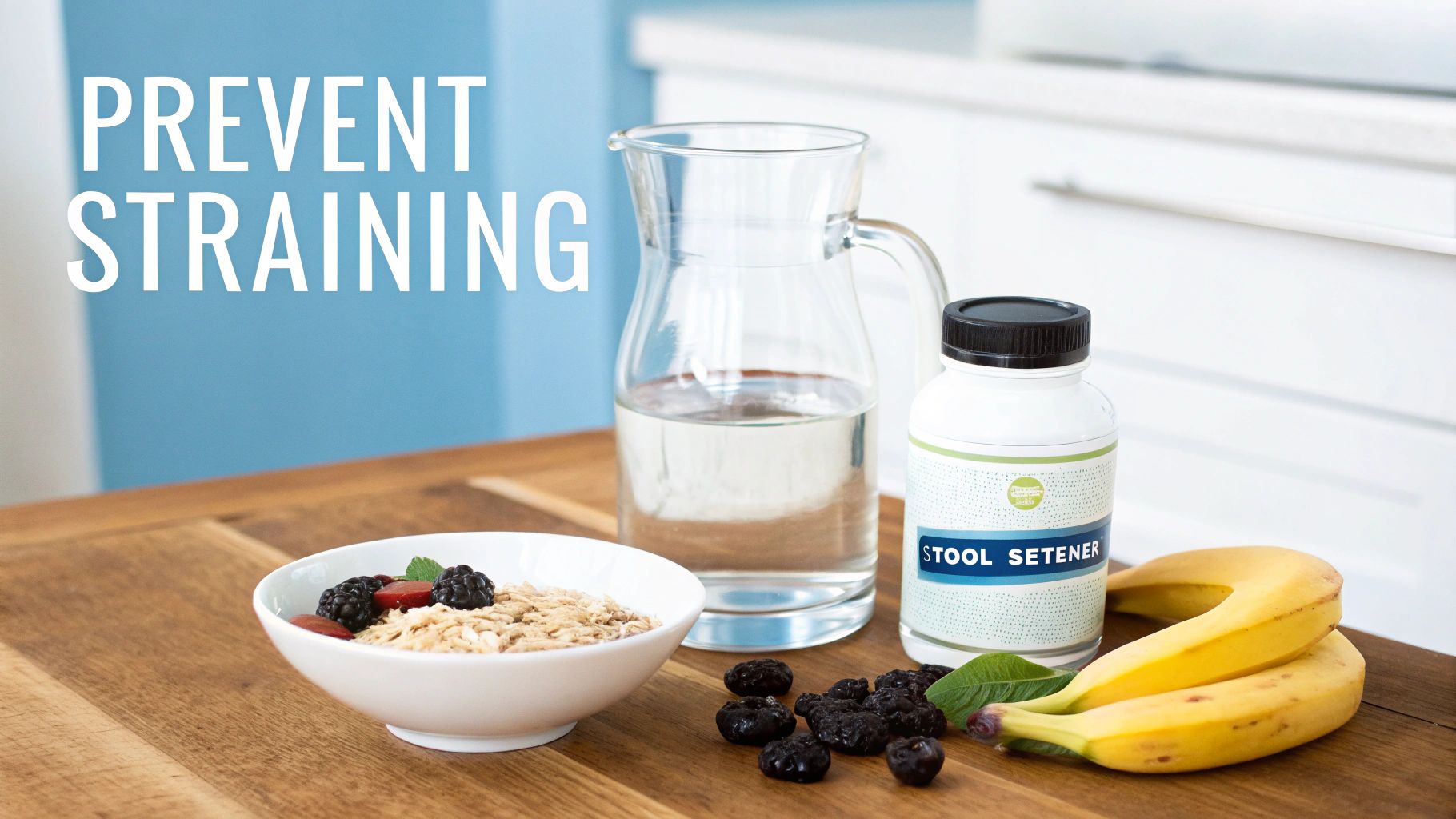
The foundation of a smooth, easy bowel movement is surprisingly simple: water and fiber. They’re a team. Water softens your stool, and fiber gives it bulk, making it much easier to pass without pushing. This is even more critical if you're breastfeeding, since your body is already demanding extra fluids.
Try to drink at least eight glasses of water a day. A simple trick is to keep a water bottle with you at all times and take a few sips every time you sit down to nurse or feed your baby.
At the same time, you'll want to gently increase your fiber. No need to completely overhaul your diet overnight. Just start adding a few high-fiber foods that are easy on your system.
Easy Fiber Sources for New Moms:
- Oatmeal: A warm bowl is comforting and packed with soluble fiber.
- Berries: Raspberries and blackberries are fiber powerhouses and easy to snack on.
- Pears and Apples (with skin): These are gentle on the digestive system.
- Lentils and Beans: Toss them into a soup or salad for a quick boost.
- Avocado: Creamy, delicious, and a great source of both fiber and healthy fats.
Consider a Stool Softener
Sometimes, especially in those first few postpartum days, diet and water aren't quite enough. Your body is doing a lot of healing, and this is where an OB-GYN-approved stool softener can be a total game-changer.
It’s important to understand that a stool softener isn't a laxative. It doesn't force a bowel movement. It simply works by drawing more water into your stool, making it softer and way more comfortable to pass.
The goal is to make every bowel movement effortless... not a long-term fix.
Always check with your doctor before starting any new medication, but most common stool softeners are considered safe to use while breastfeeding. They can provide that little bit of extra help you need to keep things moving without pain.
Create a Strain-Free Bathroom Routine
How you go is just as important as what you eat. The final piece of the puzzle is adopting a bathroom routine that actively supports healing. Ignoring the urge to go can lead to harder stools, so when your body tells you it's time, listen.
Try not to delay. Sit on the toilet, relax, and give yourself time without feeling rushed. A small footstool that elevates your feet (the "squatty" position) can make a huge difference.
By combining these strategies... hydration, fiber, a gentle stool softener, and a relaxed bathroom routine... you can effectively manage postpartum constipation. You can also learn more about how to prevent hemorrhoids in the first place.
Small Lifestyle Changes That Make a Big Difference
How you move through your day can either help your postpartum hemorrhoids heal or make the pain drag on. You don't need a massive life overhaul... just a few smart, simple adjustments to your daily routine can reduce pressure, prevent irritation, and give your body the best chance to recover.
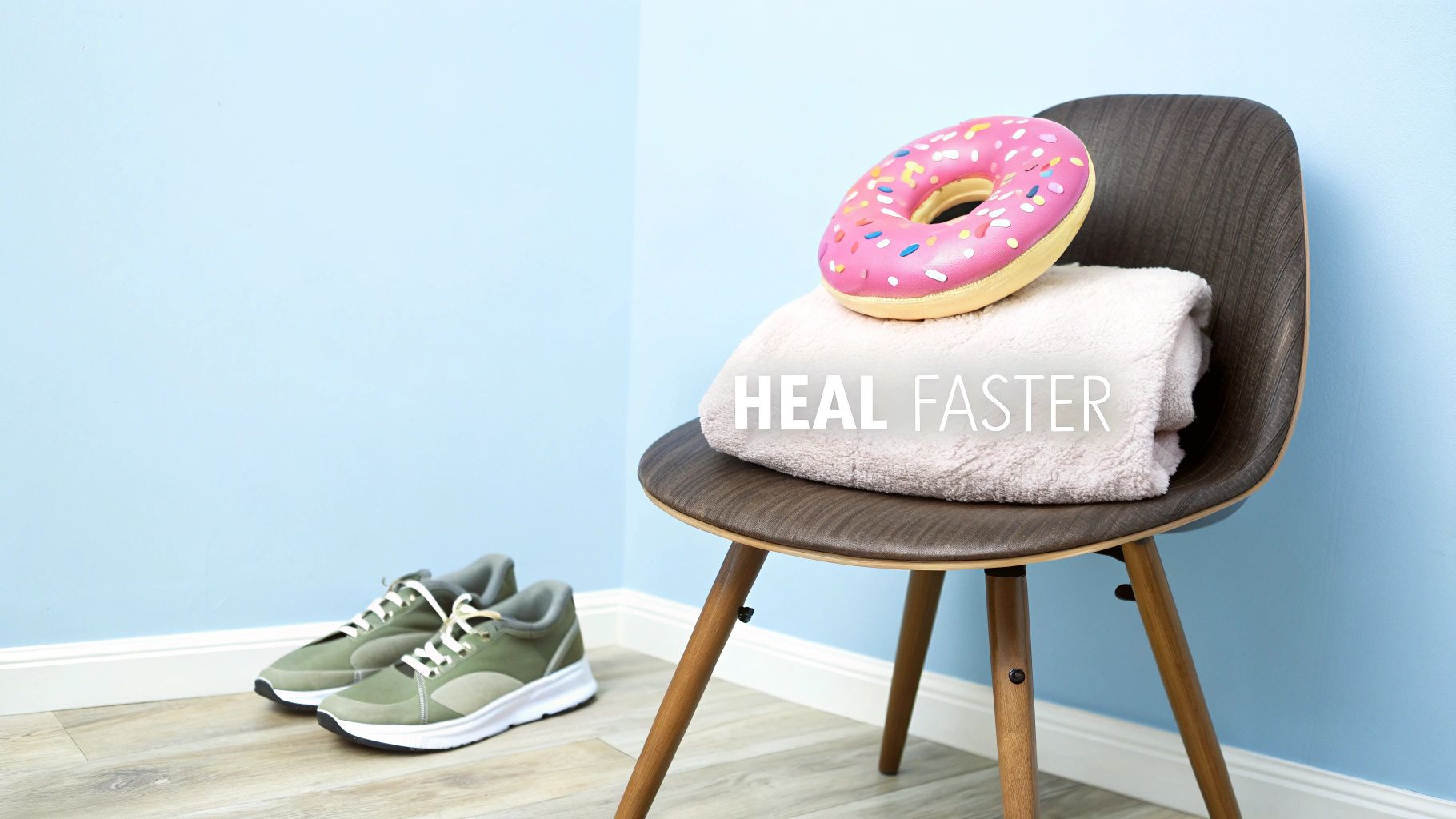
Often, these little shifts in your routine are the most effective tools for learning how to treat hemorrhoids postpartum. They work hand-in-hand with creams and sitz baths to keep new flare-ups from happening.
Rethink Your Bathroom Hygiene
The skin around hemorrhoids is incredibly sensitive. Standard dry toilet paper can feel like sandpaper on an already irritated area, making the swelling, itching, and pain so much worse.
The key is to dab, not wipe. After using the toilet, gently pat the area with a soft, unscented wipe or a damp cloth. This one change can cut down on irritation dramatically.
For an even gentler clean, try adding a soothing product to your routine.
- Peri bottles: Your hospital probably sent you home with one. Fill it with warm water and use it to gently rinse the area clean. It’s a game-changer.
- Toilet paper lotions: Instead of pre-moistened wipes that can contain harsh chemicals, a product like Revivol-XR's Toilet Paper Lotion lets you add soothing ingredients like aloe and witch hazel directly to your own toilet paper.
Adjust How You Sit and Rest
With a newborn, you’re doing a lot of sitting... nursing, rocking, cuddling, and just trying to catch your breath. The problem is, sitting for long stretches puts direct pressure on the very veins that are trying to heal.
Try to be more mindful of how you're positioned throughout the day. Lying on your side while nursing or resting takes all the pressure off. It's a simple fix. When you do need to sit up, a little extra support can make all the difference.
A donut cushion isn't a luxury... it's a recovery tool.
A donut pillow or even a folded towel can be your best friend. It lifts your bottom just enough to relieve that direct pressure, making it so much more comfortable to sit and focus on your baby.
Embrace Gentle Movement
While intense exercise is off the table for a bit, gentle movement is fantastic for your recovery. Being too sedentary can lead to stiffness and constipation, but even a short, slow walk can work wonders.
Walking improves blood circulation everywhere, including the pelvic region. Better blood flow is crucial for shrinking swollen tissues and helping your body heal. Just a 10-15 minute walk around the house or your neighborhood once or twice a day can make a real difference.
Smart Activity Adjustments:
- Avoid sitting for too long. When you can, lie on your side to read, watch TV, or nurse.
- Use a cushion. Always sit on a donut pillow or soft cushion to take the pressure off.
- Take short walks. Aim for a couple of brief, gentle walks each day to boost circulation and keep things moving.
These tweaks aren't complicated, but their combined effect is powerful. By being gentle with your body, changing how you sit, and adding some light movement, you’re actively helping yourself heal.
When You Should Call Your Doctor
Most postpartum hemorrhoids get a whole lot better with consistent at-home care. You do the sitz baths, apply the creams, and tackle constipation... and slowly but surely, things start to improve. This is the normal path for most new moms.
But it’s also really important to know when a symptom is more than just a normal part of the healing process. While you don’t need to panic over every little twinge, ignoring certain red flags can delay getting the right treatment.
Think of it this way: knowing when to call your doctor isn't about creating anxiety. It's about being an empowered, informed advocate for your own health during a pretty vulnerable time.
Signs of a Thrombosed Hemorrhoid
One of the most common reasons to seek medical advice is for a thrombosed hemorrhoid. This is a fancy way of saying a blood clot has formed inside an external hemorrhoid, turning it into a hard, incredibly painful lump.
This isn’t just your typical hemorrhoid discomfort. The pain from a thrombosed hemorrhoid can be sudden and severe, making it hard to sit, walk, or even think about anything else. You might also notice the lump has a bluish or purple color.
If you feel a hard, intensely painful lump... it's time to call your doctor.
While it isn't dangerous, the pain can be debilitating. Your provider can offer treatments to bring you much-needed relief, sometimes with a simple in-office procedure.
When to Be Concerned About Bleeding
Seeing a little bright red blood on the toilet paper after you go is pretty common with hemorrhoids. It's usually just caused by a hard stool passing over the delicate, swollen tissue. However, not all bleeding is normal.
You should get in touch with your provider if you experience:
- Heavy or continuous bleeding: A few streaks are one thing; bleeding that doesn’t stop or seems like more than a small amount is another.
- Dark, tarry-looking stool: This can be a sign of bleeding higher up in your digestive tract, which needs to be looked into.
- Bleeding accompanied by dizziness or fainting: These are signs of significant blood loss and require immediate medical attention.
Pain That Doesn’t Get Better
Postpartum hemorrhoids are definitely uncomfortable, but the pain should gradually get better with at-home care. If you've been diligent for a week and the pain is getting worse instead of better, that's a sign something else might be going on.
Severe or escalating pain could point to a thrombosed hemorrhoid, an infection, or even an anal fissure (a small tear in the skin). Your doctor can figure out what's really happening and get you on the right treatment plan.
Never hesitate to reach out if something feels off. Your peace of mind is just as important as your physical healing.
Common Questions About Postpartum Hemorrhoids
Postpartum recovery is a journey, and when hemorrhoids join the party, you need straightforward answers. Fast. Let's tackle some of the most common questions new moms have, so you can feel more in control.
How Long Do Postpartum Hemorrhoids Last?
This is usually the first thing on every new mom's mind. The good news? For most, this is a temporary problem. With consistent at-home care... we’re talking sitz baths, the right topical treatments, and staying ahead of constipation... you should feel a real difference within a few days to a couple of weeks.
Of course, everyone’s body is different. The severity of the hemorrhoids and how consistent you are with your care routine both matter. The key is to look for steady, gradual improvement.
When Can I Expect to See Improvement?
While every recovery is unique, there's a general pattern you can expect to see if you're actively using strategies for how to treat hemorrhoids postpartum. Below is a rough timeline, but the most important thing is to be patient and kind to your body as it heals.
Here’s an estimated look at what you can expect as you start feeling better.
Postpartum Hemorrhoid Recovery Timeline
| Timeframe | Expected Improvement | Key Actions |
|---|---|---|
| First 2-3 Days | The initial intense pain and swelling should start to calm down. You may notice less throbbing. | Focus on cold compresses, gentle cleansing with a peri bottle, and starting a stool softener. |
| Week 1 | Pain and itching should be noticeably reduced. Swelling may still be present but should be smaller. | Continue with warm sitz baths, apply a multi-symptom cream like Revivol-XR, and stay hydrated. |
| Weeks 2-4 | Most discomfort should be gone. You may still have some minor swelling or small skin tags left over. | Maintain a high-fiber diet, continue gentle exercise like walking, and avoid straining at all costs. |
| After 1 Month | For most, the hemorrhoids will have resolved. If significant symptoms persist, check in with your doctor. | Continue healthy bathroom habits to prevent future flare-ups and stay active. |
Listen to your body. If things aren't improving or feel like they're getting worse, don't hesitate to reach out to your doctor.
Are Hemorrhoids After a C-Section Normal?
Yes, absolutely. It's a common misconception that hemorrhoids are only caused by the pushing phase of a vaginal delivery. The real culprit is the pregnancy itself.
For nine months, the weight of your growing uterus put tremendous pressure on the veins in your lower rectum and pelvic area. Add in pregnancy hormones that cause veins to relax and swell more easily, and you have the perfect recipe for hemorrhoids.
Will My Postpartum Hemorrhoids Go Away Completely?
For the vast majority of women, yes, postpartum hemorrhoids do go away completely. As your body heals, your hormone levels return to normal, and that intense pressure on your pelvic veins finally lets up.
Sometimes, after a hemorrhoid has fully healed, a small, soft piece of skin called a skin tag might remain. These are usually harmless and painless.
The single biggest factor in making sure hemorrhoids go away and stay away is preventing constipation.
Is It Safe to Use Hemorrhoid Cream While Breastfeeding?
Most over-the-counter hemorrhoid creams are considered safe for breastfeeding moms. Because they’re applied topically, very little of the medication actually gets absorbed into your bloodstream. That said, it’s always the smartest and safest move to check with your OB-GYN or pediatrician before starting any new medication.
When you're looking for a product, seek out formulas with trusted active ingredients... like lidocaine for pain, phenylephrine to shrink swelling, and protectants like glycerin. Brands like Revivol-XR offer steroid-free options designed for comprehensive relief.
The exhaustion and pain that mother felt wasn't just about her hemorrhoids... it was about feeling like her own well-being didn't matter anymore. Taking these small, practical steps to heal is a powerful reminder that your health is the foundation of your family. You deserve to feel good so you can enjoy this precious time.
At Revivol-XR, we understand the challenges of postpartum recovery. Our full range of doctor-trusted, USA-made products, from our Advanced Hemorrhoid & Fissure Cream to our soothing Sitz Bath Salts, is designed to provide safe and effective relief so you can focus on what matters most. Explore our complete care solutions.