How to Shrink Hemorrhoids Quickly: 5 Steps for Fast Relief

Most people don’t realize their daily routine is actually making their hemorrhoids worse.
I once watched a customer break down in tears because they thought their hemorrhoids would never go away. They had tried everything they read online, from strange home remedies to expensive creams, but the painful, persistent swelling just wouldn't quit. They were exhausted, frustrated, and felt completely alone in their struggle. All they wanted was to feel normal again, but every day was a reminder of the constant discomfort.
Relief isn't about finding a magic cure ... it's about following a proven, step-by-step process.
That customer’s story stuck with me because it highlights a crucial truth. When you’re in the middle of a painful hemorrhoid flare-up, you don’t need more confusion... you need a clear, actionable plan that works. The key to shrinking hemorrhoids quickly isn't a single product, but a combination of immediate soothing techniques, targeted treatments, and smart lifestyle adjustments. This guide will give you that plan.
Finding Immediate Relief From Hemorrhoid Pain
Let's cut right to it. When you're dealing with the sharp, persistent pain of a hemorrhoid, your only goal is to feel better fast.
The most effective first steps are often the simplest ones you can do right in your own bathroom. Two methods, in particular, stand out for providing almost instant comfort and kickstarting the healing process.
First up is a cold compress. It might sound basic, but applying an ice pack (wrapped in a thin towel or cloth, of course) directly to the area for 15-20 minutes can be a game-changer. The cold instantly constricts the swollen blood vessels, which is the key to reducing the swelling. It also numbs the nerve endings, giving you a much-needed break from the pain.
The Soothing Power of a Therapeutic Sitz Bath
After a cold compress, your next best friend is a warm sitz bath. This isn't your average bubble bath... it's a targeted soak designed specifically for the perineal area to provide deep, soothing relief and promote healing.
So, how does it work? The warm water helps increase blood flow to the swollen, irritated tissues. This boost in circulation helps calm inflammation and can also relax the anal sphincter muscles, which often clench up in response to pain, making everything worse. For a deeper dive into this, you can check out our complete guide to hemorrhoid swelling treatment here.
For the best results, try to take a sitz bath 2-3 times a day, especially after a bowel movement. This simple routine not only eases discomfort but also helps keep the area clean, which is crucial for preventing further irritation.
How to Prepare the Perfect Sitz Bath
Setting up an effective sitz bath is incredibly easy. You can either use a small plastic basin that fits right over your toilet bowl or just fill your bathtub with a few inches of warm water.
The single most important thing is the water temperature... it should be comfortably warm, never hot. Hot water can actually make the inflammation worse.
To really elevate the healing power of your soak, consider adding therapeutic salts. Products like Revivol-XR's 20-in-1 Sitz Bath Salts are formulated with a blend of Epsom salt and other soothing botanicals designed to calm inflamed tissue and speed up recovery.
Here’s how to do it right:
- Fill your basin or tub with about 3-4 inches of warm water.
- Add the recommended amount of sitz bath salts and give the water a swirl to help them dissolve.
- Soak for a good 15-20 minutes. This gives the warm water and therapeutic ingredients enough time to work their magic.
- When you're done, gently pat the area dry with a clean, soft towel. Whatever you do, don't rub... that friction will only aggravate the sensitive skin.
To make things even simpler, here's a quick reference guide for your first 24 hours of at-home care.
Quick Relief At-Home Action Plan
When a flare-up starts, every minute counts. This table breaks down the most effective immediate actions you can take to get swelling and discomfort under control within the first day.
| Action | How It Works | Recommended Frequency |
|---|---|---|
| Cold Compress | Constricts blood vessels to reduce swelling and numbs the area for pain relief. | 15-20 minutes, several times a day, especially after bowel movements. |
| Warm Sitz Bath | Increases blood flow to promote healing and soothes irritated tissue. | 2-3 times per day for 15-20 minutes, particularly after bowel movements. |
| Topical Cream | Provides a protective barrier, reduces itching, and can contain vasoconstrictors to shrink tissue. | Apply a thin layer up to 4 times per day after cleaning the area. |
| Avoid Straining | Prevents putting more pressure on swollen veins, which can worsen the flare-up. | On every trip to the bathroom... use a stool if needed to improve posture. |
Following these simple but powerful steps can make a massive difference in how quickly you start to feel better. The goal is to be gentle, consistent, and proactive.
Navigating Over-The-Counter Hemorrhoid Treatments
Walking down the pharmacy aisle for hemorrhoid relief can feel overwhelming. You’re faced with a wall of creams, sprays, and suppositories all promising results, and when you're in pain, choosing the right one feels like a high-stakes decision.
The best first step is to understand what's actually in the box. Most over-the-counter (OTC) products are designed to tackle the trifecta of hemorrhoid symptoms: swelling, pain, and itching. Different ingredients are formulated for different jobs.
Understanding Key Active Ingredients
Many of the most effective treatments contain a vasoconstrictor, like phenylephrine. This ingredient is your go-to for actually shrinking the hemorrhoid. It works by temporarily narrowing the swollen blood vessels in the tissue, which directly reduces its size and the associated pressure.
Other formulas focus on immediate comfort. You’ll often find local anesthetics like lidocaine, which numb the area for powerful, fast-acting pain relief. Then there are protectants, such as glycerin or mineral oil, which create a soothing physical barrier over the irritated skin. This is a game-changer for preventing extra friction and discomfort, especially during bowel movements.
Choosing The Right Formula For Your Needs
The best treatment often boils down to your specific symptoms and whether your hemorrhoids are internal or external. It’s pretty straightforward once you know what to look for:
- Creams and Sprays: These are your best bet for external hemorrhoids. They're easy to apply directly to the irritated area for targeted relief from pain, itching, and swelling.
- Suppositories: These are designed specifically for internal hemorrhoids. You insert them into the rectum, where they dissolve and release medication to shrink swollen internal tissues and ease that deep, internal discomfort.
This quick decision tree can help you figure out the best first steps for immediate at-home care.
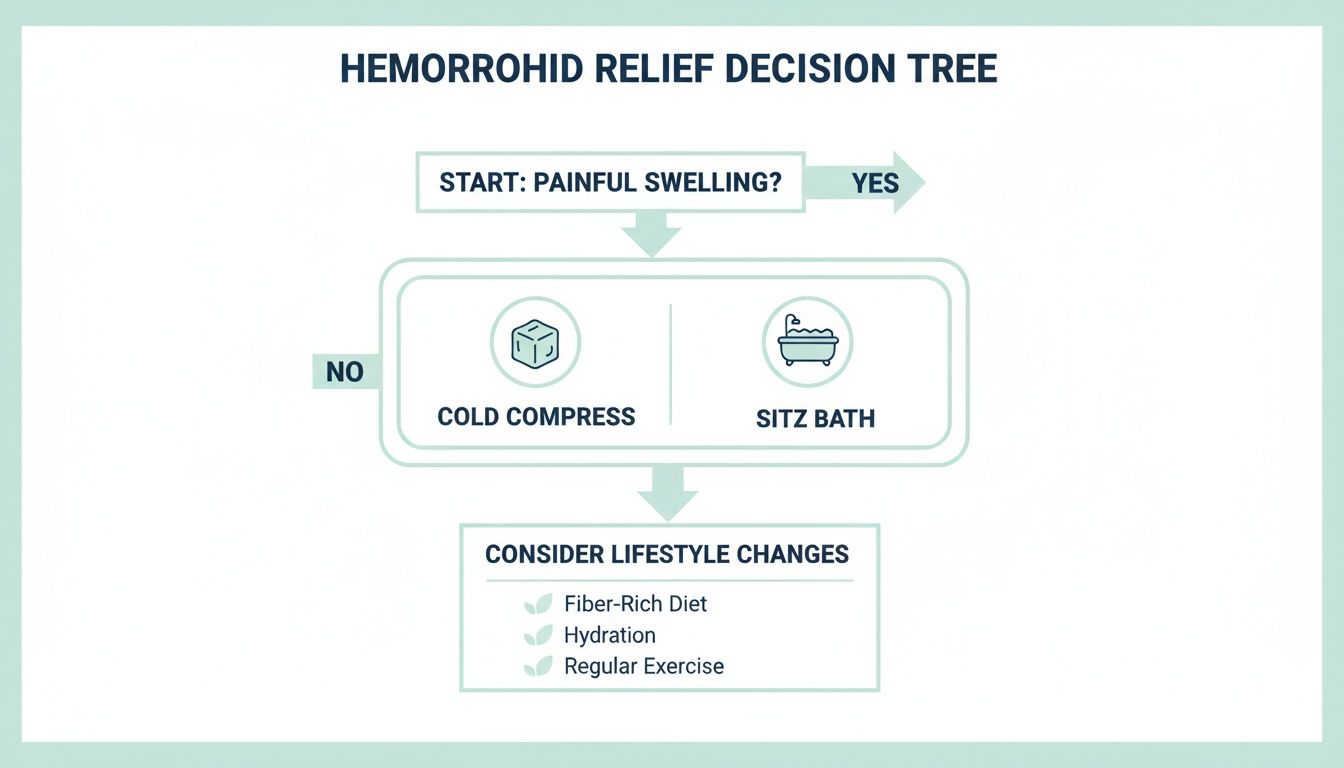
As the visual shows, combining soothing methods like sitz baths with a targeted OTC product creates a really powerful initial response to a flare-up.
To help you decode the labels in the pharmacy aisle, here’s a quick breakdown of the most common ingredients and what they do.
OTC Hemorrhoid Ingredient Comparison
| Ingredient Type | Primary Function | Best For | Example Ingredient |
|---|---|---|---|
| Vasoconstrictor | Narrows blood vessels to reduce swelling | Shrinking external hemorrhoids | Phenylephrine |
| Local Anesthetic | Numbs the area to block pain signals | Severe pain and burning | Lidocaine, Pramoxine |
| Protectant | Forms a barrier to prevent irritation | Protecting raw skin, easing bowel movements | Glycerin, Mineral Oil |
| Astringent | Causes tissues to contract and dry out | Relieving itching and minor irritation | Witch Hazel |
Understanding these key players makes it much easier to grab a product that directly addresses what you're feeling.
The Advantage Of Multi-Symptom Treatments
Instead of juggling separate products for each symptom, many people find relief with a multi-action formula. For instance, some of the most popular creams combine a vasoconstrictor like phenylephrine to shrink swollen tissue with soothing botanicals like witch hazel or aloe to calm irritation. This approach provides more complete relief in a single application.
You can explore a more detailed comparison in our guide to the best over-the-counter hemorrhoid treatments.
The market for these non-invasive solutions is huge for a reason. The global hemorrhoid treatment market hit $1.03 billion in 2023, with OTC pharmacological treatments making up about 45% of that. People turn to them first because they're affordable, accessible, and frankly, most of us prefer to start with a treatment we can manage at home.
Simple Diet And Lifestyle Changes That Prevent Flare-Ups
True long-term relief isn't just about damage control when a flare-up hits. The real secret to shrinking hemorrhoids and keeping them away for good is getting to the root of the problem... and that almost always leads back to our daily habits. A few simple tweaks to your diet and lifestyle can be a total game-changer.
The single biggest enemy here is constipation and the straining that comes with it. When you have to push to pass hard stool, you’re putting immense pressure on those delicate veins around your anus. That pressure is exactly what causes them to swell and become hemorrhoids. This is where your diet plays the starring role.
Embrace High-Fiber Foods
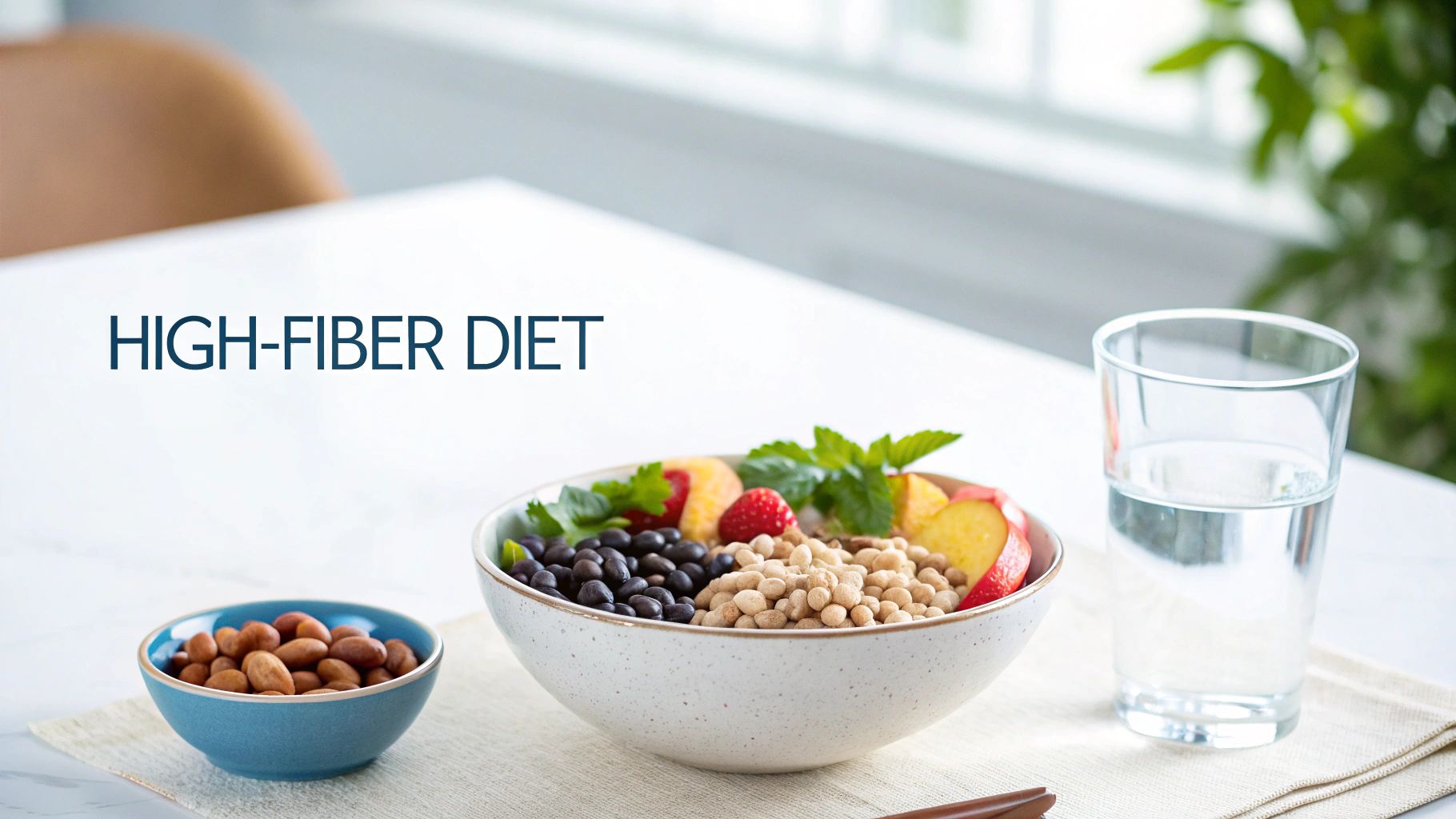
Think of fiber as your digestive system’s best friend. It softens stool and adds bulk, making it much easier to pass without any drama. The goal for most adults is 25-35 grams of fiber per day. It sounds like a lot, but you can get there with a few smart swaps at the grocery store.
Here are some high-fiber powerhouses to load up on:
- Legumes: Lentils, chickpeas, black beans, and kidney beans are absolute fiber bombs.
- Whole Grains: Ditch the white bread and pasta for whole-wheat versions. Start your day with oatmeal or a high-fiber bran cereal.
- Fruits: Berries, pears, apples (keep the skin on!), and oranges are fantastic choices.
- Vegetables: Broccoli, Brussels sprouts, and leafy greens like spinach pack a serious punch.
- Nuts and Seeds: A sprinkle of almonds, chia seeds, or flaxseeds in your yogurt or on a salad is an easy win.
As you add these in, try to cut back on low-fiber culprits like cheese, processed snacks, and white bread that can clog up the system.
Preventing strain is about more than just what you eat... it’s a proactive strategy. Every meal is an opportunity to make your next trip to the bathroom easier on your body.
The Importance of Proper Hydration
Here’s the catch: fiber needs water to work its magic. Without enough H2O, a high-fiber diet can backfire and actually make you more constipated. The fiber soaks up water to create that soft, bulky stool we’re aiming for.
Try to drink at least eight 8-ounce glasses of water a day. If you’re active or it's hot outside, you'll definitely need more. This one simple habit keeps your whole digestive tract running smoothly and is one of the easiest ways to stop straining before it starts.
Rethink Your Toilet Posture
Believe it or not, how you sit on the toilet makes a difference. The standard sitting position actually creates a kink in your colon, making it harder for stool to pass and encouraging you to strain.
There’s a simple fix for this: get your feet up. Using a small stool to elevate your feet mimics a more natural squatting position. This straightens out the colon and allows for a quicker, more complete, and less forceful bowel movement. By combining a better diet, more water, and smarter bathroom habits, you create a powerful defense against future flare-ups.
Managing Hemorrhoids During Pregnancy And Postpartum
Pregnancy and the postpartum period are demanding enough without dealing with the discomfort of hemorrhoids. But if you’re struggling with them, you are definitely not alone... up to 40% of women get them during this time. It’s a perfect storm of increased pressure on your pelvic veins from your growing baby, coupled with hormonal shifts that relax blood vessel walls.
During this incredibly sensitive phase, the safety of you and your baby is the number one priority. Many standard treatments are off-limits, which makes it critical to stick with OB/GYN-approved advice and products designed for this stage of life. The goal is to find gentle, effective relief without relying on steroids.
Safe And Soothing Postpartum Relief
One of the safest and most recommended remedies for new moms is a simple therapeutic sitz bath. The warm water brings immediate, soothing comfort to the tender perineal area, helps reduce swelling, and promotes healing without any harsh medications.
Just soaking for 15 minutes a few times a day can make a world of difference. To get even more out of it, you could add specialized salts like Revivol-XR's 20-in-1 Sitz Bath Salts. They’re formulated with natural oils and botanicals that are gentle enough for postpartum recovery.
Trying to manage discomfort while caring for a newborn is a unique challenge. Prioritizing simple, safe self-care like a daily sitz bath isn't an indulgence... it’s an essential part of your recovery.
Gentle Cleansing Is Key
After giving birth, the last thing you want is abrasive toilet paper making an already sensitive area feel worse. This is where gentle cleansing becomes an absolute game-changer. Using a product like Revivol-XR's Toilet Paper Lotion can be a lifesaver.
It turns regular toilet paper into a soothing, cleansing wipe with just a small pump. Made with aloe and witch hazel, it cleans the area gently while calming inflammation and preventing the friction that can aggravate hemorrhoids. For more specific guidance, check out our article on how to treat hemorrhoids after childbirth. This easy swap can help you stay comfortable and clean, which is a huge part of healing.
Knowing When To See A Doctor
Most of the time, hemorrhoids are a temporary problem you can handle at home. But it’s just as important to know when to stop self-treating and bring in a professional. Think of over-the-counter solutions as your first line of defense... they're incredibly effective, but they aren't the only tool you have.
Sometimes, symptoms can signal something more serious or point to a stubborn hemorrhoid that just won’t give up without a doctor's help. Recognizing the difference is key to making smart, safe decisions for your health.
Red Flags That Warrant a Doctor’s Visit
There are a few symptoms you should never ignore. If you experience any of the following, it’s time to pick up the phone and schedule an appointment.
- Persistent or Heavy Bleeding: Seeing a bit of bright red blood on the toilet paper is pretty common with hemorrhoids. But if the bleeding is heavy, doesn't stop, or the blood looks dark (maroon or even black), that could be a sign of a problem further up in your digestive tract.
- Severe, Unrelenting Pain: Hemorrhoids are definitely uncomfortable, but they shouldn't cause agonizing pain. If the pain is excruciating, it might be a thrombosed hemorrhoid... that’s when a blood clot forms inside, and it needs a doctor's attention.
- A Lump That Doesn’t Improve: If you’ve been diligent with at-home treatments for a week and that hard, painful lump isn't getting any smaller or less sore, it’s time for a medical evaluation.
- Changes in Bowel Habits: Are your hemorrhoid symptoms showing up alongside other changes? Things like a different stool consistency or color, unexplained weight loss, or new abdominal pain are signals to see a doctor and rule out other conditions.
What to Expect From Your Doctor
I know a visit for hemorrhoids can feel awkward, but for doctors, it's a routine, professional process. It usually starts with a simple conversation about your symptoms, followed by a quick physical exam. Trust me, they handle this every single day.
The best part? Most cases don't even come close to needing major surgery. In fact, research shows that over 80% of patients get relief from conservative approaches like lifestyle adjustments and prescribed treatments. You can learn more about these effective treatment outcomes and see how much modern medicine has moved beyond invasive surgery. For the small number of people who need a bit more help, doctors have several minimally invasive procedures that work wonders.
These procedures are not intimidating surgeries. They are quick, in-office treatments designed to provide lasting relief with minimal downtime.
A couple of the most common options include:
- Rubber Band Ligation: This is the go-to procedure for internal hemorrhoids. A tiny rubber band is placed around the base of the hemorrhoid, which cuts off the blood supply. The hemorrhoid then shrinks and falls off within a week or so.
- Sclerotherapy: For this one, a doctor injects a special solution directly into the hemorrhoid tissue, which causes it to safely shrink and scar over.
Just knowing these options exist can bring a lot of peace of mind. Your goal is to find relief, and your doctor is your partner in getting you there.
Creating a Routine for Long-Term Prevention
Knowing how to shrink hemorrhoids fast is great for getting through a flare-up, but the real win is making sure they don’t come back. This means shifting from simply reacting to pain to proactively preventing it from happening in the first place.
It all comes down to building a few smart habits into your daily life. We're not talking about a major lifestyle overhaul... just small, consistent choices that make a huge difference over time.
Take Action: Building Your Prevention Toolkit
A solid prevention plan is all about combining diet, exercise, and better bathroom habits into a routine that works for you. It also means having the right tools on standby so you can handle a flare-up the moment it starts.
-
Daily Cleansing: Regular toilet paper can be surprisingly abrasive. A simple switch to something like Revivol-XR’s Toilet Paper Lotion can make a huge difference. Just a single pump turns any tissue into a gentle, soothing wipe with aloe and witch hazel, cutting down on daily irritation.
-
Flare-Up Response: Don't wait until you're in serious pain to go to the pharmacy. Keep a reliable cream, like our Advanced Hemorrhoid & Fissure Cream, in your medicine cabinet. Having it on hand lets you tackle the first hint of discomfort before it becomes a major problem.
-
Soothing Soaks: A warm sitz bath is more than just a remedy... it’s a great self-care habit. Use it after a tough bowel movement or during a stressful week to calm things down. Adding something like Revivol-XR Sitz Bath Salts can help soothe minor irritation before it ever gets a chance to escalate.
Final Thought
That moment with the tearful customer wasn’t just about her pain... it was about her feeling powerless. A proactive routine gives that power back. It’s about having a smart plan and the right tools ready, so a potential flare-up is just a minor bump in the road, not something that ruins your week.
FAQs: How to Shrink Hemorrhoids Quickly
Got questions? You're not alone. When you're dealing with a flare-up, you want answers fast. Here’s what people ask us most often about getting hemorrhoid relief.
How Long Does It Take For A Hemorrhoid To Shrink?
Everyone hopes for that magical 48-hour fix, but the real timeline depends on the hemorrhoid's size and how consistently you treat it. For most minor flare-ups, you can expect to feel a major difference in pain and swelling within just a few days of dedicated at-home care.
That said, a larger or more stubborn hemorrhoid might hang around for a week or longer before it’s fully gone. "Quickly" is more about starting to feel better fast, not about the hemorrhoid vanishing overnight. The key to speeding things up is consistency... stick with those cold compresses, sitz baths, and effective creams.
Can Stress Make My Hemorrhoids Worse?
Yes, absolutely. While stress isn't the direct cause, it kicks off a domino effect that makes hemorrhoids much more likely to appear and stick around. High stress levels can throw your digestive system into chaos, leading to constipation or diarrhea. Both cause straining, which is enemy number one.
On top of that, when we're stressed, our bodies physically tense up, and that includes the muscles in the pelvic floor. All that extra tension puts more pressure on the veins around your anus, making existing hemorrhoids angrier or helping new ones form. It might sound strange, but managing your stress is a powerful long-term strategy for keeping hemorrhoids at bay.
Is It Safe To Use Multiple Hemorrhoid Products At Once?
It can be, and sometimes it's the best way to tackle the problem from all sides. For instance, using a vasoconstrictor cream like Revivol-XR right after a warm, soothing sitz bath is a fantastic one-two punch. The bath calms the irritated area, and the cream gets to work shrinking the swollen tissue.
The big rule here is to avoid layering multiple medicated products. Using two different creams with active ingredients at the same time is a recipe for irritation or an adverse reaction. Stick to one medicated topical at a time, unless your doctor has specifically told you otherwise.
For a complete, multi-symptom approach you can trust, Revivol-XR delivers fast, effective, and safe relief. Our doctor-trusted, USA-made products are designed to help you manage everything from immediate pain to long-term prevention. Explore our full range of solutions at hemorrhoid.com.