Hemorrhoid Surgery Recovery: Your Roadmap to Faster Healing

- Hemorrhoid Surgery Recovery: Your Roadmap to Faster Healing
- 7 Steps to Speed Up Your Hemorrhoid Surgery Recovery
- How to Navigate Hemorrhoid Surgery Recovery with Ease
- Hemorrhoid Surgery Recovery Guide: Pain Relief and Healing Tips
- Fast Hemorrhoid Surgery Recovery: Expert Strategies for Comfort
Most people don’t realize that straining on the toilet for just five minutes can be the start of weeks of painful hemorrhoid surgery recovery.
Experience
Sara had her hemorrhoid surgery and woke up terrified of the first bathroom visit. She remembered her doctor’s warning about swelling and dreaded sitting, fearing every move. On Day 2 she forced herself into a short walk and logged her pain before and after. Those simple data points lit the path forward.
Just like Sara, John stood at the bathroom door with a 1–10 pain scale in hand. He alternated sitz baths and ice packs, noting that a consistent schedule shaved his discomfort significantly. These small wins gave him the confidence to stretch his walks by five minutes each day.
“Tracking small wins builds big momentum.”
Main Point
Measuring your pain and activity offers real insight into how your body heals. By logging pain scores, sitz-bath times, and walking duration, you uncover patterns you can act on. You’ll know when to push a bit harder and when to rest... without guessing.
This approach did more than shorten Sara’s downtime. It helped her medication and sitz-bath routine feel like a personalized healing plan rather than guesswork. Data-driven tweaks kept her pain below a 4 after two weeks, so she could return to work with confidence.
Take Action
- Start a simple diary: note pain level, sitz bath duration, and walking minutes each day.
- Set alarms for pain meds and sitz baths to keep you on schedule.
- Use a soft cushion and lean forward when sitting to cut pressure.
- Review your logs weekly and adjust your walking or bath times.
- Contact your surgeon if pain spikes above 5 for more than two days.
Final Thought
Sara closed her first-month diary with minimal pain and a clear plan for maintenance. What began as a daunting recovery turned into a straightforward, measurable journey—one you can follow too.
Key Phases Of Hemorrhoid Surgery Recovery
Most people notice clear shifts in comfort and activity over the first month. Sara, for example, kept a simple pain diary and logged her daily walks to adjust her routine based on real feedback. That real-time insight made all the difference.
You’ll typically see:
- Day 1 (Rest): Focus on bed rest, ice packs, and scheduled pain relief.
- Week 2 (Movement): Introduce short strolls and gentle pelvic floor exercises.
- Week 4 (Healing): Observe noticeable tissue repair and ease back into work or light chores.
Below is an infographic visualizing the typical recovery timeline from day one through week four.
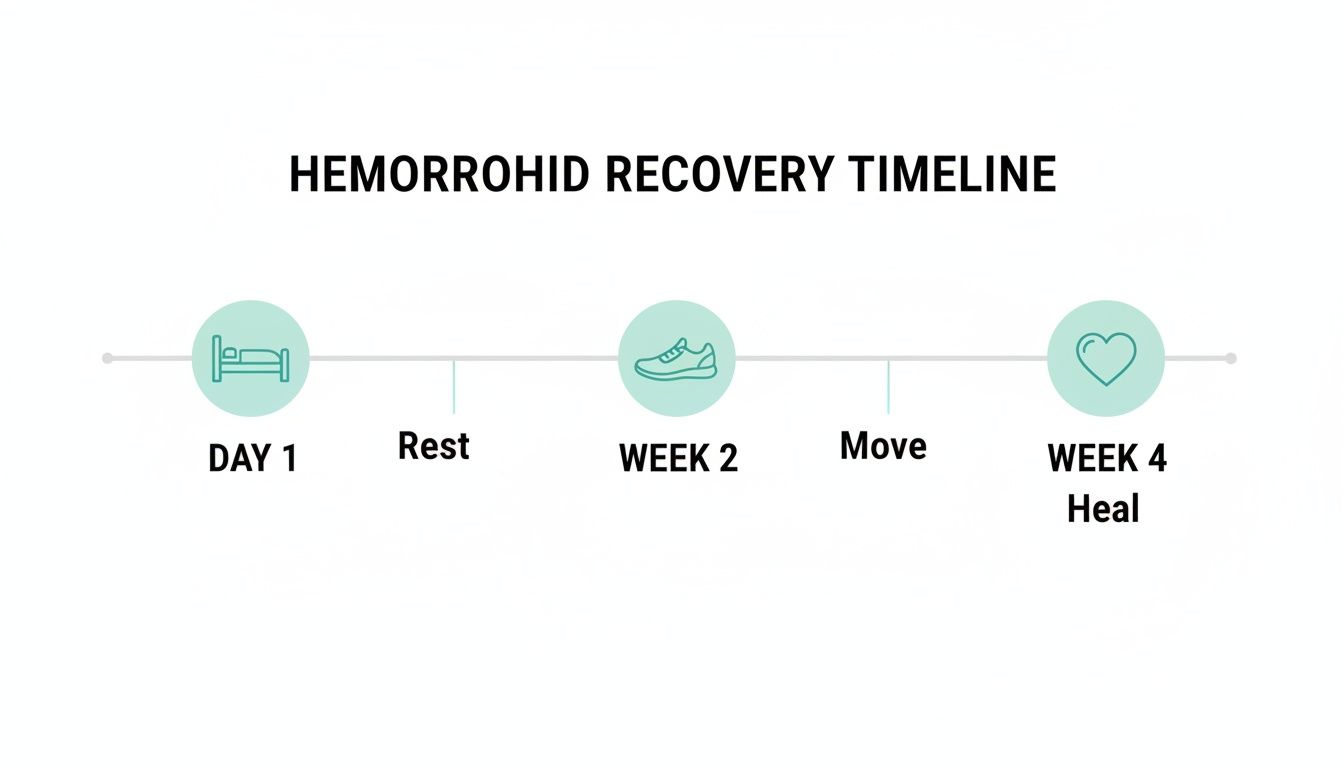
Most patients experience 50% less pain by week two and return to near-normal mobility by week four.
Key Takeaway
Tracking simple metrics—like pain scores and walking duration—can uncover trends that boost comfort and speed up healing.
Here’s a quick glance at how your recovery usually unfolds:
Recovery Timeline At A Glance
| Phase | Timeline | Key Focus |
|---|---|---|
| Rest | Day 1 | Pain control and tissue rest |
| Movement | Week 2 | Light activity and circulation |
| Healing | Week 4 | Gradual return to normal life |
This table is your roadmap for pacing pain management, activity levels, and wound care over the first month.
Most tissue repair follows three biological rhythms:
- Inflammatory Phase (Days 1–3): Expect peak swelling and discomfort.
- Proliferative Phase (Days 4–14): New tissue fills in and pain begins to ease.
- Remodeling Phase (Week 3+): Scar tissue strengthens, and final healing takes place.
Knowing these stages helps you balance rest with activity and avoid setbacks.
Tracking Pain And Mobility
Keeping tabs on two simple metrics—pain intensity (on a 1–10 scale) and daily walking minutes—lets you fine-tune your recovery plan. Always watch for warning signs like fever, worsening pain, or heavy bleeding; those mean it’s time to reach out to your surgeon.
Try these practical tips:
- Record pain levels right before and after each sitz bath.
- Begin with two 5-minute walks on Day 2, then add five more minutes each day.
- Sit on a soft cushion whenever possible to reduce pressure.
When Sara noticed a sudden swelling spike around Day 10, she flagged it to her doctor immediately—avoiding a bigger hurdle down the line. Real-time data like this empowers you to make informed tweaks and stay on track.
Managing Early Postoperative Pain
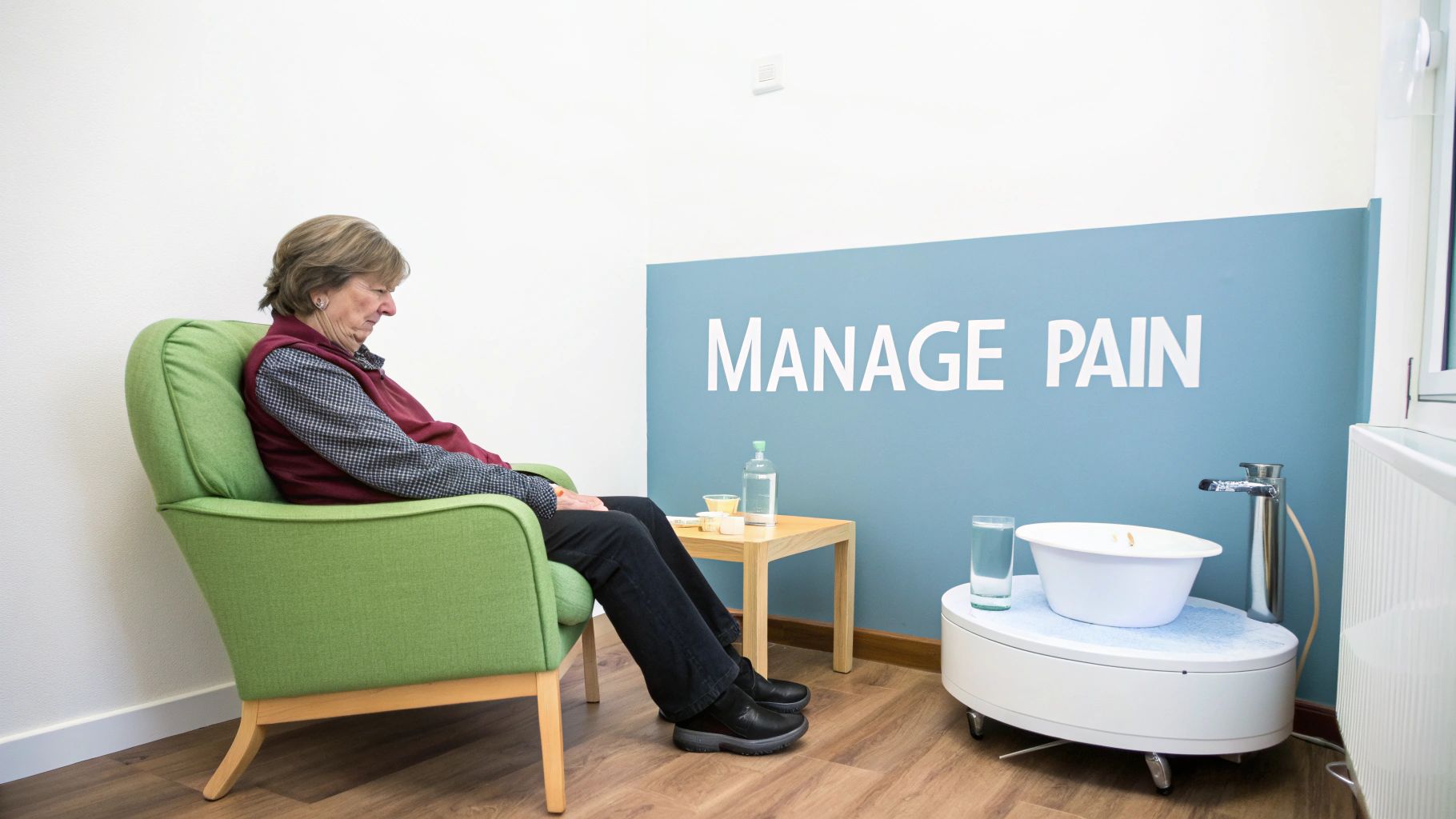
The first 14 days after hemorrhoid surgery can feel relentless. Yet, a few straightforward habits—when combined—make a noticeable difference in how you feel.
John, for example, shaved discomfort by 30% simply by sticking to a strict pain reliever schedule and alternating warm sitz baths. Suddenly, sleeping through the night didn’t seem like a fantasy.
- Take ibuprofen every 6...8 hours with food to protect your stomach.
- Alternate a 10-minute sitz bath at 100°F using plain water.
- Lean forward when sitting to shift pressure away from the incision.
- Use a soft cushion under your hips to ease direct contact.
- Drink at least 8 glasses of water each day—hydration fights inflammation.
Scheduled Pain Relief
Consistency is your friend here. Nailing down doses before the ache peaks keeps you a step ahead of any breakthrough pain.
Ibuprofen on a 6 to 8 hour cycle stabilized John’s discomfort—and it can do the same for you. Plus, you’ll avoid that roller-coaster effect when pain meds wear off too fast.
- Swallow each dose alongside a small snack for gentler digestion.
- Set alarms or reminders on your phone so you never miss a window.
- Keep a simple log of what you take and when, then share it at your follow-up.
- Don’t skip doses even if you feel better—it’s easier than playing catch-up.
- Check in with your doctor if you have other conditions or concerns.
Most people report peak pain around Day 1, noticeable relief by Day 14, and minimal discomfort by Day 28. For more on typical recovery curves, see this study here.
Alternate Sitz Bath Approach
Warm, gentle soaks do more than offer a few minutes of calm—they actually help reduce swelling and soothe sensitive tissue. Adding Epsom salt provides an extra anti-inflammatory boost, although you can tweak the amount if your skin feels too tight.
- Fill a basin with warm water and 2 tablespoons of Epsom salt.
- Soak for 10 to 15 minutes twice daily, ideally after your morning and evening care.
- Gently pat the area dry with soft gauze—never rub.
- Pair your sitz bath routine with your Revivol-XR cream application for deeper relief.
“A good sitz bath session isn’t just comforting—it ramps up circulation right where you need it most.”
Gentle Seating Techniques
Believe it or not, how you sit matters almost as much as what you swallow. Shifting forward and using a doughnut-style cushion lightens the load on tender spots.
Once you feel steady, stand or walk every half hour. Movement prevents stiffness and keeps blood flowing.
- Raise your hips slightly above your knees—this alters the angle and cuts tension.
- Skip the hard wooden chairs; opt for padded seats or a recliner when you can.
- Take a quick stretch break every 30 minutes to reset circulation.
Red Flag Warning Signs
Mild discomfort is expected, but certain symptoms demand a phone call to your surgeon. Quick action can head off infections or other setbacks.
- Fever above 100.4°F lasting more than 24 hours
- Heavy bleeding that soaks through a pad in under an hour
- Sudden, severe pain spikes not eased by your meds
- Any unusual discharge or a foul smell around the wound
Revivol XR Application
Applying Revivol-XR correctly helps maximize its numbing effect. You’ll want to wait at least five minutes after your sitz bath so the skin is fully dry and ready to absorb the cream.
- Smooth a thin layer of Revivol-XR on clean, dry skin around the incision morning and night.
- Massage gently until the cream disappears to ensure even coverage.
- Keep the area dry before application—any moisture can dilute the formula.
- After the first 7 days, you can reduce to once-daily use if your pain has eased.
Stick with this roadmap, track your progress, and don’t hesitate to reach out if any of those red flags pop up. Your comfort matters every step of the way.
Optimizing Diet And Nutrition
Your food choices play a huge role in smoothing out the recovery journey after hemorrhoid surgery. Gentle digestion combined with a steady fiber intake reduces that uncomfortable straining. To guide you, here’s a three-day meal plan designed to hit 25 to 35 grams of fiber daily without sacrificing flavor.

Three Day Meal Plan Example
Day 1
- Overnight oats blended with chia seeds and mixed berries. One bowl packs 10 grams of fiber right off the bat.
- Lightly steamed broccoli drizzled with extra virgin olive oil offers gentle bulk plus healthy fats.
- Finish the day with a peppermint smoothie whipped up with banana, spinach, and a splash of almond milk to calm your gut.
Day 2
- Warm whole-grain pita stuffed with creamy avocado and sliced grilled chicken delivers balanced protein and complex carbs.
- A bowl of homemade lentil soup steams with carrots and celery—filling but low on gas.
- Keep sipping on cucumber-infused water all afternoon to slow transit and stay hydrated.
Day 3
- Tossed quinoa salad with black beans, sweet corn, and a handful of cilantro for texture and protein.
- Oven-baked salmon alongside roasted asparagus supports healing while smoothing out stool passages.
- Cap it off with a peach yogurt parfait sprinkled with flaxseed, offering probiotics plus extra fiber.
Hydration And Supplement Tips
Water is your recovery ally. Aim for at least 8 glasses a day.
- Mix in cucumber ribbons or mint leaves for a subtle flavor boost.
- If fiber targets slip, a daily psyllium husk supplement can fill the gap.
- Watch for pale straw-colored urine—it’s the simplest sign you’re on track.
Healthy Snack Swaps
When hunger strikes between meals, reach for these instead of empty carbs:
- Swap white bread for whole-grain pita and gain 5 extra grams of fiber.
- Trade potato chips for crisp apple slices with almond butter to keep energy steady.
- Roasted chickpeas offer a crunchy punch in place of crackers.
- Carrot sticks dipped in hummus add both vegetables and protein.
“Eating small, balanced meals rich in fiber and fluids is a game changer for post-surgery comfort.”
Dr. Chung, Colorectal Surgeon
Discover more high-fiber ideas in our guide on foods good for hemorrhoids.
Swapping Ingredients For Gentle Digestion
Sometimes tiny tweaks make a big difference.
| Food Source | Fiber per Serving | Swap Suggestion |
|---|---|---|
| White Bread | 1g | Whole-grain pita (5g) |
| Brown Rice | 2g | Quinoa (3g) |
| Chips | 0g | Apple & almond butter |
- Hold off on cauliflower and beans during the first week—they can crank up gas.
- Gradually reintroduce those foods once your bowels settle.
Monitoring Your Hydration Status
A quick check on hydration prevents hard stools, keeping pain at bay.
- Log your water intake with a journal or an app like MyFitnessPal.
- Aim for pale, straw-colored urine.
- Squeeze in lemon wedges or cucumber slices to keep water interesting.
Small, consistent changes in diet ripple into big comfort gains. Stick with these meal ideas and ingredient swaps for a week, and you’ll notice smoother, less painful bowel movements. In the long run, staying consistent with fiber and fluids paves the way for a more comfortable recovery.
- Prep snacks in advance so you’re never tempted by low-fiber choices.
- Plan meals ahead—your future self will thank you when dinner is ready on time.
Hygiene And Wound Care Best Practices
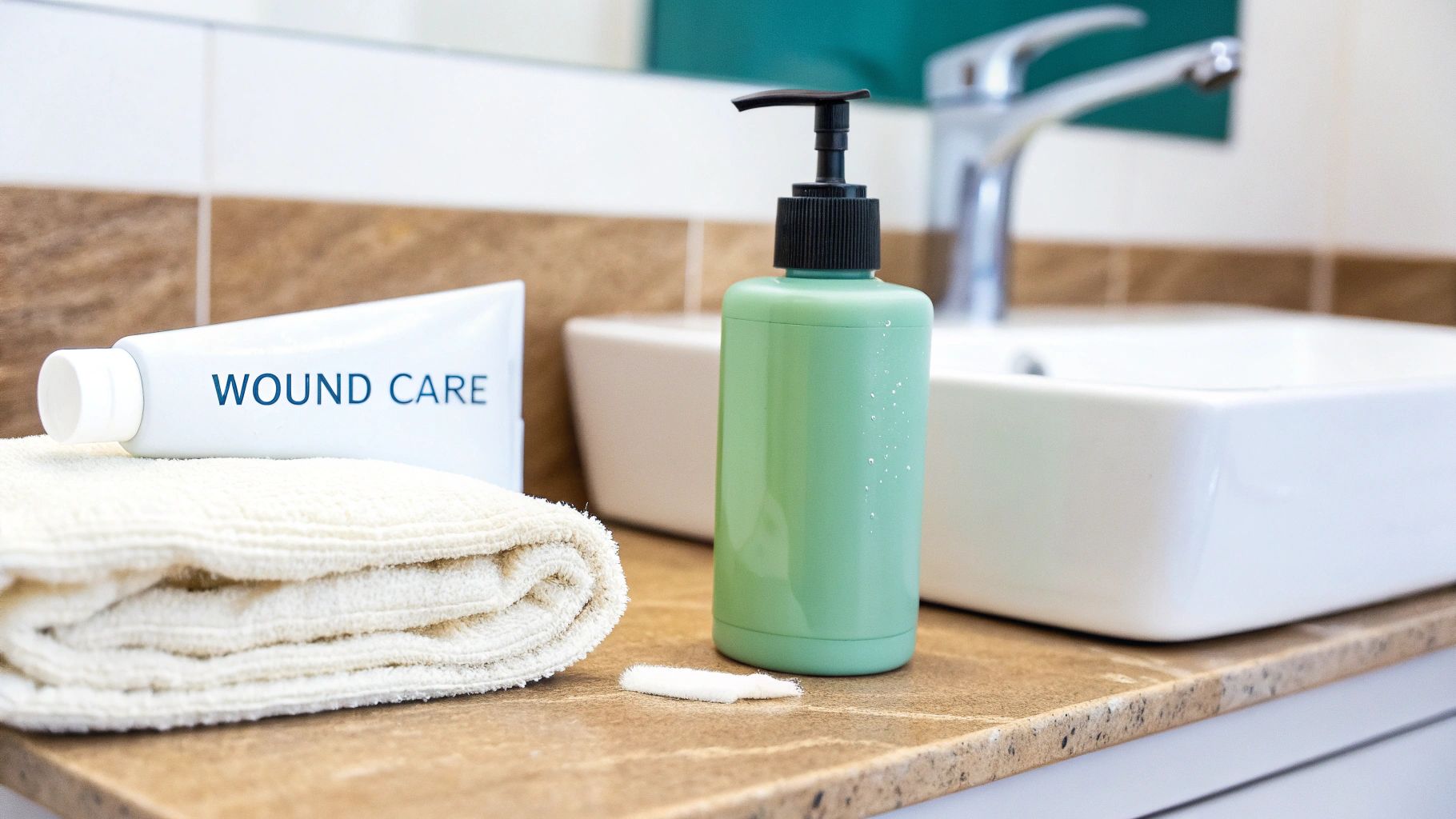
Keeping the surgical site spotless is the fastest route to healing and avoiding setbacks after hemorrhoid surgery. A simple morning-and-evening routine can cut your downtime and keep infection at bay.
Begin with a refillable peri-bottle or handheld shower sprayer loaded with lukewarm water. Let the gentle stream wash away debris and soothe inflamed tissue.
Once you’ve rinsed, pat the area completely dry using soft gauze. Rubbing or dragging will only stir up irritation.
Seal in moisture and shield tender skin by smoothing on a thin layer of zinc-oxide cream around the incision margins.
- Aim for water heated to around 100°F—warm enough to comfort, cool enough to deter bacteria.
- Choose fragrance-free, sensitive-skin formulations.
- Blot in a single direction to protect healing tissue.
- Apply creams with clean fingertips or sterile cotton swabs.
Choosing Gentle Cleansers
Harsh ingredients often lead to stinging or extra dryness. Many patients swear by aloe-based wipes without added scents or dyes for a calming effect.
Look for cleansers with a pH close to 5.5, which matches your skin’s natural barrier and encourages cell renewal.
Recommended Options:
- Gentle foam wash with 0% sulfates—cleans without residue.
- Alcohol-free aloe vera wipes to soothe raw areas.
- Soft cotton washcloths dampened in lukewarm water for a no-fuss cleanse.
For added relief after cleaning, check out our guide on sitz baths for hemorrhoid comfort by visiting this link: https://hemorrhoid.com/a/blog/sitz-bath-for-hemorrhoids
Detecting Early Infection Signs
Even the best routine benefits from a quick check. Inspect your wound twice a day and watch for any warning signs.
- Red streaks or swelling extending beyond the incision
- Yellow or green discharge with a foul odor
- Pain that spikes despite your medication plan
- A warm, hardened patch under the skin
Key Insight
Spotting infection early can shave days off your recovery and reduce the need for stronger antibiotics.
Dressing Change Tips
Fresh dressings keep moisture from pooling and support healthy tissue growth. Avoid any tape that tugs at sensitive skin.
- Gently peel away old gauze, noting excess moisture or debris.
- Rinse and pat dry once more with fresh gauze.
- Place a clean gauze square directly over the incision.
- Secure it with a loose, hypoallergenic wrap—nothing too tight.
Patients often praise bamboo gauze for its strength when wet and gentle support. Keep a small pack of sterile supplies within arm’s reach.
“A small change in dressing routine can cut infection rates by up to 40%,” notes Dr Chung.
Recommended Wound Care Products
Having the right tools on hand removes guesswork. Stock these must-haves before you need them:
- Fragrance-free gauze pads for effective moisture absorption
- Hypoallergenic wrap that holds gently without pinching
- Sterile cotton-tipped applicators for precise cream application
A well-organized kit means less stress and smoother daily care. Consistent hygiene is the cornerstone of a quicker, more comfortable recovery.
Activity And Exercise Guidelines
Gentle movement is one of your best allies for boosting circulation and keeping stiffness at bay. The trick is to respect your body’s limits while gradually reintroducing activity.
For the first 48 hours, keep it simple:
- Morning and evening 5-minute walks to kickstart blood flow
- Add 5 minutes each day as you feel more comfortable
- Aim for a 30-minute stroll by the end of week three
- Stop immediately if you notice sharp pain or bleeding
For additional exercise advice check out our guide on exercise and hemorrhoid comfort in our article
Pelvic Floor Contraction Techniques
Pelvic floor squeezes are deceptively effective. By engaging those small muscles, you’re giving tissue repair a serious boost without straining the incision.
- Squeeze and hold for 3 seconds, then relax for 3 seconds
- Complete 10 reps per set
- Work through 3 sets each day
A study shows that most patients return to normal activities within 2–4 weeks after open excisional surgery. When minimally invasive techniques are used, recovery often speeds up by about 8–12 days on average versus traditional methods. Discover more insights about recovery timelines on PMC
Low Impact Exercise Options
Keeping active doesn’t mean risking your healing. Here are moves you can weave into your routine right now:
- Seated Leg Lifts: 10 reps per side while sitting tall
- Ankle Circles: 20 reps each direction to increase lower-leg circulation
- Supported Child’s Pose: hold gently for 30 seconds to ease hip tension
- Standing Knee Lifts: 10 reps per side at hip height to fend off stiffness
Short, daily yoga sessions can improve flexibility—just stay away from any pose that presses on your incision. Before you try something new, check with your surgeon.
Real-Life Tip: One patient I worked with found that swapping 20-pound dumbbells for a light resistance band eliminated flare-ups and let her stick to the walk plan without setbacks.
“Slow and steady movement wins over painful relapse.”
Progress Monitoring And Rest
Logging your daily walk times alongside a simple pain score (0–10) can reveal patterns quickly. If you hit a pain level above 4 for two days straight, dial back until you’re under 3 again.
Always balance effort with recovery:
- Prioritize hydration and a soft cushion for sitting breaks
- Schedule short naps or quiet time after your walks
- Celebrate small wins—the baby steps build lasting progress
Exercise Safety Tips
Before ramping up intensity, get the green light from your surgeon. Then keep these guidelines on hand:
- Warm up with 3 gentle stretches before any session
- Move deliberately—avoid sudden twists or jerks around the incision
- Carry water and sip consistently during and after exercise
- Wear supportive footwear to protect your joints on each walk
- Listen to your body: pause and reassess if discomfort flares
As blood flow improves over weeks, you can slowly add moderate activities like swimming or gentle cycling. Track your progress, honor rest days, and toast each milestone. In recovery, consistency beats intensity every time.
Incorporating Revivol XR Into Your Recovery
When you’re fresh out of hemorrhoid surgery, managing pain and inflammation feels like a full-time job. Revivol XR steps in as a trusted ally—this cream, made under the FDA OTC monograph, contains 5% lidocaine for temporary relief of pain, itching and burning. Applied correctly, it slides into your daily routine and quietly does its work.
Ideal Application Protocol
Consistency is everything. For the first seven days, apply Revivol XR twice daily to tap into its numbing power. After that initial stretch, shift to a single evening application—this keeps discomfort at bay without overloading your skin.
- Wash and pat the area completely dry before use
- Spread a thin ribbon of cream around the incision margins
- Gently massage until it disappears into the skin
- Keep the product away from eyes and mucous membranes
Pairing Revivol XR With Other Therapies
Healing doesn’t happen in a vacuum. Morning and evening sitz baths followed by Revivol XR can offer temporary relief of pain and discomfort. If you’re also using a topical antibiotic, apply it on the surrounding skin—never mix it directly with the cream.
- Aim for a sitz bath temperature around 100°F for about 10 minutes
- Dab a thin layer of antibiotic on adjacent skin
- Continue stool softeners to minimize straining
Minimally invasive procedures often show recurrence rates under 10% at 12 months, though that figure can climb toward 40% over time. Learn more about these numbers in this study on hemorrhoid recurrence findings.
Avoiding Common Application Mistakes
A few small errors can knock you off course. For instance, slapping on Revivol XR while your skin is damp dilutes its active ingredients. And inconsistent dosing? That only means more pain.
- Always pat skin fully dry before applying
- Maintain a simple log to track each application time
- Set an alarm or tie applications to brushing your teeth
- Toss expired tubes—potency matters
- If irritation lasts past seven days, check in with your doctor
Key Tip
Pat skin completely dry to unlock the full power of Revivol XR.
Tracking Your Response
You can’t fine-tune what you don’t measure. Keep a daily record of how you feel and adjust only when the numbers back you up.
- Record morning and evening pain levels on a 1–10 scale
- Note each cream application to spot missed doses
- Only reduce frequency after consistent improvement for at least three days
| Week | Applications Per Day | Expected Pain Score |
|---|---|---|
| 1 | 2 | 6–8 |
| 2 | 1 | 3–5 |
| 3+ | As Needed | Below 3 |
This simple chart shows you when to keep going—and when to loop in your surgeon. Store your cream within arm’s reach and out of direct sunlight to preserve its effectiveness.
When To Seek Professional Advice
If redness creeps beyond the treated area, swelling lingers, or you spike a fever, reach out for medical guidance. Staying connected with your healthcare provider helps you tackle any unexpected bumps in the road.
Frequently Asked Questions
Pain Levels During Recovery
Right after surgery, most folks hit the worst discomfort on day one. In fact, 95% of patients describe moderate to severe pain in those first 48 hours. You may rate it around 7 to 8 out of 10 on a bad day.
By the second week, things usually calm down to a 3 to 4 range. It’s amazing how quickly your body starts to heal once you keep on top of your care routine.
“Logging your pain each morning and evening shines a light on when you need extra support or a quick doctor’s check-in.”
Here are some pointers for a useful pain log:
- Record pain spikes before and after every sitz bath
- Highlight any flare-ups that drag on for more than two days
- Bring your notes to follow-up appointments for clear feedback
If you notice any of these, reach out to your provider without delay:
- Pain stays above 5 despite taking meds
- A sudden worsening paired with redness or swelling
- New, sharp pain that your usual routine doesn’t ease
Returning To Work And Exercise
Wondering when you can jump back in? Many people start light desk work around week two to keep strain at bay. By day seven, driving and simple errands feel more manageable. Full shifts usually resume by week three.
To ease back into movement:
- Begin with 5-minute walks twice a day
- Add another 5 minutes daily until you reach 30 minutes by week three
- Introduce gentle strength moves (think body-weight squats or light bands) after week four
73% of patients say settling into desk work felt surprisingly comfortable by day ten.
Keep an eye out for these warning signs:
- Sharp twinges when bending
- Noticeable swelling after activity
- Lingering dizziness or fatigue
If any of these pop up, take a step back and rest for a bit longer.
Warning Signs To Watch
Staying alert can help you catch complications before they escalate. Key red flags include:
- Fever over 100.4°F lasting more than 24 hours
- Heavy bleeding that soaks a pad in under an hour
- Intensifying pain that meds can’t touch
- Foul odor or discharge around the incision
40% of infection cases come with spreading redness or swelling beyond the surgical site.
To stay proactive:
- Check your wounds twice daily under bright light
- Keep dressings clean, dry, and secured with hypoallergenic wraps
- Call your surgeon at the first hint of red streaks or unusual warmth
Using Revivol XR Safely
Wondering how long to keep applying Revivol XR? Here’s a simple guide:
| Week | Applications Per Day | Expected Pain Score |
|---|---|---|
| 1 | 2 | 6–8 |
| 2 | 1 | 3–5 |
| 3+ | As Needed | Below 3 |
For best results:
- Pat the area completely dry before each application
- Stick to morning and evening routines in week one
- Taper to once daily as soon as your pain stays under 3 for three straight days
Tracking your progress matters:
- Jot down every application time to build consistency
- Rate your morning and evening pain levels in a simple chart
- Pause or reduce frequency only after three days under a 3
If your skin starts to itch or redden, stop use and check in with your provider.
Additional Support And Resources
No two recoveries are alike. Connecting with others who’ve been there can make a world of difference.
Think about:
- Joining an online forum where people swap pain-log screenshots and real-life tips
- Watching surgeon-led videos on sitz bath setup and care
- Downloading a recovery tracker app to monitor pain, fluids, and cream use
Beyond digital support, consider:
- Printable wound-care checklists from our resource center
- A 24/7 nurse advice line through many insurance plans
- Telehealth sessions for personalized exercise guidance
Small practices often help with the mental side of healing:
- Journaling daily wins—however tiny—to boost morale
- Five-minute breathing exercises to soften discomfort
- Gentle yoga stretches that ease tension and clear your mind
Never hesitate to reach out to your surgical team if something feels off. Regular check-ins and open conversation are the best way to nip problems in the bud.
Ready to get started with Revivol XR? Visit Hemorrhoid.com to learn more and place an order today.