5 Ways to Stop Hemorrhoid Itching in Its Tracks

Most people don’t realize their daily routine is actually making their hemorrhoids worse.
I once worked with a client, a long-haul truck driver, who was on the verge of quitting his job. The constant sitting led to a severe hemorrhoid flare-up, and the itching was so relentless it was affecting his ability to focus on the road. He’d tried everything he could grab at a truck stop pharmacy, but the relief never lasted. He felt trapped, miserable, and thought this was just his new reality. He didn’t realize the solution wasn’t about finding one “magic” cream, but about changing his approach entirely.
Lasting hemorrhoid itching relief comes from a combination of immediate soothing and long-term prevention... not just one or the other.
His story is incredibly common. The intense, maddening itch from hemorrhoids... what doctors call pruritus ani... isn’t just a random annoyance. It’s a signal that your body is stuck in a cycle of irritation. The good news is that you have the power to break that cycle. It starts with understanding what’s happening and taking a few simple, powerful actions to find hemorrhoid itching relief for good.
Here are the concrete steps to take back control.
Understanding Why Hemorrhoids Itch So Intensely
So, where does this relentless itch come from? It often starts with something as simple as using harsh, dry toilet paper or wiping too aggressively. This creates tiny tears on already inflamed skin, kicking off a miserable cycle of irritation.
Both internal and external hemorrhoids are to blame. External ones are swollen veins on the outside, and their very presence creates friction and sensitivity.
Internal hemorrhoids, on the other hand, can leak small amounts of mucus. This creates a constantly damp environment, softening the surrounding skin and leaving it vulnerable to damage and that persistent itch.
The swelling and irritation can also create other weird sensations. In fact, many people wonder, do hemorrhoids feel like something stuck? It's a common feeling that goes along with the discomfort.
Quick Actions for Immediate Relief
When the itching hits a fever pitch, your first instinct is probably to scratch. Resist that urge. Do not scratch. It only makes the inflammation worse and can even break the skin, leading to a nasty infection.
Instead, try these immediate actions to calm things down.
- Clean Gently: After a bowel movement, skip the dry toilet paper. A much better approach is to pat the area clean with an unscented, alcohol-free moist towelette or use a portable bidet.
- Cool Things Down: Apply a cold compress or a witch hazel pad to the area for 10-15 minutes. The cold provides immediate numbing relief by constricting the swollen blood vessels.
- Try a Sitz Bath: Soaking in a shallow tub of warm (not hot) water for about 15 minutes is one of the most effective at-home remedies. It can dramatically reduce both itching and inflammation.
When you're in the middle of a flare-up, it’s easy to do things that feel right but actually make the problem worse. Here’s a quick guide on what to do versus what to avoid for instant relief.
Immediate Itch Relief Actions vs Common Mistakes
| Do This Immediately | Avoid This Mistake |
|---|---|
| Gently pat the area clean with a moist wipe. | Wiping aggressively with dry, scented toilet paper. |
| Apply a cold compress or witch hazel pad. | Scratching the itchy area, no matter how tempting. |
| Soak in a warm sitz bath for 15 minutes. | Using hot water, which can increase inflammation. |
| Wear loose-fitting, breathable cotton underwear. | Wearing tight, synthetic fabrics that trap moisture. |
| Use an unscented, soothing hemorrhoid cream. | Applying fragranced lotions or soaps to the area. |
Following the "Do This" column can provide that crucial first wave of relief, while steering clear of the common mistakes will stop you from making a bad situation even worse.
The Role of Topical Treatments
While those quick actions offer temporary comfort, you need something more for lasting hemorrhoid itching relief. This is where a specialized topical treatment becomes essential. A good one is designed to tackle multiple symptoms at once by soothing the skin, reducing swelling, and numbing the area.
The most effective first line of defense is a treatment that calms the immediate itch while helping the underlying tissue heal. This breaks the itch-scratch cycle and allows for real recovery.
It’s no surprise that topical creams and ointments are the go-to solution for most people. They dominated the hemorrhoid-treatment market in 2023, and that trend is holding strong. In fact, some reports show the topical segment brought in about 50% of revenue in 2024.
By choosing a quality cream like Revivol-XR, you're not just chasing symptoms... you're using a proven method to manage the flare-up and kickstart the healing process.
Mastering At-Home Remedies for Soothing Relief
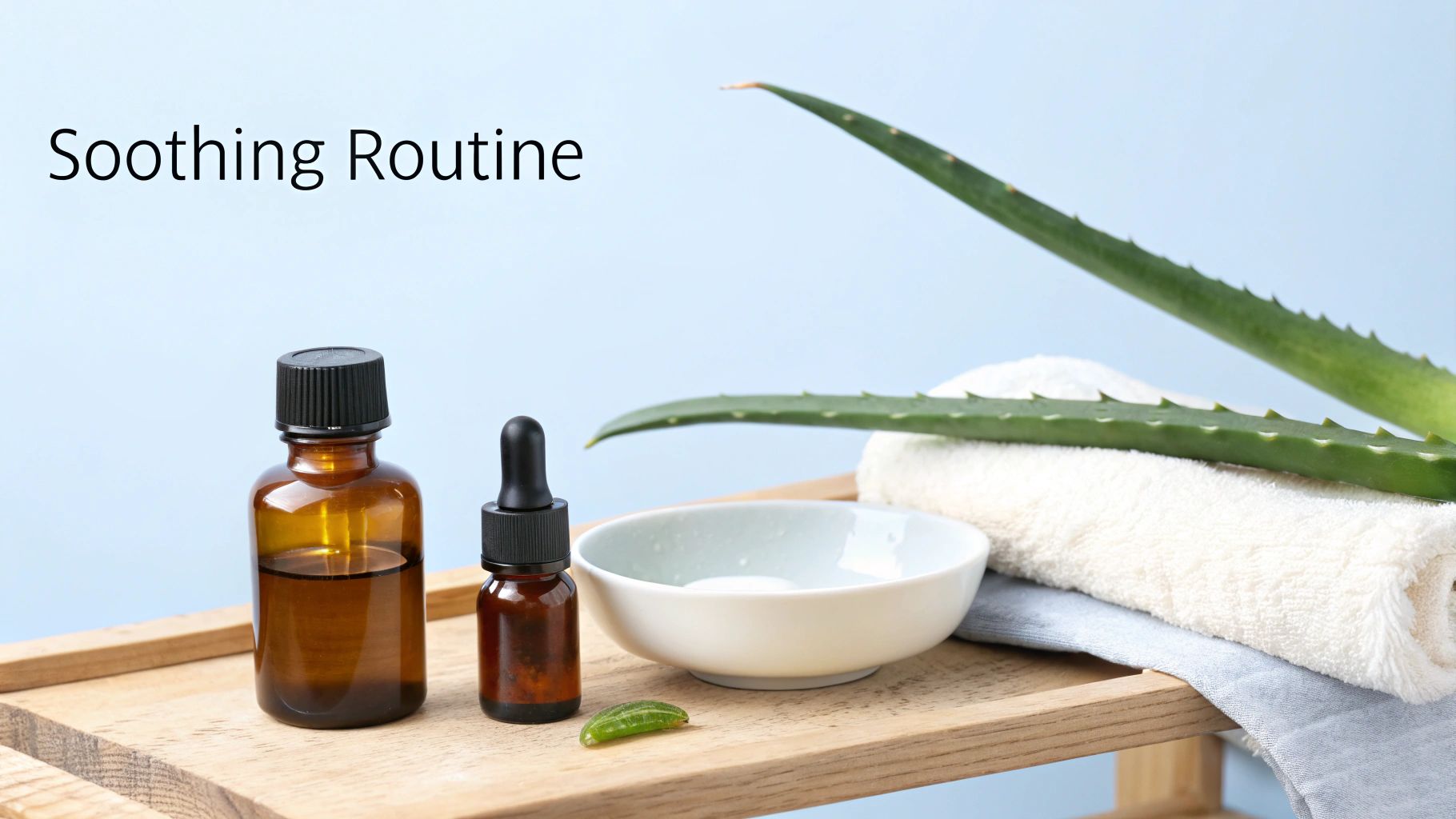
When hemorrhoid itching strikes, you need relief, and you need it now. Thankfully, some of the most effective solutions are simple, inexpensive, and can be done right in the comfort of your own home.
The goal isn't just a quick fix... it's about building a gentle, sustainable routine that calms the immediate irritation and helps the area heal. Think of it like this... a busy office manager struggling with flare-ups from sitting all day found that just a few small habits turned a constant, nagging problem into something completely manageable. That’s the power of consistent at-home care.
The Power of Warm Water Soaks
A sitz bath is probably the single most effective tool for hemorrhoid itching relief. It's nothing more than a shallow, warm water soak for your perineal area, but it works wonders by cleansing, soothing, and boosting blood flow to relax the anal sphincter.
To get the full benefit, a few details really matter.
- Temperature is Key: The water must be comfortably warm, not hot. Hot water can backfire by making swelling and irritation even worse. Test it on your wrist first.
- Duration and Frequency: Plan to soak for 15 to 20 minutes at a time. For best results, do this two or three times a day, especially after a bowel movement, to keep the area clean and calm.
For a complete walkthrough, check out our guide on how to use a sitz bath properly. You can also give your soak an extra boost by adding Epsom salts or specialized formulas like Revivol-XR Sitz Bath Salts, which are packed with soothing botanicals.
Harnessing Natural Ingredients
Beyond a good soak, a few natural ingredients are legends in the world of soothing care. They work by calming down angry nerve endings and helping to shrink swollen, irritated tissue.
The real magic of at-home care is consistency. A 15-minute sitz bath or a quick application of witch hazel doesn't seem like much, but done daily, it can stop the itch-scratch cycle in its tracks.
Witch Hazel: This classic natural astringent is fantastic for reducing swelling and giving you an immediate cooling sensation. Just apply it with a cotton ball or use a pre-moistened pad. It works by temporarily tightening the hemorrhoidal tissues right on contact.
Aloe Vera: Famous for soothing sunburns, pure aloe vera gel can bring that same cooling relief to hemorrhoids. Apply it directly to the external area to reduce inflammation. The key is to use a product that is 100% pure aloe, with no added alcohol or fragrances that could sting or cause more irritation.
Lifestyle Changes That Prevent Itching from Returning
Getting that immediate itch to stop is a massive relief, but the real win is keeping it from coming back for good. This means we need to look beyond quick fixes and focus on long-term prevention.
It’s easy to think hemorrhoid itching is just a random annoyance. But more often than not, it’s our daily habits... like sitting for hours on end or eating a diet that’s low in fiber... that are the true culprits behind the discomfort.
Lasting hemorrhoid itching relief doesn't just come from a tube of cream. It starts with simple, consistent changes to how you eat, drink, and move.
Fuel Your Body with Fiber
The single biggest change you can make is upping your fiber. Fiber is what softens your stool, making it much easier to pass. This directly cuts down on the straining that causes hemorrhoids to form and flare up in the first place.
You should be aiming for 25 to 35 grams of fiber per day. I know that sounds like a lot, but it’s easier than you think if you make a few smart additions to your grocery list.
- Fruits: Berries, apples (keep the skin on!), pears, and oranges are great choices.
- Vegetables: Load up on broccoli, Brussels sprouts, and leafy greens like spinach.
- Legumes: Add beans, lentils, and chickpeas to salads, soups, or chili.
- Whole Grains: Swap white bread for whole-wheat, and kick off your day with oatmeal.
Lasting hemorrhoid itching relief starts in your kitchen, not just your medicine cabinet.
Getting your diet right is the foundation for preventing the pressure and irritation that lead to that maddening itch.
Hydration and Movement Are Key
What you drink and how often you move are just as crucial as what you eat. Here’s the thing about fiber... it needs water to work its magic. Without enough H2O, a high-fiber diet can backfire and actually make constipation worse.
So, make sure you’re drinking plenty of water all day long. A good target is at least eight glasses.
Sitting for long stretches is another major enemy. It puts constant pressure on the veins in your lower rectum. If you have a desk job, make it a rule to get up, stretch, and walk around for a few minutes every single hour.
Finally, work in some low-impact exercise. Brisk walking, swimming, or even yoga can get your circulation going and strengthen your pelvic muscles without adding extra strain. Just 30 minutes of moderate activity on most days can make a huge difference in preventing future flare-ups.
This focus on prevention is becoming more important than ever. With more people working sedentary jobs, the demand for effective hemorrhoid solutions is on the rise. In fact, industry forecasts show the market for treatments is steadily growing, driven by these very trends. You can read more about these market projections here. By making these simple changes now, you're taking control and putting your health first.
How To Choose the Right Topical Treatment
Walking down the pharmacy aisle for hemorrhoid relief can be a bit of a deer-in-the-headlights moment. You're faced with a wall of boxes... creams, ointments, pads... all promising to stop the itch. So, how do you pick the one that will actually work?
It's not about grabbing the first thing you see. It's about knowing what's in the box. A little bit of knowledge goes a long way in finding something that targets your specific brand of misery, whether it's that maddening itch, a painful burn, or frustrating swelling.
This simple decision tree shows how crucial those foundational lifestyle habits are, no matter which treatment you end up choosing.

As you can see, things like diet and hydration are your first line of defense. They help prevent the irritation that kicks off the itching cycle in the first place.
Decoding the Active Ingredients
The real secret to finding relief is reading the "Active Ingredients" list on the package. Different compounds are built to solve different problems. Let's break down the most common ones you'll find.
- Lidocaine: Think of this as a pure numbing agent. It's a local anesthetic that gets to work on contact, offering powerful and fast relief from severe pain and itching. Look for products with 5% lidocaine... that’s the maximum strength you can get over-the-counter and it’s a lifesaver during intense flare-ups.
- Hydrocortisone: This is a mild steroid designed to calm inflammation. It works wonders on itching and swelling, but it’s meant for short-term use. A week is typically the limit unless your doctor says otherwise.
- Phenylephrine: This ingredient is a vasoconstrictor. In plain English, it shrinks swollen hemorrhoidal tissue. By reducing the size of those inflamed veins, it can ease the pressure and discomfort that's causing the itch.
- Witch Hazel: A go-to natural astringent, witch hazel is fantastic for soothing general irritation and taking the edge off minor swelling. It delivers a cooling sensation that feels instantly calming. You can dig deeper into witch hazel for hemorrhoids reviews to learn more.
To make things a little easier, here’s a quick guide to what you’ll find on the shelf.
A Guide to Over-the-Counter Hemorrhoid Products
This table breaks down the common options to help you match a product to your symptoms.
| Product Type | Active Ingredient | Best For... | How It Works |
|---|---|---|---|
| Numbing Cream | Lidocaine (often 4-5%) | Severe pain, intense itching, burning sensations | Blocks nerve signals in the affected area to provide immediate numbing relief. |
| Steroid Cream | Hydrocortisone (usually 1%) | Persistent itching, redness, minor swelling | Reduces inflammation and suppresses the immune response that causes itching. |
| Vasoconstrictor | Phenylephrine | Swollen external hemorrhoids, discomfort from pressure | Narrows blood vessels to shrink swollen tissue and reduce associated discomfort. |
| Astringent Pad | Witch Hazel | Soothing irritation after bowel movements, gentle cleansing | Tones the skin, provides a cooling sensation, and helps reduce minor swelling. |
Remember, the goal is to match the ingredient's function to what you're feeling. One ingredient might be great for swelling, but another is what you need for that sharp, distracting pain.
Choosing Your Product Format
Okay, so you’ve got your ingredient figured out. Now, what form should it come in? Each one has its place.
Creams and Ointments: These are the workhorses of topical treatments. Creams tend to be lighter and absorb pretty quickly. Ointments are thicker and greasier, which is actually a good thing... they create a protective barrier over irritated skin, locking in moisture.
Pads and Wipes: Usually soaked in witch hazel, these are perfect for gentle cleansing when dry toilet paper feels like sandpaper. They’re soothing, clean effectively, and are incredibly handy to have when you're not at home.
Suppositories: These are specifically for internal hemorrhoids. You insert them into the rectum, where they dissolve and deliver medication directly to the internal tissue. It's all about targeting the problem right at the source.
Choosing the right product is about matching the best active ingredients to your worst symptoms. For comprehensive relief, a multi-symptom formula is often the most effective approach.
This is where a product like Revivol-XR Advanced Hemorrhoid & Fissure Cream really shines. Instead of making you choose, it combines multiple heavy-hitters into a single formula. You get the 5% lidocaine for numbing, phenylephrine for shrinking, and soothing botanicals like aloe. It’s a multi-action approach that attacks itching, pain, and swelling all at once... something a single-ingredient product just can't do.
When You Should See a Doctor About Itching
While at-home remedies and simple lifestyle tweaks are fantastic for managing most hemorrhoid flare-ups, they aren't a silver bullet. It's just as important to recognize the signs that your body is telling you it's time to call in a professional.
Ignoring symptoms that just won't quit can drag out your discomfort. Worse, it could let a more serious issue fly under the radar. Knowing when to escalate your care is a key part of looking after yourself.
Red Flags That Warrant a Doctor's Visit
If you run into any of the following, it’s time to put the home remedies aside and make an appointment. Think of these as clear signals from your body that it needs a closer look.
- Persistent Bleeding: A little bright red blood on the toilet paper is pretty common with hemorrhoids. But if you're seeing it often, if it seems like a lot, or if the blood looks dark (like maroon or even black), that’s a major red flag. This needs a doctor's attention right away.
- Severe or Worsening Pain: A bit of discomfort is one thing. But sharp, debilitating pain that doesn't get better with home care could point to something more, like a thrombosed hemorrhoid (one that has a blood clot) or even an anal fissure.
- Itching That Just Won't Quit: You’ve been doing everything right for a full week... sitz baths, creams, dietary changes... and the itching is still there or getting worse. That’s your cue to get a professional diagnosis.
- A Lump That Feels Hard or is Getting Bigger: An external hemorrhoid usually feels like a soft, rubbery bump. If you notice a lump that's hard, incredibly painful, or seems to be growing, it's really important to have a doctor check it out.
- Changes in Bowel Habits: If your hemorrhoid symptoms show up alongside sudden changes in your bowel habits, or the color or consistency of your stool, you’ll want to see a doctor to make sure nothing else is going on with your digestive health.
Seeking medical help for hemorrhoids is not a sign of failure... it's a sign of taking your health seriously. A doctor can provide an accurate diagnosis and a treatment plan that finally brings you relief.
What to Expect at the Doctor's Office
Knowing what's coming can take a lot of the anxiety out of making that appointment. Your doctor's only goal is to figure out what's wrong and help you feel better.
The visit usually starts with a chat about your symptoms and medical history. From there, the doctor will likely do a simple visual exam of the area. If they suspect internal hemorrhoids, they might need to perform a digital rectal exam.
I know it sounds uncomfortable, but the whole thing is very quick. It gives the doctor vital information they need to give you the right diagnosis. Don't let fear or embarrassment keep you from getting the care you deserve.
Your Questions About Hemorrhoid Itch, Answered
We’ve gone over a lot of ground, but you probably still have a few lingering questions. Let’s tackle some of the most common ones we hear from people dealing with that maddening hemorrhoid itch.
Could this itching be a sign of something more serious?
While the vast majority of cases are just that... hemorrhoids... it’s smart to know when something else might be going on. Persistent itching that just won’t quit, even with good home care, can sometimes point to other problems like fungal infections, pinworms, or skin conditions like eczema.
In rarer situations, it could be related to anal fissures or even tumors. The main thing to remember is this... if the itch is severe, doesn't get better after a week of trying home remedies, or you see other red flags like significant bleeding, it’s time to see a doctor for a proper diagnosis.
How long until the itching finally stops?
This is the question on everyone’s mind. With a consistent daily routine, most people start to feel real relief from itching within a few days to a week. That routine should include gentle cleaning, regular sitz baths, more fiber and water, and a high-quality topical cream.
Just remember, the itch might go away long before the hemorrhoid itself has fully healed. If the irritation drags on for more than a week despite your best efforts, take that as a clear sign to get some medical advice.
Is it really that bad to scratch an itching hemorrhoid?
In a word... yes. You have to resist the urge to scratch, no matter how intense it gets. That fleeting moment of relief just isn't worth the damage you’ll do.
Scratching the very delicate skin around the anus causes tiny tears. This only increases inflammation and opens the door to infection. Before you know it, you’re trapped in a miserable itch-scratch cycle that makes everything a whole lot worse.
Don't scratch. Instead, reach for a solution that actually solves the problem. A cold compress can numb the area instantly, a warm sitz bath will soothe the inflammation, and a targeted cream can calm the irritation without causing more harm.
Can my diet make the itching worse?
Absolutely. What you eat directly affects your digestive system, and certain foods can definitely aggravate hemorrhoid symptoms, especially the itch. The usual suspects include:
- Spicy Foods: These can irritate your digestive tract on the way in and the anal area on the way out.
- Too Much Caffeine and Alcohol: Both are dehydrating, which leads to harder stools and more straining.
- Highly Processed Foods: They're almost always low in fiber, which contributes to constipation... a primary cause of hemorrhoids.
These foods often create harder, more acidic stools that are incredibly irritating to already sensitive tissue. The fix is simple... shift your focus to a diet packed with fiber from fruits, veggies, and whole grains, and drink plenty of water to keep things soft and moving smoothly.
That truck driver I mentioned... it wasn't a magic cream that finally brought him relief. It was the simple, consistent routine. He started drinking more water, swapped his usual snacks for fruit, and used a proper multi-symptom cream like Revivol-XR after every long shift. The itching didn't just stop... it stayed away. That wasn't about a fancy medical procedure... it was about taking control with small, actionable steps. For comprehensive treatment that takes on the pain, swelling, and the itch all at once, turn to Revivol-XR. Our Advanced Hemorrhoid & Fissure Cream is formulated with maximum-strength lidocaine plus ingredients that shrink swollen tissue and protect your skin. It delivers the powerful, multi-symptom relief you need to break the cycle and finally start healing.