5 Risky Workouts: Can Exercise Cause Hemorrhoids?

Most people don’t realize their daily workout is actually making their hemorrhoids worse.
I once spoke with a fitness enthusiast who was in peak physical condition... yet he was dealing with constant, nagging hemorrhoid pain. He was doing everything right for his health... lifting heavy, running miles, and pushing his limits. But those very same habits were the source of his misery. He couldn't understand how something so healthy could be causing so much pain, and he felt trapped between his fitness goals and his comfort.
He’d tried everything... creams, diet changes, more water... but the flare-ups kept coming back after every intense leg day. It wasn’t until he learned about the hidden link between specific exercises and internal pressure that things finally started to click.
The wrong type of physical strain is a direct trigger for hemorrhoids.
His story is incredibly common. The issue wasn’t exercise itself; it was the kind of exercise. Certain movements, especially those involving heavy straining or repetitive impact, dramatically increase pressure inside the abdomen. This pressure, called intra-abdominal pressure, is the primary culprit that causes the delicate veins in the rectum to swell, bulge, and become painful hemorrhoids. The goal isn't to stop moving... it's to start moving smarter.
To get back in the gym without fear, you have to:
- Identify the high-risk exercises in your routine.
- Master your breathing to release pressure, not build it.
- Swap high-strain movements for safer, more effective alternatives.
- Have a clear action plan for when flare-ups inevitably happen.
That trainer I mentioned? He didn't quit lifting. He just changed how he lifted. He lowered the weight, perfected his breathing, and swapped out deep, heavy squats for other leg exercises. The change was almost immediate. He could finally build strength without suffering for it. His experience wasn’t about weakness... it was a wake-up call to train with awareness.
The Surprising Link Between Fitness and Hemorrhoids
So, can exercise cause hemorrhoids? Yes, it absolutely can... but the story is a bit more complicated than that.
Certain high-impact or high-strain activities dramatically ramp up the pressure inside your abdomen. This is what doctors call intra-abdominal pressure, and it's the main trigger for either creating new hemorrhoids or making existing ones flare up.
Imagine the veins in your rectum are like tiny, delicate balloons. A little pressure is fine, but when you grind out a heavy lift, hold your breath during a tough rep, or even go for a long, grueling run, you're essentially over-inflating them. That repeated stress makes them swell, bulge, and eventually turn into painful hemorrhoids.

The single most important takeaway here is that the type of exercise you do makes all the difference. Some activities build you up, while others can break you down in ways you didn't expect.
How Your Body Responds to Strain
The pressure from a heavy squat isn't the only factor at play. A few other habits common in an active lifestyle can add fuel to the fire:
- Dehydration: Sweating a lot without rehydrating is a recipe for hard, difficult-to-pass stools. That leads directly to straining on the toilet.
- Holding Your Breath: That classic grunt-and-hold move when you lift... known as the Valsalva maneuver... spikes your internal pressure through the roof, putting a direct squeeze on those rectal veins.
- Chronic Constipation: If your active lifestyle isn't matched with enough fiber and fluids, constipation can become a real problem. It's one of the biggest risk factors for hemorrhoids, as we explain in our guide on the connection between constipation and hemorrhoids.
The great news is that regular, gentle movement is one of the best ways to prevent hemorrhoids in the first place. The trick is knowing which exercises put you at risk and which ones are safe. Let’s break it down.
Why Certain Workouts Trigger Hemorrhoid Flare-Ups
To figure out how your workout might be working against you, it helps to understand what’s happening inside your body. The answer to can exercise cause hemorrhoids isn’t about movement itself... it’s all about pressure. Four key factors can turn a healthy routine into a source of real pain.
The Problem of Intense Straining
The number one culprit behind exercise-related hemorrhoids is intense straining, especially when you hold your breath. This common mistake, known as the Valsalva Maneuver, dramatically spikes the pressure inside your abdomen.
Imagine squeezing a water balloon... that pressure has to go somewhere. When you hold your breath and bear down during a heavy squat or leg press, that force pushes down on the delicate veins in your rectum, causing them to swell and bulge.
This isn't just about weightlifting. Any activity that involves grunting and straining... from certain ab exercises to pushing hard in a spin class... can create this dangerous internal pressure.
Repetitive Impact and Sustained Pressure
Not all pressure comes from a single, intense effort. Some exercises create problems through steady, repetitive stress over a longer period.
Think about these common scenarios:
- Long-Distance Running: The constant pounding on pavement can jar the body, putting ongoing stress on your pelvic floor and rectal veins.
- Prolonged Cycling: Sitting on a narrow bike saddle for an hour or more puts direct, sustained pressure on the perineal area. This can restrict blood flow and irritate existing hemorrhoids.
- Rowing: Similar to cycling, the seated position combined with a powerful leg drive can increase pressure in the lower abdomen and aggravate symptoms.
Research shows that while a sedentary lifestyle is a known risk factor, the wrong types of exercise can worsen hemorrhoids. It’s a paradox, but it highlights how important the type of activity is. To learn more, check out this excellent overview of weight lifting and hemorrhoids on GoodRx.com.
Dehydration and Core Weakness
Two other factors often fly under the radar but play a huge role. First is dehydration. When you sweat a lot during a workout and don’t replace those fluids, your body pulls water from your colon to compensate. This leads to harder stools and constipation, forcing you to strain on the toilet... one of the primary causes of hemorrhoids.
Finally, a weak core can be a hidden trigger. When your abdominal and back muscles aren't strong enough to stabilize your body, other muscle groups... including your pelvic floor... are forced to overcompensate. This incorrect muscle engagement puts extra stress on the rectal area, making the problem worse over time.
High-Risk Exercises to Approach with Caution
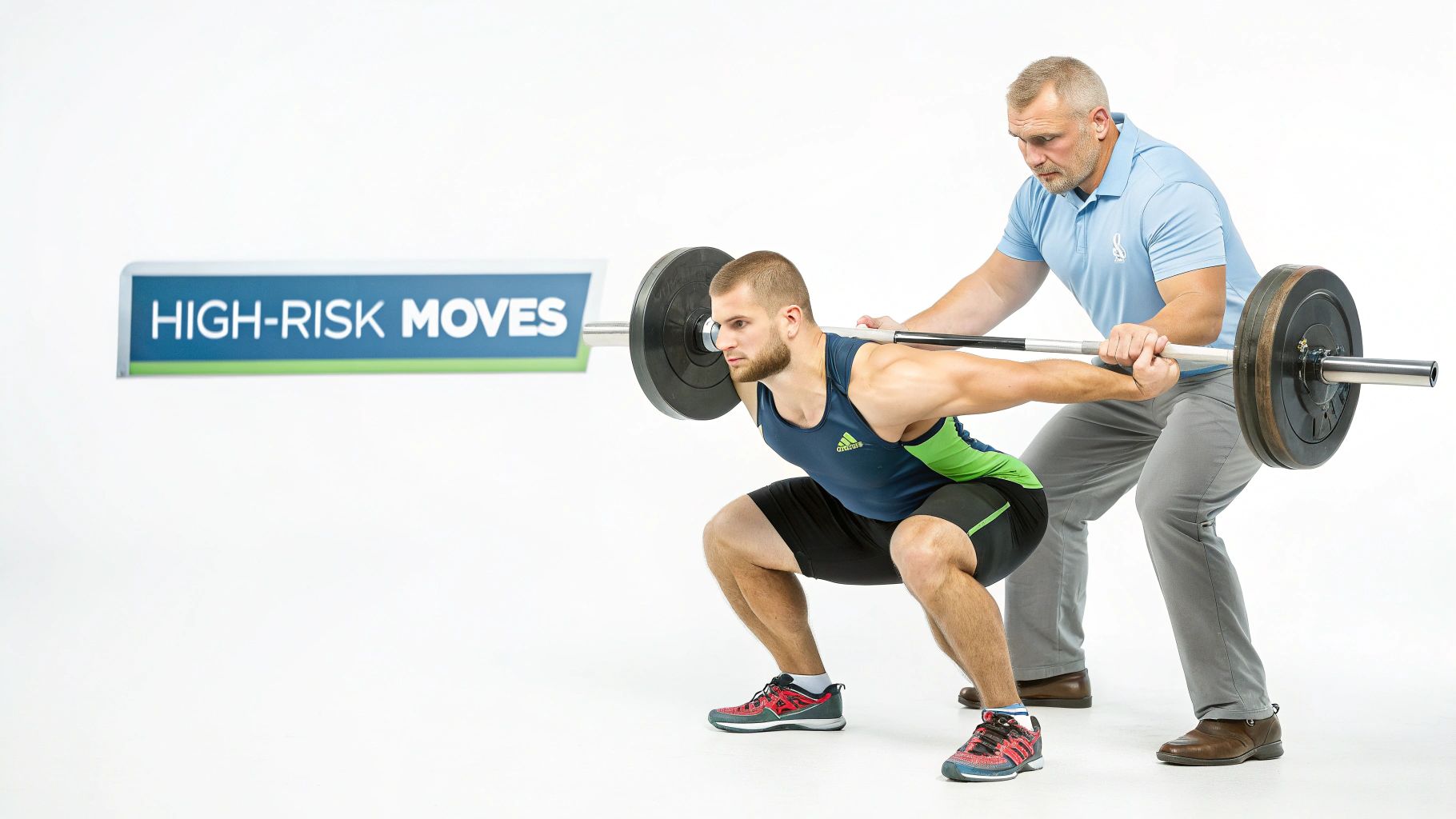
Knowing which exercises can cause trouble is the first step, but spotting them in your own routine is what really counts. This isn't a "do not do" list meant to scare you away from the gym. Instead, think of it as a guide to working out smarter, so you can keep building strength without triggering a painful flare-up.
As we've covered, certain movements are notorious for creating the kind of intense intra-abdominal pressure that puts hemorrhoids on high alert.
Heavy and High-Strain Lifts
Let's start with the most common culprit: heavy lifting. The main issue here is the massive strain it requires, which often leads people to hold their breath and bear down... a perfect recipe for spiking that internal pressure.
Be especially mindful of these classic lifts:
- Barbell Squats: A fantastic full-body exercise, but it places a tremendous load right on your core and pelvic floor.
- Deadlifts: Pulling a heavy, stationary weight from the ground generates an incredible amount of internal force.
- Leg Presses: Even though you're seated, pushing heavy weight with your legs funnels that pressure directly into your lower abdomen and rectum.
The key to making these moves safer is to master your breathing. Always, always exhale during the hardest part of the lift (the push or pull) and inhale during the easier phase. Dropping the weight to focus on perfect form is always a better choice than ego-lifting with bad technique.
Intense Cardio and Repetitive Motion
It’s not all about the heavy iron, though. Some cardio workouts create problems through repetitive impact or sustained pressure on sensitive areas.
High-intensity interval training (HIIT), while amazing for overall fitness, can be a real troublemaker. Explosive movements like box jumps or deep squat jumps create sudden, sharp spikes in abdominal pressure that can easily irritate existing hemorrhoids.
Likewise, any activity that involves sitting for a long time puts direct stress on the rectal veins, which can restrict blood flow and lead to irritation. Keep an eye on:
- Prolonged Cycling: Sitting on a narrow bike saddle for an extended ride can cause major discomfort. Try adjusting your seat height and angle, or look into a padded or wider saddle for relief.
- Rowing: The seated position combined with a powerful leg drive can ramp up pressure in the pelvic region.
Certain Core Exercises
Believe it or not, even your ab workout could be part of the problem. Many traditional core exercises, like full sit-ups or double leg lifts, encourage you to flex your abdomen in a way that shoves pressure downward onto the pelvic floor.
Instead of these high-pressure moves, try swapping in alternatives that build a strong, stable core without the strain. Planks, bird-dog poses, and gentle pelvic tilts are all excellent choices. They stabilize your core while keeping that pelvic region safe from excessive force.
Safe and Beneficial Exercises for Hemorrhoid Prevention

Now for the good news. While certain movements can absolutely trigger hemorrhoids, the right kind of exercise is one of your best defenses against them. The key is to choose activities that improve your body’s resilience without adding unnecessary strain.
Gentle, consistent movement boosts circulation, strengthens crucial supportive muscles, and keeps your digestive system regular... all of which help prevent flare-ups. This is about working with your body, not against it.
Low-Impact Cardio for Better Blood Flow
Think of gentle cardio as a way to keep things moving. It gets your blood pumping through your entire body, including the veins around your rectum, which helps prevent the blood pooling that leads to swollen, painful hemorrhoids.
Here are some of the best low-impact options:
- Brisk Walking: It sounds simple, but a good walk is a powerful tool. It stimulates bowel function and improves circulation without the jarring impact of running. For a deeper dive, check out our article on why walking is so good for hemorrhoids.
- Swimming and Water Aerobics: The buoyancy of water takes nearly all the pressure off your lower body, making it one of the safest and most effective exercises you can do if you're prone to hemorrhoids.
- Elliptical Trainer: This machine gives you a great cardio workout that mimics running but with a smooth, gliding motion that eliminates the harsh impact on your joints and pelvic floor.
Strength and Flexibility for Core Support
A strong, stable core is your secret weapon against the kind of straining that causes hemorrhoids. Activities like yoga and Pilates are fantastic for building this foundational strength in a controlled, low-pressure way.
Of course, not all poses are created equal. You’ll want to focus on movements that gently strengthen the core and pelvic floor muscles.
Some of the most beneficial yoga and Pilates moves include:
- Child's Pose (Balasana): This classic resting pose gently stretches and relieves pressure in the lower back and anal region.
- Legs-Up-the-Wall Pose (Viparita Karani): By simply elevating your legs, you can help improve circulation from your lower body and reduce swelling.
- Bridge Pose: This move is excellent for strengthening your glutes and pelvic floor without creating downward pressure.
The goal is to build supportive strength, not to create more strain. Be sure to avoid any poses that tempt you to hold your breath and bear down, like very deep squats or intense abdominal holds.
By choosing these safer alternatives, you can build a fitness routine that supports your health from the inside out, helping you stay strong, active, and symptom-free.
Smart Strategies for Pain-Free Workouts
Understanding how exercise can lead to hemorrhoids is the first step. The next is putting smart strategies into practice so you can build a resilient, pain-free fitness routine. This isn't about giving up the activities you love… it's about making small, powerful adjustments to protect your body from unnecessary strain.
These are simple habits you can start building today to make every workout safer and more effective.
Master Your Breathing and Hydration
Two of the most common workout mistakes are also the easiest to fix: how you breathe and how much you drink. The single most important change you can make is to never hold your breath during a lift.
Always exhale forcefully on the hardest part of the movement... the push, the pull, or the press. This simple action releases intra-abdominal pressure instead of trapping it and sending it downward.
Hydration is equally important. Your goal should be to drink water relentlessly... before, during, and after you exercise. Staying hydrated keeps your stools soft and easy to pass, which prevents the straining on the toilet that often causes hemorrhoids in the first place. Think of it as proactive prevention.
Focus on Form and Recovery
How you move and recover are just as vital as the exercise itself. It’s always better to use lighter weights with perfect form than to lift heavy with bad technique. Proper form engages the right muscles and protects your core and pelvic floor from taking on excessive strain.
And remember, your workout doesn't end with the last rep. Always include a proper warm-up and cool-down.
- Warm-Up: Five to ten minutes of light cardio and dynamic stretching prepares your muscles and gets your blood flowing.
- Cool-Down: Gentle stretching after your workout helps your body recover, reduces muscle soreness, and brings your heart rate down gradually.
Finally, choose your workout gear wisely. Wearing loose, breathable clothing helps reduce friction and irritation in sensitive areas, especially during cardio. Together, these simple habits create a powerful system that protects your body while helping you stay active and symptom-free.
How to Manage Flare-Ups and Find Lasting Relief
Even with the smartest workout plan, flare-ups happen. When they do, your focus needs to shift immediately to gentle care and getting relief, fast. Knowing how to handle these moments is just as crucial as knowing which exercises to avoid in the first place.
The second you feel that familiar pain or irritation, be gentle. Abrasive, dry toilet paper is the enemy here... it just creates more friction and makes a bad situation worse. A soothing wipe or toilet paper lotion is a much better call, letting you get clean without aggravating the area.
Your Action Plan for Immediate Comfort
For fast relief, a simple, multi-step approach is your best bet. The first job is to calm down the initial inflammation.
A therapeutic soak is a fantastic place to start. A warm sitz bath for hemorrhoids is one of the most effective ways to reduce swelling and soothe that throbbing pain. Using something like the Revivol-XR 20-in-1 Sitz Bath Salts can take it to the next level by adding calming Epsom salts and botanicals to the water.
When symptoms are more persistent... think nagging pain, constant itching, or swelling that just won't quit... it's time to bring in a more targeted over-the-counter solution. This is where a multi-symptom product becomes essential for getting back to your life without being sidelined by discomfort.
Finding Comprehensive Relief for Nagging Symptoms
For those more intense flare-ups, you need a product that does more than just soothe. The Revivol-XR Advanced Hemorrhoid & Fissure Cream is designed for exactly this kind of situation.
It brings together several key actions into one formula to tackle the problem from all sides:
- Numbing Agents: To quickly shut down pain and itching right on contact.
- Vasoconstrictors: To help shrink those swollen tissues and bring down the inflammation.
- Protectants: To create a barrier that stops further irritation and gives the delicate skin a chance to finally heal.
This kind of all-in-one approach addresses the major symptoms of a flare-up, delivering the lasting relief you need to stay comfortable and active. By having a clear plan for flare-ups, you can manage them effectively and get back to your routine that much faster.
Your Top Questions, Answered
We’ve gone over a lot, but I bet a few specific questions are still on your mind. Let’s tackle the most common concerns people have when it comes to working out with hemorrhoids.
Should I Stop Exercising Completely If I Have a Hemorrhoid Flare-Up?
Absolutely not. In fact, gentle, regular movement is one of the best things you can do. It boosts circulation and helps prevent constipation... two key factors in managing hemorrhoids. The goal is to modify your routine, not abandon it completely.
Think of it as a temporary swap. Put the heavy squats and intense runs on pause and switch to low-impact activities like walking, swimming, or gentle yoga until your symptoms have cleared up.
How Soon Can I Get Back to the Gym After a Flare-Up?
Your body will tell you. If you’re dealing with significant pain or swelling, give yourself a few days of rest. Once the worst of it subsides, you can slowly reintroduce very light activities.
Start with short, easy walks or some gentle stretching. I’d recommend holding off on any high-impact or strenuous workouts for at least a week after the flare-up is totally gone. This gives the delicate tissue in that area enough time to properly heal.
A crucial tip: Never, ever push through sharp pain. If an exercise hurts, stop immediately. That’s your body’s alarm bell, signaling that the area is still irritated and needs more time to recover.
Are Kegel Exercises Good or Bad for Hemorrhoids?
This is a great question. Kegels, which are designed to strengthen the pelvic floor muscles, can actually be very helpful. A strong pelvic floor improves blood flow and gives better support to the rectal veins, which can help prevent hemorrhoids in the first place.
But here’s the catch: your form has to be right. The focus should be on a gentle contraction and then a full release of the muscles. Forceful, aggressive clenching can backfire by increasing pressure, so keep it smooth and controlled.
Can Running Make My Hemorrhoids Bleed?
Unfortunately, yes, it can. The constant, jarring motion of running can irritate existing external hemorrhoids, creating friction that might lead to bleeding. For internal hemorrhoids, the issue is often dehydration on long runs, which can lead to harder stools and more straining later.
If you notice any bleeding after a run, it’s a smart move to switch to a lower-impact cardio alternative for a while. The elliptical, swimming, or even a brisk walk are all great choices until you’re fully healed.
When a flare-up tries to derail your fitness goals, get fast, effective relief with the multi-symptom formula in Revivol-XR products. Find the right solution to get you back on track at https://hemorrhoid.com.