Best Treatment for Hemorrhoid Itch: What Works in 2026

Many readers don't realize their daily wiping and creaming routine can keep hemorrhoid itch going long after the swelling has eased. You're probably reading this between shifts, at night when the itching won't let you sleep, or in a pharmacy aisle comparing tubes you wish you didn't need. The best treatment for hemorrhoid itch isn't a single tube. It's a short, matched plan... the right topical for your main symptom, used for a limited time, plus bowel habits that stop the itch from coming back.
Table of Contents
- Quick Picks for Hemorrhoid Itch Relief
- When Itch Is Not Caused by Hemorrhoids
- Hydrocortisone Creams and the 7-Day Limit
- Numbing Creams and What Lidocaine Can and Cannot Do
- Witch Hazel Protectants and Sitz Baths
- Choosing the Right Itch Treatment for Your Situation
- Frequently Asked Questions About Hemorrhoid Itch
Quick Picks for Hemorrhoid Itch Relief
If the itch flares after a bowel movement, a numbing product may help briefly. If the skin feels raw from rubbing, a protectant may be a better fit. Choose by the main symptom and how long it has been present, rather than treating every itch with the same cream.
The 2024 American Society of Colon and Rectal Surgeons guideline on hemorrhoid management recommends dietary and behavioral changes as the first approach for symptomatic hemorrhoids. Topical creams, ointments, foams, and suppositories can offer short-term relief, but the guideline notes limited evidence for specific ingredients such as hydrocortisone, phenylephrine, pramoxine, and witch hazel.
The evidence for other treatments is stronger in some areas, but it does not establish a cream as a cure. A Cochrane review summarized in the guideline evaluated 24 randomized controlled trials with 2,334 participants and found phlebotonic medicines were associated with lower odds of pruritus than placebo, with an odds ratio of 0.23. For day-to-day relief, match the topical to the symptom and use it as directed.
Match Your Main Symptom First
| Option | Best for | How long to use | Main limit |
|---|---|---|---|
| Hydrocortisone cream or suppository | Sharp itch with inflammation | Up to 7 days | Longer use can thin the skin |
| Lidocaine or pramoxine numbing cream | Burning and itch that interrupts sitting or sleep | Follow the label, about one week in most cases | Numbs the area but does not reduce swelling |
| Phenylephrine-containing product | Itch with swelling | Follow the label for a short course | Shrinking effect is temporary, and label cautions apply |
| Witch hazel pad or compress | Mild itch and a cooling feel | As needed for a few days | Evidence for hemorrhoids is limited |
| Protectant cream with glycerin or petrolatum | Friction, dryness, and raw skin | As needed after bowel movements | Forms a barrier but does not address the cause |
| Warm sitz bath | Gentle cleansing and soothing | Several times a day | Requires a basin or tub and time |
| Fiber or stool softener | Itch that keeps returning | Daily habit, with results building over days | Works gradually, not as a fast fix |
Choose the closest match and check the relevant product guidance before adding another treatment. More products can irritate sensitive skin and make it harder to tell what is helping.
Practical rule: Use one topical at a time and follow its label. If symptoms are severe, persistent, recurrent, or accompanied by bleeding, contact a healthcare provider rather than starting another round of self-treatment. Irritation may have another cause, including a fissure, dermatitis, or infection.
When Itch Is Not Caused by Hemorrhoids
After three weeks of applying hemorrhoid cream, a reader may discover the itch comes from a fungal rash. The treatment can't address the wrong cause, and repeated applications may further irritate the skin. Check the symptom pattern before choosing another product.
The infographic shows that anal itching can have several causes, not just hemorrhoids.
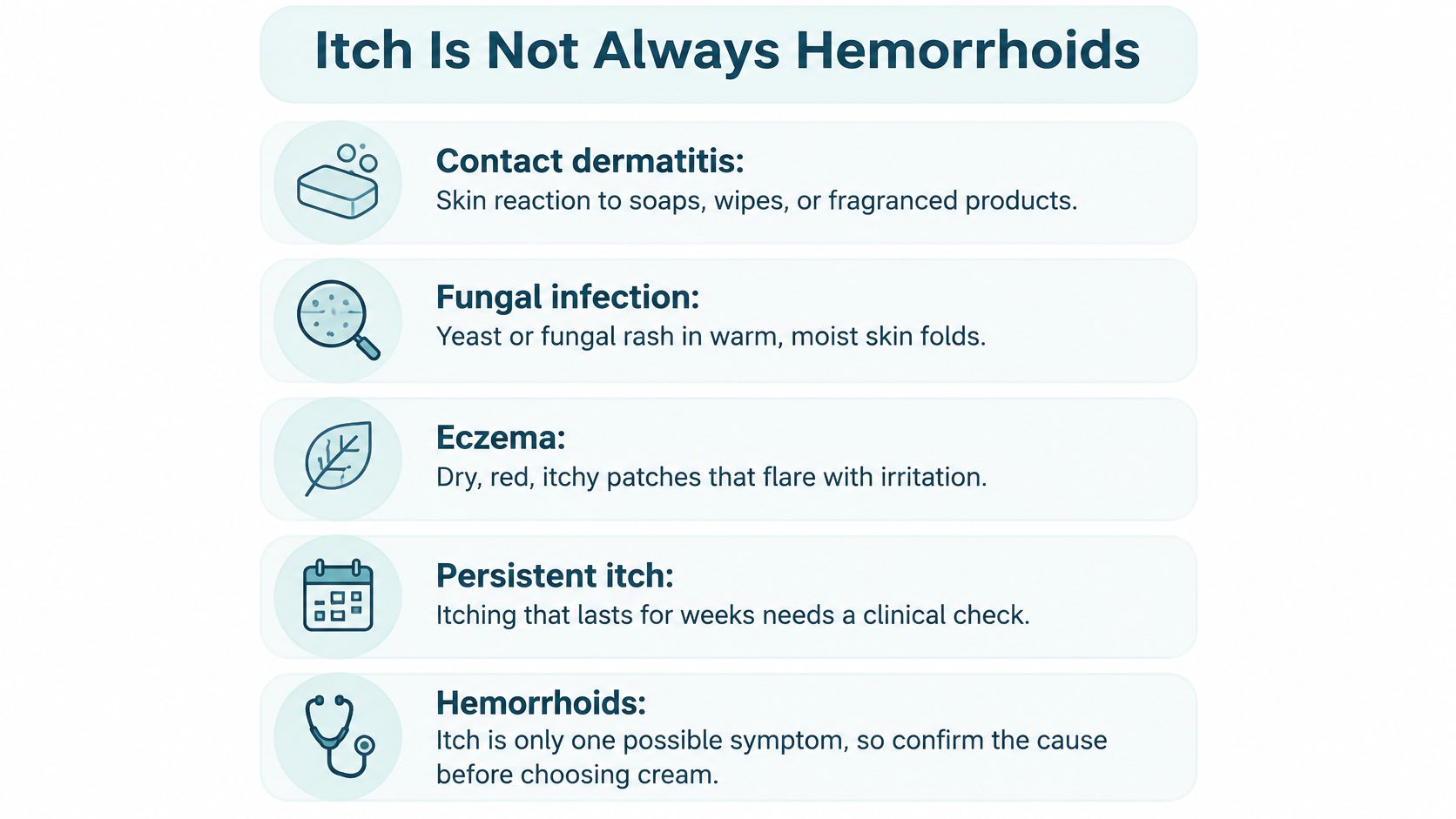
Itch with a lump, intermittent swelling, or minor bleeding on toilet paper may fit hemorrhoids. A rash, moisture, discharge, abdominal symptoms, fever, severe pain, or ongoing bleeding calls for medical assessment. Itching that is mainly at night also deserves a closer look.
Possible causes include contact dermatitis, fungal infection, eczema, inflammatory bowel disease, fistula, and pinworms. Merck's clinical reference on pruritus ani notes that evaluation may involve an examination or, when symptoms suggest another disorder, anoscopy, sigmoidoscopy, or colonoscopy. A product label cannot distinguish these conditions.
A Simple Triage Check
- May fit hemorrhoids: Itch with a lump, occasional swelling, or minor bleeding on toilet paper.
- Get assessed promptly: Rash, discharge, fever, severe pain, persistent bleeding, abdominal symptoms, or strong nighttime itching.
- Arrange care after one week: Symptoms worsen, disrupt sleep or daily life, or have not improved after about one week of home treatment.
If you're unsure whether a lump is a hemorrhoid or a spot, this guide to telling a hemorrhoid from a pimple explains visual differences that can be confusing.
Repeated medicated products, fragranced toilet paper, and vigorous wiping can keep irritated skin raw, even if hemorrhoids started the problem. More cream may then add to the irritation rather than relieve it.
If products may be aggravating the itch, stop medicated products briefly, wash gently with plain water, pat dry, and use unscented products. If symptoms settle, irritation may have been contributing. Seek care if the itch persists or returns.
This video offers clinician context on anal itching and its possible causes.
For example, someone with recurring itch may keep buying cream because it helped once, delaying an examination that could identify another cause. Persistent or returning symptoms deserve assessment rather than another round of the same treatment.
Hydrocortisone Creams and the 7-Day Limit
Hydrocortisone is a mild steroid that reduces inflammation and can ease hemorrhoid-related itching. Because the skin around the anus is thin and delicate, use it only for a short course and follow the product directions. Prolonged use can thin the skin further, worsen irritation, or cause sensitization. Relief should not come at the cost of more fragile, itchy skin.
Check the label before applying the first dose. Products vary, and the label sets the directions and time limit.

What NHS Guidance Says
NHS guidance on hydrocortisone for piles and itchy bottom advises that symptoms should start improving within a few days and recommends not using hydrocortisone products for more than 7 days. Seek medical advice if symptoms have not improved by then or return soon after treatment ends.
NHS formulary guidance gives the same maximum for products such as 0.25% hydrocortisone acetate ointment and 10 mg hydrocortisone acetate suppositories. Changing the form does not extend the course: cream, ointment, and suppository all count toward the same limit.
If you are comparing steroid treatment with a familiar brand-name option, this overview of Preparation H versus hydrocortisone explains how their ingredients differ.
Use It Safely for a Short Course
- Read the Drug Facts label for the strength, directions, and time limit.
- Clean gently with plain water, then pat the area dry.
- Apply only the directed amount. Using more will not speed healing.
- Note the first day of use. Discomfort and tiredness can make it easy to lose track.
- Review symptoms by day 7. Contact a clinician if there is no improvement or the itch quickly returns after stopping.
If you still need steroid cream in a third week, arrange an examination rather than continuing self-treatment.
After day 7, nonsteroidal products may offer comfort. Local anesthetics can temporarily reduce itch-related discomfort, while protectants and gentle hygiene can reduce friction and moisture. These measures do not correct the underlying hemorrhoid. Bowel habits remain part of managing symptoms over time.
Pregnancy, Postpartum, and Older Skin
Ask a clinician before using hydrocortisone during pregnancy or postpartum recovery, or on older, more fragile skin. The 2024 ASCRS guideline cites a small prospective study of 88 pregnant patients who used 1% hydrocortisone acetate with 1% pramoxine hydrochloride foam in late pregnancy. Pain, pruritus, and swelling improved, and the study observed no fetal adverse effects. Because the study was small, it cannot establish safety with certainty.
Follow the product label and avoid extended use without medical supervision. If symptoms repeatedly bring you back to steroid treatment, discuss the pattern with a clinician.
Numbing Creams and What Lidocaine Can and Cannot Do
Lidocaine is a topical anesthetic. It temporarily dulls nerve signals in the skin, so burning and itching feel softer for a while.
That's the whole job. It doesn't shrink swollen tissue, close a fissure, or fix hard stools. I see the disappointment when people expect numbing to make a lump disappear, then conclude the cream failed when the lump is still there but quieter. Judged on comfort, it may have worked exactly as intended.
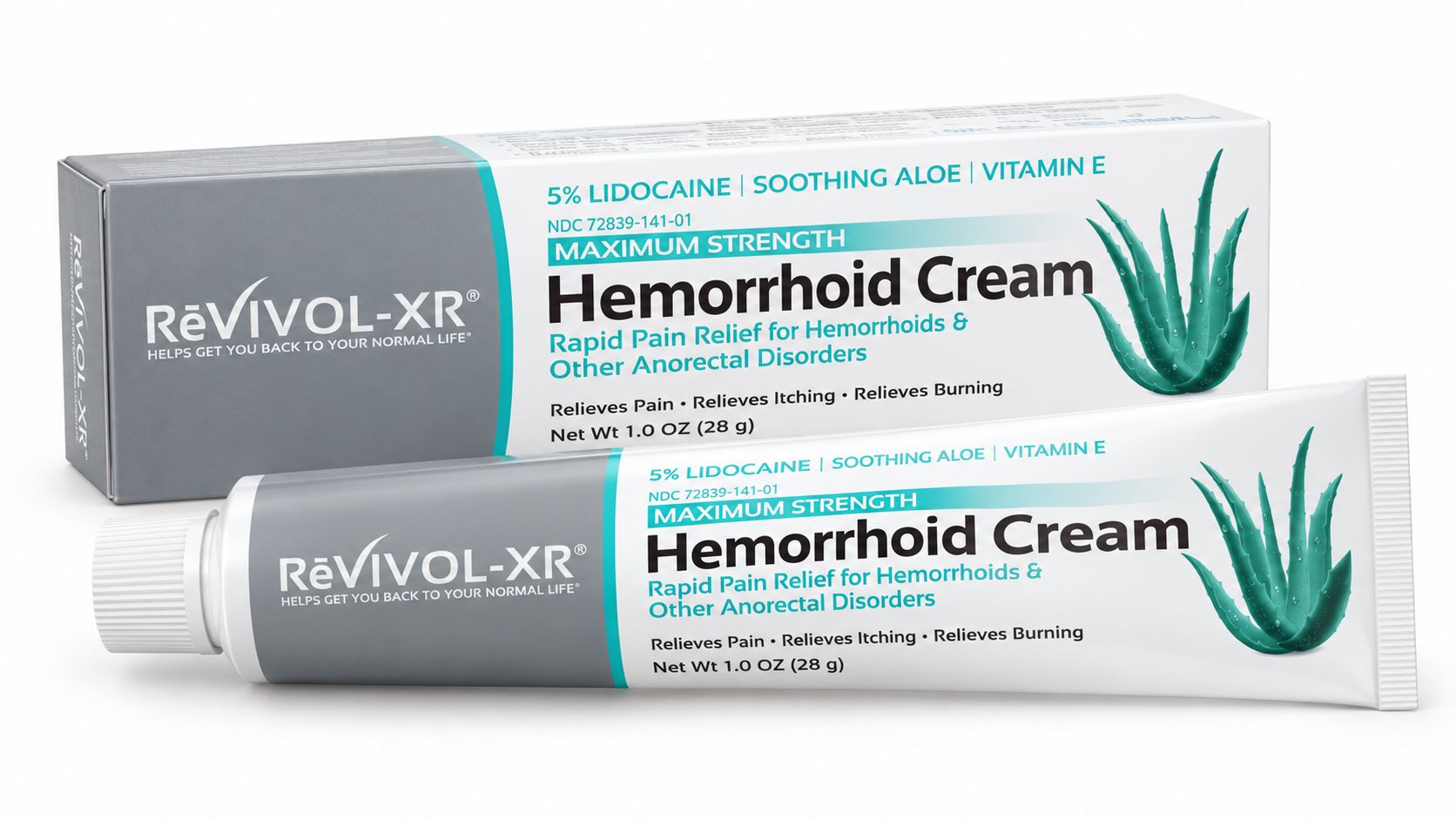
The product example below shows the type of external lidocaine cream discussed in this section.
When Numbing Makes Sense
Choose a numbing option when itch or burning interrupts sitting, work, driving, or sleep. Pramoxine is the other common numbing ingredient you'll see in hemorrhoid products, and both are short-term comfort tools.
One example is Revivol-XR 5% Lidocaine Numbing Cream – Maximum OTC Hemorrhoidal Grade Strength - Temporary Pain Relief Without a Prescription, an over-the-counter 5% lidocaine cream for temporary numbing of itch and burning. It includes aloe and vitamin E as soothing inactive ingredients and is for soothing relief and comfort, not for treating or curing an underlying condition.
A multi-ingredient alternative in the same line pairs 5% lidocaine with phenylephrine 0.25% and protectants. That combination targets numbing plus temporary shrinking and coating in one tube, which suits itch that comes with noticeable swelling. It also adds more label cautions to check, so simpler is sometimes smarter.
Label Limits You Need to Respect
- External use only: Don't put the product into the rectum with fingers or any applicator.
- Age directions matter: Adults and children 12 and older follow label directions, and children under 12 should see a doctor first.
- Check before use: Ask a doctor first with heart disease, high blood pressure, thyroid disease, diabetes, or prostate enlargement, especially for products containing phenylephrine.
- Pregnancy and breastfeeding: Ask a health professional before use.
- Stop and ask a doctor: Do this if bleeding occurs, symptoms worsen, or they don't improve within 7 days.
A Bridge Not the Whole Plan
A 2025 JAMA review on hemorrhoidal disease identifies increased dietary fiber, adequate water intake, and avoiding straining as initial treatment. It also notes that persistent grade I to III internal hemorrhoids may require rubber band ligation when conservative care fails.
That ordering is the point most product pages skip. Topicals may reduce itch temporarily, while fiber and reduced straining address recurrence drivers. Hard stool, diarrhea, and long toilet sitting will bring the itch back no matter how strong the numbing is.
Use the cream to get through the day and sleep tonight. Use the quieter window to soften stools, shorten toilet time, and cleanse gently. If you still need maximum strength numbing after a week, get assessed rather than escalating on your own.
Pregnancy, postpartum recovery, anticoagulant use, kidney or heart disease, and older age can change which medicines or bowel strategies are appropriate. A pharmacist can check your list quickly, and there's no embarrassment in that conversation. They have it every day.
Witch Hazel Protectants and Sitz Baths
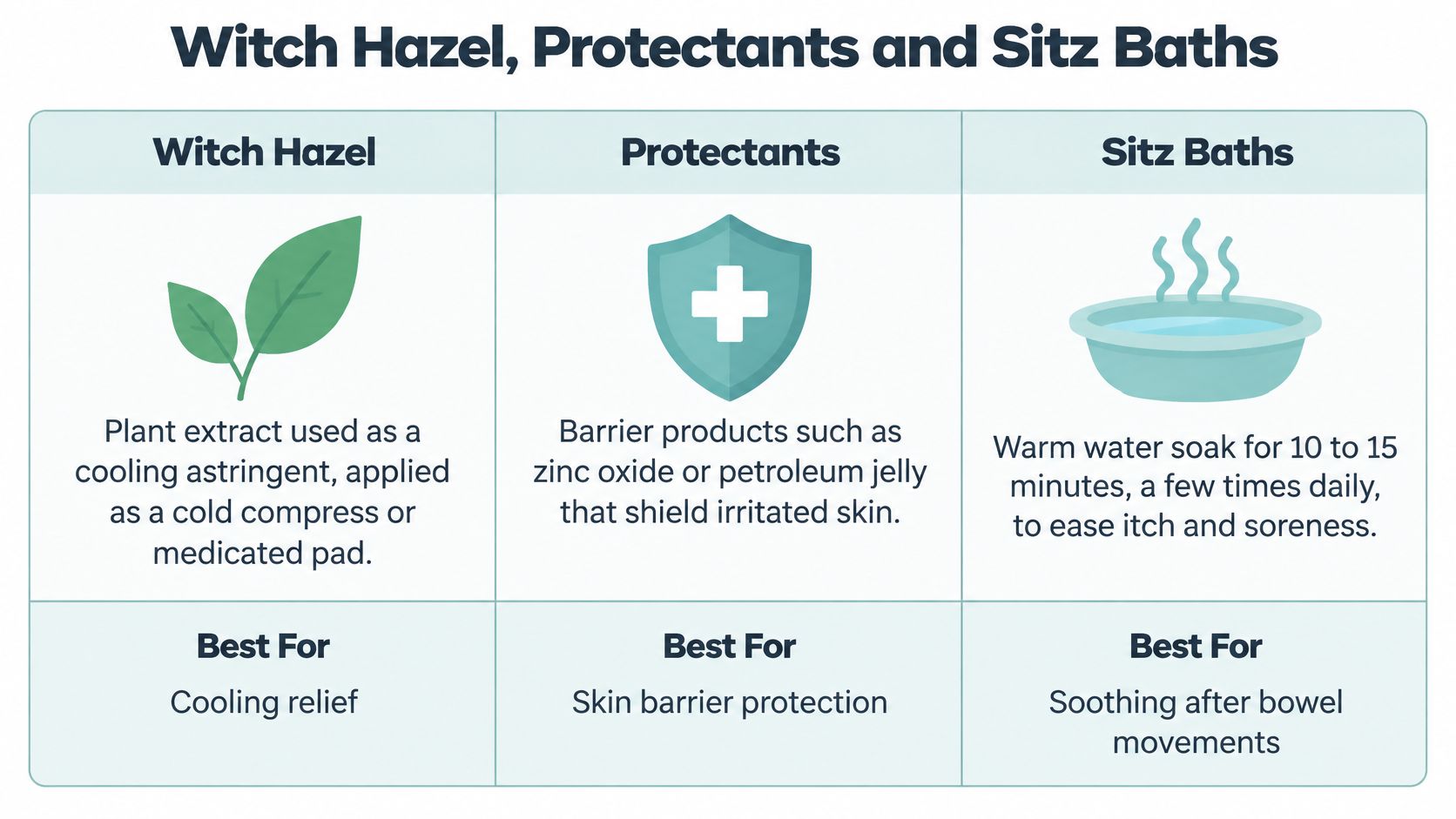
After a bowel movement, mild itching may ease with a cool compress or a warm soak. The right choice depends on what aggravates the skin: witch hazel can feel cooling, protectants reduce rubbing, and plain warm water offers a gentle way to clean and soothe.
Witch hazel is a plant extract used as a cooling astringent. It is available in pads or can be applied with a clean, damp cloth after gentle cleansing. Glycerin and petrolatum protectants form a barrier that limits friction from clothing, stool, and toilet paper. Evidence for witch hazel specifically in hemorrhoids is limited, so judge it by how your skin responds. Protectants can shield irritated skin, but they do not reduce swelling.
The comparison below shows how these options differ.
Witch Hazel and Protectant Options
| Option | How it works | Best use | Watch for |
|---|---|---|---|
| Witch hazel pad or compress | Cools and tightens the skin's surface | Mild itch after cleansing, as needed | Stinging on raw skin; alcohol-based versions can dry the skin |
| Glycerin and petrolatum protectant | Forms a barrier against moisture and friction | After a bowel movement or overnight | Can feel greasy; may not ease itch by itself |
Cold Witch Hazel Compress
- Soak a clean cloth or pad in witch hazel.
- Hold it on the area for 10 to 15 minutes.
- Stop if it stings. Raw or broken skin may not tolerate astringents.
Check the skin after about ten minutes. If the cool feeling brings relief without burning, continue for the planned time. If itching or stinging increases, remove the compress and rinse gently with cool water. A cloth dampened with plain cool water is a reasonable alternative when witch hazel irritates.
Warm Sitz Bath Routine
A sitz bath is a shallow warm soak that covers the hips and buttocks. NIDDK guidance on hemorrhoid treatment says warm water sitz baths several times a day may help relieve pain. For practical setup and timing, see this guide to using a sitz bath for hemorrhoid relief.
- Fill with warm water and test it with your wrist. It should not feel hot.
- Sit for 10 to 15 minutes, keeping the area in the water.
- Pat dry rather than rubbing.
- Repeat after bowel movements when practical.
- Avoid added products on raw skin until it is less reactive.
Warm water, plain and repeated, is a simple routine to maintain.
NIDDK also recommends high-fiber foods, a stool softener or fiber supplement such as psyllium or methylcellulose, adequate water or other nonalcoholic fluids, avoiding straining, and limiting time on the toilet. These habits can reduce irritation linked to difficult bowel movements. Witch hazel, protectants, and warm soaks offer comfort at the skin's surface; they do not address every cause of ongoing itch.
Keep the routine simple: cleanse gently, soak or use a cool compress, pat dry, and apply a protectant if friction is a problem. If symptoms persist or worsen, or bleeding occurs, seek medical advice rather than relying on comfort measures alone.
Choosing the Right Itch Treatment for Your Situation
Choose a starting point based on what may be driving the itch: pregnancy or recovery after birth, long periods of sitting, or bowel changes. The right topical option can ease discomfort, but it may not address the reason it keeps returning.
| Situation | Start with | Check with a clinician first if |
|---|---|---|
| Pregnancy | Protectants, sitz baths, fiber and fluids | You are considering a medicated product |
| Postpartum recovery | Cold witch hazel compresses, sitz baths, low dry heat, fiber | Pain is severe or persistent, bleeding occurs, or stitches look as if they are not healing properly |
| Breastfeeding | Protectants and sitz baths; avoid guessing about medicated products | You are considering a medicated product |
| Desk workers and drivers | A discreet spray or cream during the day, a sitz bath at home, and adequate water | Symptoms return with long periods of sitting or toilet time |
| Ongoing constipation or loose stools | Address the bowel habit first, then add topical relief | Bowel changes continue or blood appears with stool |
Pregnancy and Postpartum Timing
Hemorrhoids may worsen after childbirth or appear for the first time because of straining during labor, according to ACOG guidance on hemorrhoids during pregnancy. That timing can shape which relief measures are suitable.
For postpartum swelling and itching, ACOG lists medicated sprays or topical ointments, sitz baths, cold witch hazel compresses, and low dry heat as comfort measures. It also advises fluids, short walks when able, and fiber-rich foods. Ask an obstetric clinician whether a stool softener or laxative is appropriate. During pregnancy, check with an obstetric clinician before using over-the-counter creams or suppositories.
Breastfeeding, recent perineal injury, constipation, and recovery timing can all affect the choice. If the itch does not fit a hemorrhoid pattern, or the skin looks irritated beyond the area around the anus, get clinical advice rather than trying additional products.
Your Action List
- Choose one option that suits your situation and main symptom.
- Follow the product label and check whether symptoms are improving by day 7.
- Keep up fiber, fluids, and gentle bathroom habits after stopping the topical product.
- Contact a healthcare provider if symptoms persist, become severe or worse, or involve bleeding.
Match the treatment to the likely cause and your recovery needs. If bowel changes are driving the itch, topical relief alone may not prevent it from returning.
Frequently Asked Questions About Hemorrhoid Itch
What Happens at a First Visit?
A clinician will ask when the itch began, what makes it worse, and whether you have bleeding, pain, bowel changes, or skin irritation elsewhere. They may examine the area to check whether hemorrhoids are present or another condition, such as a rash or fissure, could explain the symptoms. Sharing which products you have tried helps guide the next step.
What Should I Track Before an Appointment?
Note whether symptoms follow bowel movements, constipation, diarrhea, sweating, or use of a new soap or wipe. Record any bleeding and where it appears. These details can help distinguish irritation linked to bowel habits from a skin problem, and make the visit more focused.
What If Treatment Keeps Failing?
Persistent or recurring itch deserves an assessment rather than repeated trials of different products. Contact a healthcare provider sooner for bleeding, severe pain, fever, discharge, or a worsening rash. Itching that disrupts sleep also merits evaluation, especially if the skin is becoming sore or broken.
If symptoms are interrupting your day, compare the Drug Facts labels for Revivol-XR's lidocaine cream, cleansing lotion, and sitz bath options. Choose based on your main symptom, follow the label, and contact a healthcare provider if symptoms persist, worsen, or bleed.