Will Exercise Help Hemorrhoids? 5 Exercises for Fast Relief

Most people don’t realize their daily workout could be the secret reason their hemorrhoid pain keeps coming back. The answer to “will exercise help hemorrhoids” isn't a simple yes or no... it depends entirely on the type of movement you’re doing. The right activities can bring incredible relief, while the wrong ones can make symptoms a whole lot worse.
I once watched a customer break down in tears because they thought their hemorrhoids would never go away. They were an avid cyclist, trying to stay healthy, but every bike ride ended in a painful flare-up. They felt trapped... exercising made them feel better mentally, but worse physically. It was a frustrating cycle of trying to do something good for their body, only to have it backfire.
Your workout shouldn’t cause more pain... it should be part of the solution.
This person’s mistake wasn’t exercising... it was choosing an exercise that put direct, constant pressure on an already sensitive area. They were unknowingly aggravating the very problem they wanted to solve. The key is understanding the difference between movement that helps blood flow and strain that hurts swollen veins.
This guide will show you how to use exercise as a tool for relief, not a trigger for pain. We’ll break down which exercises soothe and which ones strain, so you can build a fitness routine that supports your healing journey.
Your Workout and Hemorrhoids A Double-Edged Sword
It’s a frustrating cycle. You’re trying to stay active and healthy, but your efforts seem to trigger painful flare-ups.
This confusion is incredibly common. The key is to understand that activities that get your blood flowing and promote healthy digestion can bring immense relief. On the flip side, exercises that put intense pressure on your abdomen and pelvic area can aggravate swollen veins.
The Physiology Behind Safe Movement
Think of your circulatory system as a network of highways. Gentle exercise encourages blood to flow smoothly, preventing traffic jams in sensitive areas like your rectum. This is vital for healing existing hemorrhoids and preventing new ones.
However, high-strain activities like heavy lifting create a sudden surge in intra-abdominal pressure. This pushes down on the pelvic floor, forcing blood into the rectal veins and causing them to swell.
A sedentary lifestyle is also a major risk factor, as sitting for too long creates similar pressure problems. Finding the right balance is everything.
How Gentle Movement Fights Hemorrhoid Symptoms
When people ask, "will exercise help hemorrhoids?", it helps to think of your veins like tiny, flexible hoses. When blood pools in your lower body, pressure builds up in those rectal "hoses," causing painful swelling.
The right kind of low-impact exercise acts like a natural pump. It gets your circulatory system moving more efficiently and stops blood from just sitting there.
Improves Blood Flow and Reduces Pressure
The number one benefit of gentle exercise is better circulation. If you're sedentary, gravity works against you, letting blood pool in the veins of your lower rectum.
Activities like walking or swimming are perfect because they get your heart rate up just enough to stimulate blood flow. This steady movement helps push stagnant blood out of the swollen veins, reducing pressure and easing pain.
Promotes Healthy Digestion
Let’s be honest... constipation is a huge contributor to hemorrhoids. All that straining puts massive pressure on your rectal veins.
Movement stimulates the muscles in your intestines, helping everything pass more smoothly. This means softer stools that don't require straining. Health experts agree that consistent walking can lead to softer stools and less strain.
Helps Manage Body Weight
Carrying extra weight puts constant downward pressure on your pelvic floor and the veins in your rectum. This persistent strain can cause new hemorrhoids and make existing ones feel worse.
By helping you maintain a healthy weight, regular exercise directly reduces this chronic pressure. This not only provides relief but also serves as a crucial preventative measure.
The Best Exercises For Lasting Hemorrhoid Relief
When you're dealing with hemorrhoids, picking the right movement is everything. The goal is to get your circulation going without putting extra pressure on your pelvic area.
Think low-impact, sustainable movements. When it comes to hemorrhoids, consistency is always better than intensity.
Gentle Cardio for Circulation
Cardiovascular exercise is a fantastic way to get your blood moving, which helps prevent it from pooling in sensitive rectal veins.
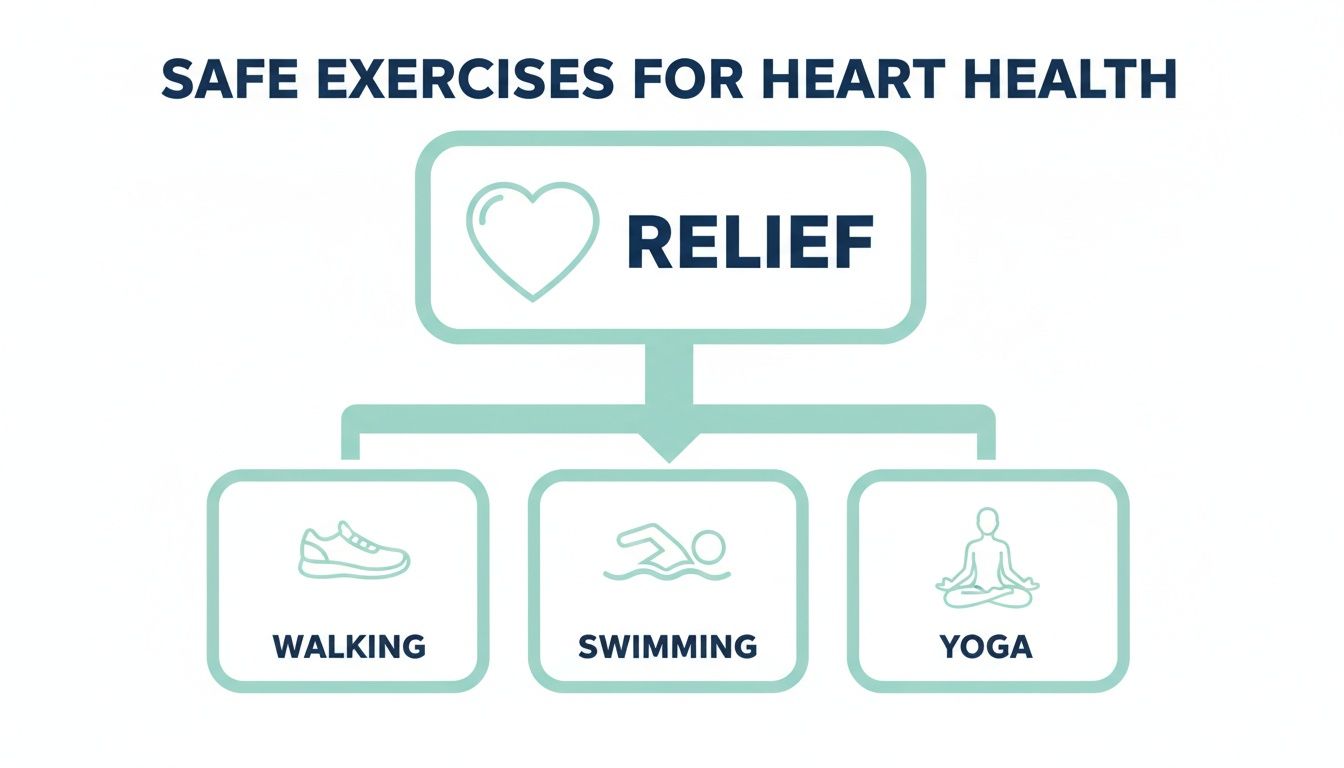
- Brisk Walking: This is the gold standard. Walking is low-impact, boosts circulation, and helps prevent constipation. You can learn more about why walking is good for hemorrhoids in our guide. Aim for 20 to 30 minutes most days.
- Swimming: The water's buoyancy supports your body completely, taking all the pressure off your pelvic floor. You get a great workout with zero risk of making symptoms worse.
- Elliptical Machine: The elliptical gives you a smooth, gliding motion without any harsh impact. It’s an excellent way to get your heart rate up safely.
Flexibility and Core Strength
Strengthening your core and becoming more flexible can also bring relief. You just have to choose poses that don't make you strain.
Yoga is especially helpful because it blends gentle stretching with deep, controlled breathing. This combo improves blood flow and helps dial down stress.
A couple of the best yoga poses to try are:
- Child's Pose (Balasana): This simple resting pose releases tension in your lower back and can improve circulation to your pelvic region.
- Legs-Up-The-Wall Pose (Viparita Karani): By elevating your legs, you let gravity drain pooled blood from your lower body, offering immediate relief from swelling.
After a gentle workout, using a soothing product like Revivol-XR can provide temporary relief of any leftover discomfort.
Workouts You Must Avoid During a Hemorrhoid Flare-Up
Knowing what exercises to do is one thing, but knowing what not to do is just as critical. If you're wondering, will exercise help hemorrhoids, the answer can be a definite "no" if you choose the wrong activities.
Certain movements dramatically increase pressure inside your abdomen. This internal force, known as intra-abdominal pressure, shoves blood down into your pelvic region and can make swollen veins much worse.
High-Strain Activities That Can Make Things Worse
Pressing pause on specific workouts during a flare-up is a smart move. Research confirms that some sports carry a much higher risk. One study found that while 34% of athletes suffered from hemorrhoids, the number jumped to 57% for cyclists and horseback riders and 48% for bodybuilders. You can read the full research on how specific sports impact hemorrhoid prevalence.
Here are the main culprits to steer clear of:
- Heavy Weightlifting: Squats, deadlifts, and leg presses create a massive spike in internal pressure.
- High-Intensity Interval Training (HIIT): Explosive movements and core-tensing exercises can put significant strain on your pelvic floor.
- Prolonged Cycling or Spinning: Constant pressure from a narrow bike seat can directly irritate existing hemorrhoids.
- Horseback Riding: Much like cycling, this activity puts direct, repetitive pressure on the sensitive anal area.
- Strenuous Abdominal Exercises: Traditional sit-ups and crunches force you to strain your core in a way that pushes pressure downward.
Exercise Risk Guide for Hemorrhoids
| Exercise Type | Risk Level | Why It Helps or Hurts |
|---|---|---|
| Walking & Brisk Walking | Low | Improves circulation and digestion without straining the pelvic area. |
| Swimming & Water Aerobics | Low | The buoyancy of water supports your body, reducing all pressure on the rectum. |
| Yoga & Gentle Stretching | Low | Certain poses can improve blood flow and relieve pelvic pressure. |
| Heavy Weightlifting | High | Causes a huge spike in intra-abdominal pressure from straining and breath-holding. |
| Cycling & Spinning | High | The bike seat puts direct, sustained pressure on the anal area, worsening irritation. |
| High-Impact Sports | High | Jarring movements can increase pressure and discomfort in an already sensitive area. |
Smart Modifications and Safer Alternatives
Instead of heavy squats, try bodyweight squats where you don't hold your breath. Swap your spin class for a session on the elliptical machine or a swim. For core work, replace crunches with planks, which strengthen your midsection without creating dangerous downward pressure.
Ultimately, listening to your body is the most important rule. If an activity causes pain or pressure, it's a clear signal to stop.
Strengthening Your Pelvic Floor For Long-Term Prevention
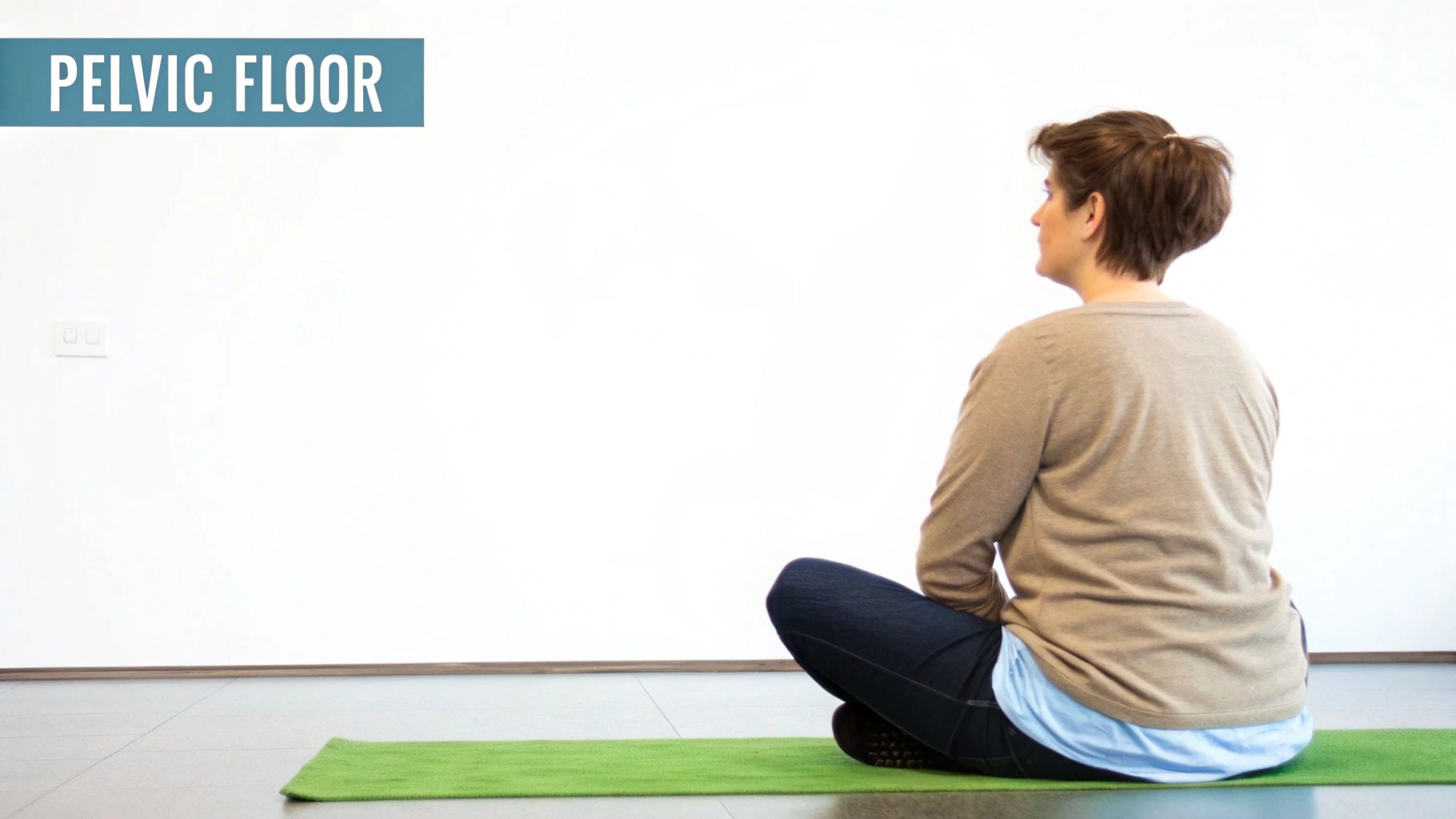
While gentle cardio gets your blood flowing, building a stronger foundation is the secret to long-term prevention. Your pelvic floor is a muscular hammock that supports your bladder, bowels, and rectum.
When that hammock is weak, it can't hold your rectal veins in place properly, allowing them to bulge.
Strengthening these crucial muscles is one of the most proactive steps you can take. By doing specific, targeted exercises like Kegels, you create an internal support system that helps prevent strain.
How to Perform Kegel Exercises Correctly
The hardest part about Kegels is finding the right muscles. An easy way is to try stopping your urine mid-stream. The muscles you clench are your pelvic floor muscles.
Here’s a simple guide:
- Find a Quiet Spot: Lie on your back with your knees bent and feet flat on the floor.
- Squeeze and Lift: Tighten your pelvic floor muscles. Imagine you're lifting them up and in.
- Hold and Breathe: Hold the contraction for 3 to 5 seconds. Breathe normally and do not hold your breath.
- Relax Completely: After the hold, let the muscles relax completely for 3 to 5 seconds.
- Repeat: Aim for 10 to 15 repetitions in one set. Try to do three sets throughout your day.
The impact of this simple exercise is backed by science. One study showed that combining Kegels with lifestyle changes led to highly significant improvements in hemorrhoid symptoms. You can learn more about the study's findings on exercise's therapeutic role.
Consistency Over Intensity
You don't need to do hundreds of Kegels a day. The most important thing is consistency. Making these exercises a daily habit is the secret to building lasting strength.
By adding pelvic floor exercises to your routine, you are actively building an internal defense system against future flare-ups.
Your Action Plan For Moving Safely With Hemorrhoids
Putting this information into practice is what brings real relief. This straightforward plan gives you clear steps to move safely while managing hemorrhoids.
Take Action
- Gentle Cardio (3–5 times per week): Aim for 20 to 30 minutes of brisk walking, swimming, or using an elliptical.
- Pelvic Floor Exercises (Daily): Do 2 to 3 sets of Kegel exercises every day to strengthen your body’s internal support system.
- Flexibility and Stress Relief (2–3 times per week): Add in gentle yoga or stretching sessions like Child’s Pose or Legs-Up-The-Wall.
Essential Self-Care Habits
Exercise is a huge piece of the puzzle, but not the only one. Pair your new routine with supportive daily habits.
Always listen to your body. If an activity causes pain, stop. Resting is a productive part of healing.
Make sure you’re drinking plenty of water and eating a high-fiber diet. After a workout, a warm sitz bath for hemorrhoids can soothe any irritation. Finally, adding a supportive product like Revivol-XR can help provide temporary relief of symptoms.
That cyclist I mentioned earlier didn't have to give up being active. He just swapped his bike for a pair of walking shoes and a yoga mat. That small change wasn't about giving up... it was about waking up to what his body actually needed: movement without pressure.
Common Questions About Exercise and Hemorrhoids
Trying to stay fit while dealing with hemorrhoids brings up a lot of questions. Here are a few of the most common concerns.
How Soon Can I Exercise After a Hemorrhoid Flare-Up?
It’s best to wait until the worst symptoms, like sharp pain and bleeding, have stopped. This usually takes a few days. Once you feel better, ease back in with something simple, like a short walk.
Listen to your body. If you feel any new discomfort or pain, that’s a clear signal to stop and give yourself more time to heal.
Can Running Make Hemorrhoids Worse?
For some people, yes. The constant jarring motion can irritate the area. While it’s less risky than heavy lifting, it’s not harmless, especially with sensitive external hemorrhoids.
Consider these alternatives: brisk walking, an elliptical machine, or swimming.
Are Sit-Ups and Crunches Safe With Hemorrhoids?
No, traditional sit-ups and crunches are best avoided. These movements create a big spike in pressure inside your abdomen, forcing everything downward.
Instead, choose core exercises that stabilize your midsection without straining your pelvic area. Planks, bird-dog poses, and gentle pelvic tilts are much safer options.
For moments when discomfort arises, Revivol-XR offers a range of supportive care products. The Advanced Hemorrhoid & Fissure Cream provides temporary multi-symptom relief to help you stay comfortable. Learn more at https://hemorrhoid.com.